by Helen | Mar 29, 2021 | Spain, Travel
Our trip to Seville was over an Easter weekend, so it was largely taken up with following the routes of the AMAZING Santa Semana processions. But, we did get to see quite a lot of the centre of this beautiful city, in between the Easter fervour. We’re not religious at all, but do appreciate a theatrical extravaganza, and this city gives it all at Easter…
We stayed in a beautiful Moorish inspired hotel, on the Alameda de Hércules, a boulevard located inside the historic district, today considered the oldest public garden in Europe. After renovation and remodelling works, the Alameda de Hércules was once again opened to the public in 2009. Now, it is possible to enjoy the tree lined, pedestrianised area paved with coloured tiles, replacing the previous chalky sand. Although we didn’t know at the booking, we were clearly very lucky to plump for this area of Seville…
For decades, the Alameda de Hércules has been the home of some of Seville’s most interesting social movements. This neighbourhood has become the epicentre for new trends, fashions and cultural expressions, which in turn lead to social customs changing all over the city. All that hasn’t just transformed the neighbourhood’s atmosphere, but it’s had a big impact on the impression that people get of Seville, as being an open-minded city that embraces diversity.Much of that is thanks to the LGBTI+ community. Venues catering to this community have opened up and many of those who belong to it have moved into the area, driving this change of image. But if you consider that just a few years ago it was one of Seville’s most run-down neighbourhoods it’s surprising that, these days, it’s so fashionable. In stark contrast to what it used to be like, today house prices in the area are rising, and every important chain in Seville has either opened, or wants to have, a restaurant or tapas bar here. What’s more, the Alameda de Hércules itself is—thanks to its size (480 metres by 80 metres) and the fact that it’s all pedestrianised—the perfect spot for holding markets, concerts, open-air exhibitions and popular festivals.
The hotel we chose – Patio de la Alameda – was a nineteenth-century mansion, now converted into a charming and unique hotel in the emblematic Plaza Alameda de Hércules in the centre of Seville. We couldn’t have been better placed – and we had the bonus of an underground garage, too.
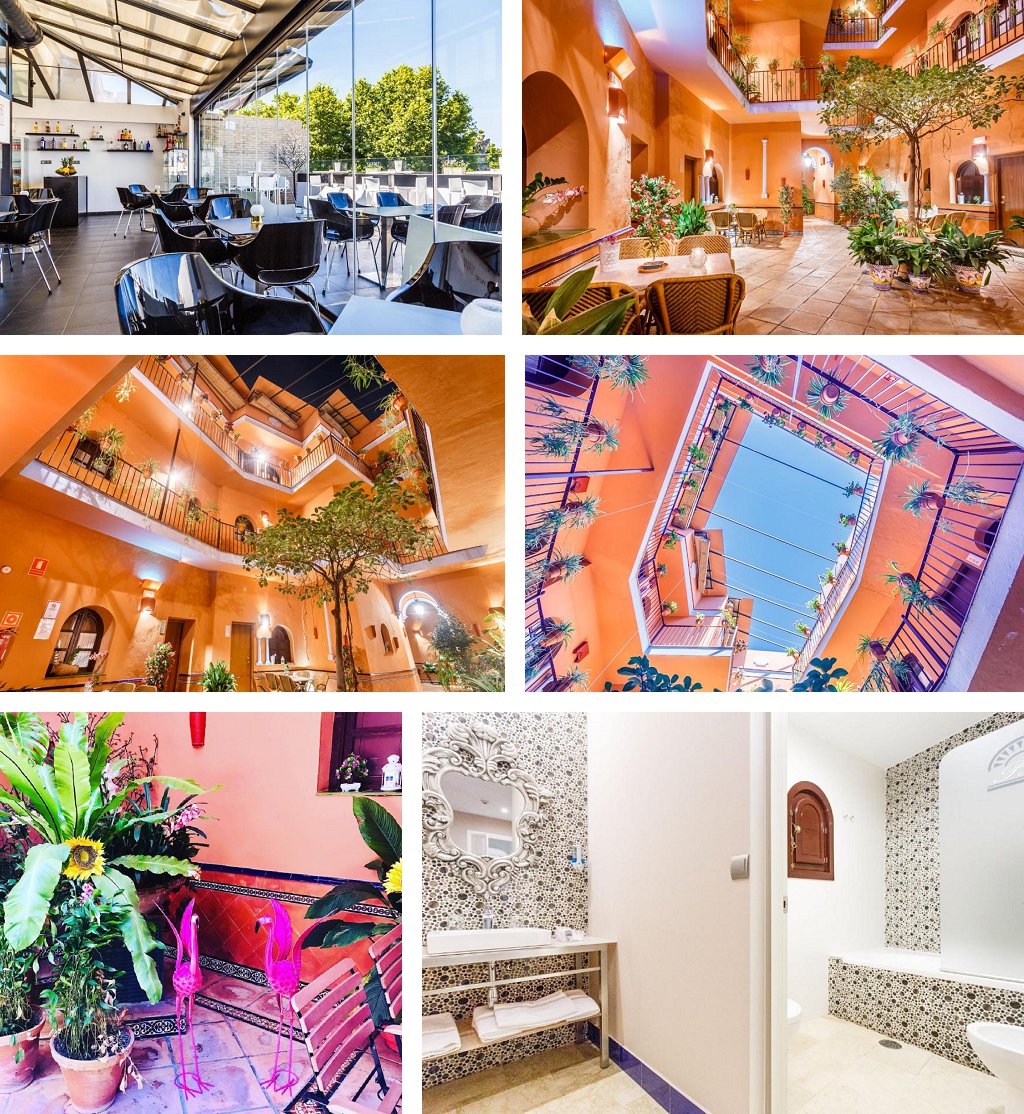
Images : https://www.booking.com/hotel/es/patio-de-la-alameda.en-gb.html
We didn’t experience the best weather when we were in Seville, but it definitely didn’t stop us getting out and about. It truly is a beautiful city – cosmopolitan, fast paced, architecturally off the scale and full of a sense of history. We also manged to eat and drink our way around a fair few few bars and restaurants, and without exception, every single one, was outstanding. Just outstanding and memorable – even if I can’t remember the names, I can remember the food, the atmosphere and the decor and know we’d be able to find them all again.
food & drink in seville
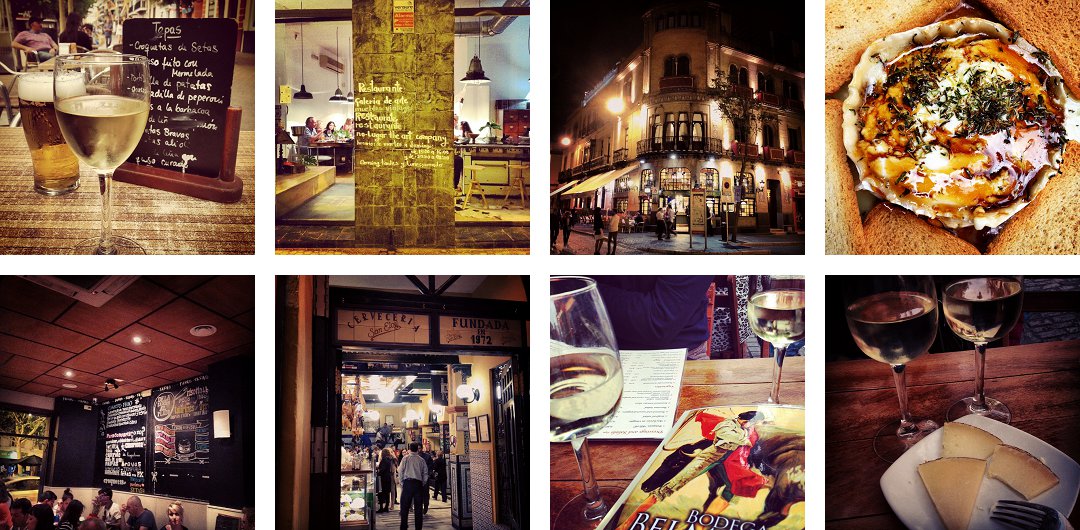
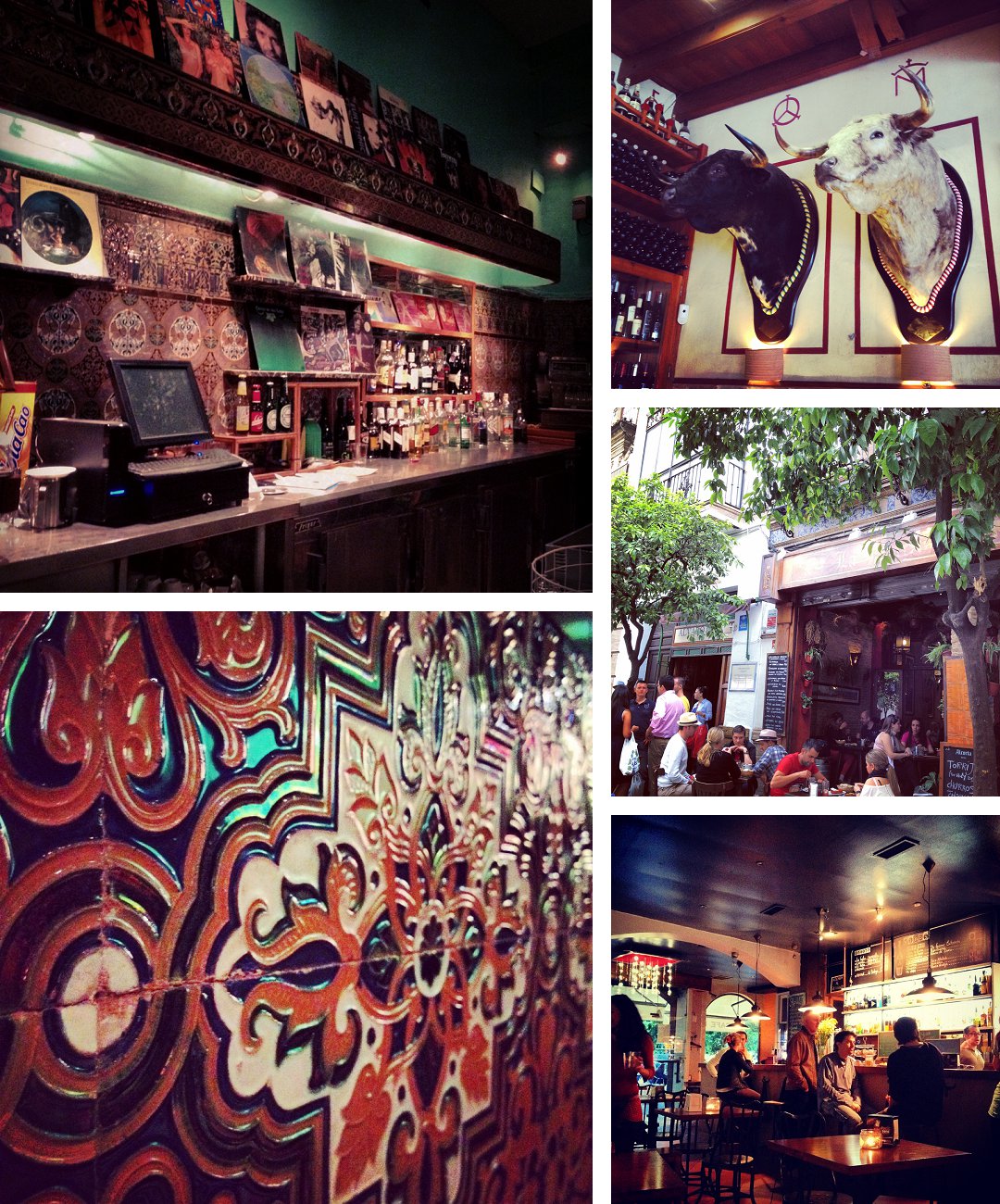
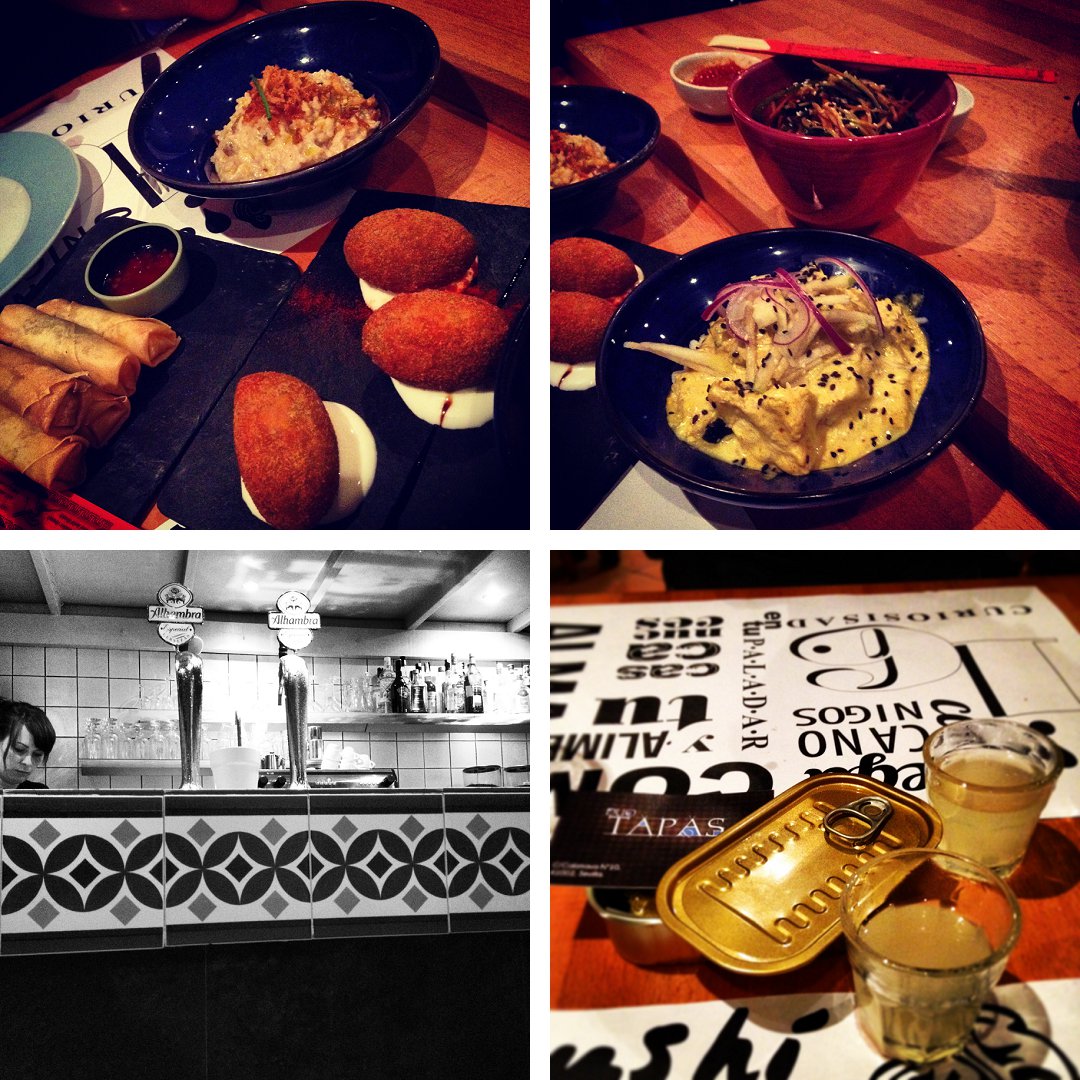
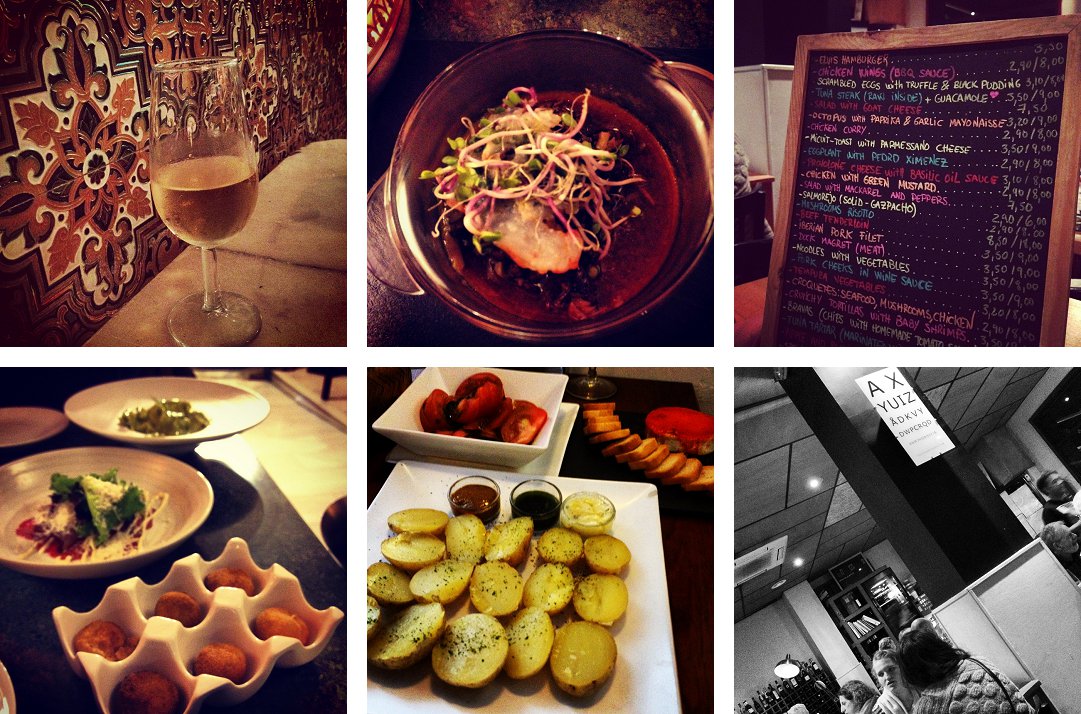
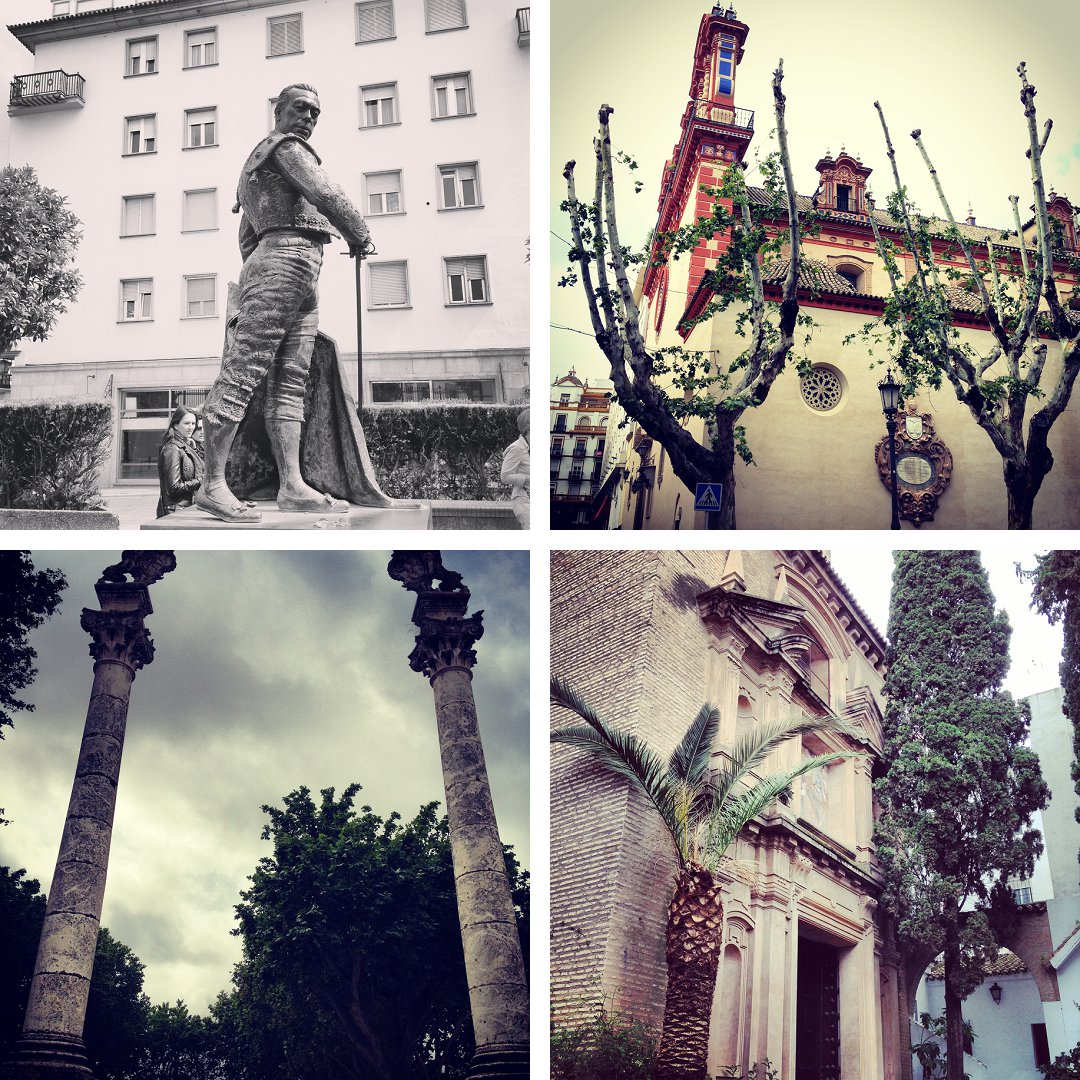
We did take in a lot of sights, but as we were madly snapping away at the Semana Santa processions, when we were relaxing, we were mostly eating and drinking, so architecture took a bit of a back seat. All there for the next visit, but we did get to experience a little of the flavour of…
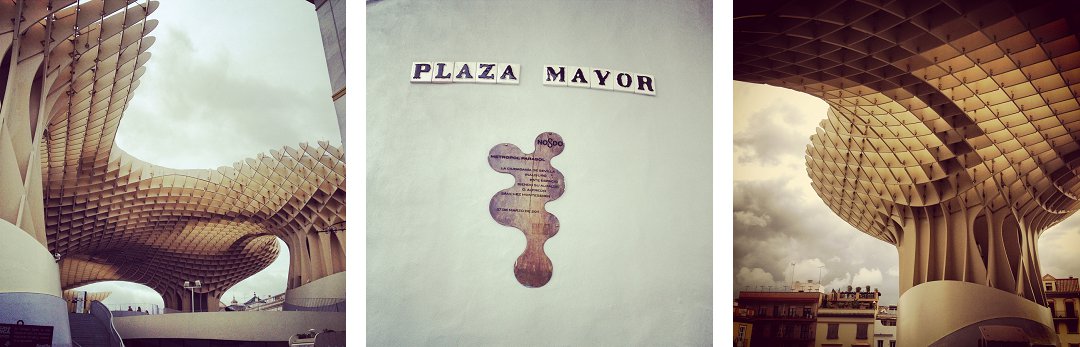
the streets of seville


by Helen | Mar 23, 2021 | Lifestyle
The Adriatic Hotel is located right on the picturesque harbour of Rovinj, a Venetian town on the south western coast of the Istrian peninsula. It is in the pedestrianised old town, full of pastel coloured Venetian buildings fringing the sea. Cobbled streets, full of the most exquisite shops, bars and restaurants, wind their way up to the top of the hill and the Church of St Euphemia, who from the top of the spire, watches out across the Adriatic Sea to Italy.
It’s one of our favourite destinations – and we know that we are very, very lucky because now that we live in Istria, we can book out of season when prices are much more suited to our pockets. It is Rovinj’s oldest hotel, dating back to 1892, the most recent refurbishment being done in 2015. The original facade has been retained and in its pale grey render, it is elegant and understated. A terrace outside, with big squishy grey and white sofas, which wraps around the front and side of the hotel, is the perfect place to while away a couple of hours, people watching or just being soothed by the sound of small fishing boats coming in and out of the harbour. The wooden shutters above the grounds floor – which comprises the Adriatic Brasserie and Breakfast Room and beautiful, beautiful bar – hint at the luxury behind them.
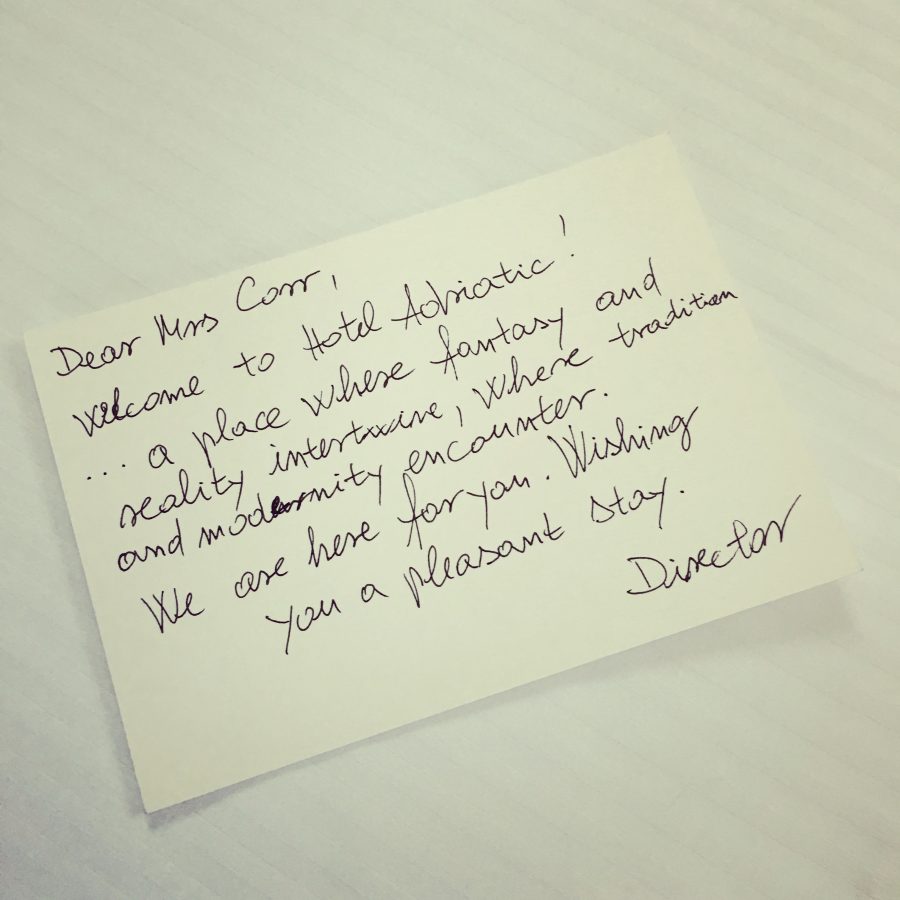
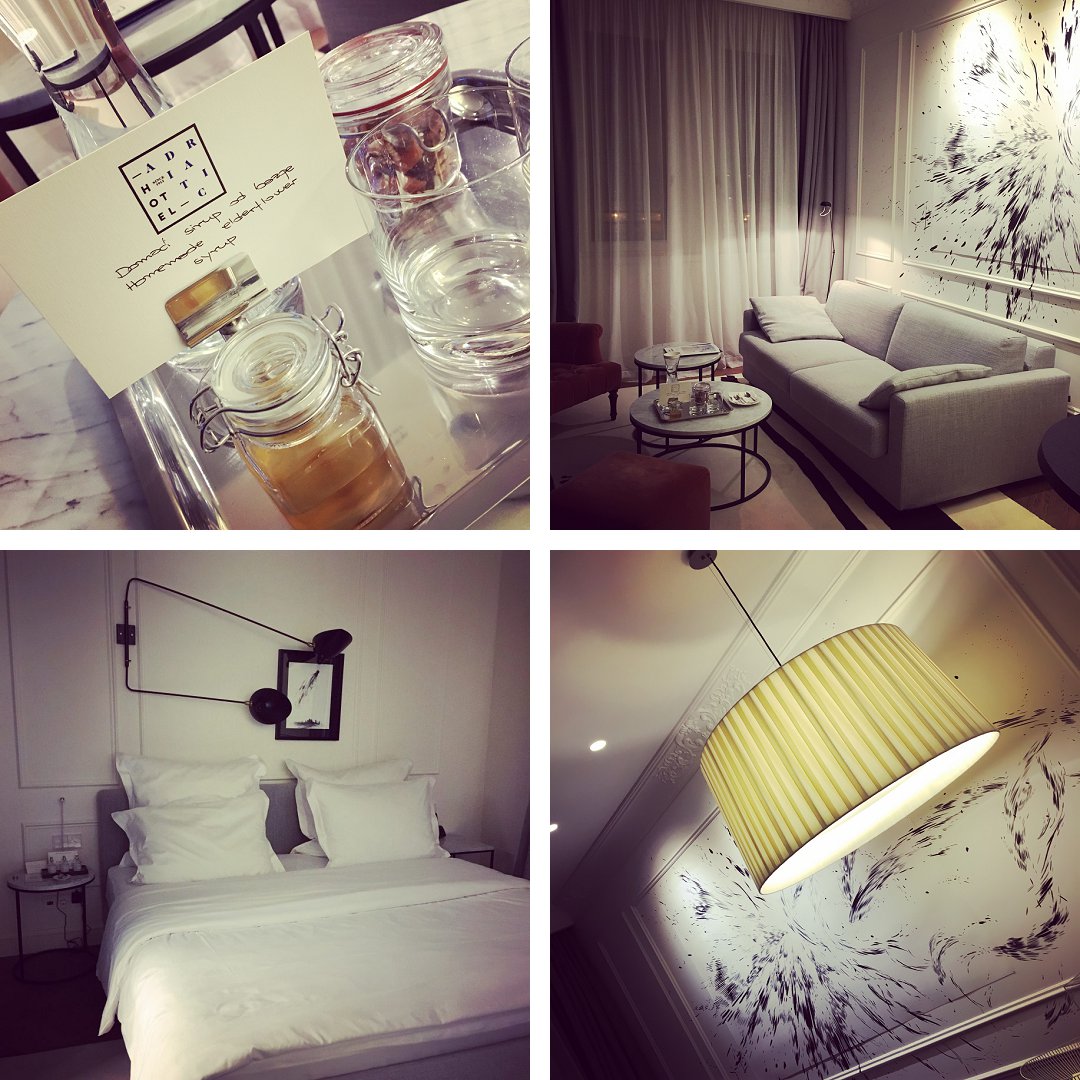
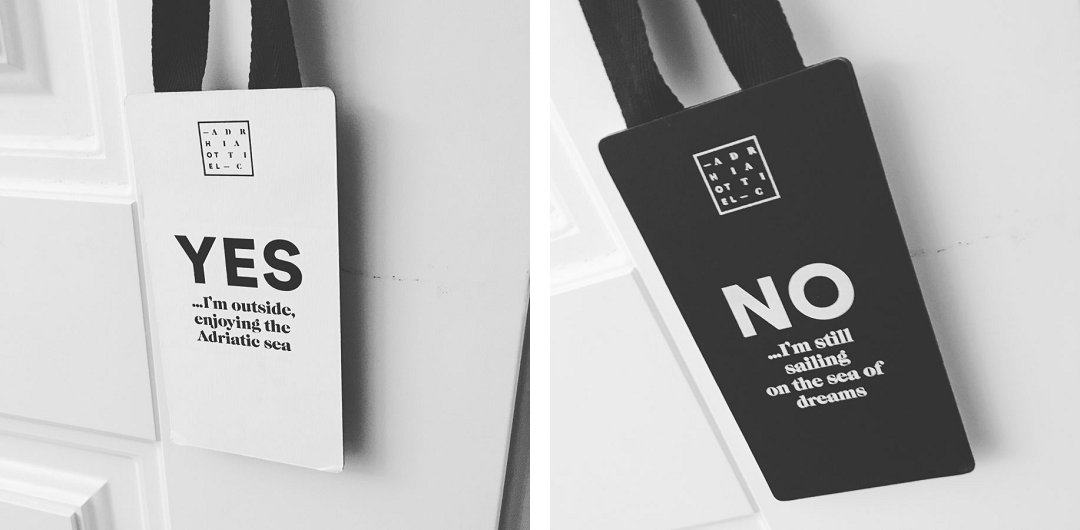
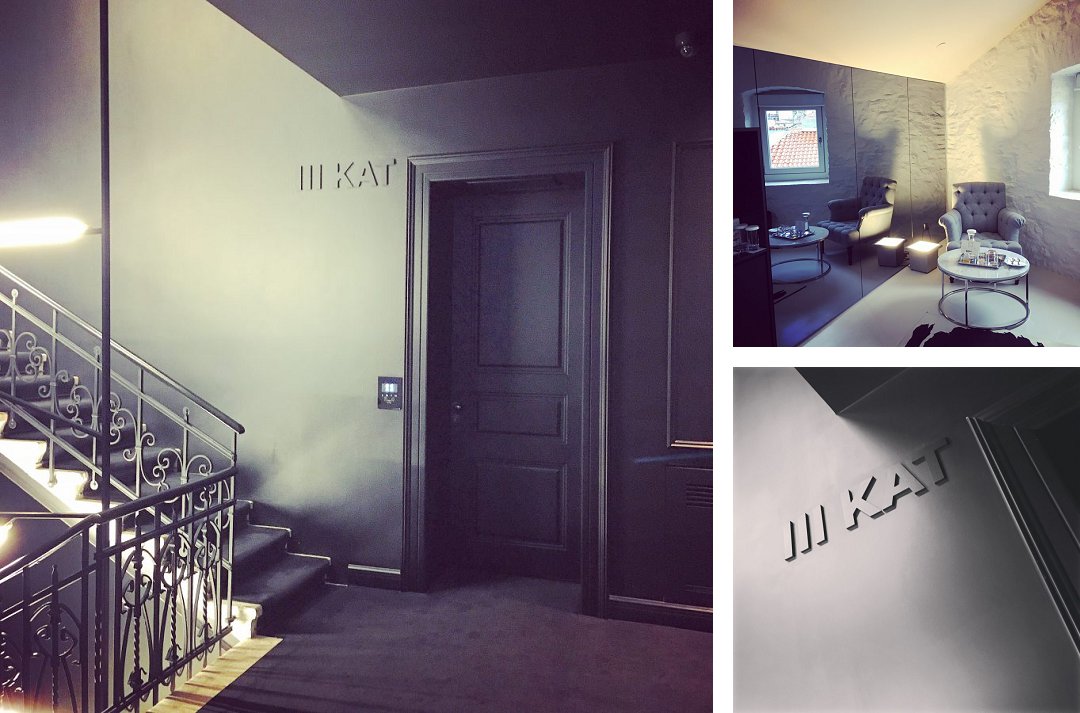
By hotel standards, it is small – there are fourteen rooms and four suites. All are different sizes and configurations – there is absolutely no “corporate” feel here. The ensuite rooms and suites have high ceilings with the original old-fashioned cornices retained. White walls are hung with big mirrors, wooden parquet floors have that added touch of luxury with modern black-and-white rugs. The beds are huge, with crisp white bedding and lots of pillows. Lighting is subtle (but sophisticated) and individual artworks, by local artists, can be found in every room. Coffee-making facilities are available, with fresh milk delivered and every afternoon, a little treat of homemade chocolates is delivered to your room. One of my favourite touches – as well as the hand written welcome postcard – is the selection of three mood scents by the bed. Grey-marble bathrooms have black-and-white mosaic-tiled floors, rain showers with glass doors, and Molton Brown toiletries, with matte black taps and handles and radiators. Of all of the rooms we’ve stayed in, the bathrooms have been huge and spacious and light. Communal areas are stylish – black carpets (with not a speck on them) fitted onto sweeping stairs, with almost black walls and very subtle lighting. Just gorgeous.

Although Rovinj is packed with amazing – but reasonably priced – restaurants, including Monte, awarded a Michelin star – the hotel brasserie is fabulous, and definitely recommended. If you don’t fancy eating in the restaurant itself, room service is quite something too. All off the a la carte menu (although you can order form a smaller room service menu too) and brought your room on a trolley, presented in exactly the same way as would be if you dined in the restaurant. Breakfast too, is a real treat – an extensive menu of hot dishes, plus an array of continental options. And, as you are eating it, you can watch the glitterati of Rovinj, strolling past.
by Helen | Mar 17, 2021 | Renovation
So, the exterior renovation of our house, continues apace. We’ve largely completed the interior renovation – but we never say never – and so our attention has been turned to the garden area around the main house and the little abandoned house to the rear. We’ve been working away on the piece of land next to our neighbour’s field and this is steadily being sown with seeds and planted up with bulbs, so that we will have ongoing colour over the summer, rather than one hit. But today, we’ve decided to begin on another area, just for a change of scene.
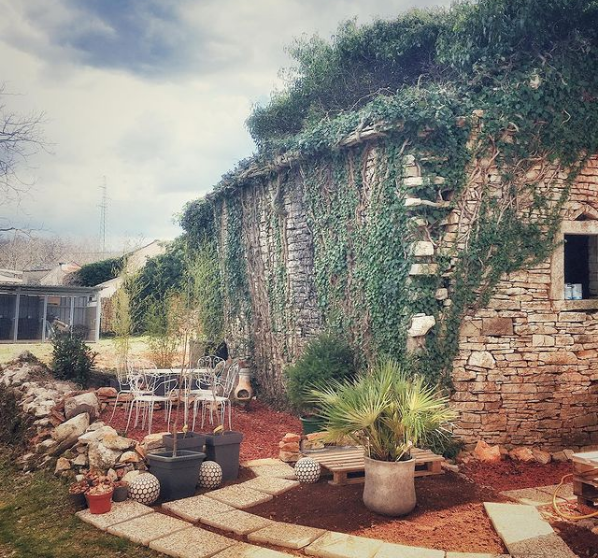
This was the very first photo we ever took of this particular piece of land. To the right is the corner of our house and then we have the abandoned property, which was owned by a neighbour. It was held together by the vines and the ivy, part of the roof having collapsed in on itself. The land around was unkempt – full of stones and rubble and strong vines growing underground, as well as weeds. It was a mess. But we had other priorities four years ago…
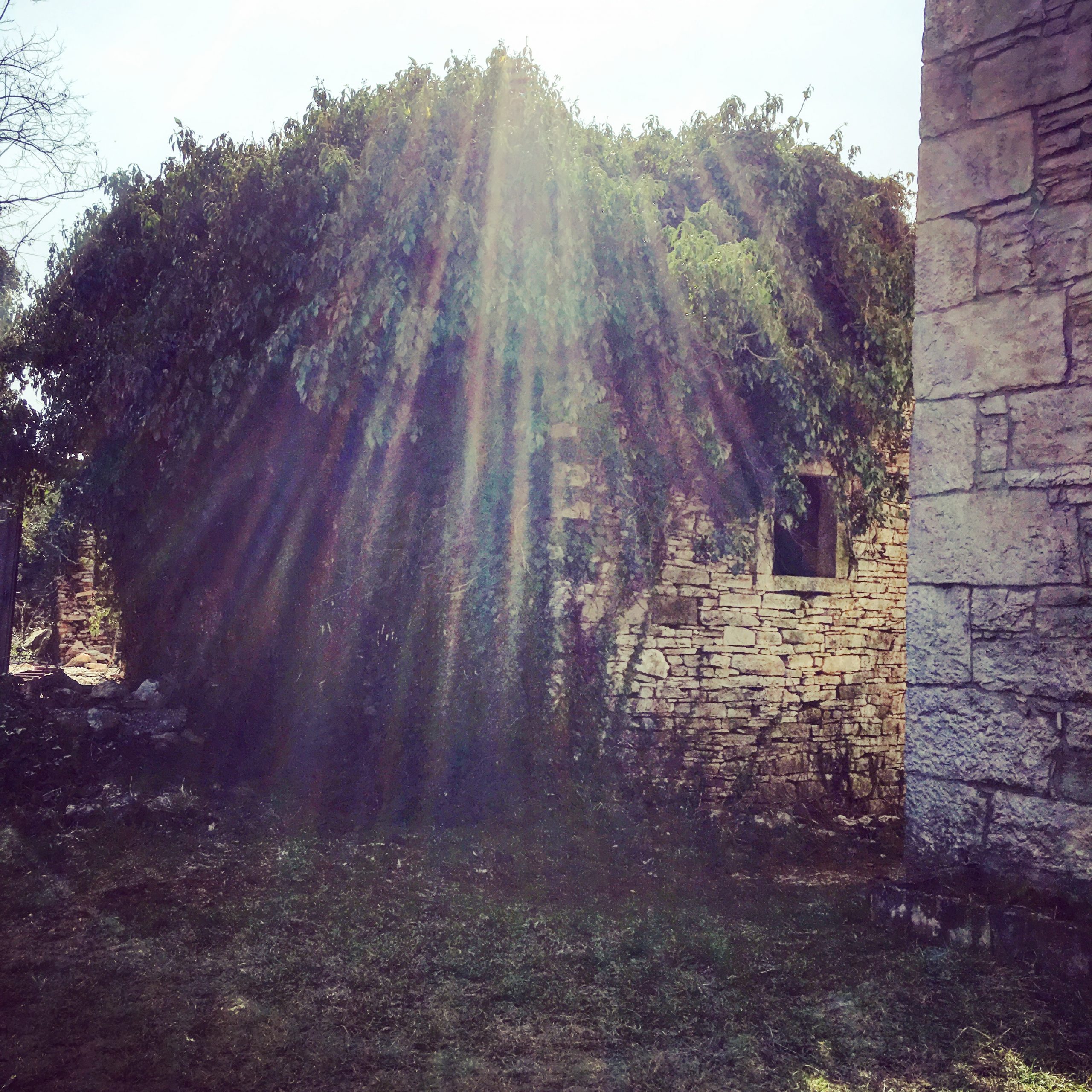
We completed on the purchase of the small house in March 2020, with the land to the other side. The land above, to the left of the property, does not belong to us – it is like a lot of land in Istria. Multiple owners, scattered far and wide, and no-one assuming any responsibility for its upkeep. We were initially very reticent to do anything with any land around the house which did not belong to us, but we have gradually come to realise, if we are prepared to do the work, no-one will raise an eyebrow. And why would they when they have someone else, keeping their land tidy and in good order? We’re sure that many people will think we are bonkers for doing this, but things out here are very different to back in the UK. If nothing is done with land here, it is literally left. It is overgrown. Uncared for. And with pieces of land like this, unless you have the patience of a saint, it’s unlikely it’ll sell as all owners need to agree to the sale. But we didn’t want to have a beautiful house internally and then be surrounded by a scruffy exterior – so when we purchased the small house, the improvements just evolved.
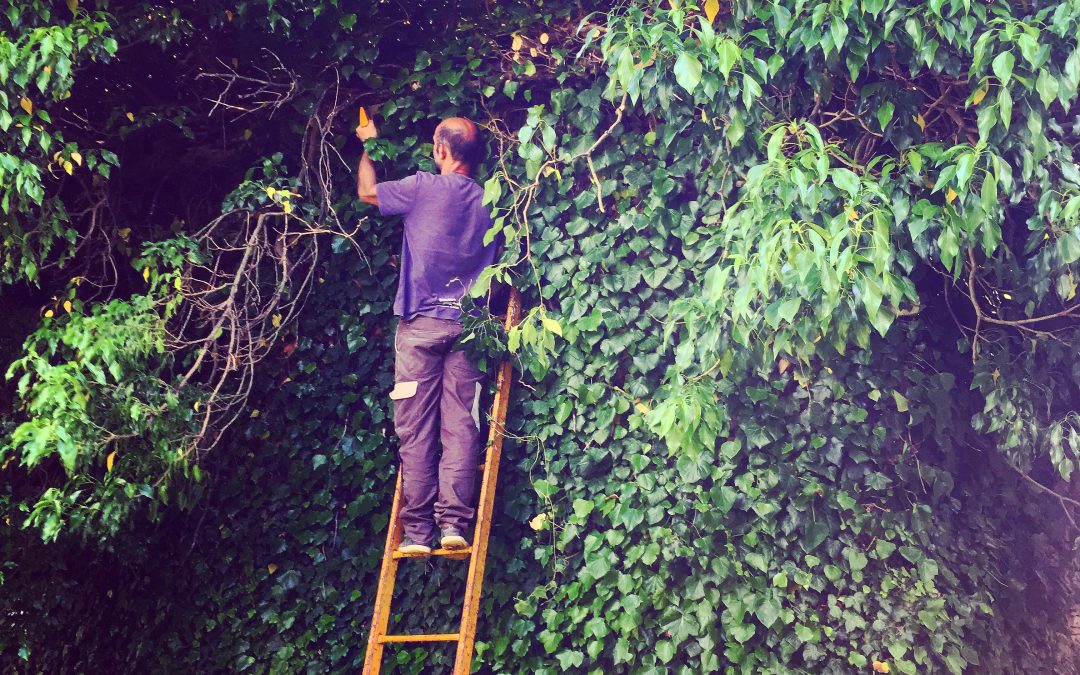
Our first foray into sorting this area was done with our first Workaway guests – Mariuz and Julie, from France. With a head for heights, Mariuz was up the ladder and chopping away at the unruly vines, which in time, would have pulled down the house. It took days to do this, but gave us our first taste of what things could be like and so motivated us to continue.
For the past few months, we’ve made do with the ground being weeded and covered in plastic sheeting to prevent regrowth, and covered in bark chippings. We also bought three fruit trees – two apple and one cherry – and these are potted up. The whole area has looked a lot more cheery, since we added some lights, a few decorative balls and a chiminera. But it still wasn’t quite as lovely as we wanted it to be, without spending a lot of money. We’re not that daft 😉
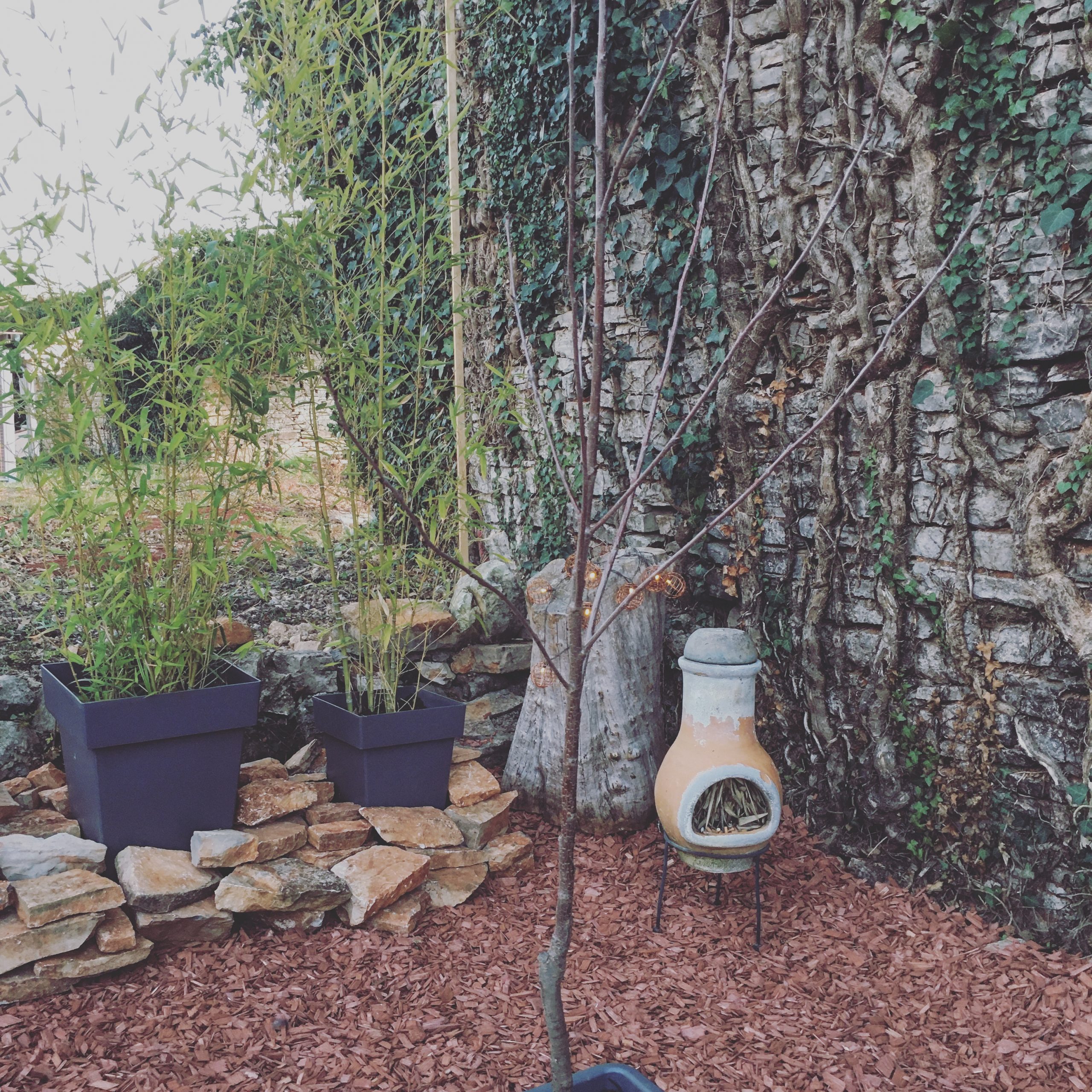
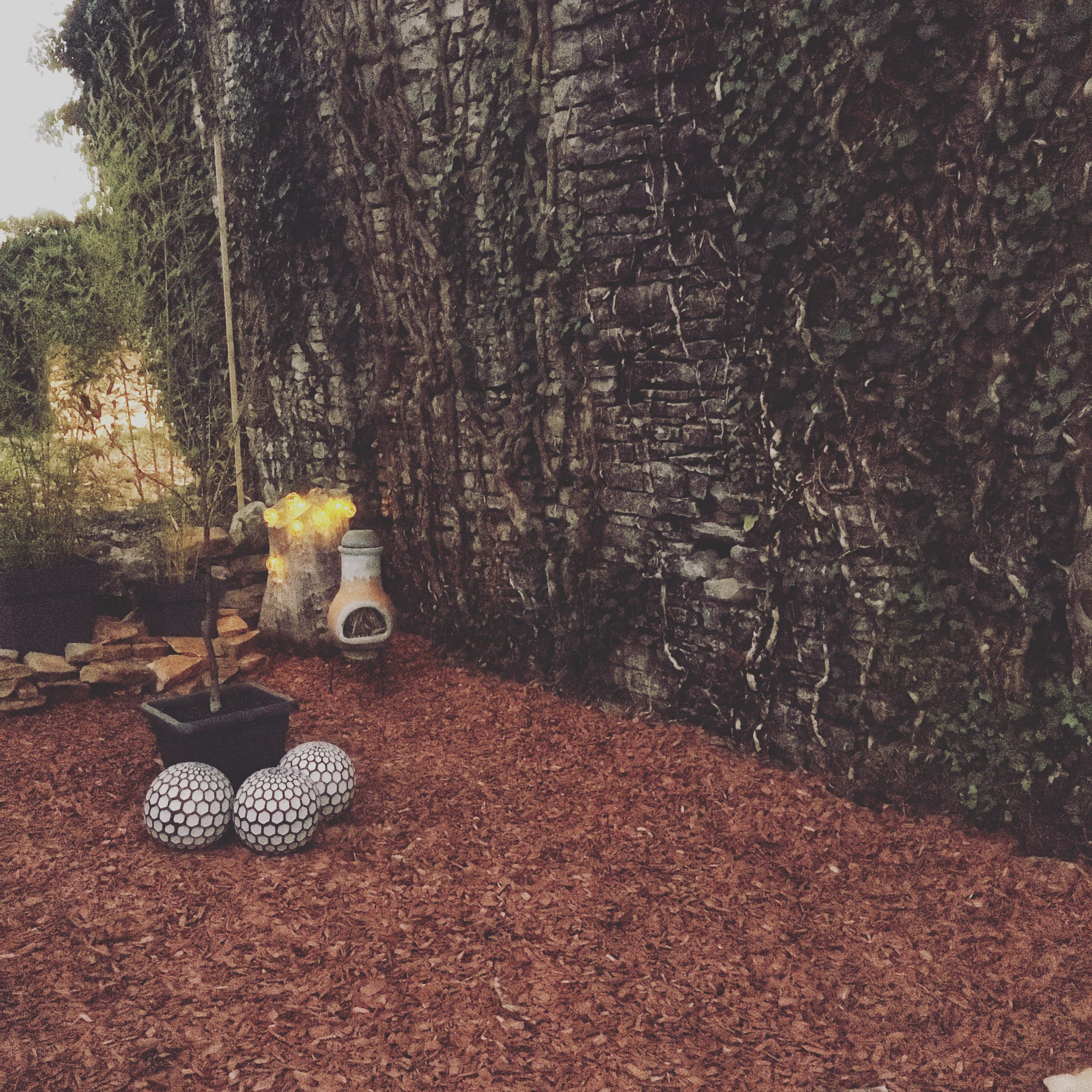
But today – a lovely, sunny March day, quite warm when in the sun – has signalled the start of the next phase of the renovation of this area of the garden. The piece of land just outside of the bark chippings has been dug over and the clumps of grass taken out. The soil has been turned over and levelled out. Before Christmas we laid a bit of a wonky path of flagstones as the grassy ground would just get muddy when it rained – it was done quickly and wasn’t ever right, so that’s now been tackled today. We now have a straight path that runs along side the house and to the rear, so no more getting wet, muddy feet in the rain. A channel has been left between the flagstones and the raised bed under the well room windows (currently bursting with spring bulbs) so that we can sow wild flower seeds, and have a burst of colour in the summer. But, the best bit, has been the inspired laying of a double arc of flagstones – not my idea! – providing a pathway AND a lovely area for sowing more flower seeds, as well as a palette that wasn’t being used, which will now be utilised for potted bulbs.
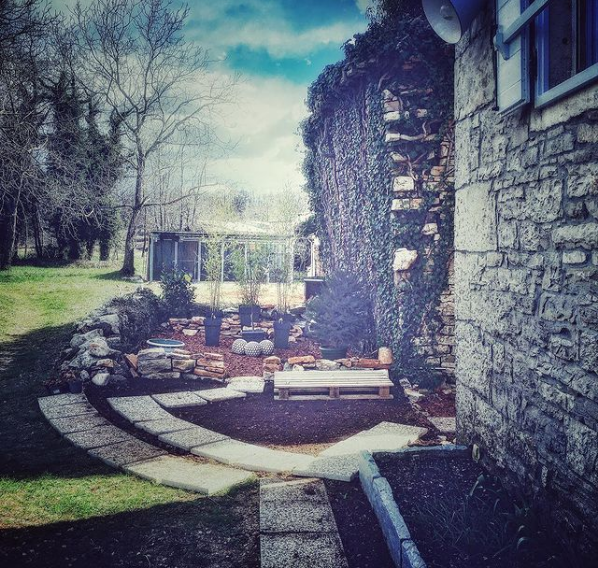
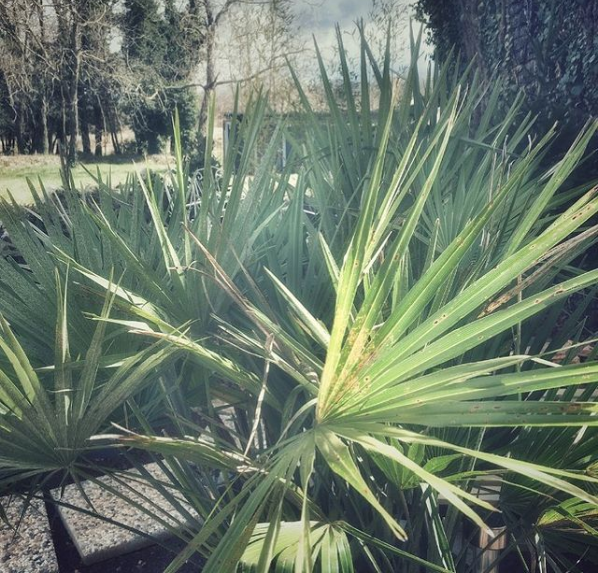
Our potted fern has always been in the shade, so she’s now been moved centre stage and will benefit from full sun, until early afternoon so may well fare a lot better. The dead fronds need to be tidied up, but we think that the sunshine will do her good. And, our white wrought iron table and chairs, which seem to have been positioned everywhere, now do seem to have found a new home until we get the time to renovate these. Tomorrow, seeds will be sown around the big concrete pot and between the two lines of flagstones, and spring bulbs potted up for the palette platform. Then, it’s onto the other side as we create a natural trellis for honeysuckles, made from thick branches and garden twine, to finally mark out the boundary of our land to the rear, meaning we can bring the potted bamboos to this side of the little house, to thicken out the screen at the top of the piece of land, beyond the vintage garden furniture.
So, it’s coming together, but it’s taking – as ever – a whole lot longer than we anticipated. But at least, we’ve largely finished inside the house and so can concentrate exclusively on the exterior.

by Helen | Mar 3, 2021 | Lifestyle
I can eat a potato in any guise. They form a staple of our culinary output :
- creamy mashed potatoes with coconut milk
- cheesy mashed potatoes, usually on top of a shepherd’s pie or a fish pie
- home made chips in the oven – always thinly sliced, cooked in olive oil and either rubbed with paprika & chilli flakes or sea salt & fresh rosemary
- dauphinoise style
- usually always in soup
- sliced thinly as the topping for a bake
- new potatoes, eaten cold in a summery salad
- small cubes of potato with trofie pasta, pesto, broad beans and parmesan
- sometimes baked – although quite rare, as I don’t usually find baked potatoes to be “proper” food, as in a baked potato with a topping, however nice, wouldn’t constitute a dinner for me
And the last point is probably why we’ve never delved into Hasselback World. Although they look admittedly very pretty, with their fans of potato slices, I’ve always – and I now know VERY mistakenly – just thought of them as a kind of sliced baked potato. Well, my potato world was turned on its head this weekend, when we decided we had the time – another mistaken idea, the one that you needs loads of time, because you don’t – to make the hasselbacks.
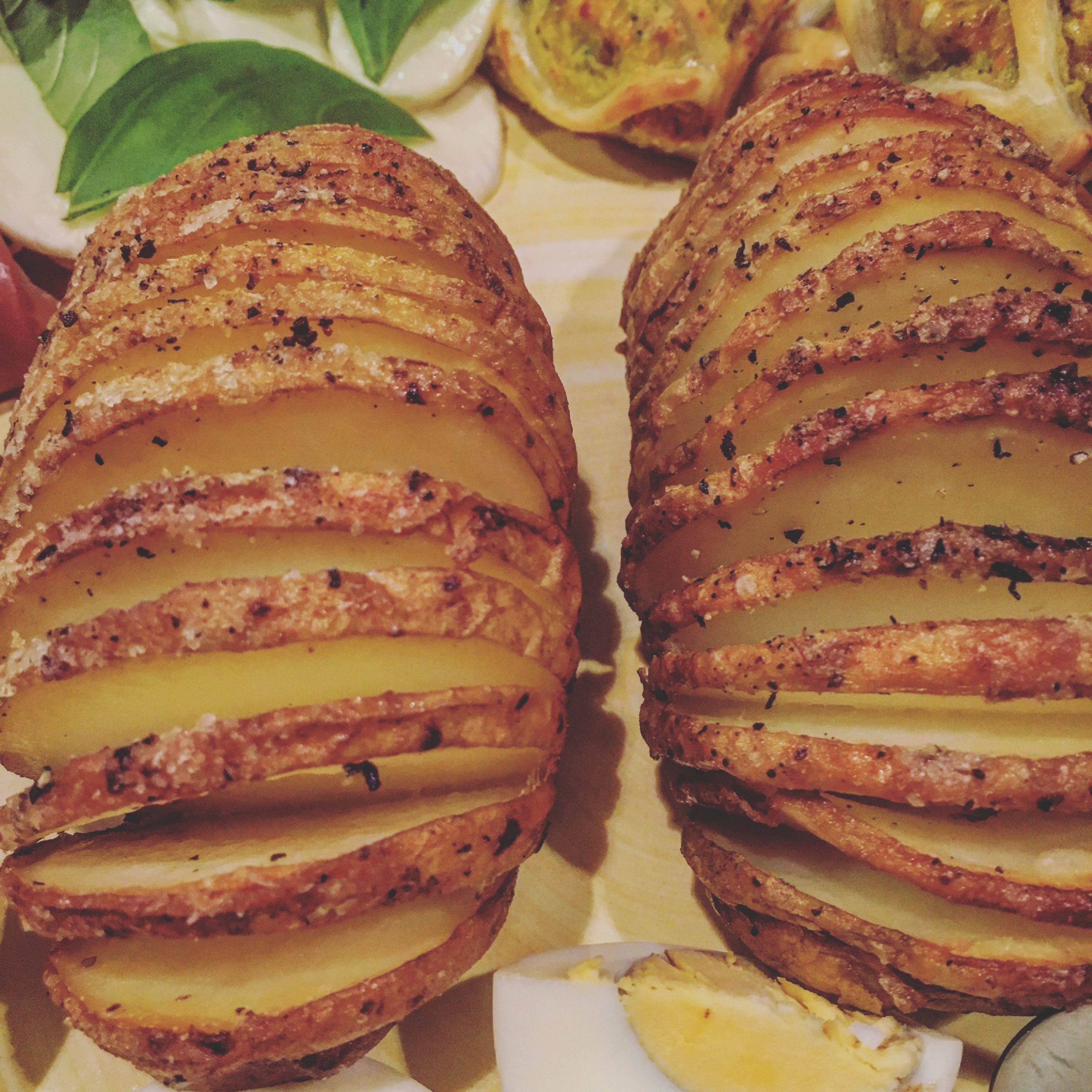
Two quite large new potatoes – the best kind, the ones with fresh soil still attached – were sufficient. These were just washed, not peeled, as I wanted the skins to brown and crisp up. Although I’m sure it wouldn’t have been the most difficult task in the world to slice the potato and stop before slicing through, I wanted to make sure it was done successfully in one go, so a stainless steel IKEA serving spoon was utilised. The potato was just placed on the spoon, and sliced very thinly – the scooped out part of the spoon meant that it didn’t cut all the way through.
I’m sure that are a million different ways to cook a hasselback, and aficionados will probably scoff at what we did. But, it was super simple and we LOVED them. Nothing like a baked potato – which seriously need to up their game in the potato stakes. They were baked first for about 35 mins, drizzled with olive oil, and sprinkled with sea salt (so it was chunky) and black pepper. They were then brushed with butter and another drizzle of olive oil & salt and pepper and back in the oven for another 35 minutes or so. Not only super tasty – and next time, it’ll be garlic butter we’ll be using – but also very photogenic. Our weekend meal was a proper spring treat – it was warm and sunny and so to accompany the potatoes, we had a mezze platter. Roll on spring…
by Helen | Mar 3, 2021 | Renovation
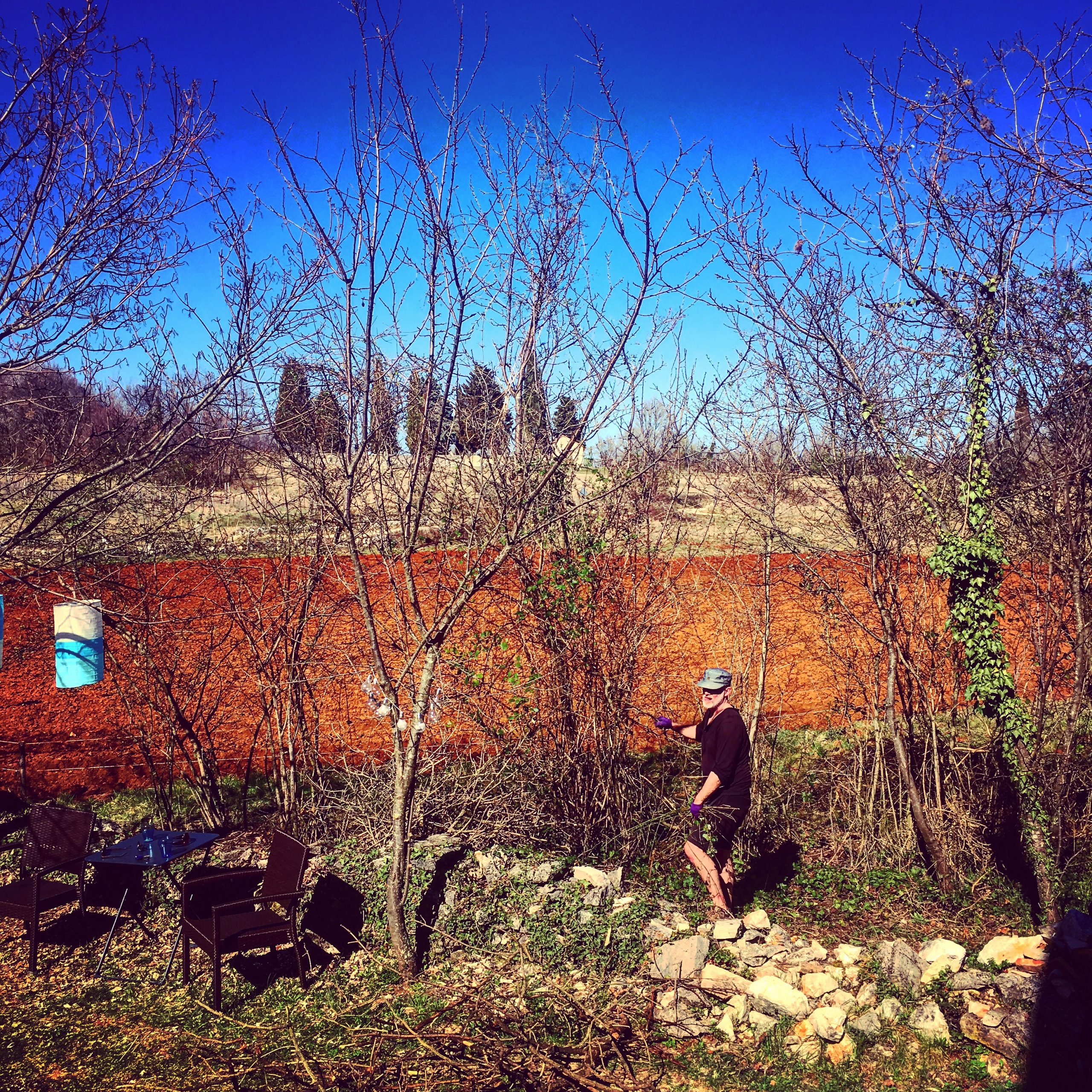
We knew we had to tackle this part of the garden, because it was overgrown, messy, full of stones and rubble from previous renovation works and the trees were literally being strangled by vines and brambles.The little stone wall was falling down in places, and in other places, held together only by creeping ivy. Nothing could grow at ground level because no sunlight could get to it. We look onto it from the side of our house and from our garden, and it has always been an eyesore, but there’s always been so much else to do, that it seemed a waste of time, tackling this previously.
We also don’t actually own this piece of land. It was once mooted that we look into the purchase of it, as it’s owned by the local Opcina (local council) and they are often willing to sell parcels of land like this – but, it is actually a huge piece of land in total and would have been difficult to keep on top of, and we weren’t actually sure how we’d make use of it. But, now that we’ve finished the internal renovation, it’s been decided that we’ll tackle the bit of land closest to us. The wall was rebuilt last year – it’s now much sturdier and falls apart less frequently! We’ve also planted succulents in many of the gaps, so in the summer, it’s actually now very attractive. So, as spring has now appeared, we’ve been dividing our days between design work and garden work. The first phase of this external renovation is now complete – all of the scrubby, twiggy branches and trunks have been removed, now revealing proper clumps of trees. Vines – so strong that they were probably the kind that Tarzan swung from – have been pulled out at ground level and carefully unravelled from the trees. This was a long, hard job as we didn’t want to damage the trees, but definitely wanted the vines out. They’ve all been removed now, and chopped up as they actually make fantastic kindling for the woodburner.
With the vines removed, we could assess what else was wrapping itself around the trees – brambles were prolific and again these were carefully removed and chopped up. Ivy was another plant which we removed – although we were reluctant to do this initially, because the birds feed off the berries in the winter. However, we reasoned that the ivy on the green wall in the garden, and the ivy covering our little abandoned house, provided a very good supply of winter berries. so went ahead with the removal in this area. Storms and winds had also broken many branches which were either just hanging on, or had broken off and were lying intertwined in other branches. All now gone. Meaning that we have enough wood and kindling to see us through the spring. So, what have the last few days looked like in the garden?
where we started
We had previously put down black plastic sheeting to try and slow down the growth of weeds and vines and ivy. Over the course of the winter however, when we had the car parking area laid, the soil and rubble which was dug out, was dumped in this patch of land, and so this had to be bagged up and cleared before we could do anything. This looks nothing – but this was at the end of the initial clearance.
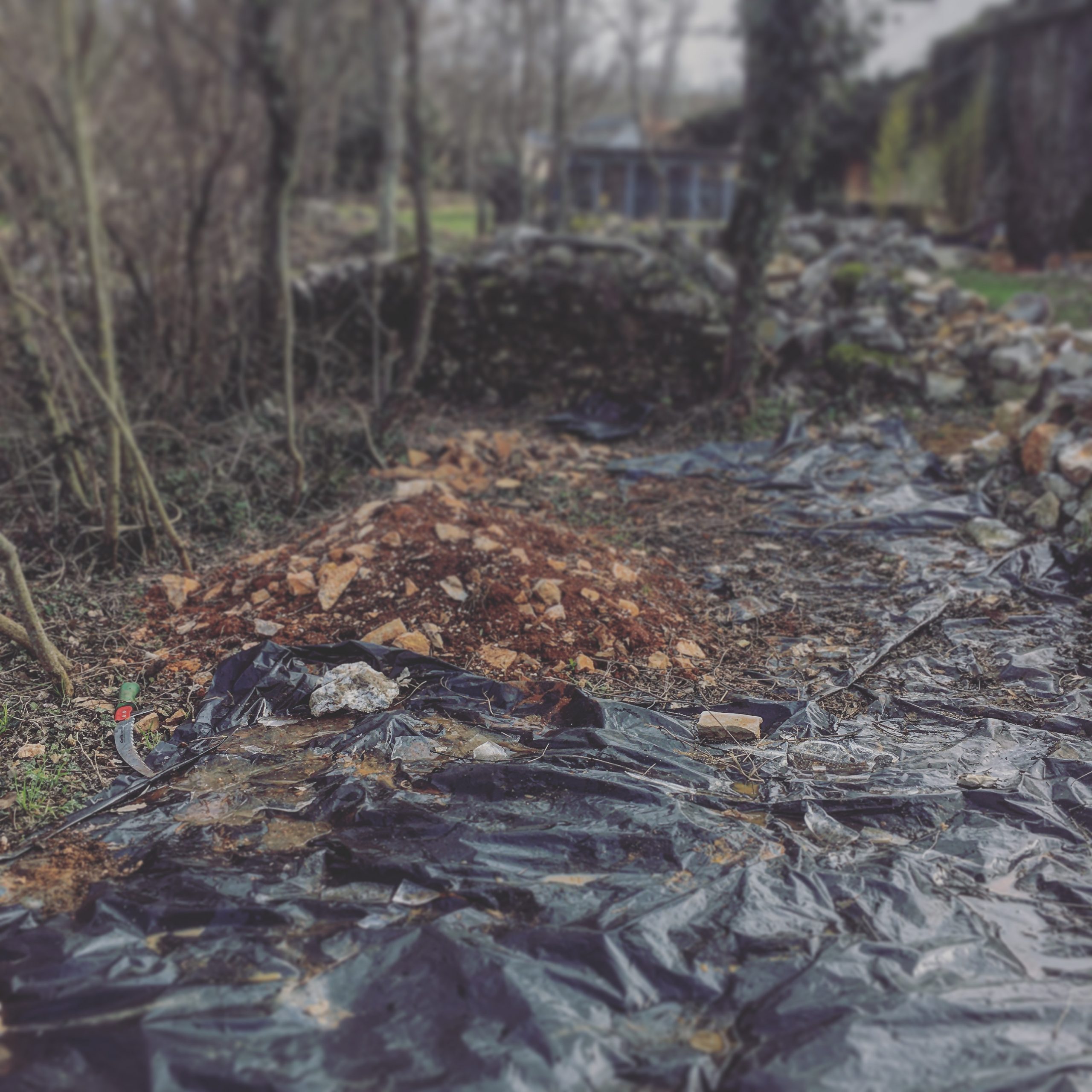
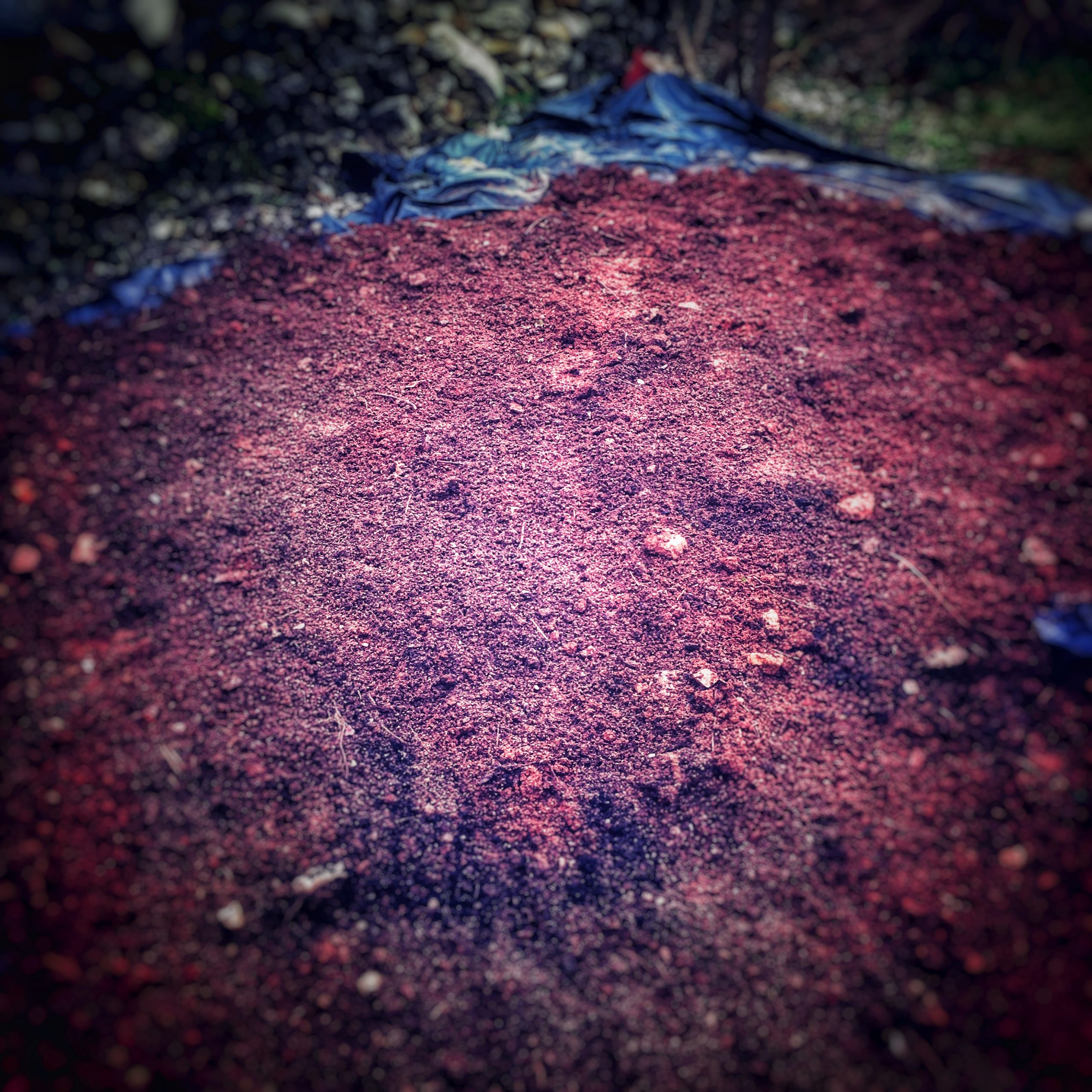
We did sift a lot of the soil to go back onto the plastic, as this would form the basis of what would become the lavender patch. This was a particularly horrendous job, as it was raining at the time, and once the red clay soil gets wet, and on your wellies, that’s it.It is impossible to remove completely and inevitably gets dragged across the painted patio and up into the house. And is an utter nightmare to clean off. But, another job we knew we had to do, as there was no way we were buying additional soil when we already had this.
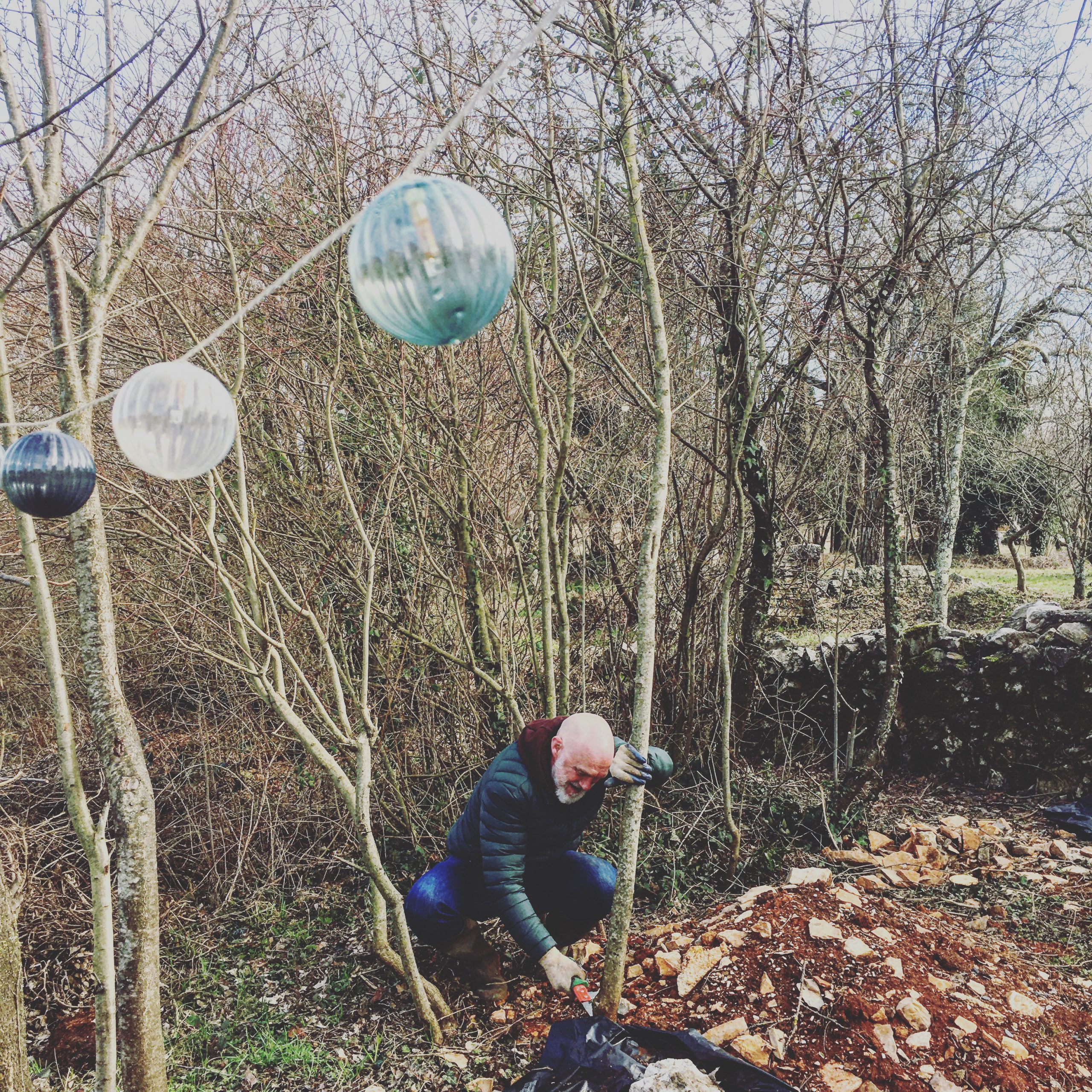
The next thing that had to be tackled was the undergrowth – and this had to be done by hand, as it was too thick and the trunks too strong for our cutters. The amount that we wanted to cut back seemed daunting, but we knew that the tangled, knotty undergrowth had to be cut back if we were to create something a little bit more magical, so teeth needed to be gritted and the tree saw put into action.
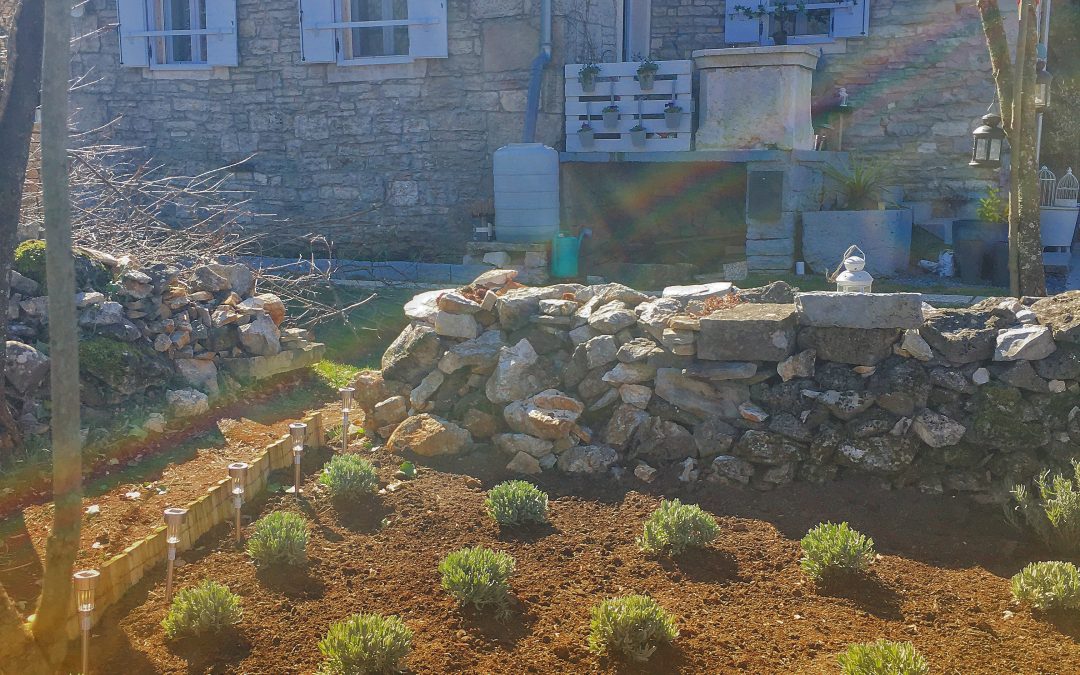
Once the red soil was down, we then dug a channel around the perimeter to sink in the small fencing, to create the bed for the lavender plants.
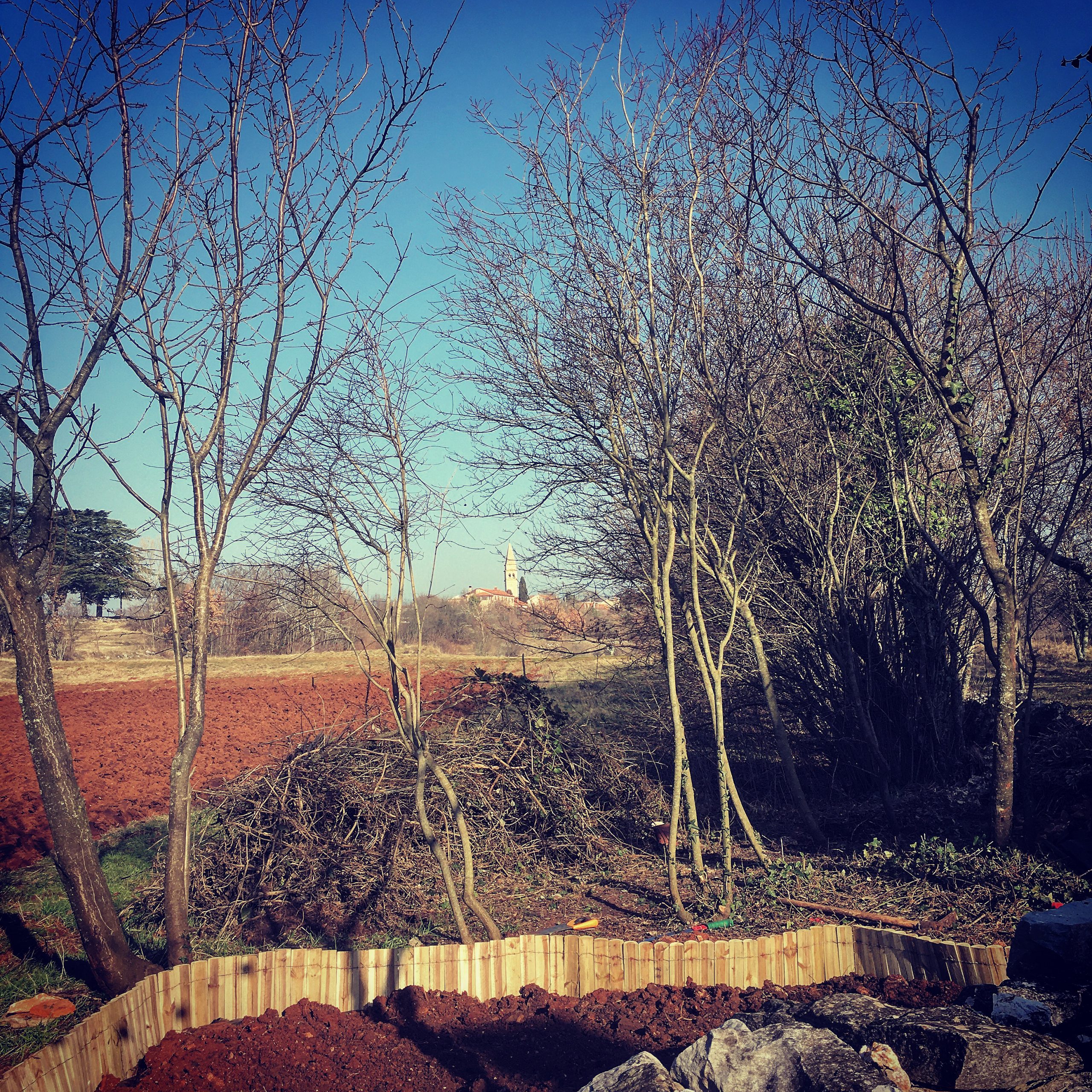
Top soil was added and we started to position the plants – but it became increasingly clear that our optimistic purchase of twelve plants was way short of the mark, having underestimated the size of the patch we’d created, so it was back to the nursery to purchase another dozen. Plus a couple of beautiful mimosa plants, to add to the colour elsewhere in the garden.
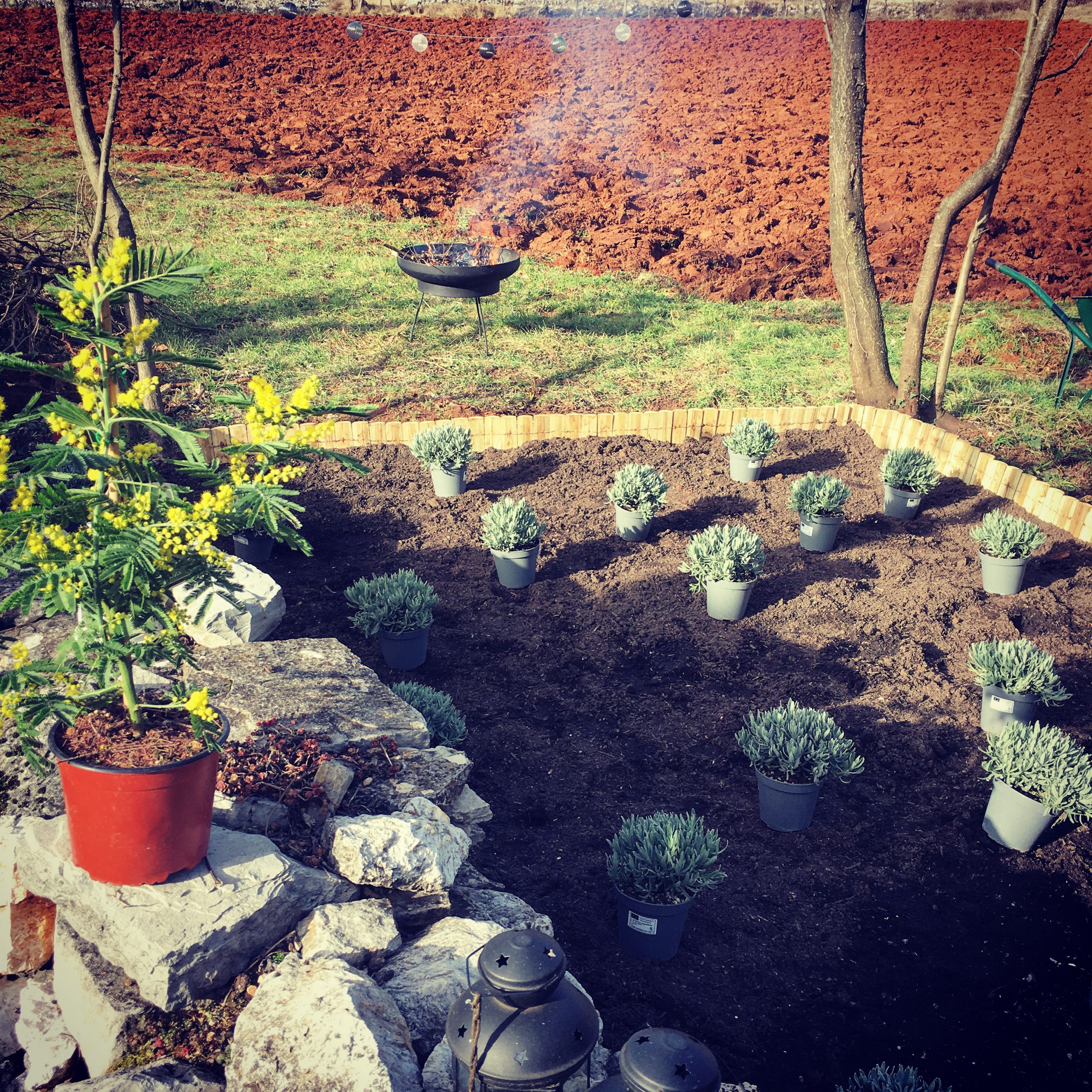
Next up, was quite a bit of fire pit action, to begin getting rid of the dead branches and cuttings etc. I’m sure that anyone who saw us lighting a fire-pit would have thought we were mad. Round here, you just seem to set to fire to things like this, on the ground – definitely not in a garden fire pit. But we didn’t want to be responsible for an out of control fire, and so played it safe…
As there is no lighting – yet – in this part of the garden, solar lights are in place for the time being, just so that when it’s dusk, there’s a little bit of light, which does look lovely from the kitchen, which overlooks this area.
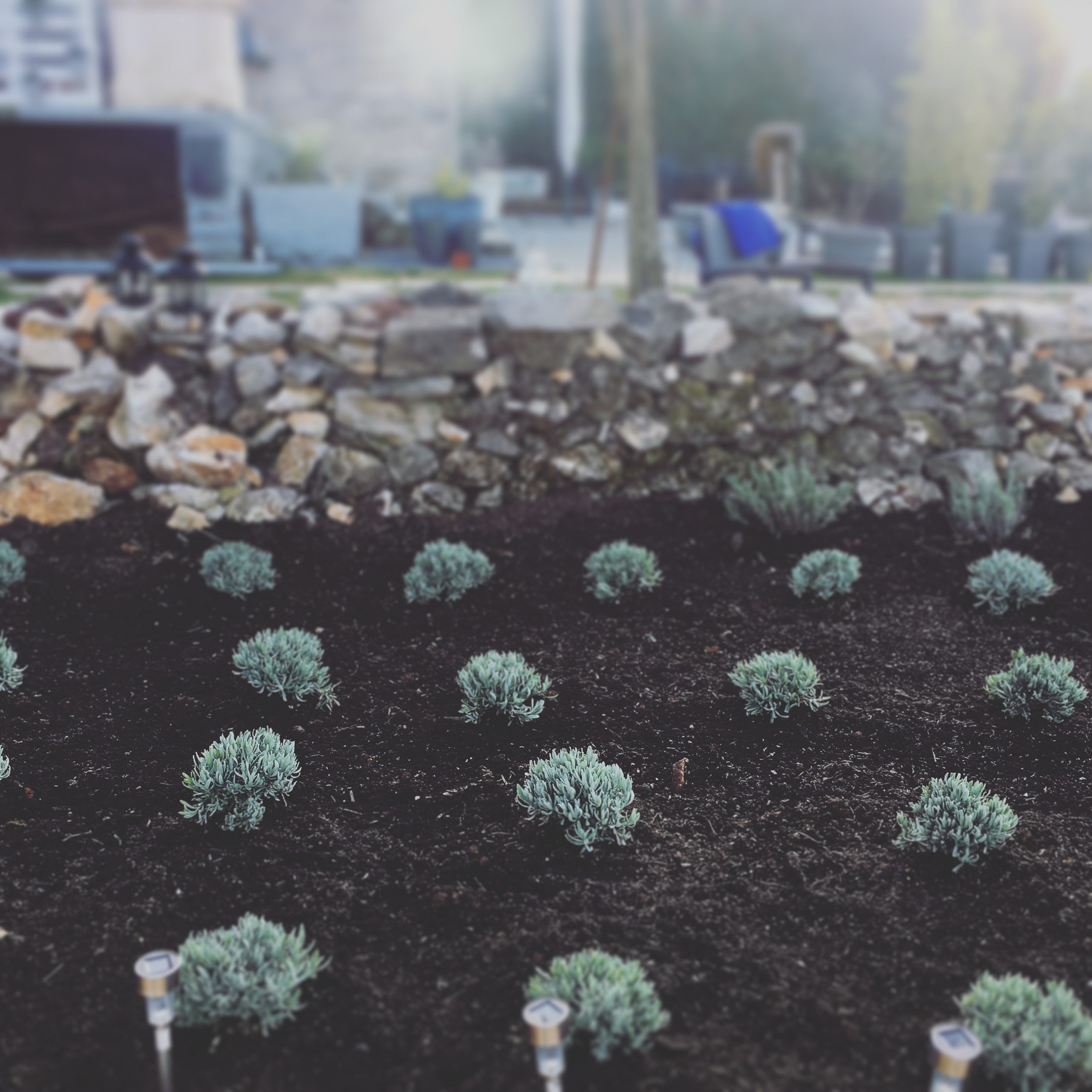
We had a couple of day’s work, cutting back the trees to the side of this piece of land and keeping on with the pulling up of vines. At some point in the past, someone has chopped trees down, as once the undergrowth was removed, the ankle-breaker tree trump stumps revealed themselves, meaning more work, sawing these down to ground level. We could go on and on, cutting and chopping and tidying, but I think we needed to take a view and be realistic, especially as it’s not our land. So, we’ve taken the clearance back to where we think is a reasonable point – and to be honest, we’ve now so much wood to chop for the woodburners, that we needed to stop or we’d have nowhere to store it.
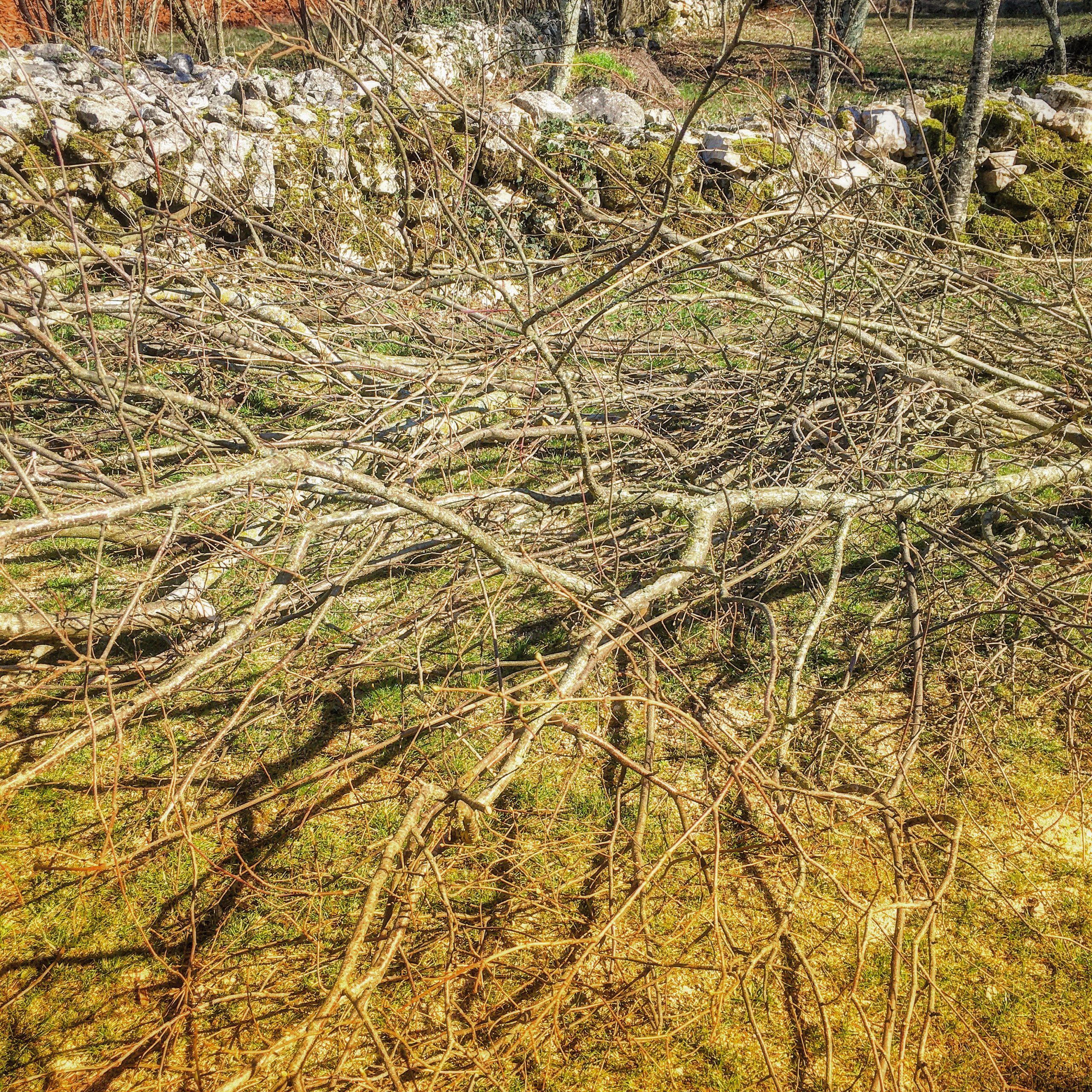
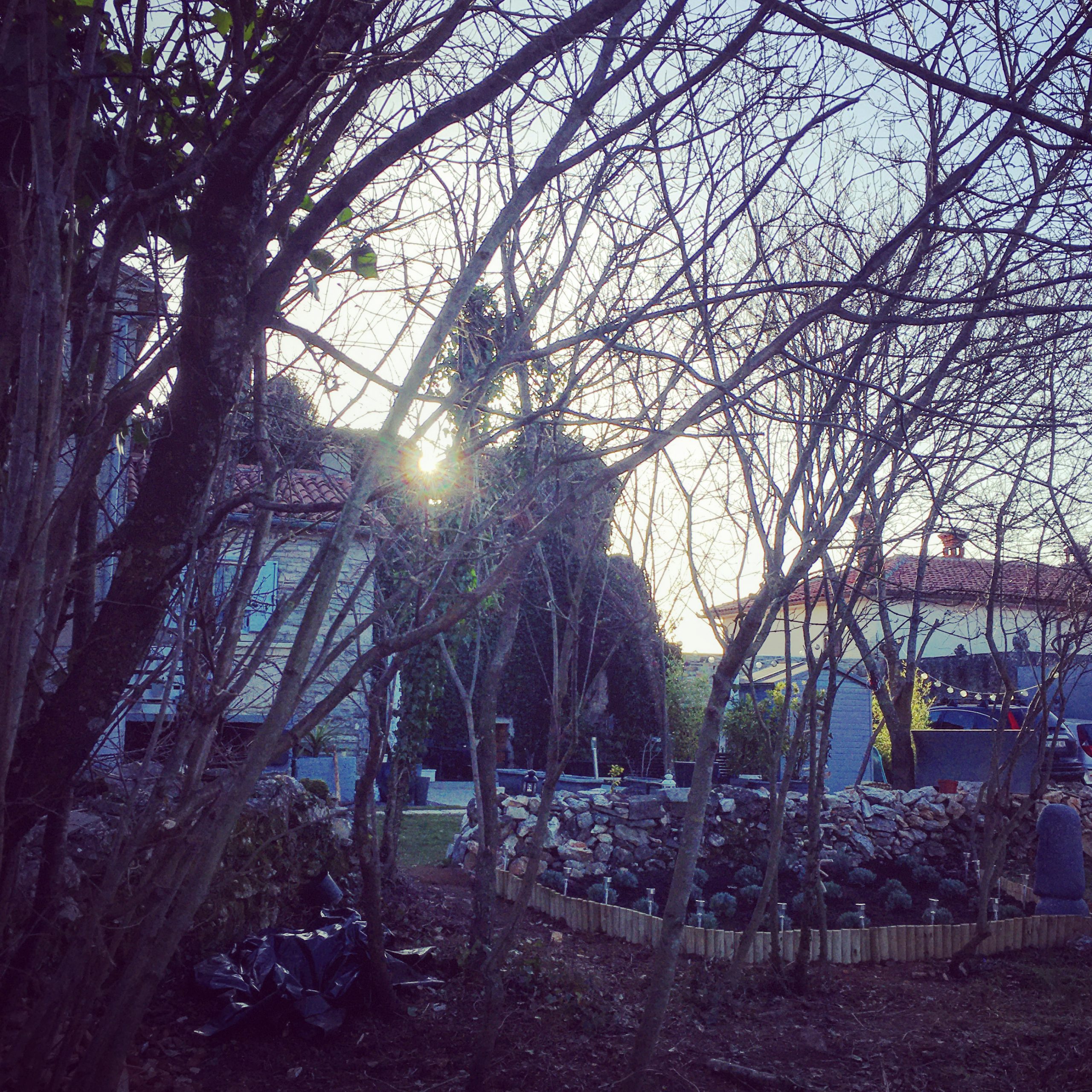
By the weekend the trees were beginning to become more defined – instead of scratty branches and growth around the base, they were now standing in clumps, with the trunks exposed. It won’t be long until the leaves are back on these trees, and hopefully the shapes will be much better too, as we’ve also done a bit of pruning and shaping here and there. You can see the ivy and vines, still twisting around the bases of the trees and which took ages, to pull up and clear. But, it had to be done, otherwise it wouldn’t be long before we were back to where we started.
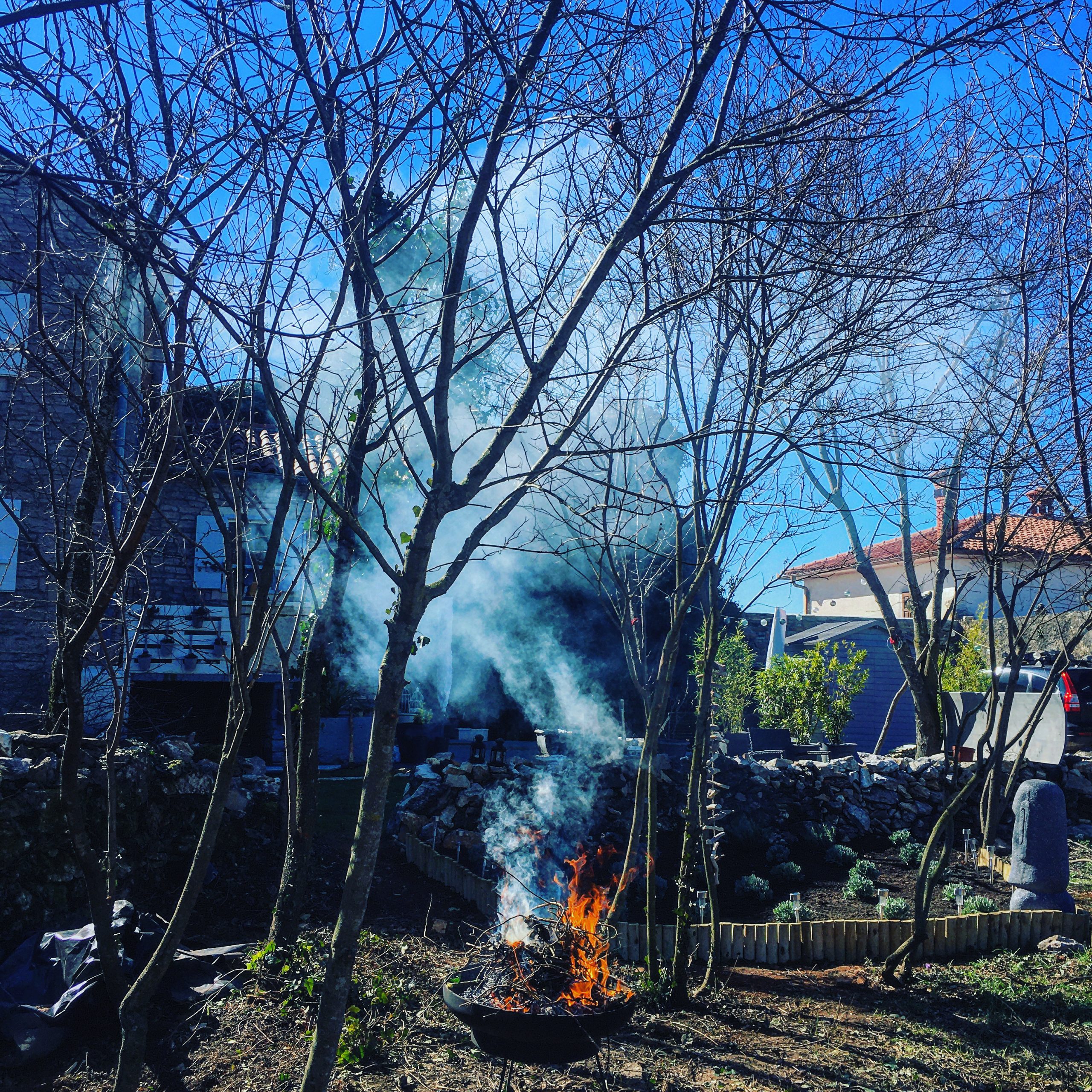
The red field will hopefully soon be planted up – we don’t know with what this year, but it always looks beautiful come the summer and so hopefully will continue to be a lovely background to our garden. These tree trunks have never been this exposed – I’d always thought we had inherited quite ugly trees, but it turns out all they needed was a bit of TLC.
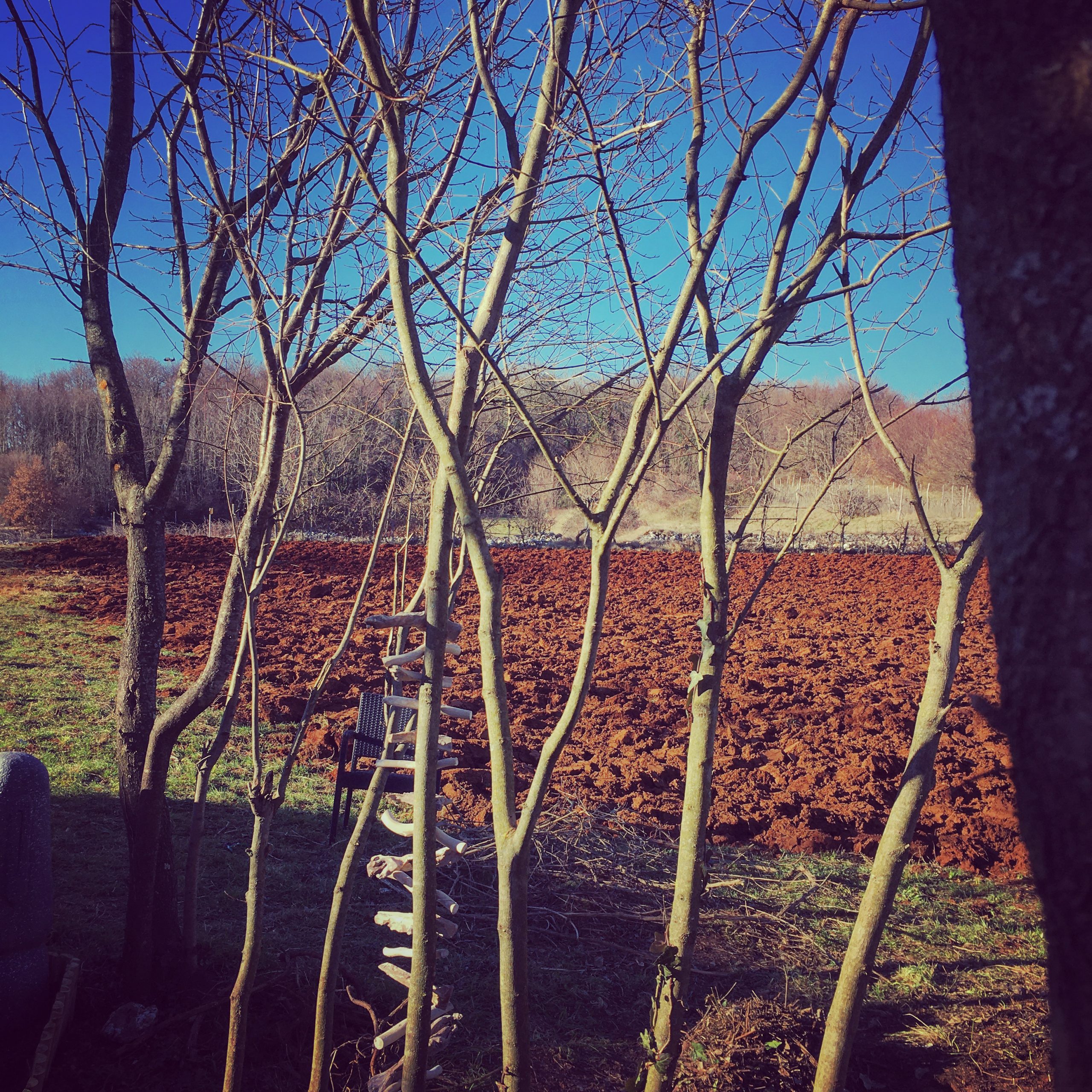
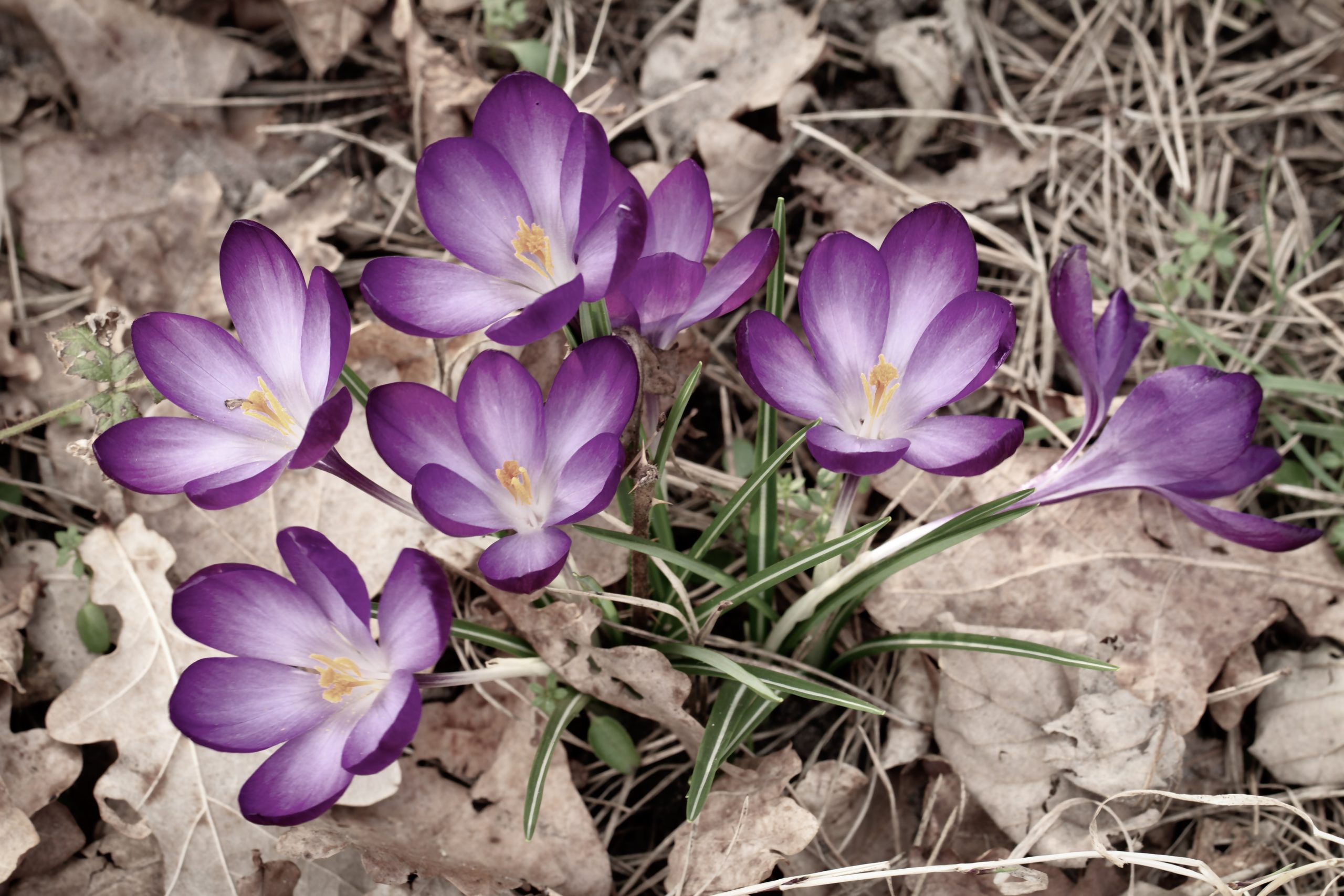
One of the lovely surprises we’ve had since clearing the ground, is that these hardy, wild crocuses have suddenly bloomed over the last few days. Every morning we spot more, and so hopefully we’ll have a few clumps of these until the wildflower seeds which we’re sowing today, start to emerge. Looks like that great big pile of branches and leaves and twigs has kept then warm under the soil and the spring sunlight is now sufficiently warm enough for them to push up through the soil. We’ve definitely not planted them and we’ve not previously ever noticed any colour in this patch, so hoping that our efforts are reviving them.

I think at times we’ve felt a bit defeated by this task. It wasn’t one that was in any way necessary, especially as it’s not even our land. But it was irritating that we looked out onto something so messy, and so we knew that we would tackle it. It’s been really hard work and seems to have taken a long time – but in reality, in just over a week, we’ve done the really hard part. It’s quite amazing looking at the first photograph above and then seeing this one, below and realising how far we’ve come. And, as we keep we reminding ourselves, it will only look better from now, as we have some gorgeous plans for it.
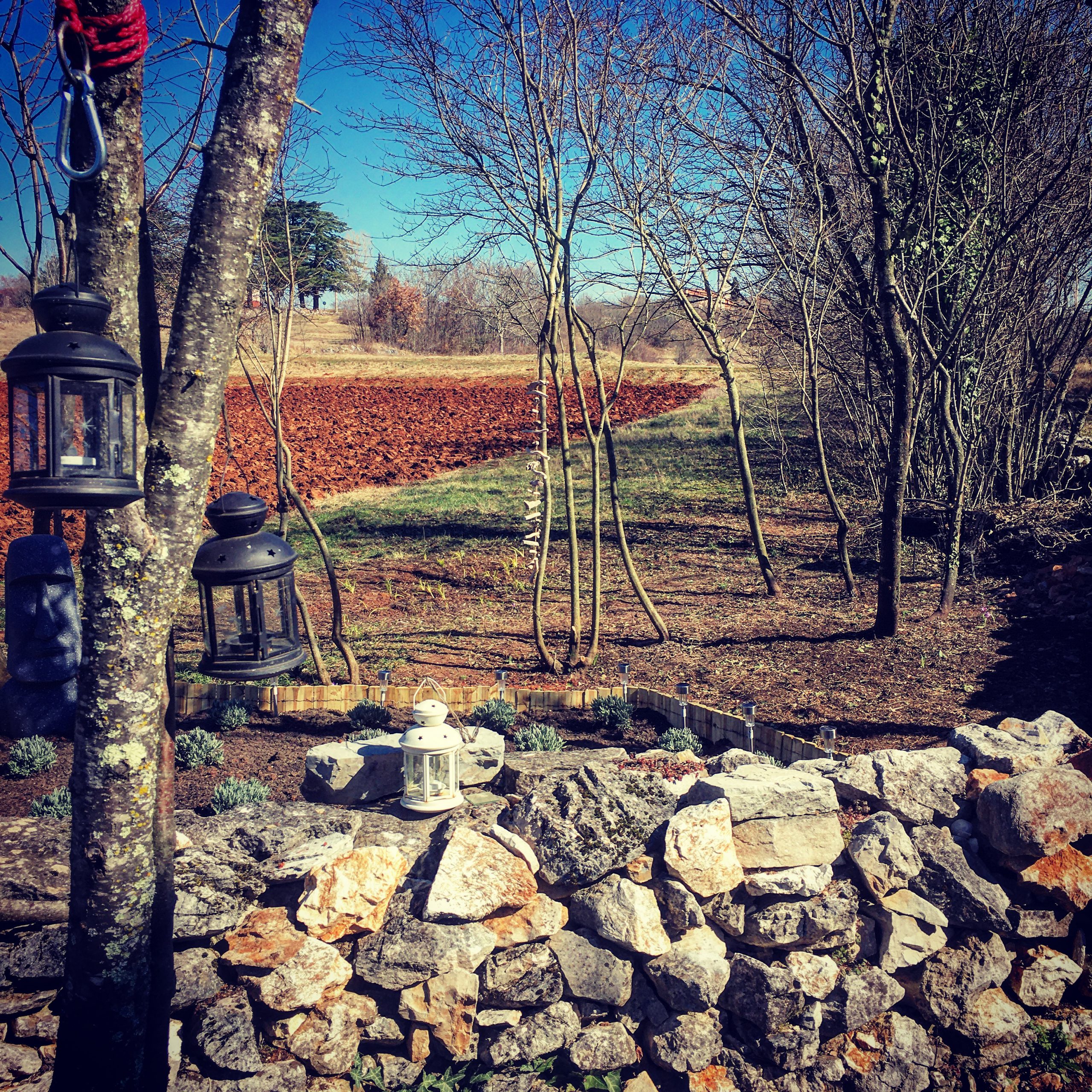
So, onwards and upwards. We have cold snap this weekend, so the planting of the dahlia tubers will have to wait a little longer, but over today and tomorrow, the rest of the sunflower seeds are being planted and a mix of wildflowers will be sown in front of this wall above (so on the other side of the lavender). Then the big sowing in the patch we’ve cleared above. This summer, one way or another, is definitely going to be a riot of colour in our garden and around it.


by Helen | Feb 22, 2021 | Lifestyle
Sometimes, all you want, is the simplest meal, which doesn’t take forever, uses just one roasting tin and packs an absolute punch in terms of flavours. And this is just what this meal provides. Wildly tasty, and if you like your cheese on the strong-side, this probably definitely a dish for you. Five ingredients, and one of those is olive oil. And, bet you will probably have all of them in the fridge or cupboard – a bag of fresh spinach, chestnut mushrooms, gnocchi, gorgonzola cheese, olive oil & seasoning. And that is it. You can probably guess how it’s done, but here you go. Here’s what we did.
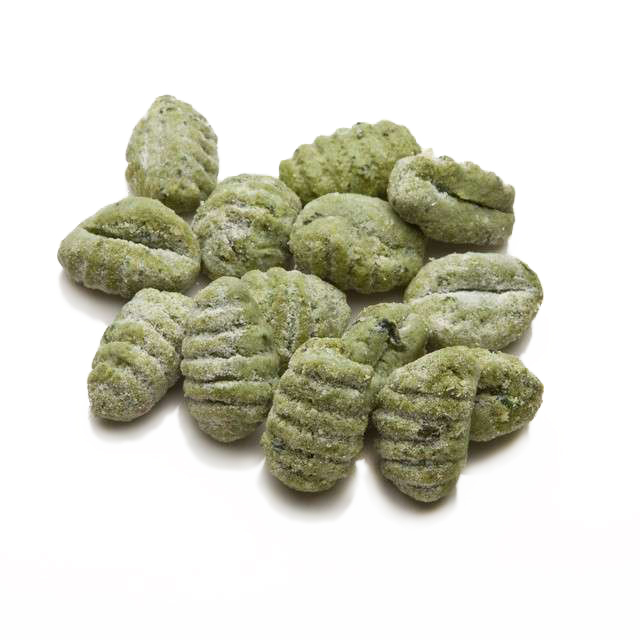
The gnocchi that we had was actually spinach gnocchi, but regular gnocchi would definitely work just as well, as the real flavours come from the cheese. I could have gone a whole lot stronger with the blue cheese too, but a fairly standard Gorgonzola worked perfectly.
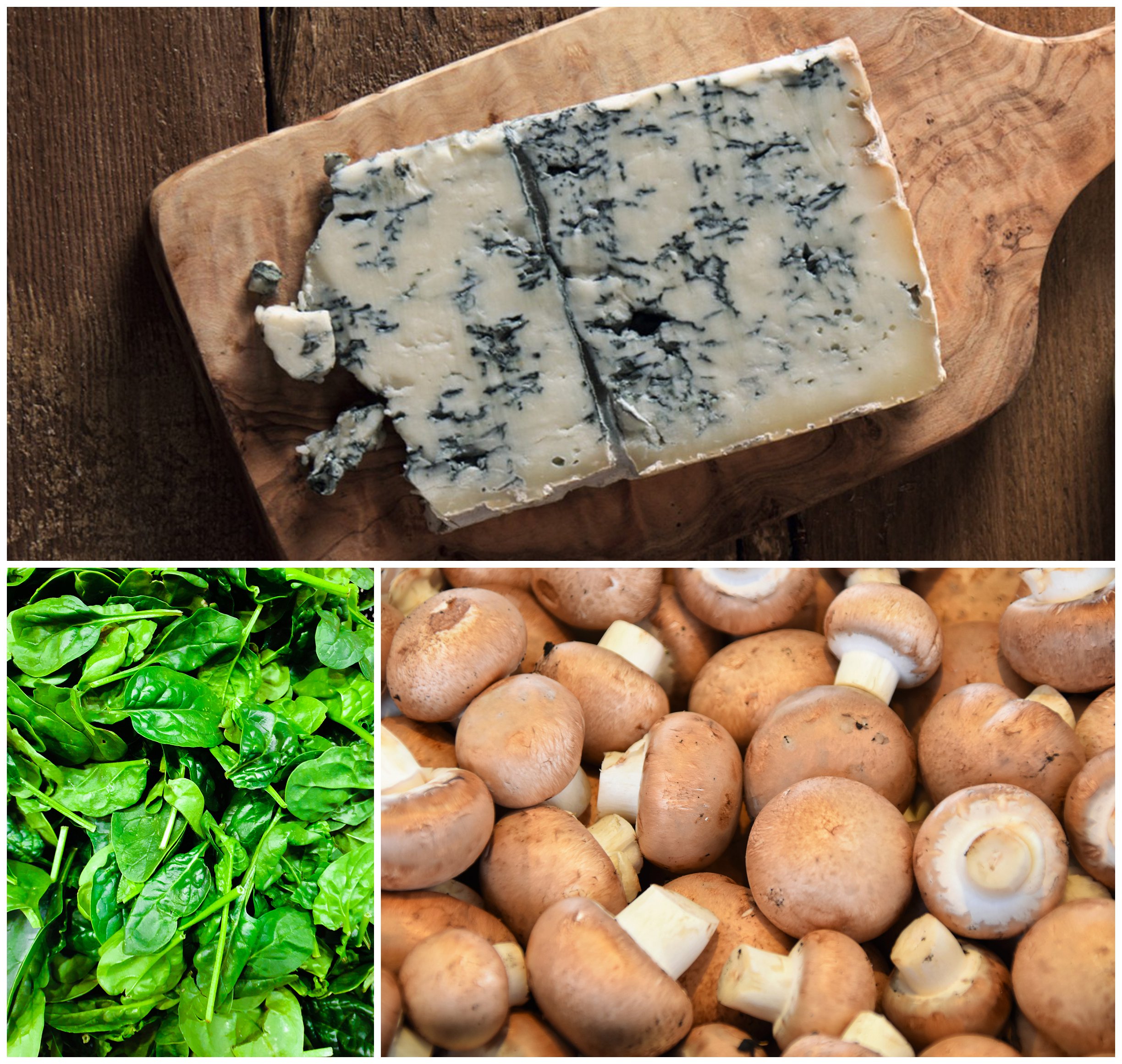
what you’ll need to do
- Roughly quarter the mushrooms (chestnuts definitely five a more nutty flavour) and toss them, with the gnocchi, in a roasting tin, in olive oil and season according to your taste, with salt and pepper;
- Roast for about 20-25 minutes, stirring frequently so that nothing sticks to the bottom of the tin;
- Add the fresh spinach (we used about three quarters of a large bag) and mix it in, then crumble the blue cheese over the mixture. (I have no “off” switch when it comes to cheese, and so the whole pack went in);
- Cook for about 5 minutes – or until the cheese is beginning to melt, but there is still texture to it;
- Take out of the oven, sprinkle with fresh, chopped spinach leaves and serve.
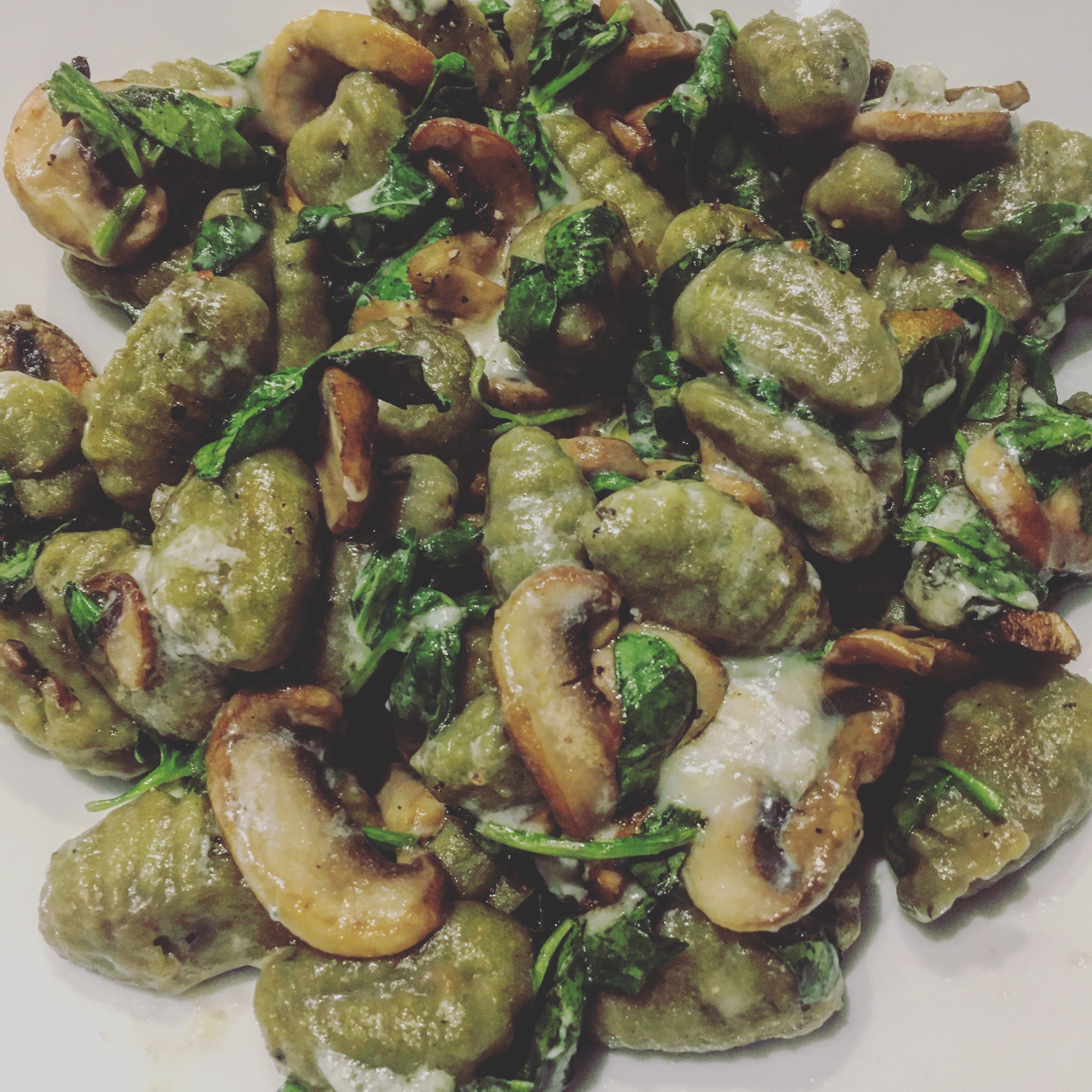
We had this with pitta breads, spread with garlic butter and heated up in the oven, while it was being served. Just enough time to roast the garlic pieces and heat up the breads. I cannot emphasis enough how tasty this dish is – creamy and peppery and robust. And, if you forget the pack of blue cheese and gnocchi, it is almost super food. I mean, it is green…

by Helen | Feb 12, 2021 | Renovation
I finally feel we’re coming to the end of a very long winter. Although we’ve still got to see February out – and this is month when for the past four years, we’ve had snowfall in Istria – there are signs of spring. The bulbs we planted around the base of a big tree and along the side of the house are beginning to push up through the soil. Tiny buds are appearing on the branches of the trees. Birdsong is much more in evidence. The days are most definitely getting longer. And we feel ourselves, that we are beginning to uncurl, stretch and slowly start to come out of our hibernation, beneath furry throws on the sofa and bed. So, although the temperature has just plummeted – a thick covering of ice has formed over the water in the butts – we decided to brave the cold and get out into the garden this afternoon.
the mini orchard
This sounds rather grand, but in reality it’s currently a collection of potted fruit trees. However, come the spring, we hope it will look a lot more plentiful. We’ve tidied the little patch of communally owned land to the side of the abandoned house we purchased from a neighbour. With hindsight, we maybe should have also pursued the purchase of this parcel of land, but we didn’t – however, no-one has taken any real responsibility for it, so for very little expenditure we’ve started to improve it. It was cleared of rubble and weeds and vines, which were knotted through the soil, last autumn and covered with thick sheeting to prevent weed regrowth. When we cleared it, we also uncovered a bay tree, which we’d never noticed before – this is now thriving and the smell is wonderful. Perfect for picking for the kitchen. The ground has now been covered with reddish-brown bark chippings, and we’ve continued the little stone wall, so that it now an enclosed piece of land. As the land doesn’t belong to us, we didn’t want to go the expense of doing anything permanent – and what we have done, we’ll likely take away, as the plants are all in pots. But, so far, with potted bamboos, a cherry tree and a couple of apple trees, as well as our potted Norwegian pine from Christmas and the unexpected bay tree, it’s beginning to look quite lovely.
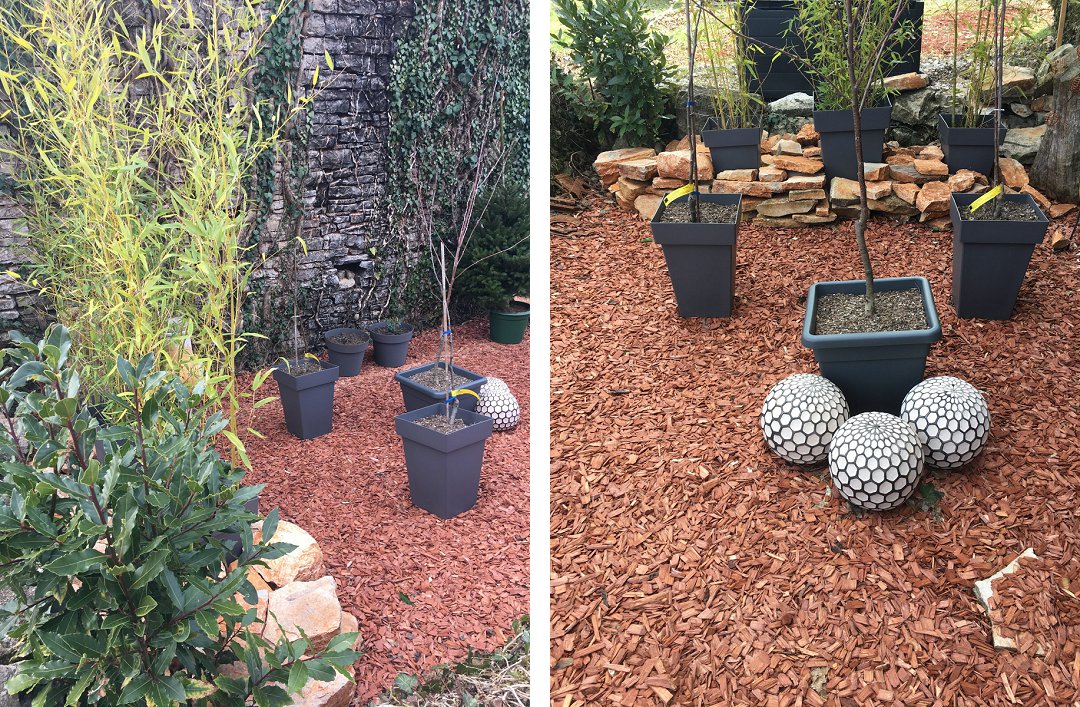
Obviously, it’s going to take a while for those trees to bear fruits, but we’re hoping that with the addition of two or three more sapling trees, come spring, we’ll have some foliage going on. A few pots of bulbs will also be spread around to add a few pops of colour, to what was a seriously neglected piece of land.
the lavender patch

For anyone who’s been to visit, you’ll remember another scratty piece of land, which was behind the little wall, opposite our kitchen window. Again, communally owned and left to its own devices – but in the summer, our hammock is hung between two trees at the little wall and so this area is to your right and has always been on our “to-do” list. Well, we’re now doing it and are hopeful that come the summer, it’ll be filled with the aroma of lavender and butterflies. We’re a bit of a way off that lovely scene, but today we did make a start…
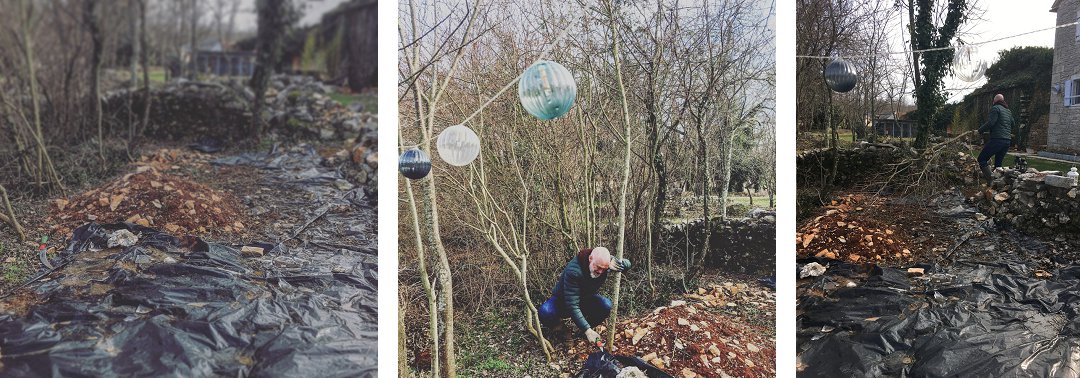
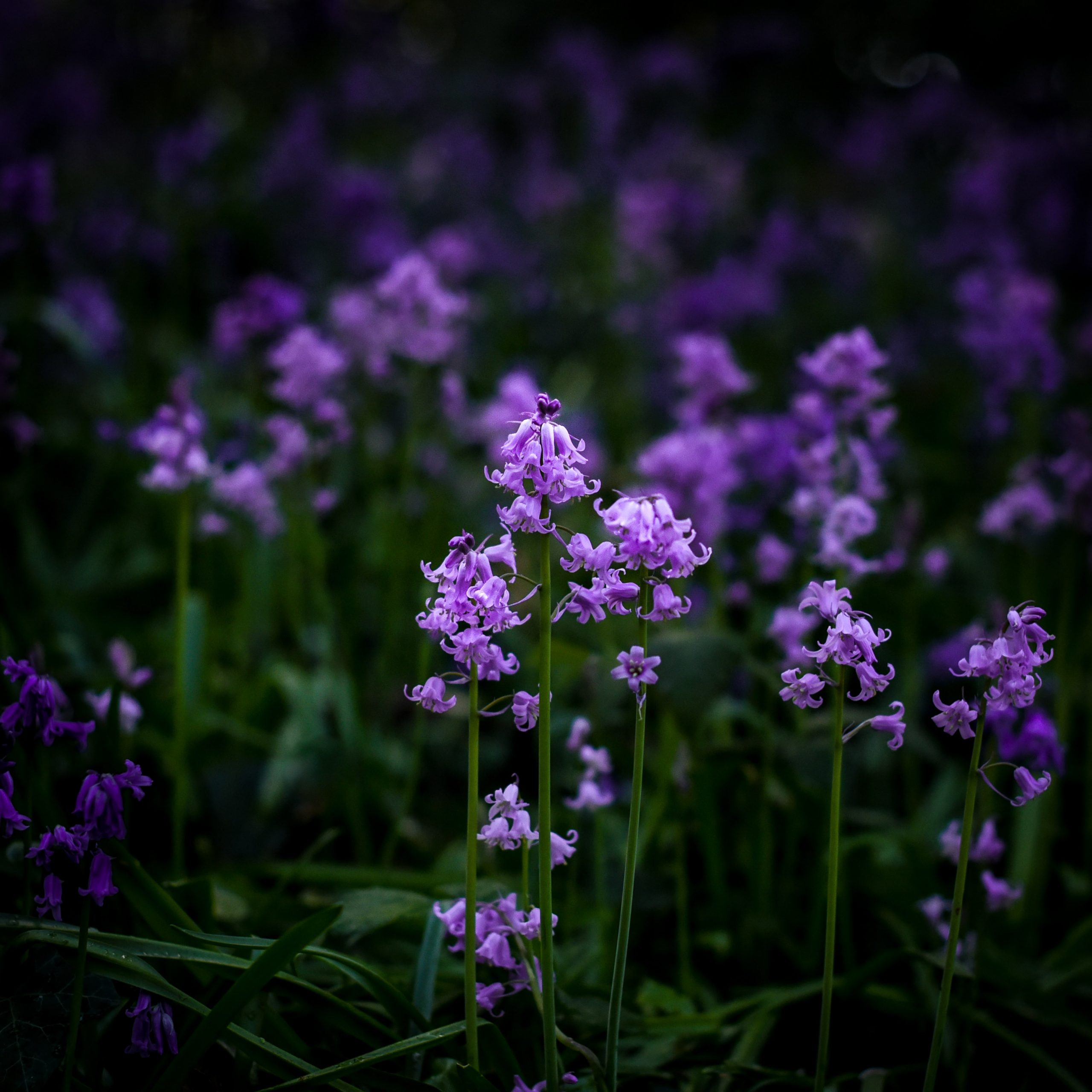
The trees in this little copse are quite spindly without leaves and are pretty gnarled and twisted. Vines and brambles wind around the base of them and it’s all been a bit of a mess. So. in the autumn, we started the clearance and put down thick black sheeting again, to prevent regrowth of weeds and to keep the thick, red soil as dry as possible. Today, a couple of the trees which were in the worst condition were cut down (good wood and kindling to dry out for next year) and the area cleared of ground level vines. This weekend, big wooden sleepers will be sourced and cut to size to make a bed, which will be filled with soil and planted up with a variety of lavender plants. Around it, the idea is to plant bluebells (or similar), so that we can create a little magical wooded copse. Last summer, strings of blue and grey bauble lights were threaded through the trees – you can see a couple of the strings which were never taken down – and looked so pretty, that more of these will be installed.
It’s hard to imagine right now that these two areas around the house, will become real features. In my head, they look magical and ethereal – let’s see if my vision comes to life…

by Helen | Feb 12, 2021 | Lifestyle

Yes, you read that right. A risotto with brussels sprouts. A rich, blue cheesy, creamy risotto packed with those little green globes of gorgeousness. You might guess that I love a sprout – and if you’re also a fan, I promise you too will love this. However, if sprouts make you feel a bit on the gippy side, I’d recommend avoiding this recipe…
This is a dish, recommended by a friend on Twitter, and adapted from a Yotam Ottolenghi recipe, in his Plenty More book. It’s the kind of dish that takes a while to prepare and cook – as with all good risotto recipes – but it’s the perfect kind of recipe to follow (loosely in our case), whilst chatting over a glass of wine or two. So, what do you need? Nothing that you probably wouldn’t have anyway – and if you do love sprouts, then surely you’ve always got a stash of them…
what you’ll need
- brussels sprouts – we used a normal supermarket bag of sprouts and cut about two thirds into quarters and then finely shredded the rest
- finely chopped white onion
- a couple of finely chopped garlic cloves
- arborio rice – we used 200g and this was more than enough for two people
- a couple of lemons – one squeezed, one zested
- crumbled Gorgonzola cheese (about three quarters of a normal sized pack was used)
- grated Parmesan cheese (no idea how much we used here as we can never get enough of this cheese, so just adjust to your own taste)
- olive oil & a knob of unsalted butter
- vegetable stock (we just kept topping up as we thought necessary)
- white wine (as above – judge according to your own taste)
- salt & pepper to season
- sprig of fresh thyme
The Ottolenghi recipe is quite involved and a bit more faffy than we wanted, but if you know how to make a risotto to your own taste, then just adapt it. It’s what we did, and our method seemed a lot less involved, but hey, we’re not professionals.
what you’ll need to do
- Put the quartered sprouts in a roasting dish – if you line them up, rather than just chucking them in, they roast more evenly – and season with salt & pepper and splash with enough olive oil, so they roast rather than burn. Roast for about 20 mins (about 200 degrees), turning after about 10 minutes until the edges are nicely caramelised
- While the sprouts are roasting, heat the olive oil and butter in a large heavy bottomed pan and gently sauté the onions for about 10 minutes until soft and beginning to colour.
- Add the garlic, thyme and and lemon zest strips and cook for another 2 -3 minutes
- Next, gradually add the rice and shredded brussels sprouts to the pan and stir to coat every grain with olive oil mixture. Cook for about 10 minutes, stirring, until the rice becomes translucent on the edges with a solid white center
- Add the white wine (about a glass of wine at this stage) stirring until it is almost absorbed. Then begin adding the stock gradually, and stirring gently all the time. At this stage, we also topped up with white wine, to suit our taste and to ensure that there was sufficient liquid to cook the rice. The exact amount of stock required to finish the risotto varies slightly, so go by the results. If the rice has a starchy crunch it is not done yet. The finished risotto should be creamy in texture.
- When the risotto is done, to your taste, stir in parmesan cheese and half the roasted brussels sprouts & season according to your taste. Serve in individual bowls topped with the remaining brussels sprouts, crumbled gorgonzola cheese, lemon zest and lemon juice.

by Helen | Feb 2, 2021 | Interiors
It’s always great having friends in-the-know when you travel abroad, as they often give you top tips that you don’t find in guide-books or through internet searches. Because usually you don’t know about these places and so don’t search on them. One of these gems turned up on a trip to Essaouira. Sandra, who runs Riad Remy in the Medina, also manages the apartment we stayed at, and so was on hand throughout our stay. She has a wealth of information about Essaouira, especially on the eating out front, but her stand-out-top-tip was a day trip to Les Jardins de Villa Maroc, located about 15km inland from Essaouira.
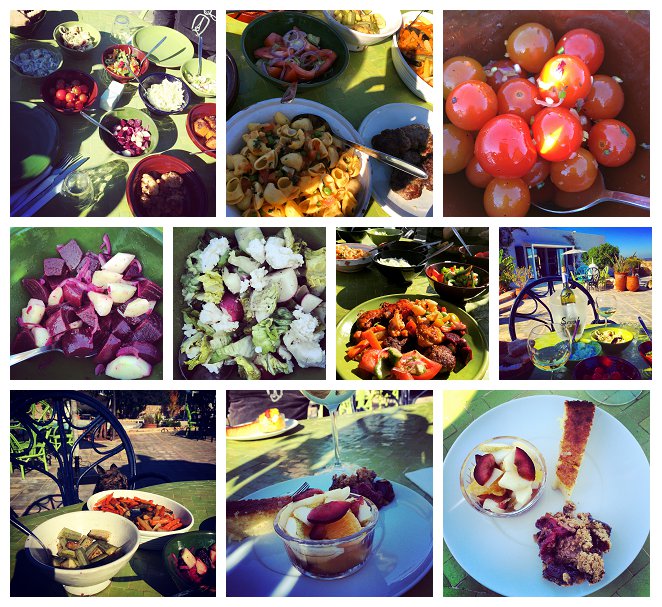
This secluded idyll is reached by private transfer, arranged through the sister hotel – Villa Maroc – in Essaouira, and when we visited, the cost was approximately £25pp. (The countryside villa used to be the private home of the owners of Villa Maroc). We met our driver at the hotel for an 11am departure and by 11.30 were around the pool, in the most amazing surroundings imaginable. We were there in January and so the only guests, so literally had the whole pool area and restaurant to ourselves. Lunch was served on the terrace by the pool and it is no exaggeration to say that what was brought to us, could have fed at least six people. Every dish was full of home-grown produce and each dish was cooked there and then. Essaouira has no shortage of brilliant places to eat, but this was something special!
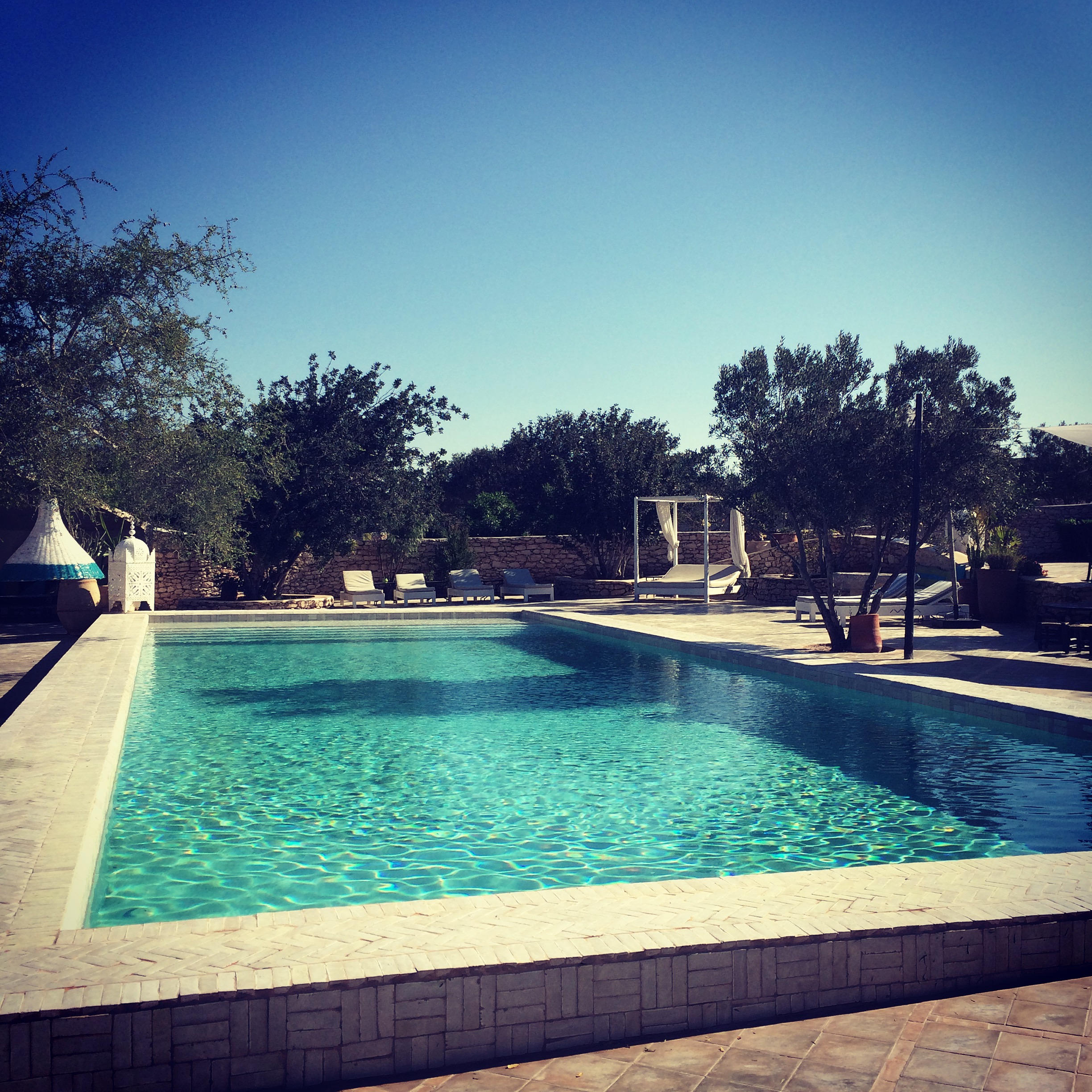
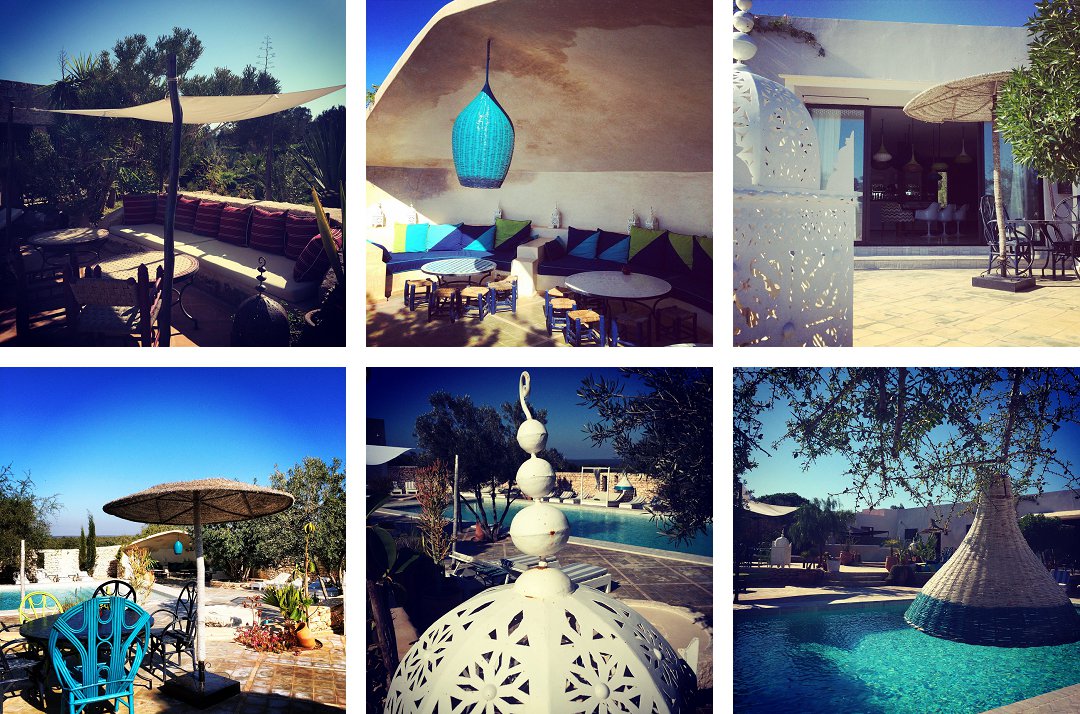
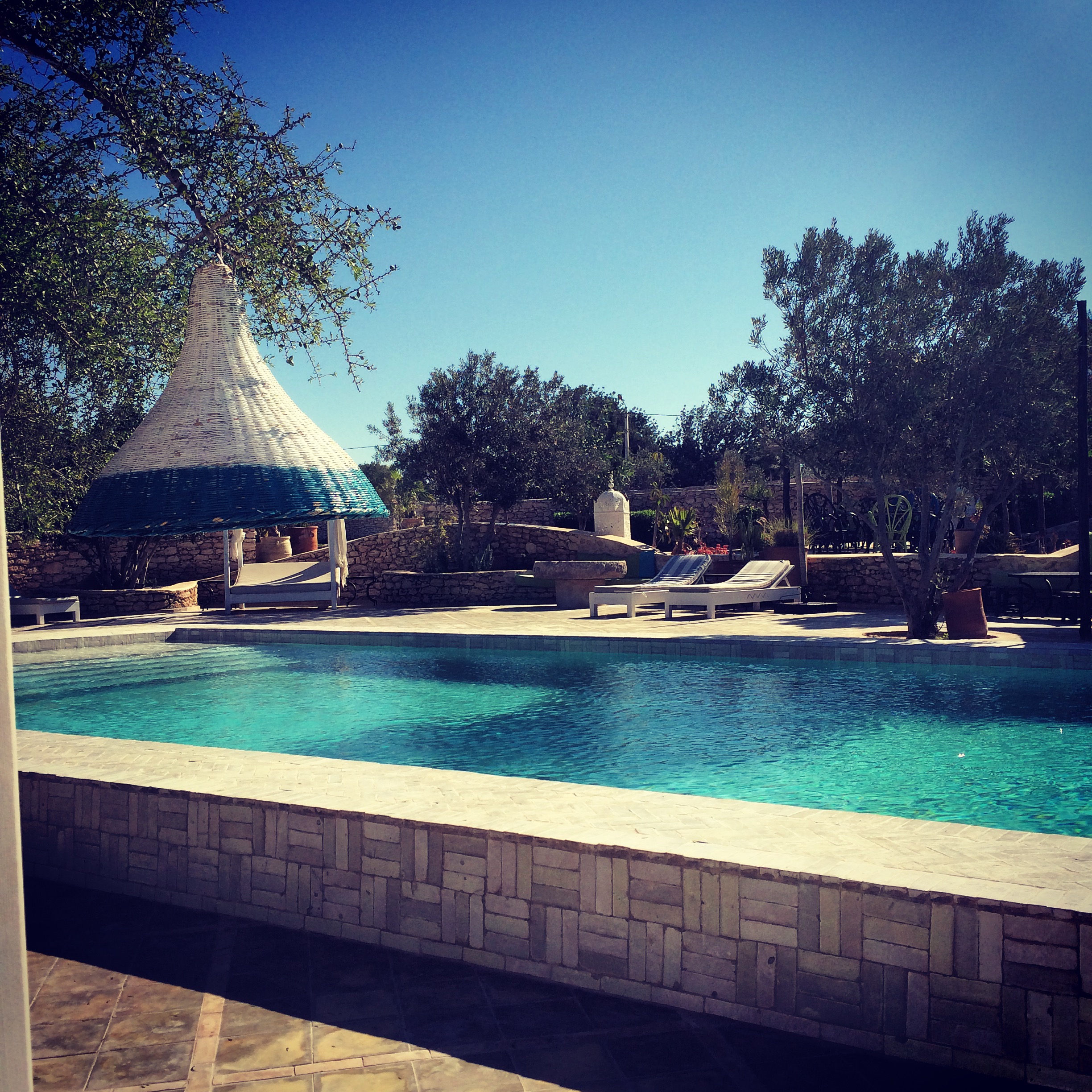
Les Jardins de Villa Maroc has three separate boutique suites and private swimming pool – perfect for families or a group of friends. There is also a beautifully equipped kitchen in the largest suite and the hotel staff, if required, will prepare food here. Design wise, it is the most exquisite complex – and the perfect retreat if you want to escape the hustle and bustle of the beach or the medina. It was apparently the first riad in Morocco and is now a hotel, comprising of three suites, dating back to the 18th century, with a full hotel service. Designed with nature in mind and ecologically friendly, using solar heating and solar power it is self-sufficient place. Let us take you on a tour, both external and internal, of the villa…
exterior
interior
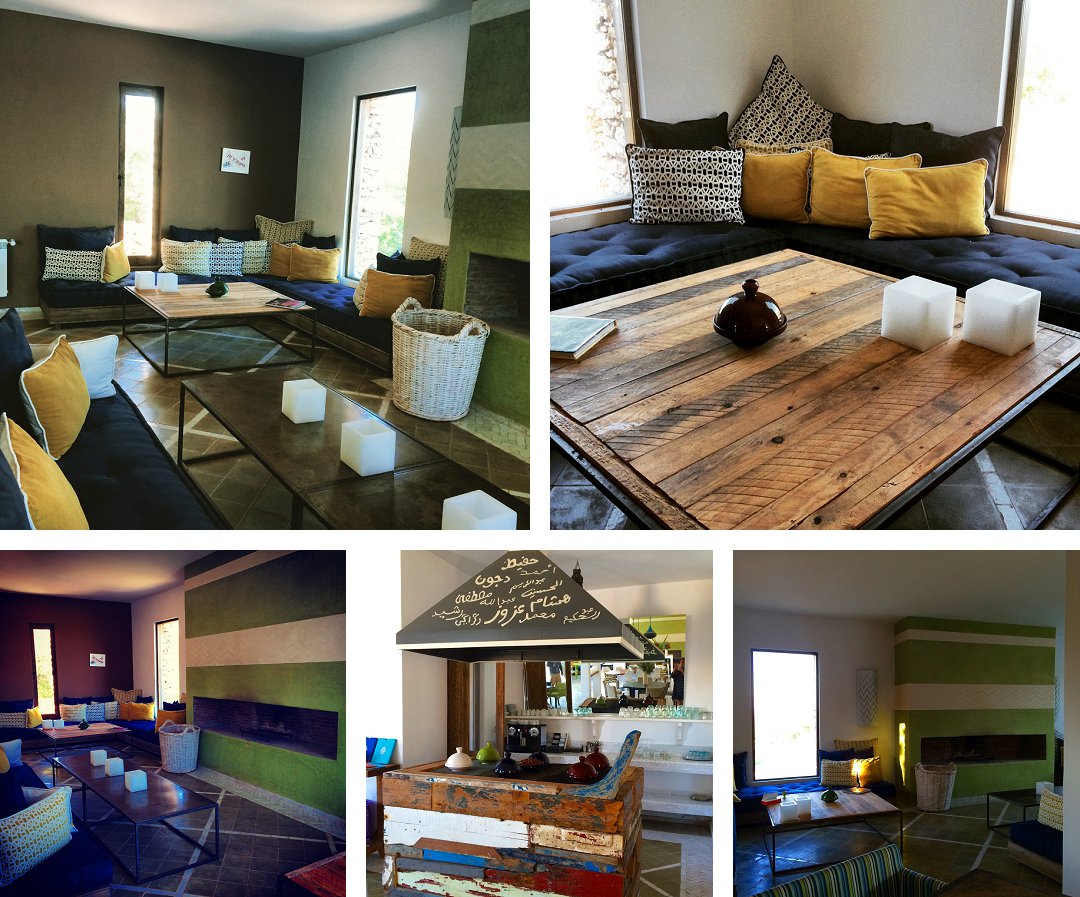
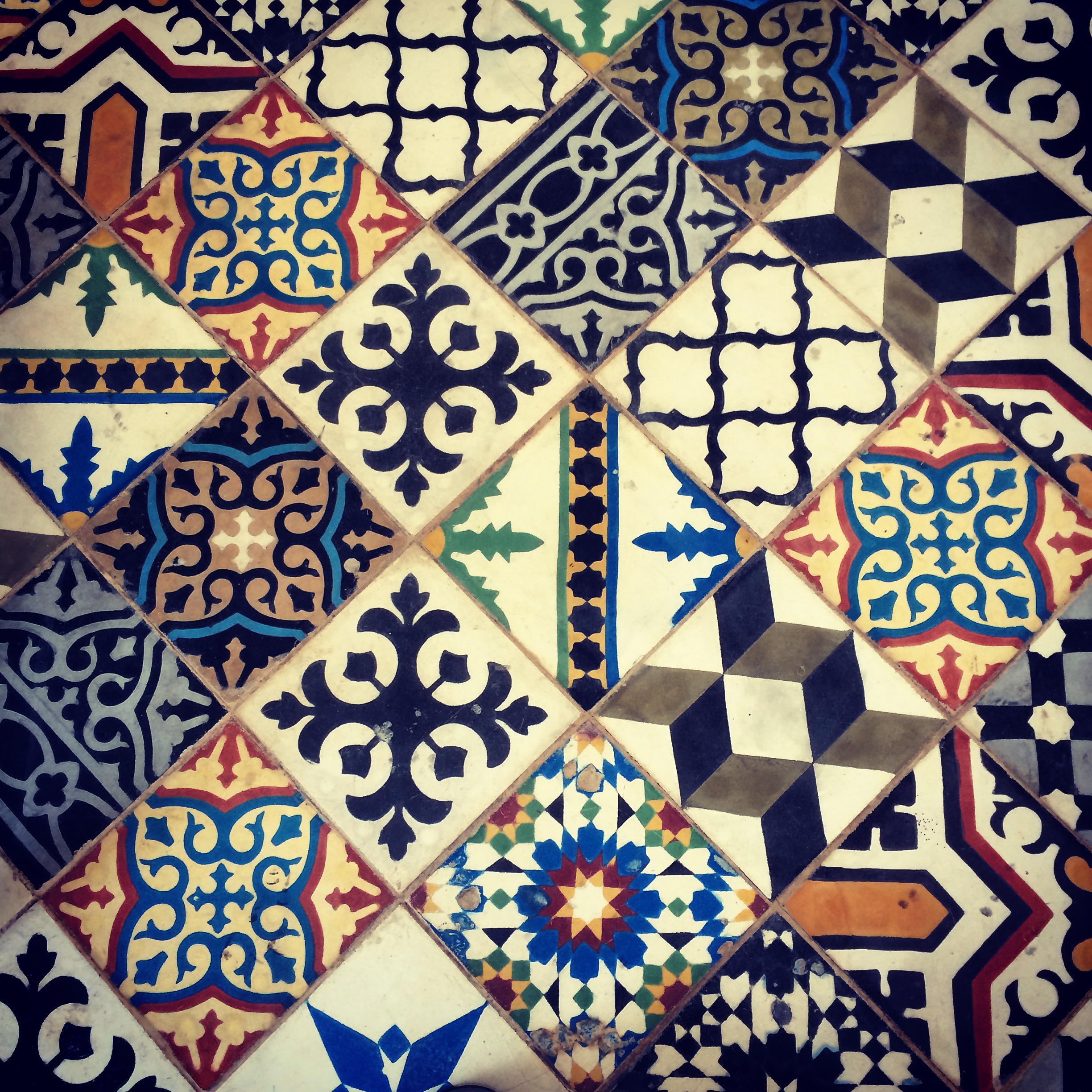
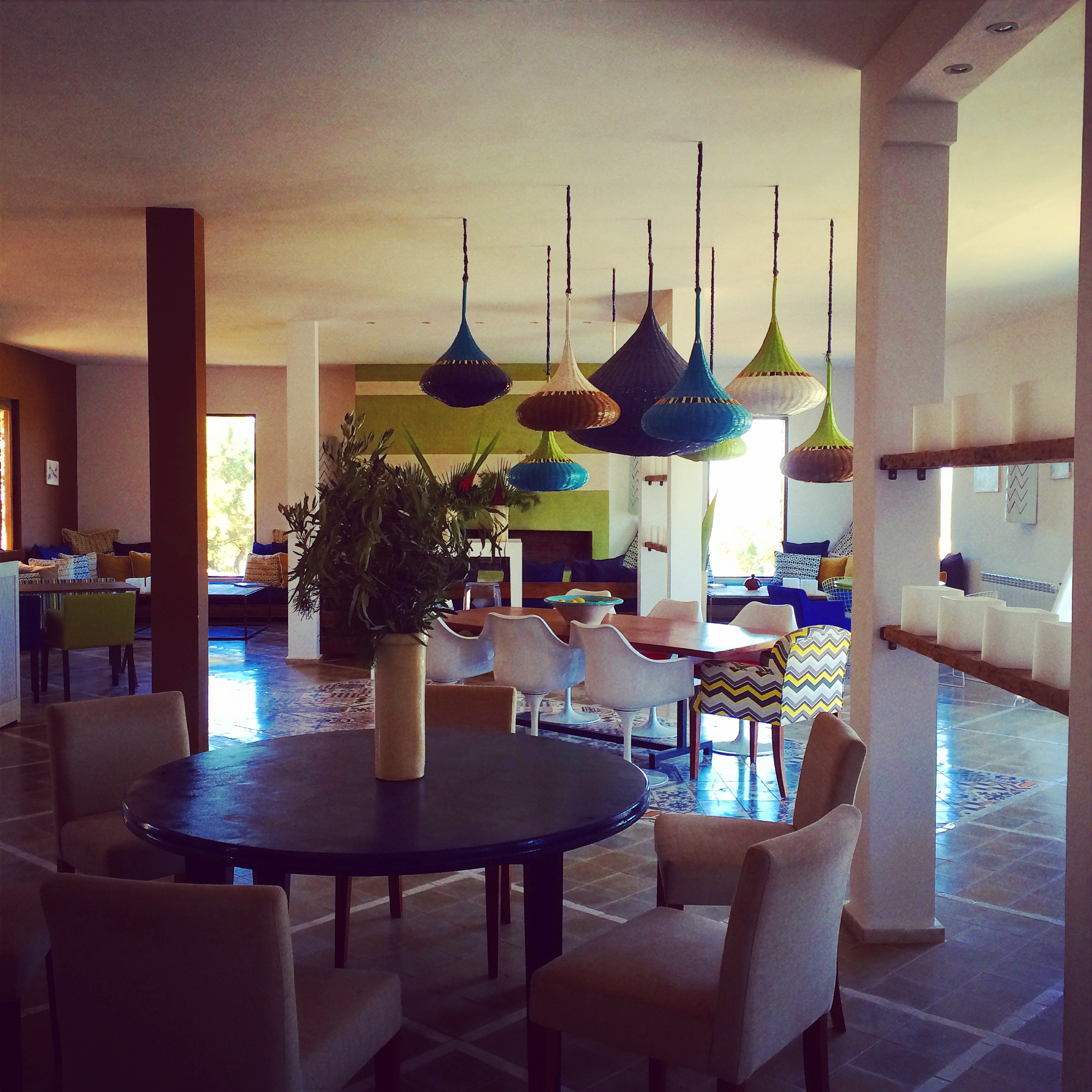
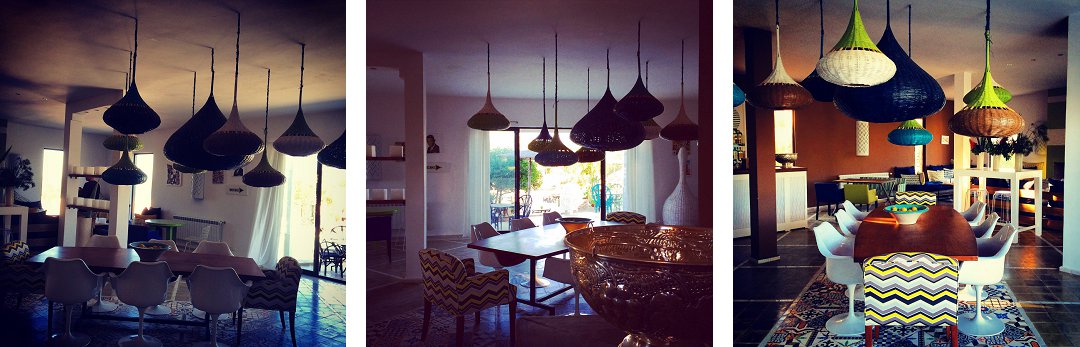
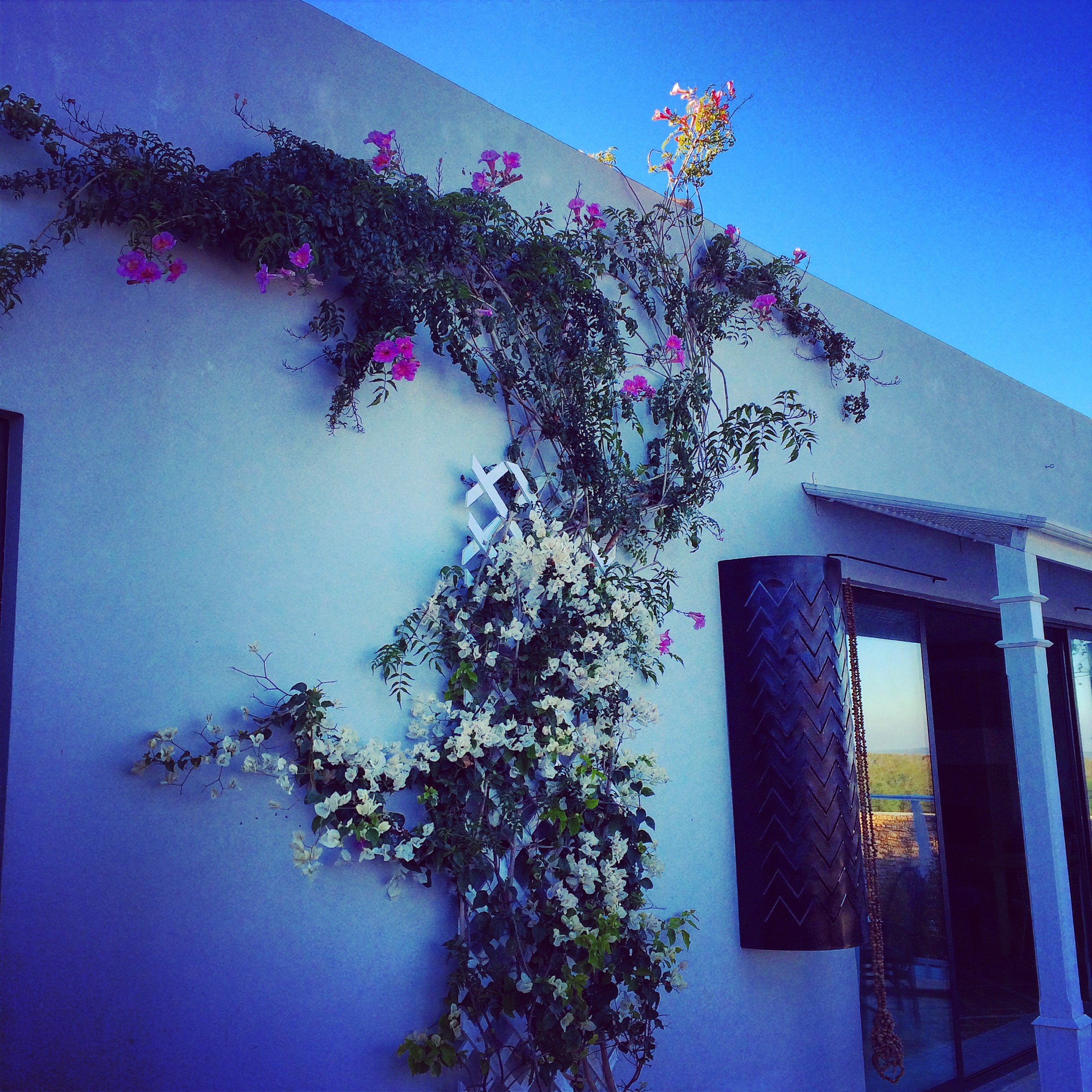
We cannot recommend this villa highly enough – even for a just a day of rest and relaxation. And if you like your interiors (and exteriors), it’s a visual treat. Very 1970s – you could definitely imagine Pierre Cardin chatting to Brigitte Bardot around the pool, looking super stylish and probably smoking Gitanes…

by Helen | Feb 2, 2021 | Lifestyle
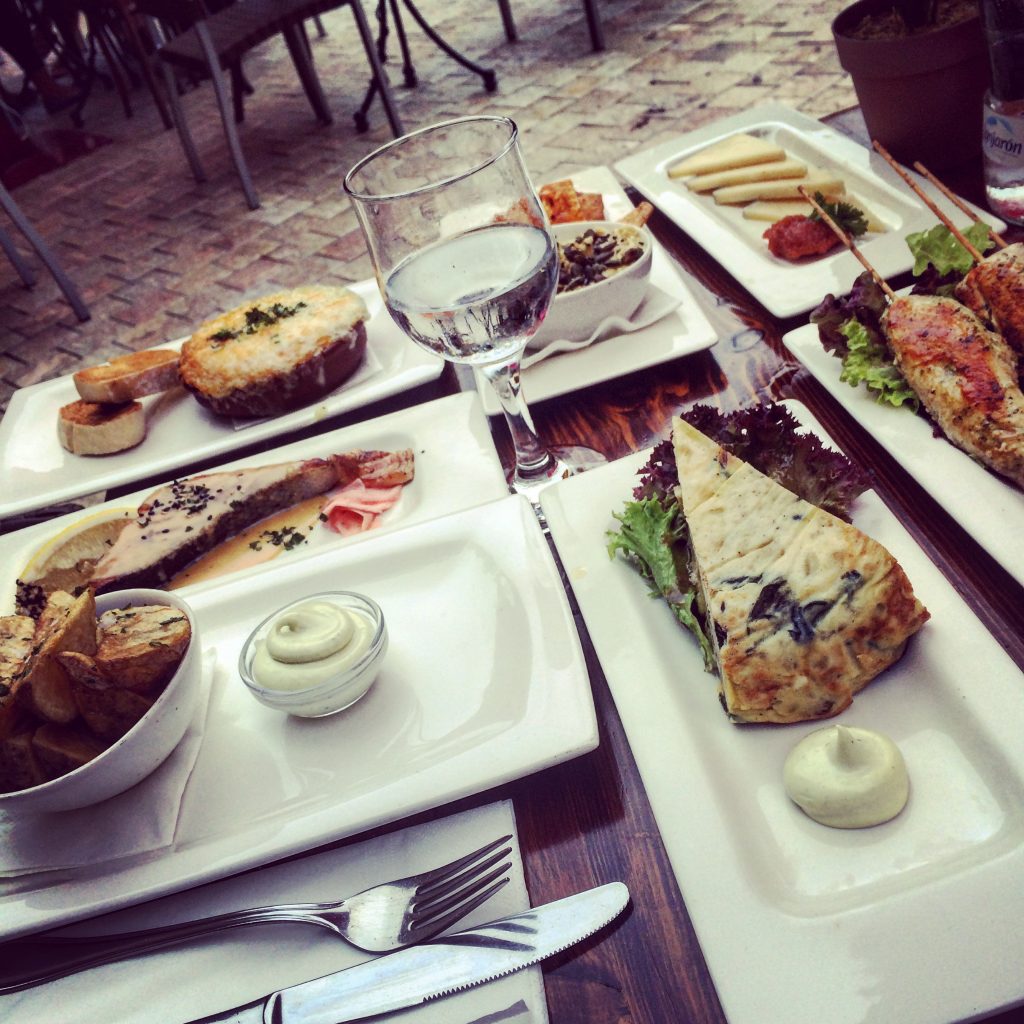
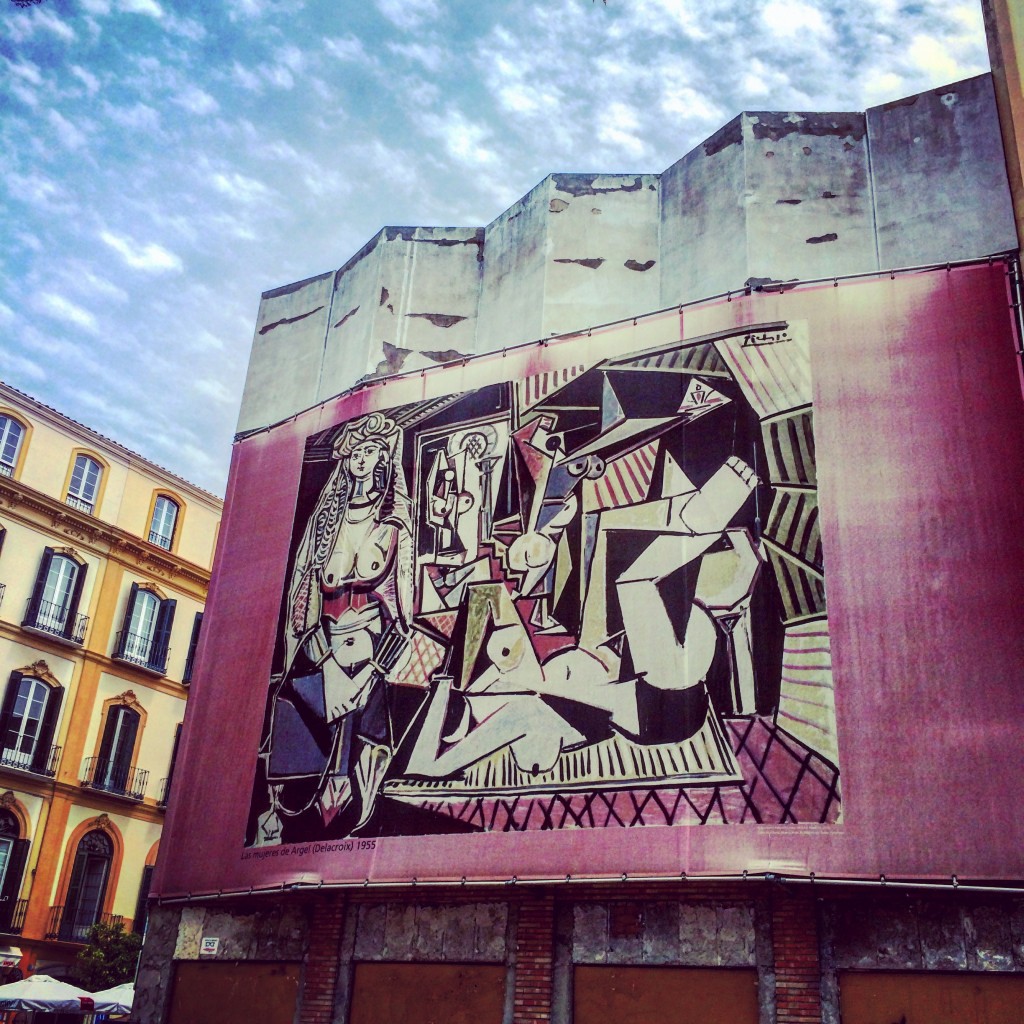
“Traditional” tapas restaurants and bars are abundant in Malaga and we’ve yet to experience one other than very good. Value is always exceptional with most providing complimentary tasters if you’re just having a pit-stop, rather than a full-on tapas session. There is one however, that we do find ourselves returning to (and recommending to travelling friends), and that is La Plaza, located on Plaza de la Merced. Whilst this square does not have the jaw-dropping wow factor of say, Plaza del Obispo where the magnificent cathedral is located, it has a feeling of being a haunt for locals, rather than tourists.
What we love about La Plaza is the style of the tapas – although the menu does have favourites such as tortilla and manchego, there’s a whole lot more, besides. Bet you wouldn’t expect to find an individual lentil shepherd’s pie as part of a tapas menu, but you will on this one. And this menu item is definitely worth ordering! Prices are very competitive, and portions are large.
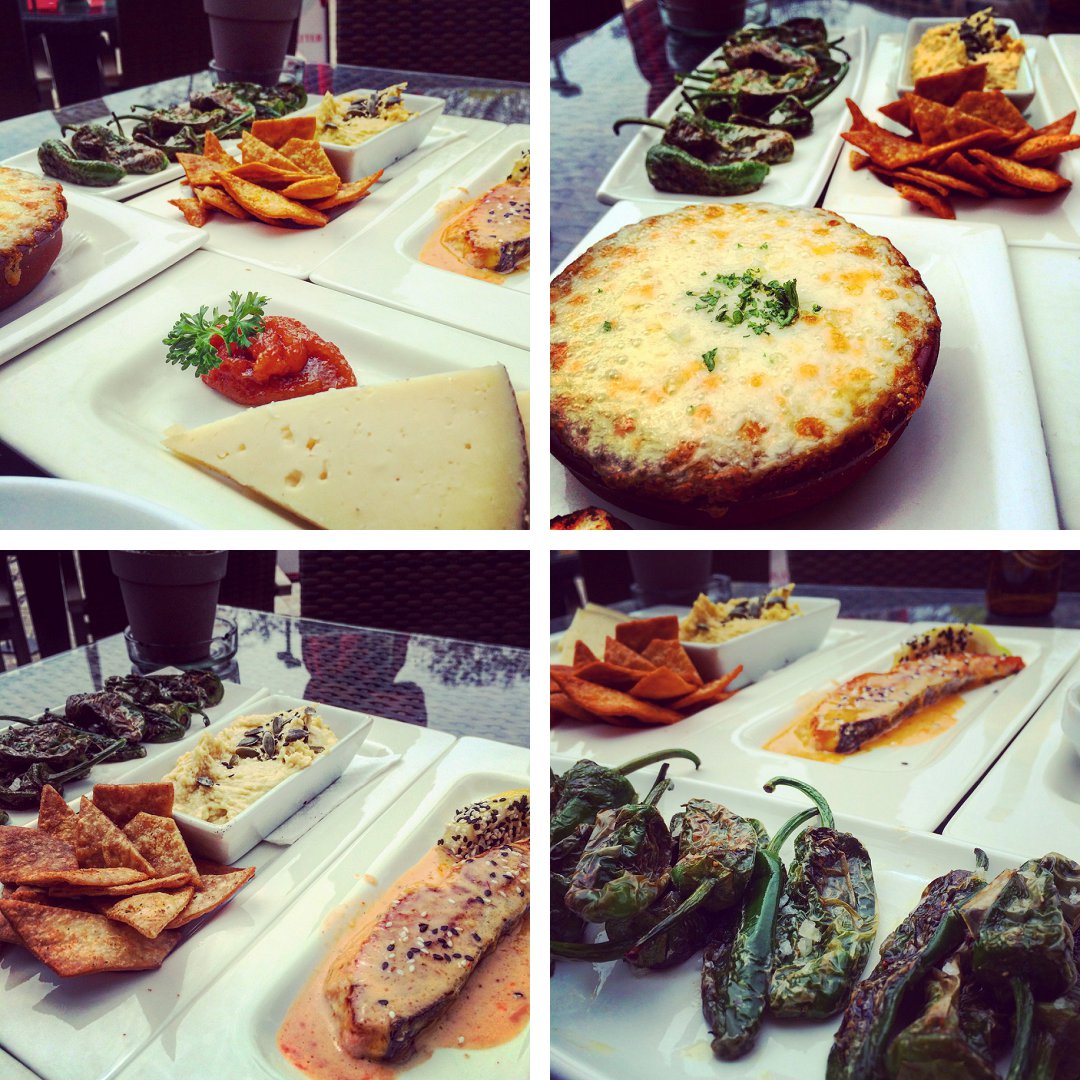
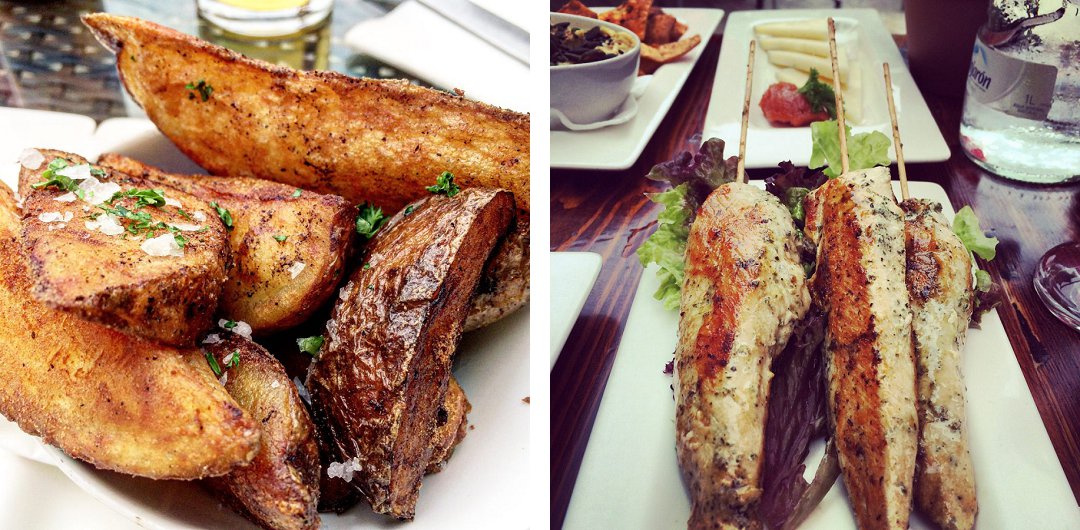
The menu is quite extensive – and as I say, there are some unusual items on it. When we visited, there were plenty of vegetarian and vegan options, too. Although the restaurant is not slap bang in the middle of the action – it’s away from the coast and a walk away from the Cathedral, but it’s easy to get to – La Plaza, Plaza de la Merced № 18, 29012 Málaga – and well worth an explore of the side streets and parts of the city that aren’t on the tourist trail, as you walk up an appetite.