by Helen | Oct 30, 2020 | Renovation
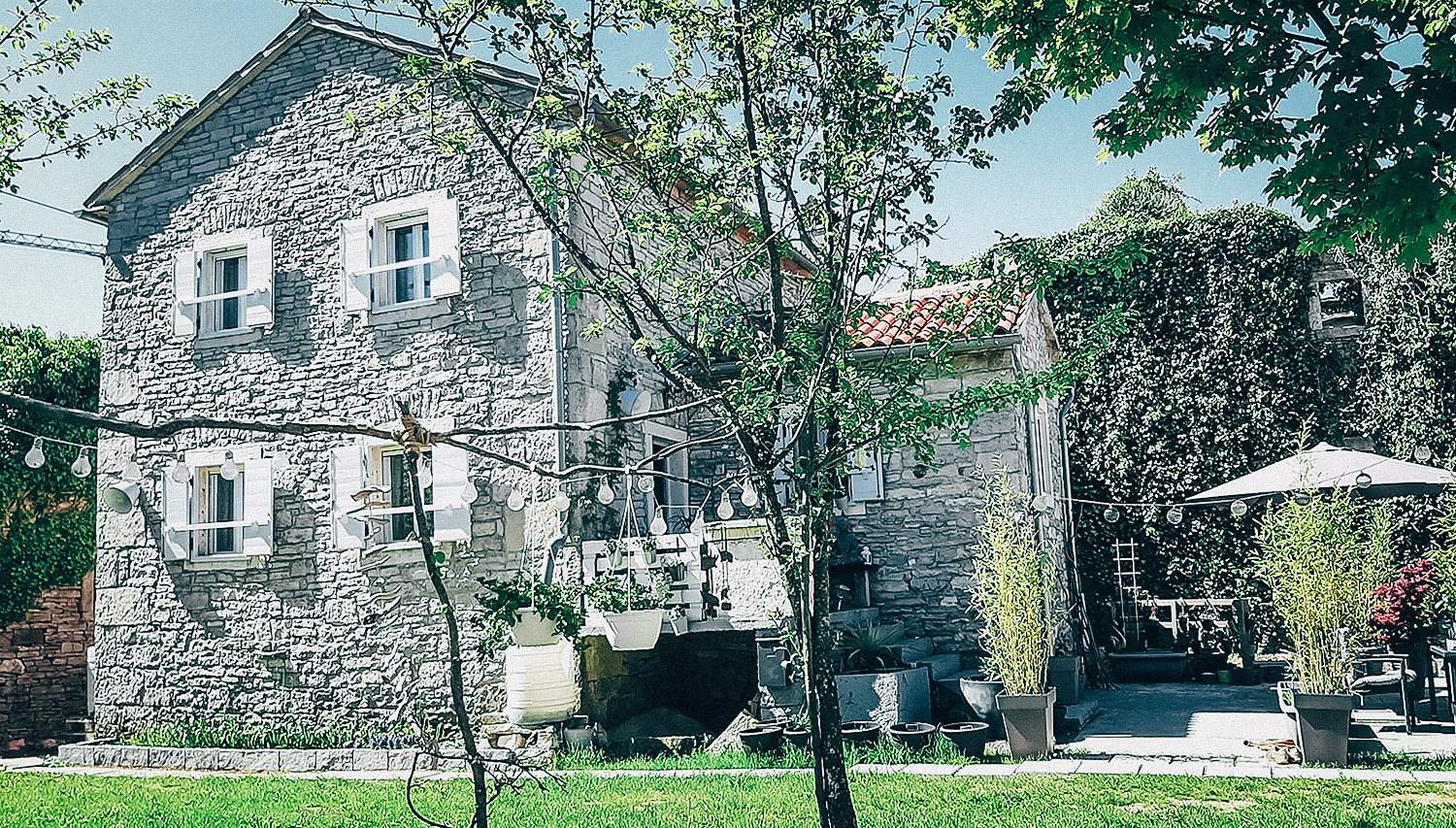
If you’re a follower of what we’re up to, you might know that we have a very unusual feature in our front garden. We are right next to an abandoned house and one of its walls forms one of our garden walls. Now, this might sound alarming – and I have to say if we were living back in the UK, the thought of being adjoined to an abandoned house, would fill me with fear. But abandoned houses in Istria are part and parcel of the landscape. These buildings were once family homes – dwellings – and all have fallen into disrepair because families either escaped or were forcibly removed, depending upon the regime they were living under at the time. Many are now being renovated and restored, as descendants lay claim to them or as sympathetic buyers bring life back to them. A lot, though, have multiple owners, often scattered around the world, and Croatian property laws dictate that every single living owner has to consent to the sale, so some are destined to probably never be purchased/renovated. The one next to us, is one such property. It has seventeen owners – we know this for definite as all had to be contacted when we were establishing our boundaries – and some of these owners live in America, some in Australia, a couple in the village and most places in between! So, one thing’s for sure – it’s not going to be sold any time soon.
So, what we do have, is a very, very unique boundary wall, which is covered in ivy and vines. It is an absolute haven for bees and butterflies and birds, and so we have “adopted” the Green Wall. We take responsibility for its upkeep and ensuring that it is kept cut back. The ivy is very heavy and although the strong, thick vines keep it in place, we don’t want to risk it being pulled down with the weight. There are windows (without glass) in this wall, and we always ensure that these are uncovered, because when the sunlight streams through them into our garden, it is beautiful, and we don’t want these to be obscured any more.
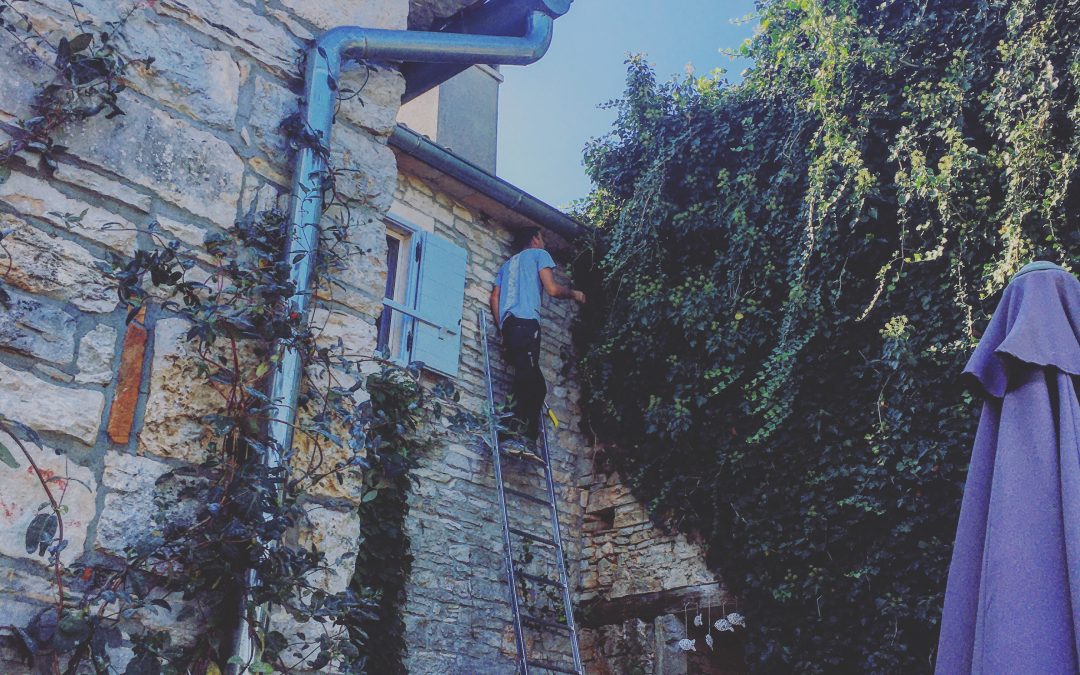
But, you do need a head for heights to do the big, once a year, chop back. Or a friend with a head for heights. And we have one of these. And he came to visit with his extendable ladder, a few weeks ago. All of the vines which were beginning to work their way into our roof tiles, were removed and the cracked roof tiles we discovered were replaced, mortared and sealed. This year, we actually had the vines cut well away from our house – there’s now a space of over a metre where there are no vines at all, so we’re hopefully all OK until next summer. The guttering at this side of the house was all cleaned out, too.
Next job was to completely cut back the bulk of the outgrowing ivy – we’re always a bit reluctant to do this, because the bees and butterflies do love it, but we can’t just let it grow wild. Tied onto the very long ladder, our friend chopped it all back – and to get to the highest branches, he unstrapped himself and walked along the top ledge, chopping away as he walked. Health & safety is shall we say, a little less stringent than in the UK…
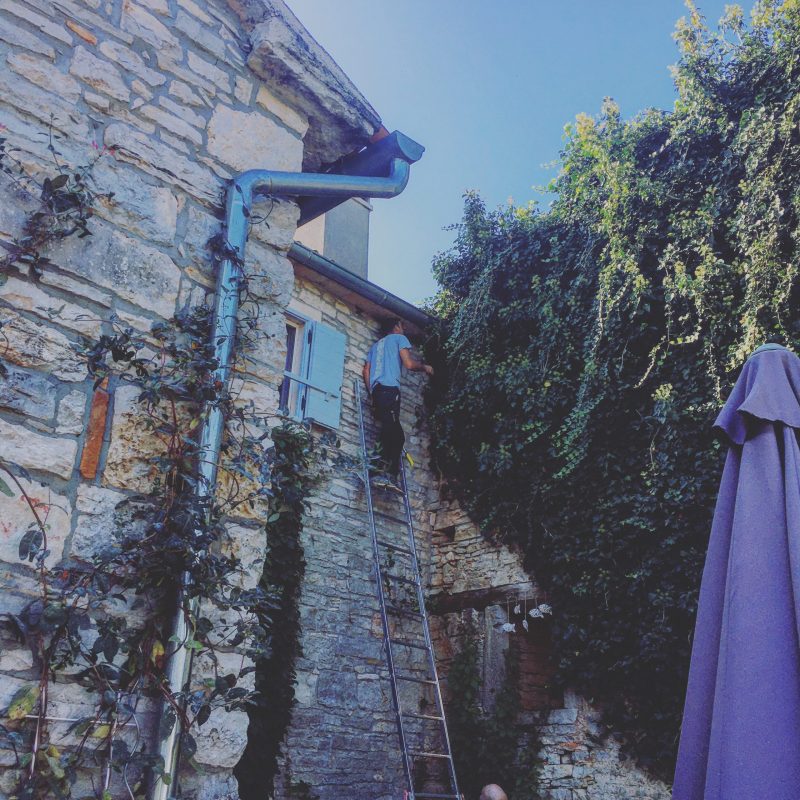
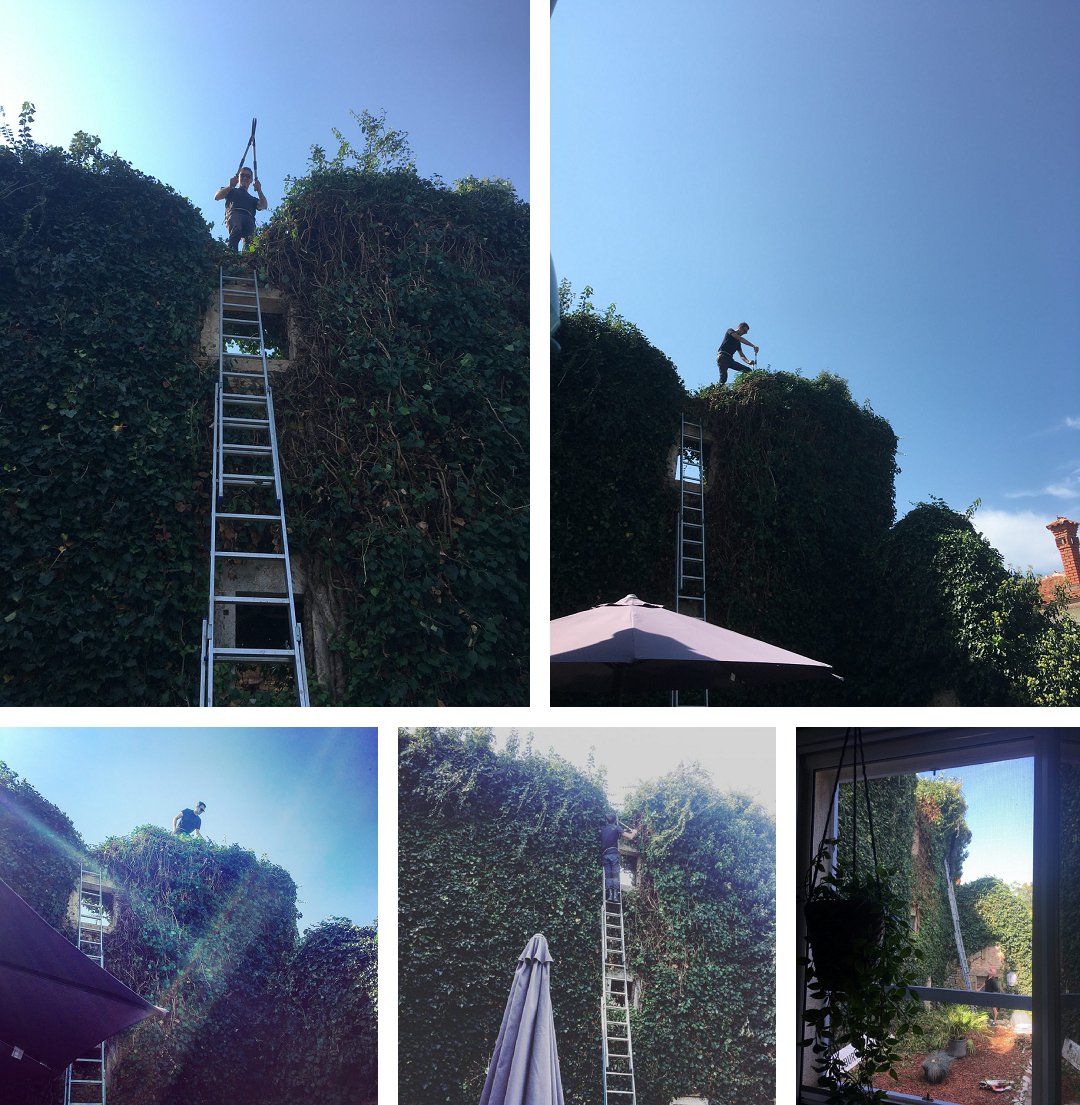
We left the smaller wall to the right and just trimmed the ivy here, rather than cut it all back at this stage, as we still wanted the berries for the birds, and the late flowers for the bees and butterflies. It’s late October now, but still warm enough during the day for them to all be buzzing around.
So, that’s one of our big autumn jobs ticked off. In the past, when we had our little garden in West Didsbury, winter prep would largely consist of putting pots away and brushing leaves. It’s all a little bit more involved now, but once done, we can rest easy over the winter, knowing there’ll be no water ingress caused by leaves in the gutters or tiles being lifted because of ingrowing vines. It’s always a good day, too, when we know that the weight of the vines has been removed and that we’ll better growth next spring. Just need to get through the next few months of darker days, less vibrant foliage and no stretching out in the garden in warm sunshine…
by Helen | Oct 8, 2020 | Lifestyle
There are certain foodstuffs that we buy, that I know should be so easy to make ourselves, but for some reason, never get around to it. Either, there’s something we don’t have from the ingredients list, Or, I just assume it won’t be as easy as I think it might. Pesto is one of these things. At least one jar, often more, is bought on every shop. Meaning more bottles to recycle and meaning always paying over the odds for something.
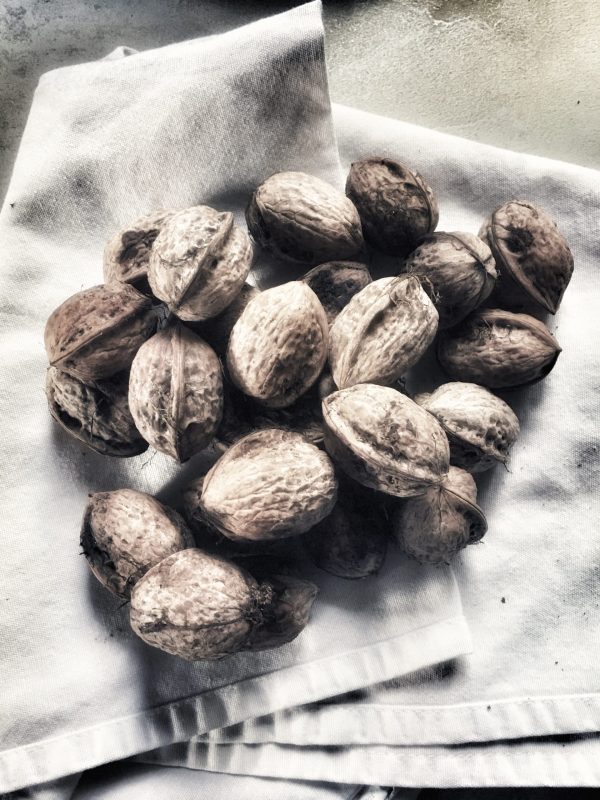
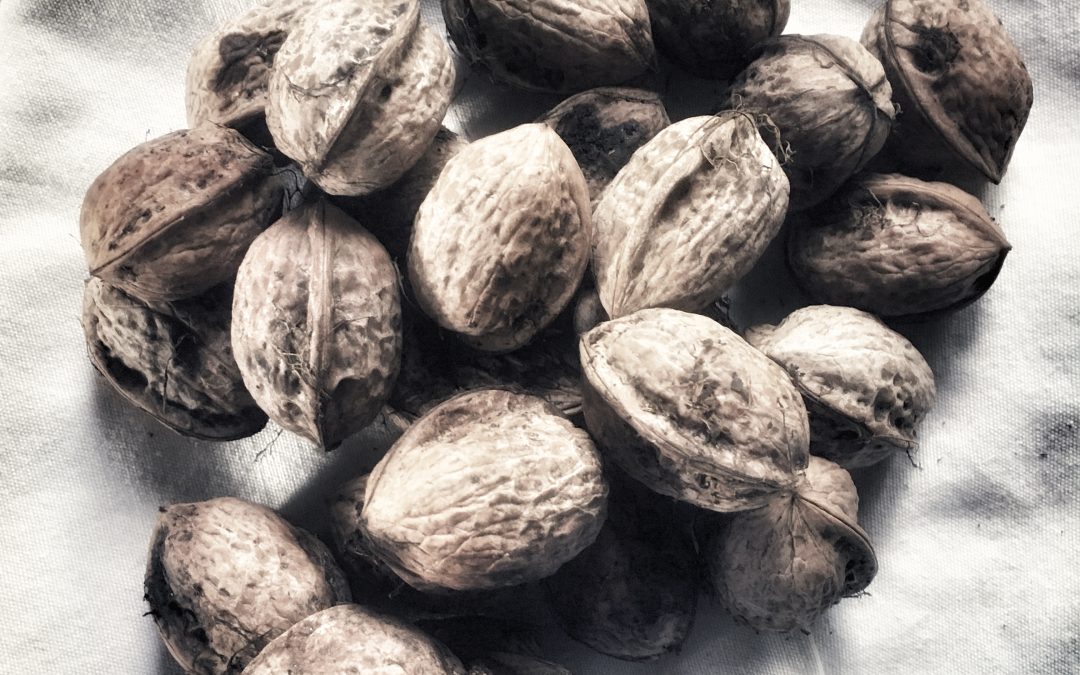
And, with the most recent haul in the garden being walnuts, we decided the the time had come to crack the pesto…
what you’ll need
- Two or three large cloves of garlic, unpeeled
- A cupful of walnuts – depends on the size of your cup, but this was the amount we used, above
- A big bunch of fresh basil leaves – again, it depends on how strong you want your pesto to be
- A chunk of fresh parmesan, grated. Same as with the basil, it’s all down to personal taste
- Olive oil – as above, re personal taste, as you can add more as necessary
what you’ll need to do
Toast the unpeeled, whole garlic, in olive oil. Once the skin begins to brown, remove from the pan and set aside. Once it’s cooled down, peel the skin away.
Toast the walnut kernels, for about 10 minutes, stirring in olive oil, so that they don’t burn.
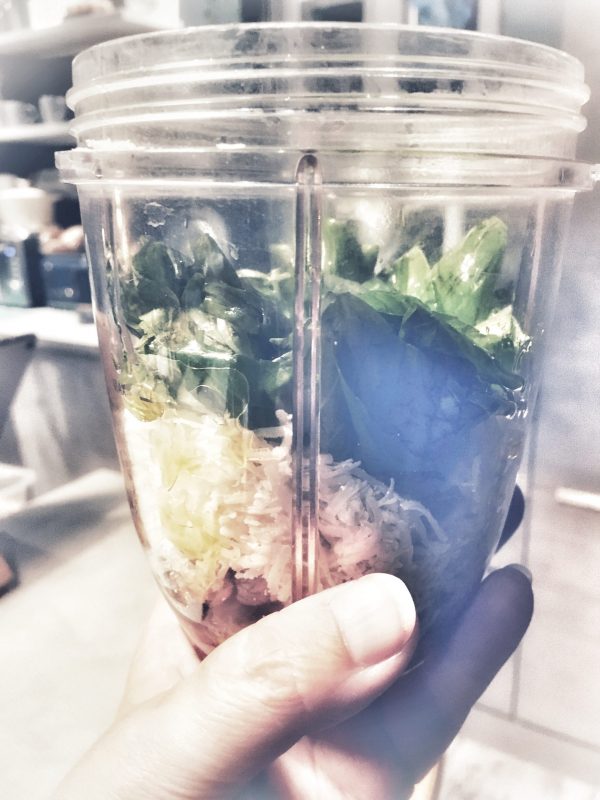
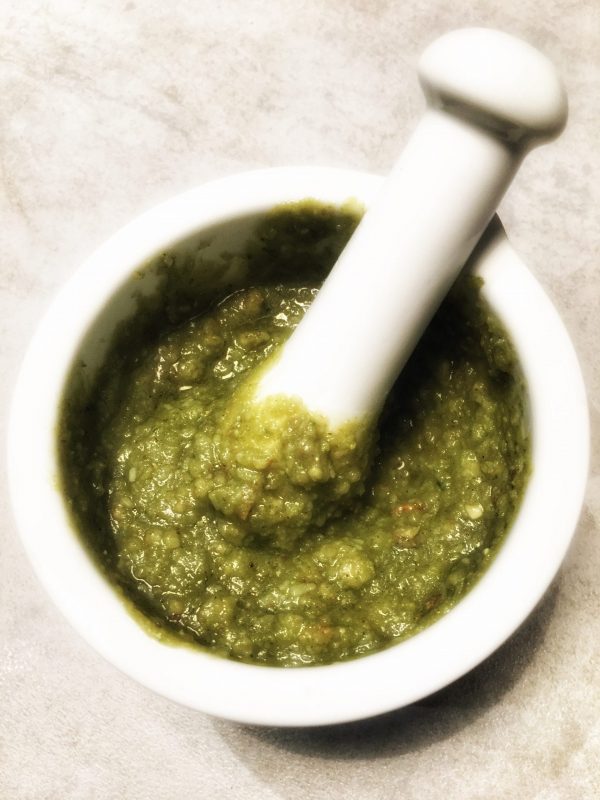
Combine peeled garlic, walnuts, basil, parmesan cheese and olive oil in a blender or food processor and blend until smooth. You’ll need to need to use a plastic scraper to mix the pesto as the walnuts tend to stick to the sides, until blended. This is also when you can add more parmesan and olive oil, depending on your taste and the kind of consistency you want to achieve
Season with salt & pepper according to your taste. And serve…
by Helen | Oct 2, 2020 | Renovation
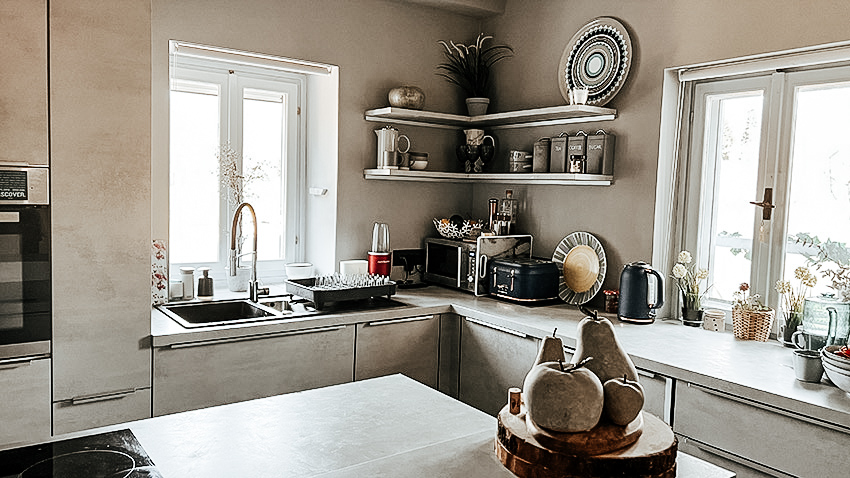
So, our long, hot – but very strange – summer, has drawn to a close. As in previous years since we’ve been here, I’m sure we’ll still have days which are warm and sunny, but the intense heat of the sun has gone. Days are obviously getting shorter and there’s a chill in the air. Our thoughts are definitely turning to getting the garden and the house, autumn/winter ready. All summer, the kitchen windows have been wide open and as they open internally, the shelf we put up last year, in the one that overlooks the front of the house, has been down. As it doesn’t seem likely that the window will be thrown wide open again until next year, the shelf is back in its place…

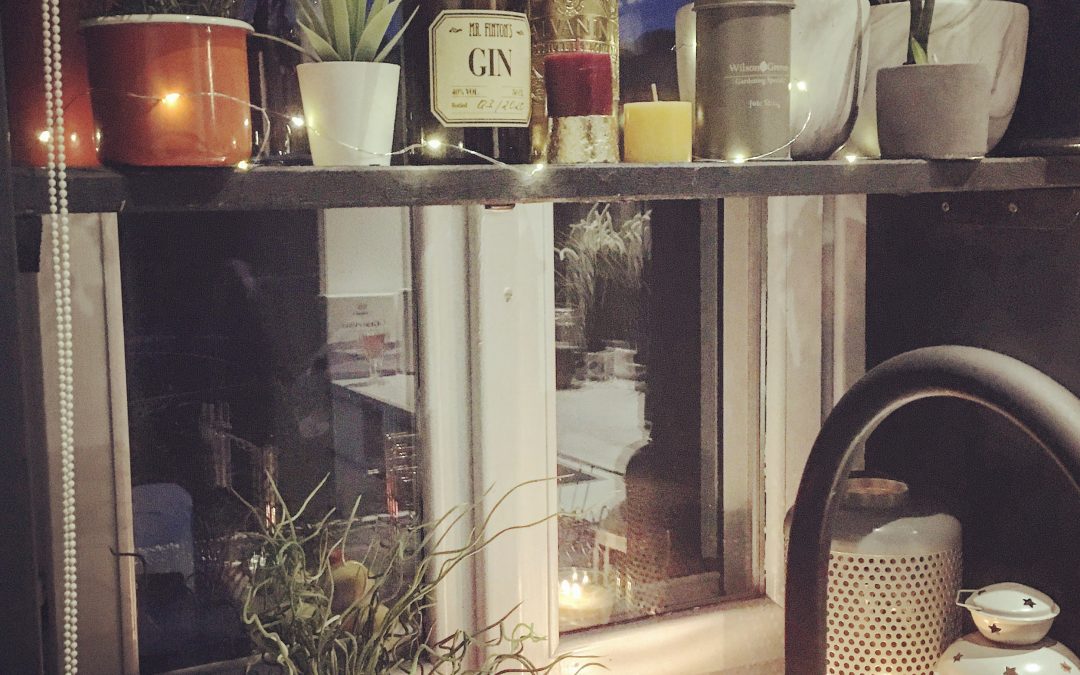
I want this shelf to bring colour into the kitchen. The room is painted in Farrow & Ball Hague Blue – walls and ceiling – and so in the winter, can be dark. I also didn’t want to go and buy more “stuff” so have searched around the house and repurposed old bottles I’ve kept, because I liked the colours or the shapes. The apothecary style gin bottle was spotted in Lidl – as cheap as chips and now very pretty, full of artificial orange berries. A rose lemonade bottle, sprayed gold, has taken on a new lease of life, rather than being condemned to the recycling bin. A cork bottle stopper, sprayed gold, makes a perfect candle stand for a collection of fat, squat candles I have – all, pleasingly, in autumn colours. I’ve also found that our potted basil plants seem to fare well in this window, and so the shelf has a *use* too – fresh basil leaves can just be plucked from the plants, which, surprisingly, given our track record with them, do seem to be thriving.

The window ledge was tiled over the summer and because it’s quite deep, it’s a good storage area. This year, we’ve gone a bit pumpkin mad, and it’s the perfect place for these autumnal beauties. The colours – oranges, yellows, greens, shades of blue – are gorgeous. Definitely too pretty to be hidden away in a cupboard. And they add to the joy of our autumnal window. A window which, until we renovated our kitchen, wasn’t even there…

The area outside the front door has also been tackled. Although we’ve painted the concrete pale blue, and the well was moved out here, we’ve not really done anything with it, to prettify up the front of the house. Well, we’ve made a start on making the entrance to the house just a little bit more attractive. The more delicate potted plants have been moved up onto the platform and now they create a much nicer scene outside the front door. Especially as the Virginia Creeper, which we planted quite late on in the summer, and so didn’t hold out too much hope for, is beginning to attach itself to the wall and turn red. The shutters to the kitchen side window are never closed, so hanging pots have been brought up here and twines of ivy have been round the bar. Plus some tiny lights which will twinkle away in the dark.

A sturdy willow wreath was sitting in the shed, basically asking for something to be done to it to make it a whole lot more attractive. A few lengths of artificial ivy, some orange leaves and russet berries did the trick, and the bare wreath is now resplendent in green and orange – and looking quite the autumnal thing, under the metal cattle skull. Very Istria.

As we have no plans to go anywhere very far this month, we’re making absolutely sure that our home, will be the cosiest it possibly can be. Looking forward to a winter of hygge inspiration…
by Helen | Sep 23, 2020 | Lifestyle
Almost with the flick of a switch, summer seemed to end yesterday, and autumn arrived. The temperature dropped and grey skies replaced the bright blue sky we seem have had for weeks and weeks. Although we’re still hopefully weeks away from having to light the woodburners, we definitely craved something a bit substantial and comforting for dinner. Our local Lidl store has been rotating, on a weekly basis, foods from different European countries – Greek week is always a winner in our house, and we’ve been stocking up on Eridanous range of smoked tuna. It is utterly delicious, with a real woody, smoky flavour and when a tin of tuna is called upon in future, I don’t think I’ll be able to have any other kind.

We’ve used this through the summer in salads and wraps but decided something more warming was needed – and our pasta dish was just perfect. It was quick and easy to make and very delicious. Hopefully, if you try it too, you can get your hands on some smoked tuna – it does make all the difference…
what you’ll need
- Penne pasta
- Red onion, finely sliced
- A couple of cloves of garlic, sliced
- Olive oil
- Medium jar of passata or a tin of chopped tomatoes
- 2 small tins of smoked or regular tuna
- Dried chilli flakes
- Strong cheese, for the topping
- Salt & pepper to taste
- Fresh basil leaves
what you’ll need to do
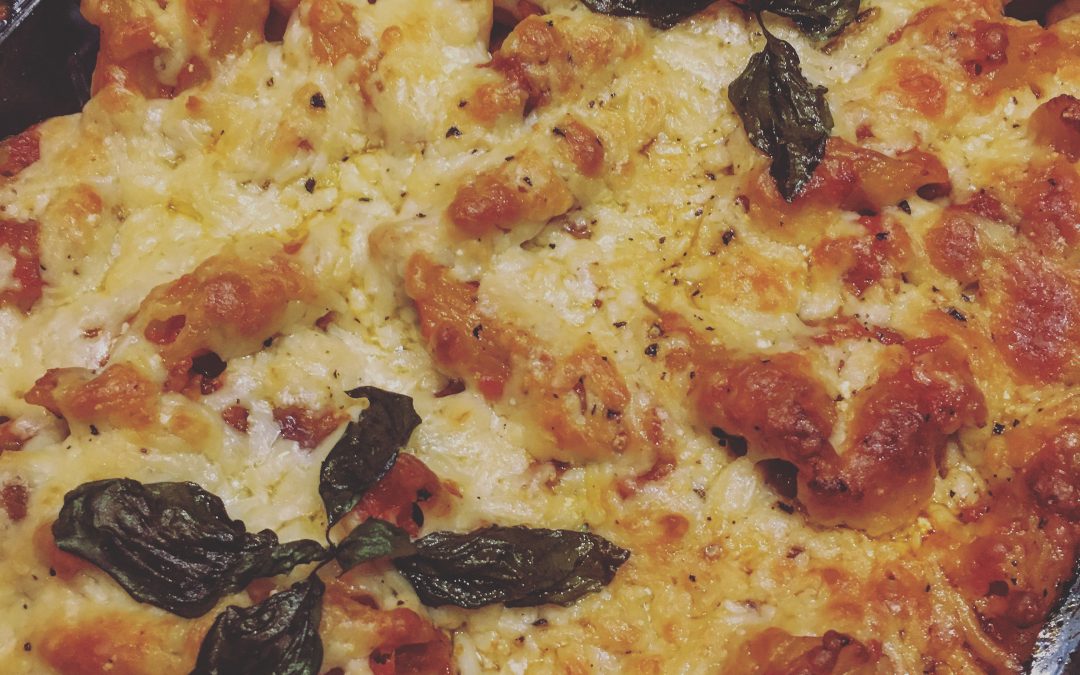
The recipe is as you would expect. Boil the pasta until al dente (it will cook further in the oven). When cooking, fry the onion and garlic until soft, in the olive oil. Sprinkle over the chilli flakes. Add the passata (or tomatoes) and stir until heated through, then add the tuna (chopped up into largish chunks) and a handful of basil leaves. Season according to taste.
Drain the pasta and mix into the tuna & tomato sauce, then turn into an oven proof dish. Cover with the grated cheese and cook for about 30 minutes in a medium oven.

by Helen | Sep 17, 2020 | Renovation
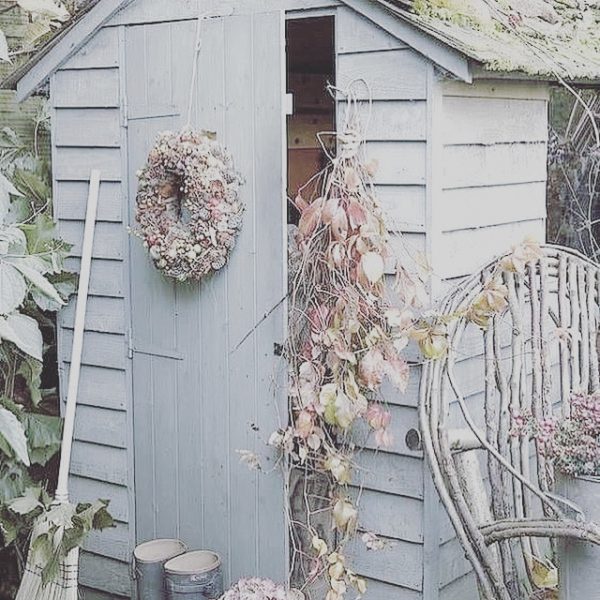
It was back in May that we finally bought a shed and started the job of building it. We made the initial mistake of thinking we’d bought just a shed, like the B&Q one we used to have in our garden back in West Didsbury, which was functional, but a bit on the cheap and flimsy side. We thought that sheds in Istria were a bit pricey because this one definitely wasn’t cheap, but we went for it, because we were becoming frustrated with the search for somewhere that sold these. I’d spotted a beautiful image on Pinterest of how I imagined it might look, and the shape of the one we found was exactly the same, so the search was over.
However, once unpacked, we realised that what we had bought was actually what was known, in shed circles, as a Dutch Log Cabin – a much grander description, I thought 😉 Unfortunately, this particular cabin had to acclimatise and as such, all of the wooden components had to sit out for three days. Not good for someone as impatient as me! But, despite instructions being in Dutch, over the course of a week, we worked it out and soon we had the structure built. The wood was a lovely golden pine – much nicer than the floorboards we inherited and which we’ve only recently finished treating and making good – but we didn’t want pine. The external (and internal) woodwork in the house is a very soft pale blue and so we chose a complementary soft grey satinwood for external use. The bonus with this paint, was that we didn’t need to use undercoat. The tongue and groove wood was caulked inside the shed, for extra protection against the rain, and painted white. Two coats were necessary for the outside, but it was fast drying satinwood and after a couple of additional days painting, the shed was ready. To accessorise!
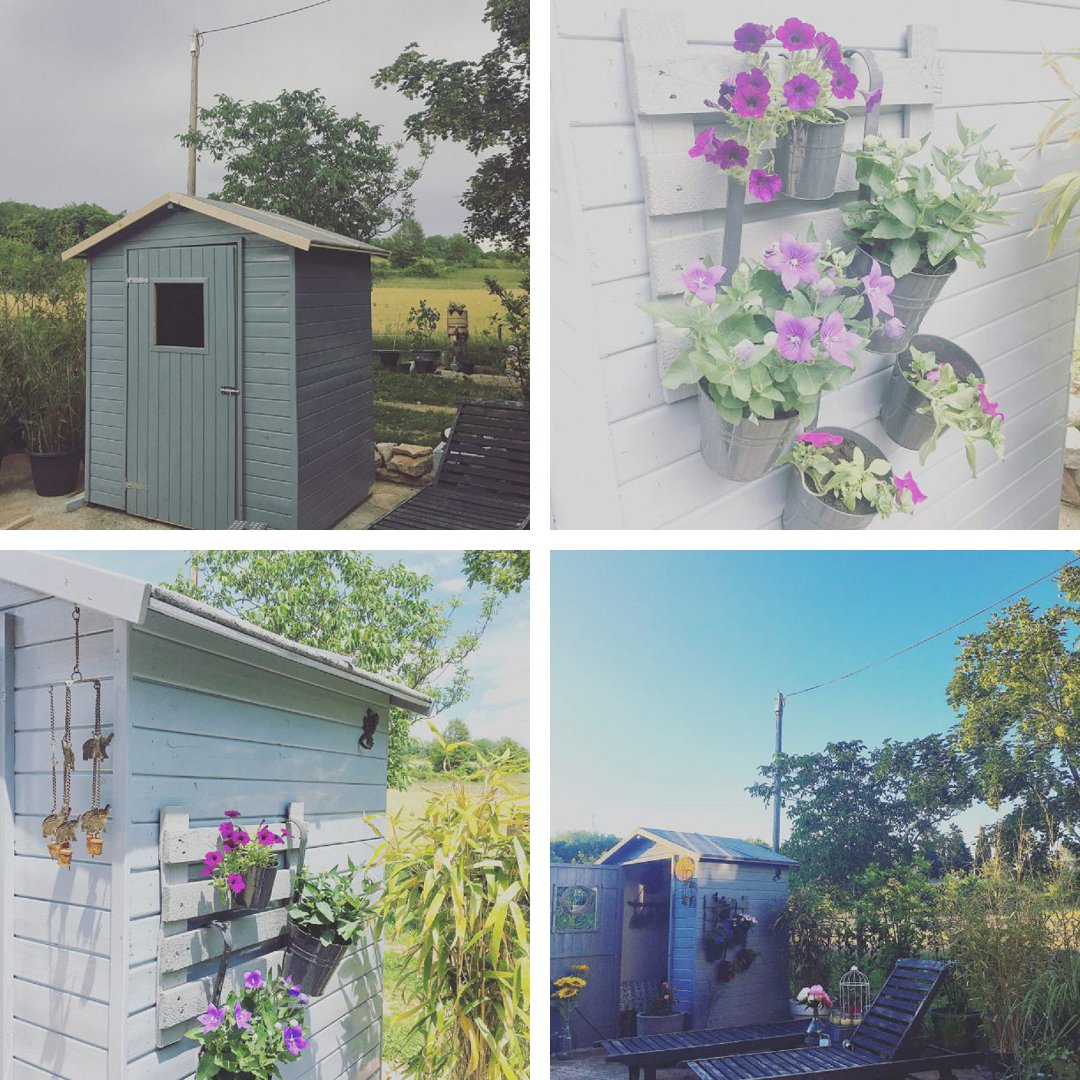
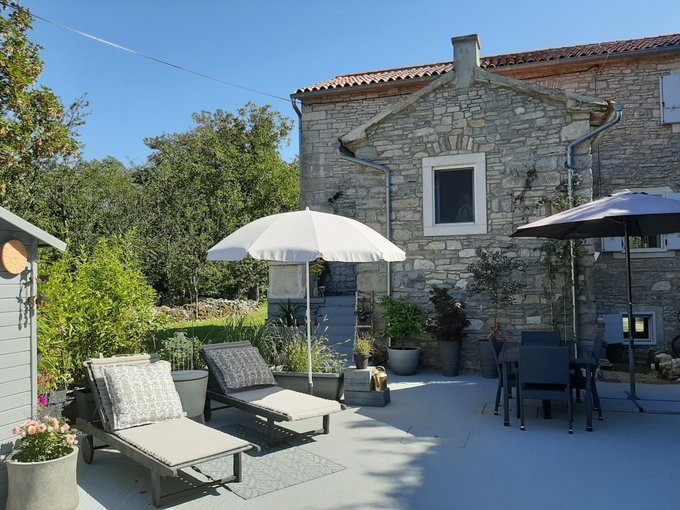
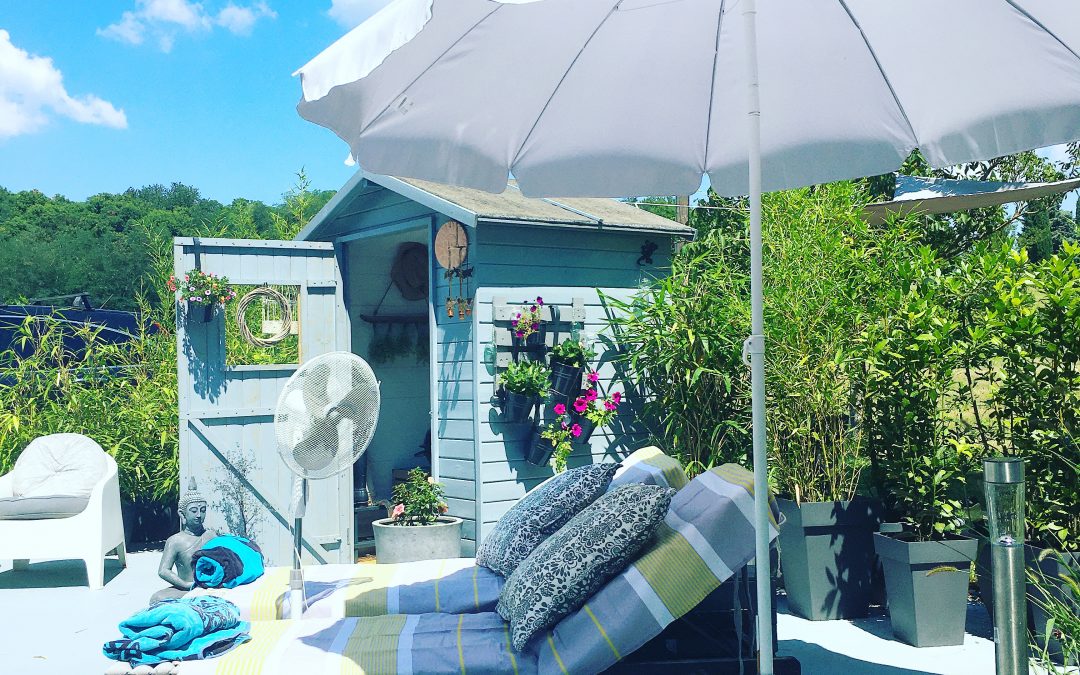
We couldn’t just be content with the shed, though, because the lovely new colour really showed up the cheap look concrete patio. I love a bit of concrete, but not this kind, and the decision was made that this would be painted, too. As the patio area is a high traffic area, we went for a specialist, waterproof (no undercoat needed) paint, which wasn’t the cheapest option, or the quickest option, but wow, what a difference when we were finished.
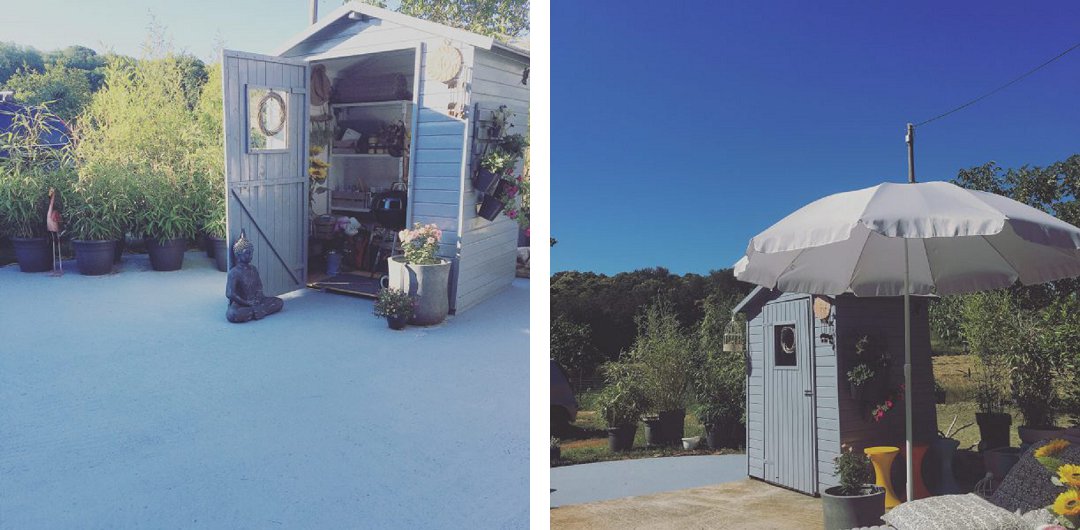
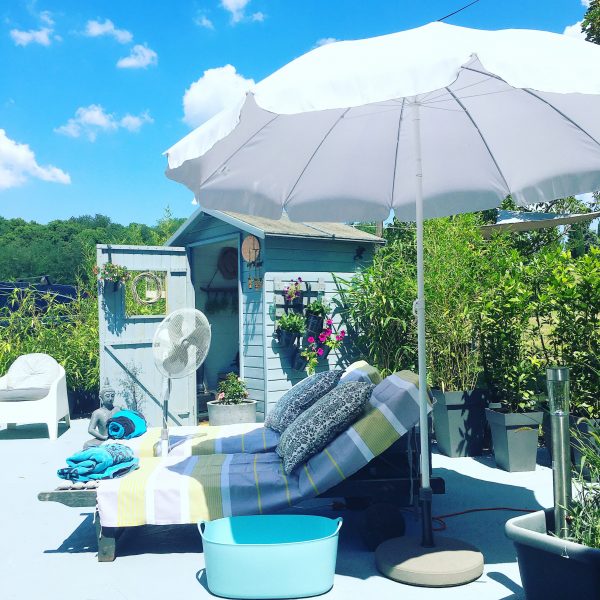
Yes, sorry, that is a big tub of cold water for feet and an electric fan outside! On the day this photo was taken, the temperature was mid-thirties and it was VERY hot!
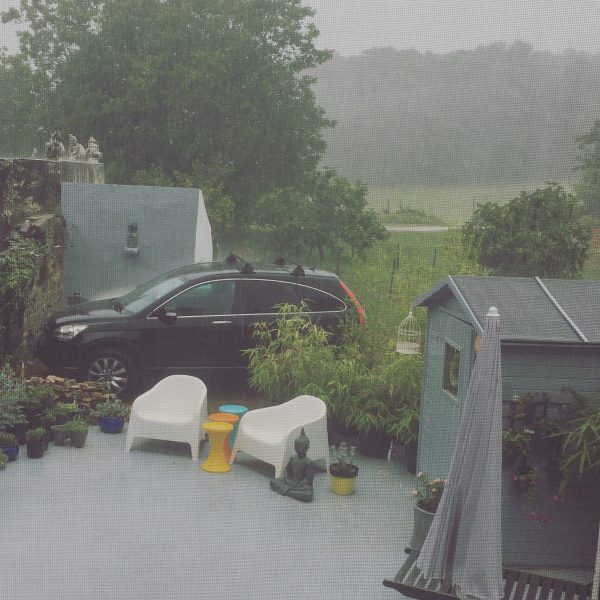
But, a few days later, this was the scene in the garden – and this is where the shed has come into its own. In previous summers, when a storm was approaching, we’d be dragging garden stuff that we didn’t want to get wet, indoors. It would all sit in The Well Room, taking up lots of space, until the weather improved. Now, it’s all found a new home in the shed.
We didn’t buy the shed to use it as a “garden shed”, full of plants pots and garden tools etc. All of that is stored in the external cellar. This was specifically for the quick in and out storage of cushions, sunbed pads, candles, lights, the hammock, sun sails etc. And, so far, it’s been worth every penny (or kuna) we paid. A couple of sets of white metal shelves were bought and fixed to the back wall, so they didn’t topple over – these are perfect to slot in seat pads, cushions, the rolled up hammock and sun towels. Two or three wooden crates are used to keep things together, which we always need in the garden, but have always had to search around the house to find them – one crate for suncreams and mosquito sprays, one for citronella candles, lighters, battery operated lights, and a smaller one full of batteries, bbq lighters etc.
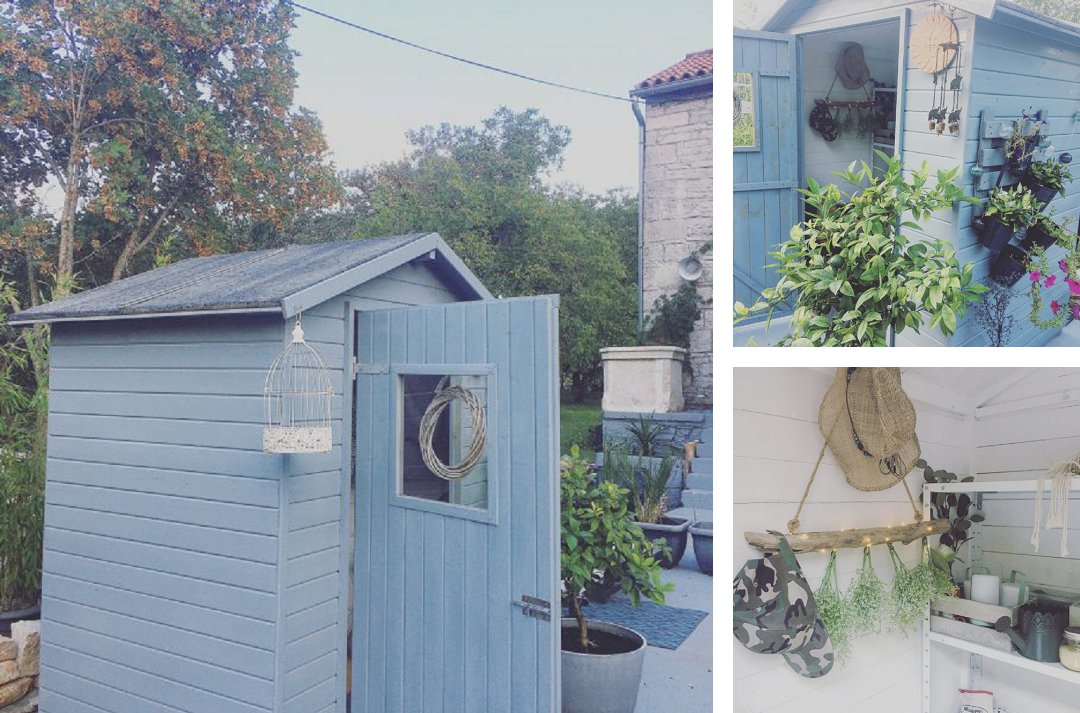
As well as providing great storage, the shed also now gives us privacy. We’ve potted up quite a few tall, thick bamboos and these now sit to either side of the shed, meaning that we don;t have to consider building a wall at the front of the house anymore. The BBQ will have a winter home, as will our wellies and umbrellas and general winter stuff we don’t want in the house. The quality of it is in no doubt, having had some very strong and ferocious summer storms – no leaking or water ingress and it’s solid. Who knew you could love a shed as much?
by Helen | Sep 14, 2020 | Lifestyle
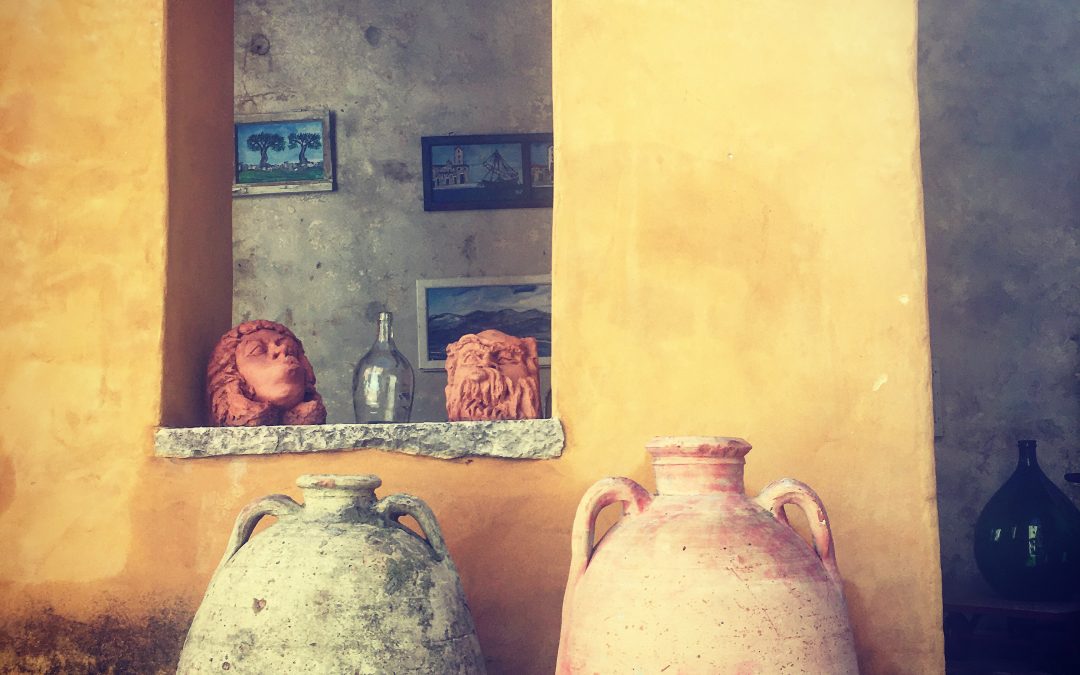
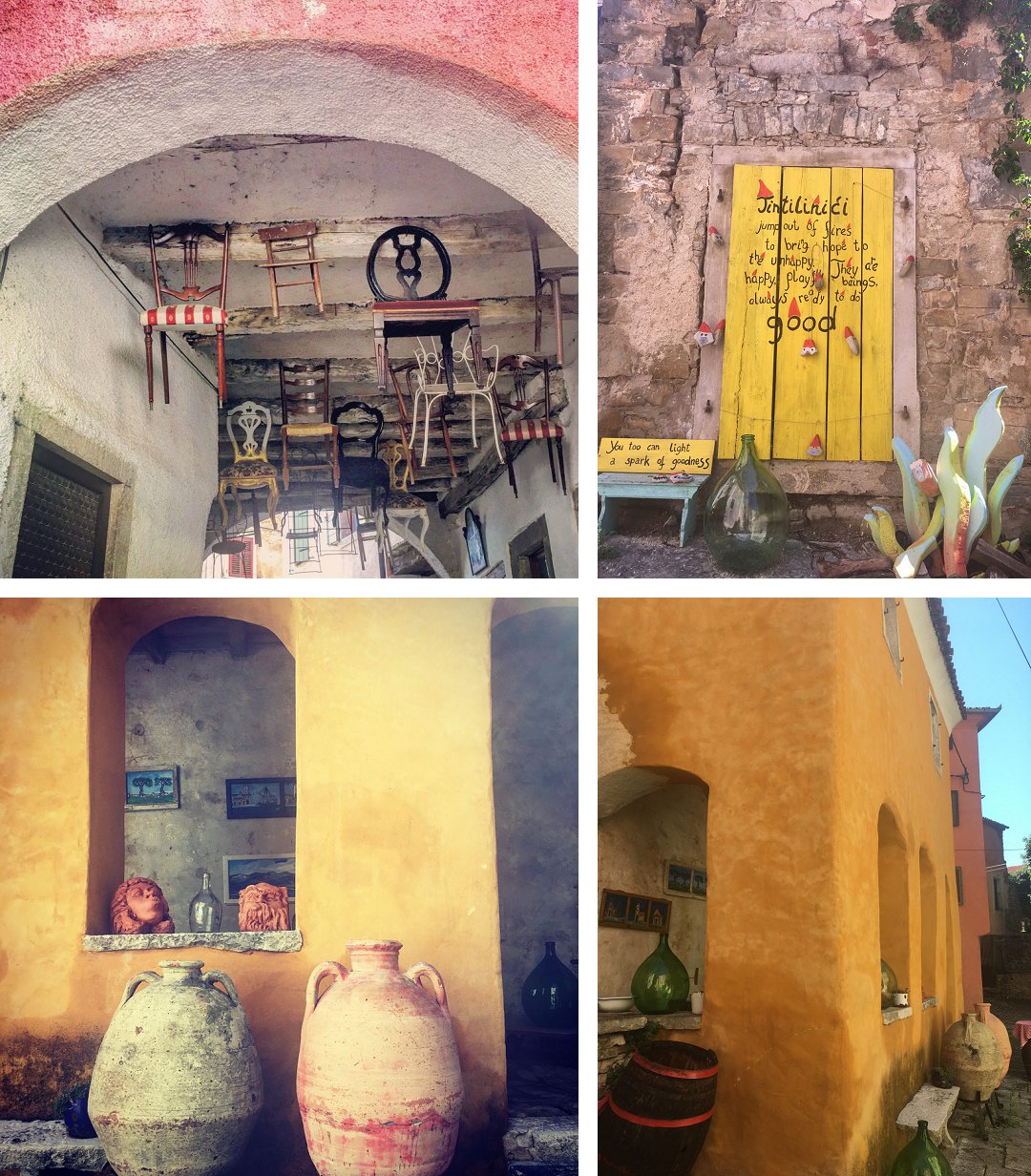
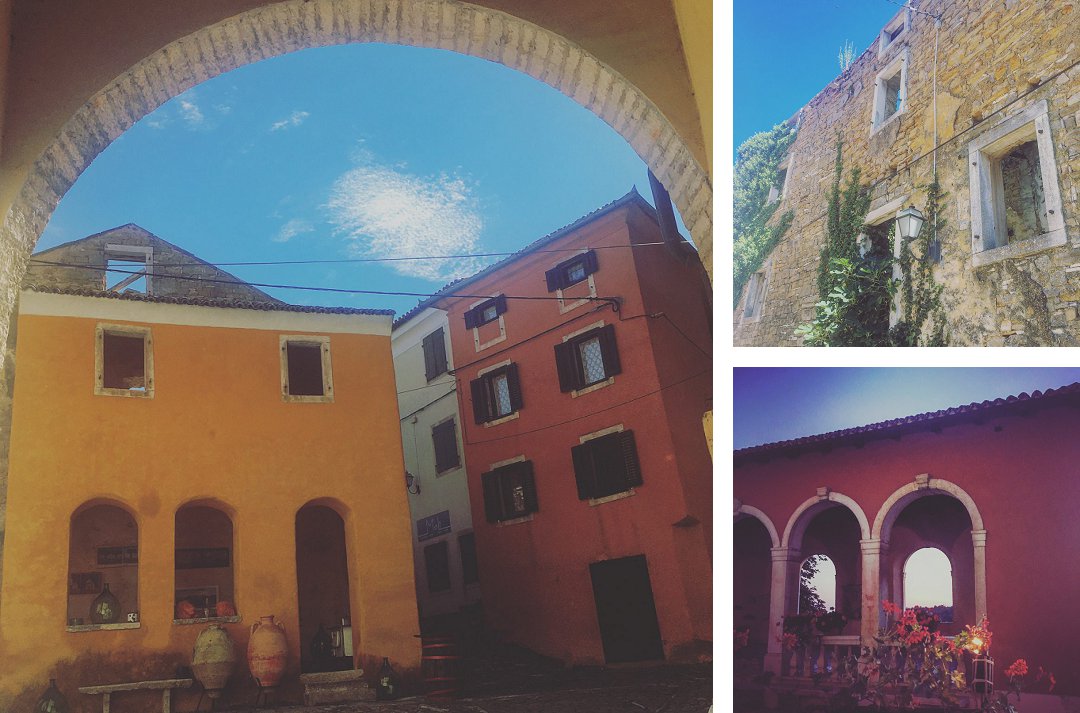
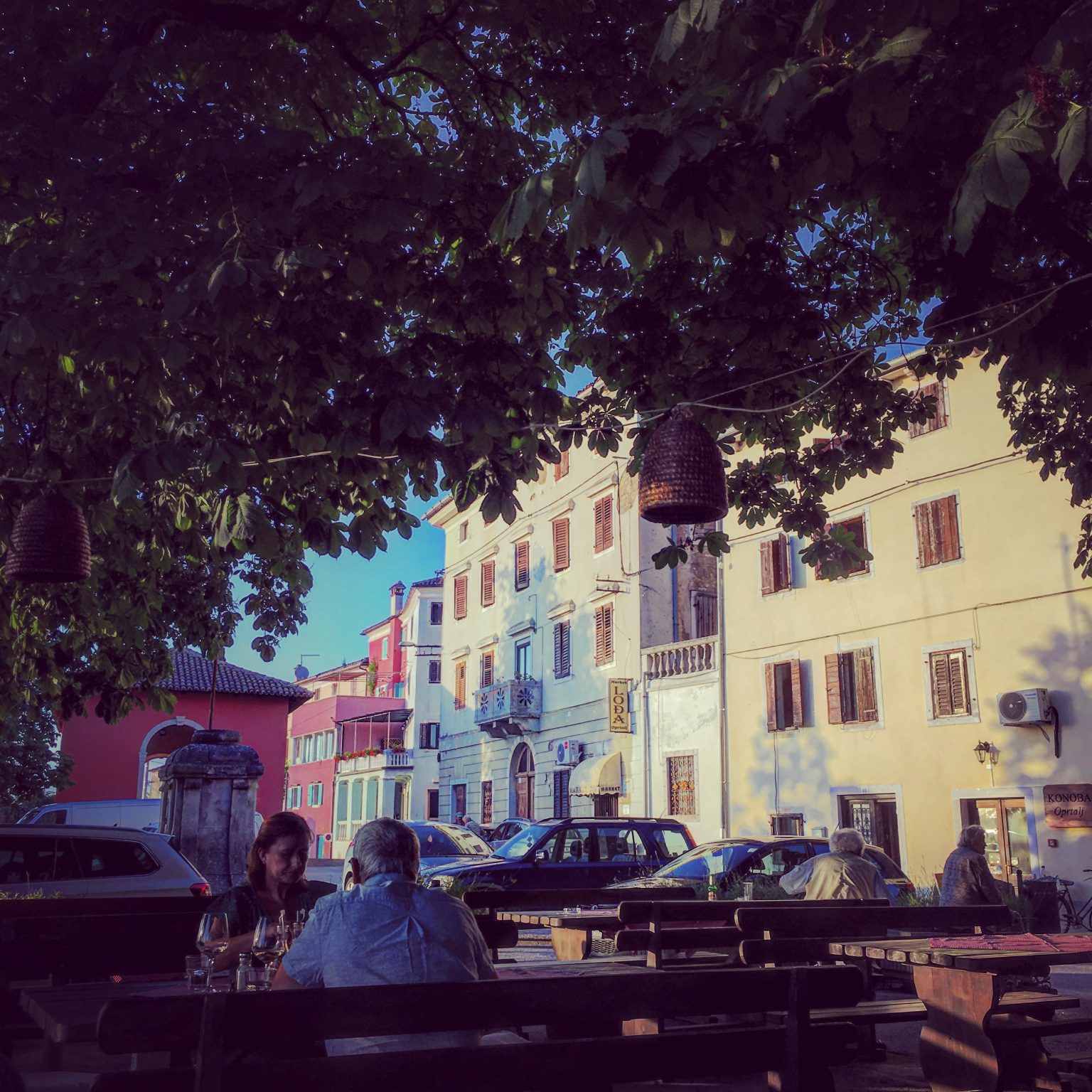
Our nearest town, Oprtalj, isn’t really a town. At least not in the sense of what we’d regard as a town back in the UK. Oprtalj is not much bigger than Burton Road in West Didsbury, but with a couple of restaurants, a cafe bar, a school, a food shop, an interiors shop, a gallery, a boutique hotel, a loggia, a church, a campanile, a cashpoint (rare in these parts), a town hall, a post office and a town square, it has plenty going for it. Many of the properties in Oprtalj were abandoned over the years – successive regimes ensured that many families upped sticks and left – and so there are plenty of buildings which are being reclaimed by nature. But, life is being breathed back into Oprtalj. Like much of Istria, tourism is a big industry here (and so the area has been hit hard this year), so many of the properties have been bought and redeveloped. However, once inside the city walls, there are very strict regulations as to what you can and can’t do to one of these old properties – even the external paint colour has to be from an approved list, but it does mean that that sympathetic restoration is ensured.
Sitting on the top of a hill, the town has stunning views across the Istrian countryside – vineyards and forests and small villages and in the distance, the shimmering Adriatic. In the winter, when the clouds are low, we can be shrouded in fog, making it really atmospheric – it’s hard to imagine on days like these, how beautiful the vista below actually is. But during the summer – and especially this summer, when days have been long and hot and lazy – it really comes into its own, especially when the sun shines on the pastel coloured buildings. Being so close to Italy, and having been ruled over by Italy throughout the ages, Oprtalj has a real feel of a Tuscan hill town. It really is our little corner of Italy…

by Helen | Sep 8, 2020 | Lifestyle
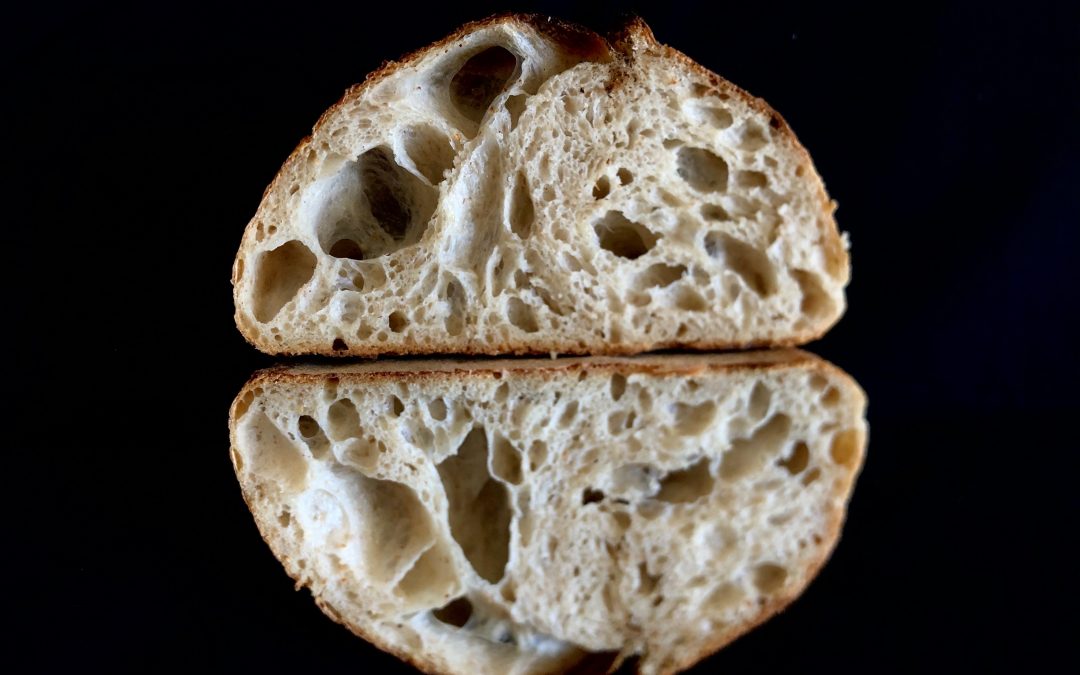
Waste not, want not. We’re trying very, very hard to live a much more sustainable lifestyle and to really take note of what we buy. In the past, we might have popped into Manchester and come bag with bags of *stuff* that we just didn’t need. We don’t do this now. Because we’ve kind of had to start from scratch, with our Istria house, we’ve had to be a lot more careful. OK, we had all of Manchester furniture and boxes of accessories etc, but we also now have a house with a whole lot more floorspace, so we’ve had to think carefully about how we furnish and accessorise it. Upcycling and recycling has played a much bigger part this time around – and it’s very satisfying to see something we’ve actually created. But this is not the only aspect of our lives, where we’re trying to be more careful. Rather than chucking food which we think looks a bit “off”, we now try to eat what we buy when it’s fresh. Or, certainly in my case, being a bit braver with food and not think I am going get food poisoning if it’s a day or two past its best. Like the ciabatta loaf that hadn’t been eaten quickly enough this weekend, and was too hard to do much with. Like the tomatoes which had gone a bit too soft. Like the jar of anchovies which had been opened for a pizza a couple of nights previously and needed to be eaten. Then I remembered a dish I had always intended to make – but then never got round to, because I’d always chucked the perfect ingredients for this recipes. Those a bit on the stale side, and just past their best. No excuses this time, as I had everything to hand to make panzanella.
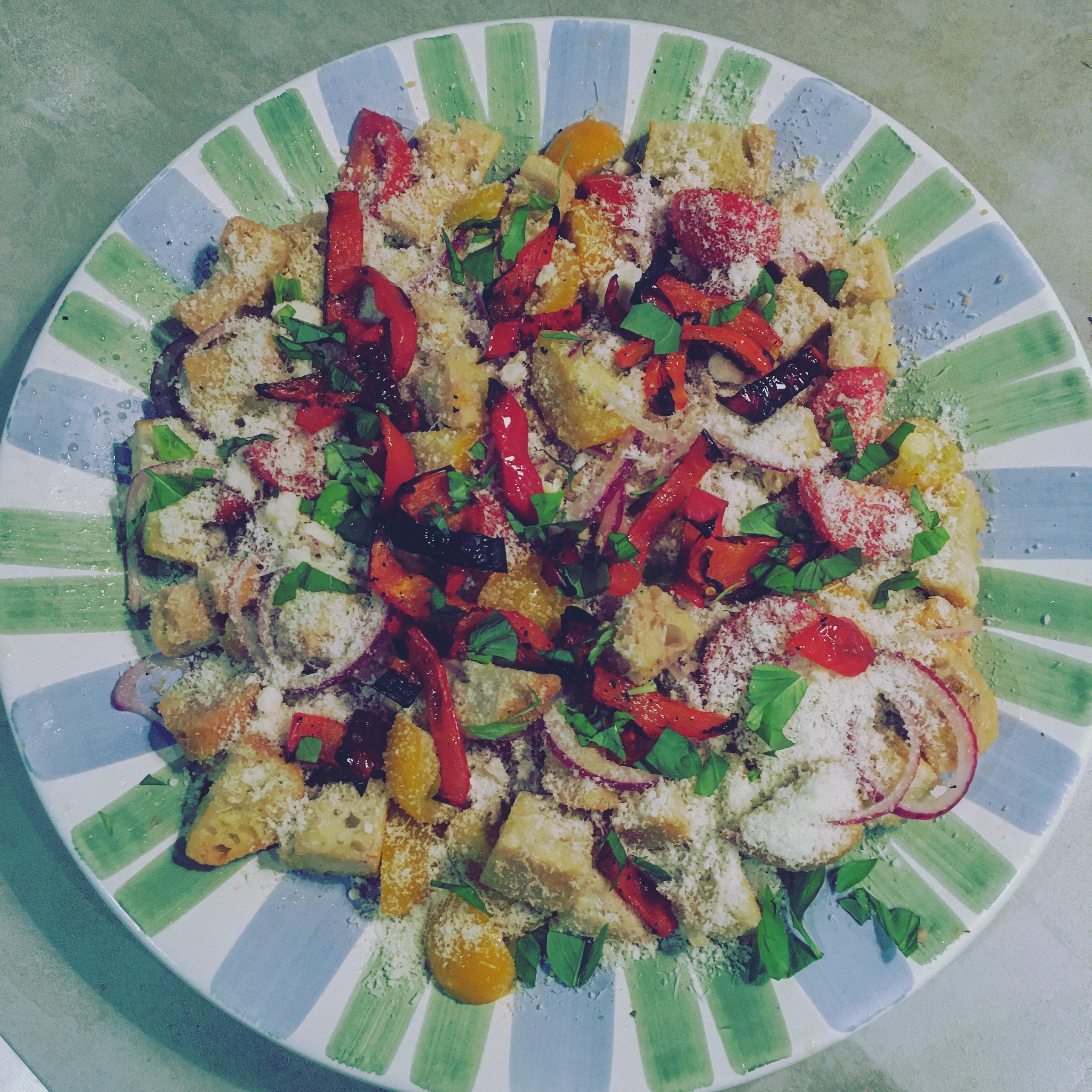
Panzanella (or panmolle) is a Tuscan salad, the main ingredients being stale bread, onions and tomatoes, with red wine vinegar and olive oil. We had a few more ingredients to hand, so threw these in, too. The easiest and quickest dish to make – even adding in the additional time to roast the peppers.
what you’ll need
- Stale ciabatta loaf
- Over ripe mixed tomatoes, roughly chopped
- 1 handful small capers (drained)
- 1 small red onion – peeled and finely sliced
- A couple of red peppers, chopped & roasted – make sure the skin blackens in places for extra flavour
- About 10 small anchovy fillets in oil, drained and chopped up
- Red wine vinegar
- Extra virgin olive oil
- Parmesan cheese
- Salt & pepper
- Torn up fresh basil leaves
what you’ll need to do
- Chop the red peppers, smother with olive oil and black pepper and roast for about 30 minutes.
- Place the chopped tomatoes in a big bowl and season with salt and pepper, and then add the red peppers when roasted.
- Rinse the capers, squeeze out any excess liquid and add to the bowl, along with the sliced, red onion, ciabatta and anchovies.
- Toss the mixture together with your hands, then stir in a splash of red wine vinegar and about 3 times as much extra virgin olive oil.
- Taste and add a little more salt, pepper, vinegar or oil, if needed.
- Tear in the basil leaves, stir together and grate parmesan cheese over the salad.
Serve, with a lovely glass of chilled wine. The perfect Italian salad, using what you probably have in the kitchen anyway.
by Helen | Sep 1, 2020 | Lifestyle
I’m a big fan of easy-peasy dishes, which include as few pots and pans as possible. And, as little time spent in the kitchen, as possible. Summer here has been very hot and currently we don’t have the luxury of air con, so our summer cooking has involved many BBQs and salads and things which are left to themselves, so we can escape the heat of the kitchen. I caught an advert on TV for Jamie Oliver’s new series & part of the clip was Cauliflower Cheese Pasta – the tiny bit that I saw was enough to get me out purchasing a fresh cauli, as I knew that this dish would be a stunner. And it was!
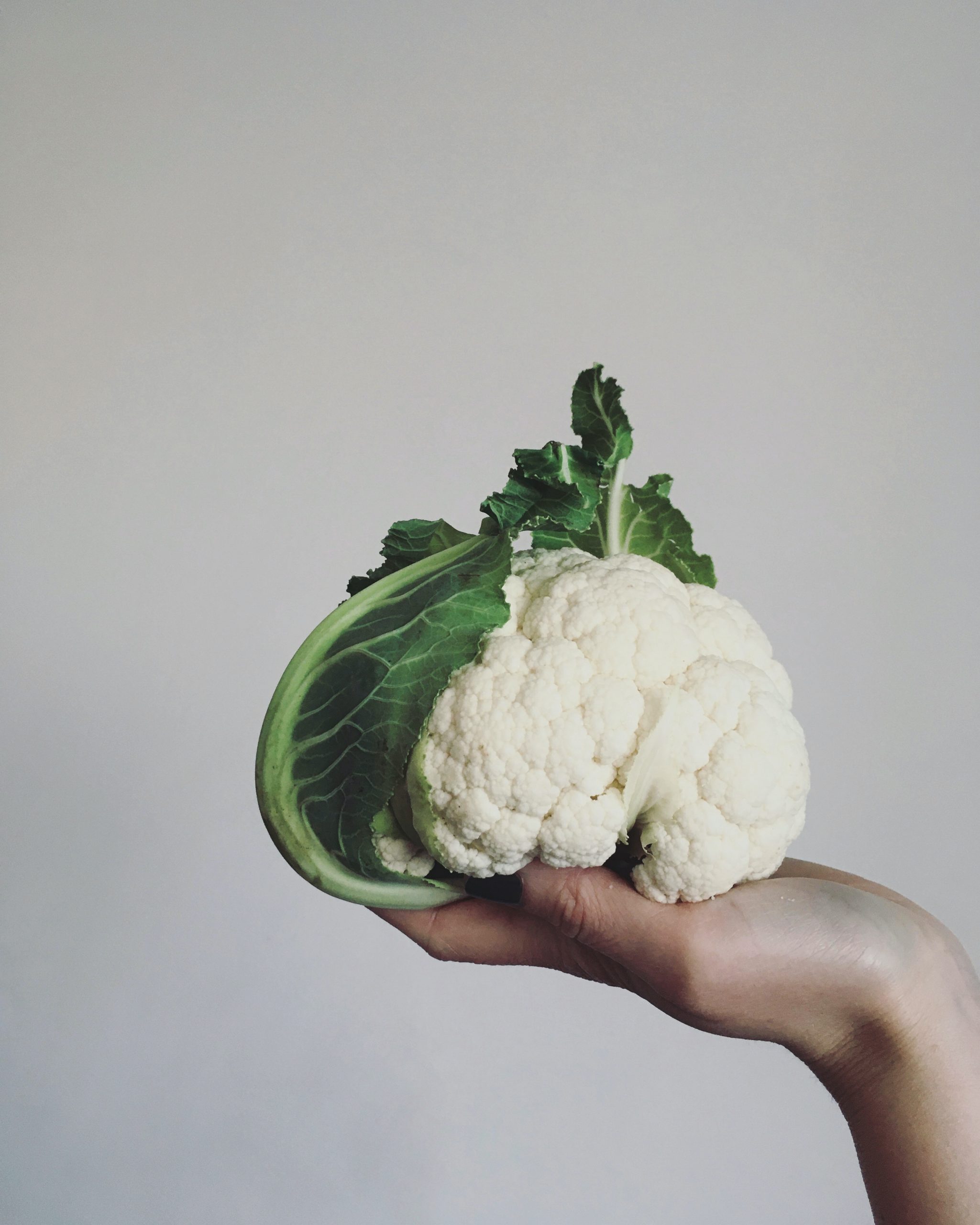
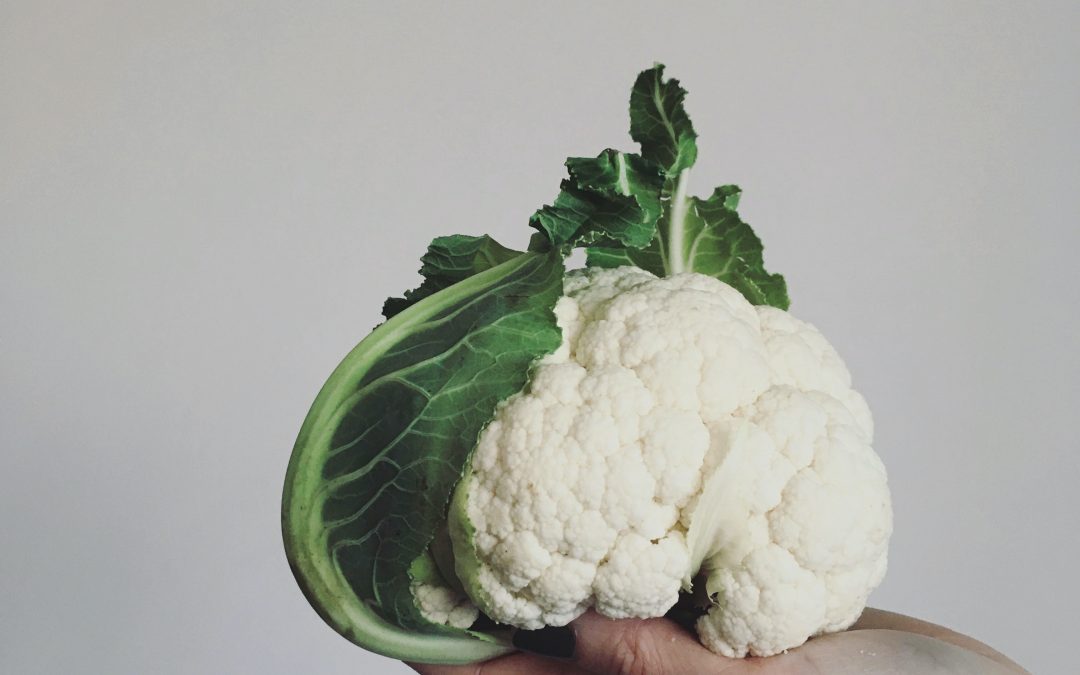
The outer leaves of my cauliflowers usually end up in the compost bin, as I’m never really sure what to with them. Well, this recipe clears that one right up. All parts of the cauliflower are used. And I bet if I told you that this recipe is actually a spaghetti dish, smothered in the creamiest, silkiest sauce – made up mostly of cauliflower – with a crispy, crunchy topping (those leaves!), you probably wouldn’t believe me. So, here’s the recipe and how it turned out…
what you’ll need
- 100 g stale bread (we used frozen breadcrumbs)
- 2 cloves of garlic
- ½ a head of cauliflower (400g)
- olive oil
- 1 onion
- 400 ml semi-skimmed milk
- 300 g dried spaghetti
- 70 g Cheddar cheese
what you’ll need to do
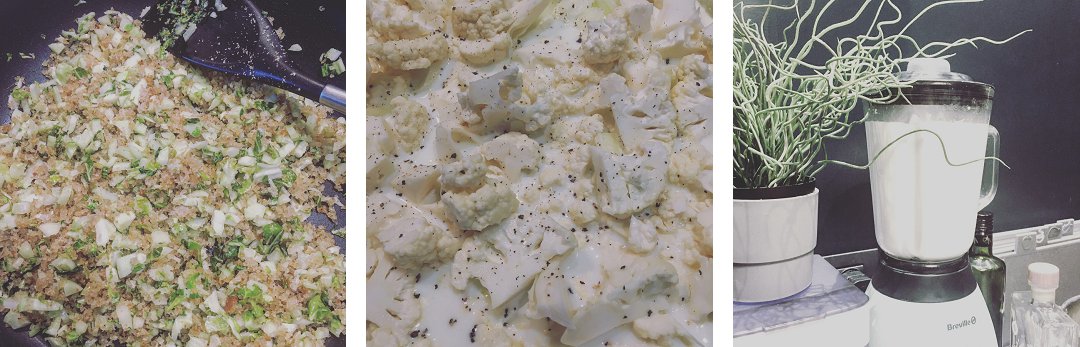
- Tip the breadcrumbs into a food processor.
- Peel and add the garlic, along with a couple of outer leaves from the cauliflower
- Add ½ a tablespoon of olive oil and blitz
- Tip into a large non-stick frying pan on a medium heat and cook for 15 minutes, or until golden and crisp, stirring occasionally and put to one side, in a bowl
- Meanwhile, peel the onion, then roughly chop with the cauliflower, stalk and all
- Pour in the milk and add the chopped veg, bring just to the boil, then reduce the heat to low, cover and simmer
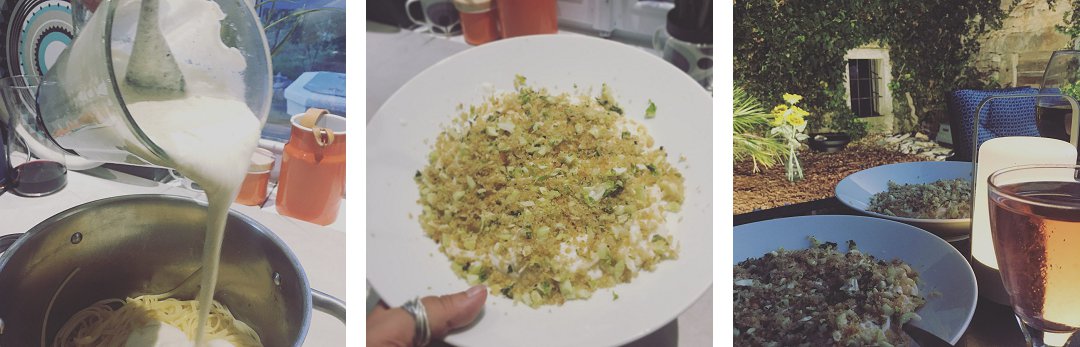
- Cook the spaghetti in a pan of boiling salted water and just before it’s ready, carefully pour the cauliflower mixture into the processor
- Grate in the cheese, blitz until super smooth, then season to perfection, and return to the pan
- Drain the pasta, reserving a mugful of starchy cooking water
- Toss the pasta through the sauce, loosening with a splash of reserved cooking water, if needed
- Serve with the cauliflower cheese spaghetti sprinkled with the crispy crumbs
This dish really is the best variation on a cauliflower cheese recipe I’ve evre had. Because it uses spaghetti, rather than pasta shapes, it seemed to feel a lot less “bulky”. And although I adore cheese, and can sometimes over use it, I stuck largely to the recipe – and I definitely don’t think the taste suffered in any way. It was also good to use a vegetable and know that absolutely none of it had gone to waste.
by Helen | Aug 18, 2020 | Lifestyle
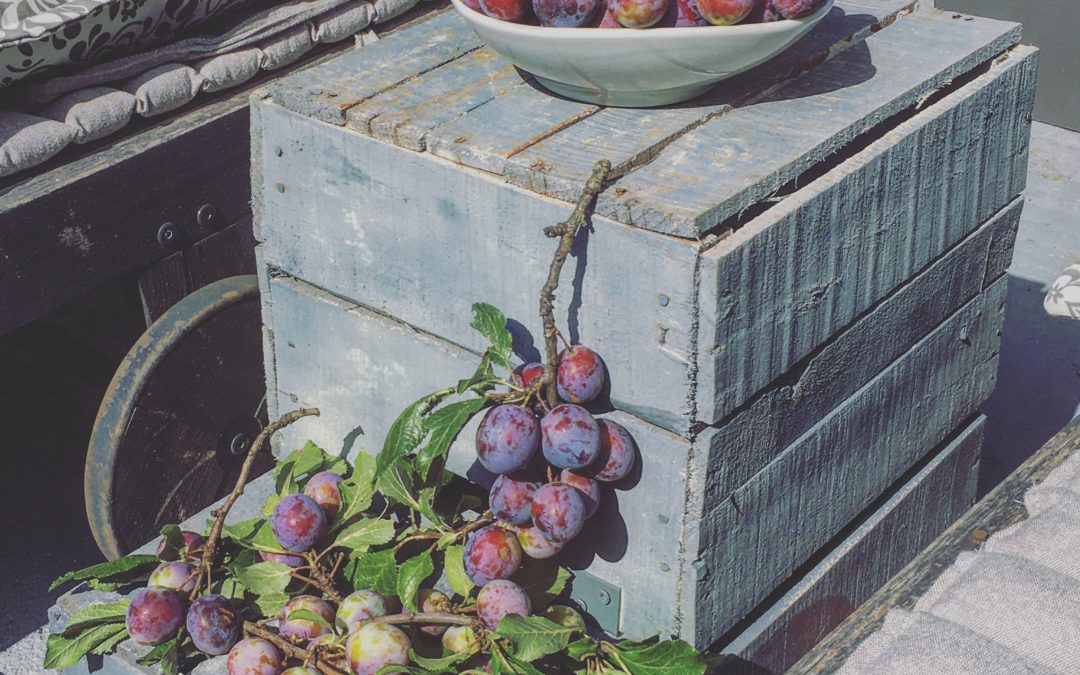
For the first year since we’ve been here, the damson trees around the garden, are absolutely laden with fruit. Maybe they have been in previous years, too, and possibly we’ve been too busy with summer visitors and renovation work, to notice, but we’ve definitely noticed this year. The bees and butterflies are in abundance, buzzing around the trees and tucking into the fallen fruits. We even have a rabbit who visits and seems to almost get intoxicated on the fruit. The trees (middle in photo below) are heavy with them and the thud of falling fruit is a familiar sound this summer. We’ve been picking and cleaning the damsons for a couple of weeks now and freezing them – and after a supermarket run to buy some cheap gin, we’ve started making the damson gin…


Today has been the perfect day, as after days and days of sunshine and high temperatures, a storm rolled in, so we had a day indoors. As we’ve never fruit trees before, I’ve never made any kind of gin, assuming it to be very difficult. Well, not so!
A litre bottle of fairly cheap gin (wasn’t going to use the good stuff) was divided between two sterilised kilner jars. 500g of our frozen damsons were bashed up a bit with a mallet, in the freezer bag, and 250g added to the gin in each jar. 125g of golden caster sugar was then added and both jars given a good old shake. This’ll be repeated daily for a week, until the sugar has dissolved and then the jars will be put it in a cool, dark place and left for 2-3 months.The plan then will be to use a coffee filter cone, to hopefully achieved a refined gin, and the liquid will be strained through it. This will then be decanted into clean, dry bottles, which will be sealed and labeled. By Christmas, we hope the gin will be ready to drink 🙂 Meanwhile, I’m just liking checking on my first attempt at gin distillery…


by Helen | Jul 30, 2020 | Lifestyle
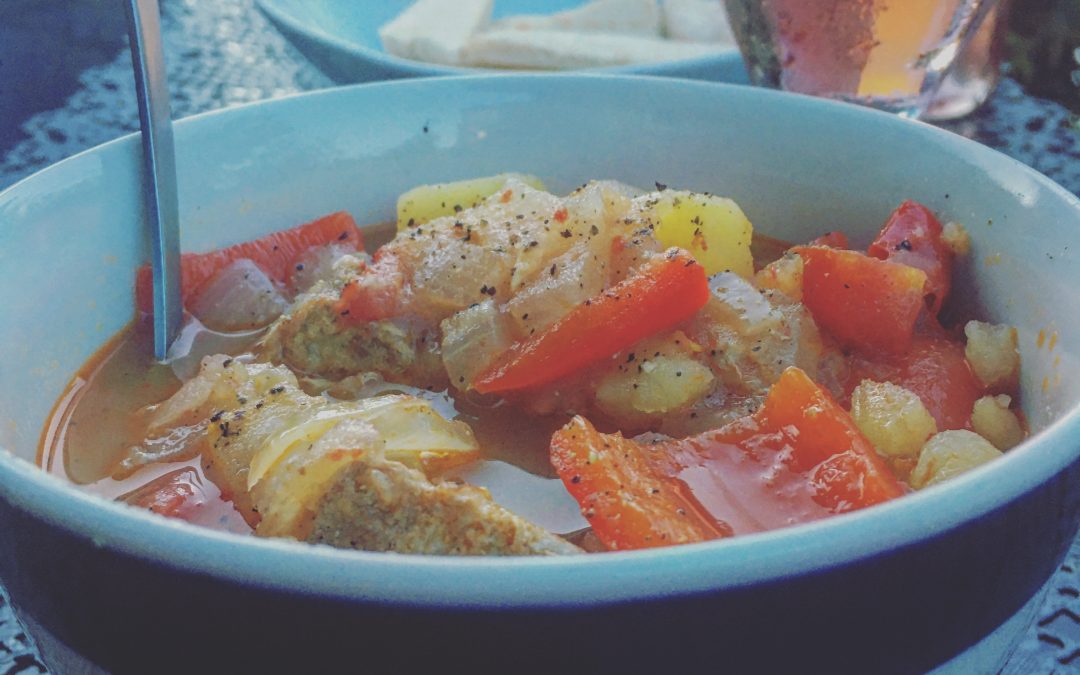
I have absolutely no idea if this dish has any Greek roots but it just reminds me of those oh-so-wholesome stewy-fish dishes that you often find in Greek tavernas. The ones located right next to the sea, with a bamboo awning, covering you from the hot sun as the water laps at your feet. The ones where the fish is so fresh, you’ve just watched it being caught.
Unfortunately, despite pretty close to the Adriatic now, we’re not good at fishing and so our tuna was of the frozen variety. But handily in cubes – so perfectly cut already for a stew or a skewer on the barbecue. I like nothing more than a good stew, where everything is tossed into one pot or pan and allowed to just bubble away and get on with things, and this is pretty much what this dish is.
what you’ll need
- tuna – we used frozen cubes, but if you fancy cutting up fresh tuna, that’d work just as well, if not better
- two large potatoes, peeled and cubed
- two peppers, de-seeded and roughly chopped
- one fresh chilli, de-seeded and chopped finely
- two large cloves of garlic, crushed or finely sliced
- one large onion, roughly chopped
- chopped fresh tomatoes
- olive oil
- chilli flakes
- veggie (or fish, if you prefer) stock
- a glug of white wine
- salt & pepper
- fresh parsley

what you’ll need to do
- Sear the tuna cubes (sprinkled with sea salt) in a skillet, with olive oil (just a couple of tablespoons) on a high heat, for about 3 minutes, turning all the time so that all sides brown. Set aside on a plate.
- Boil the peeled and cubed potatoes.
- Saute the garlic, onions, peppers and fresh chillies until soft. Season with salt and pepper and a sprinkling of dried chilli flakes.
- Add the boiled potato cubes and roughly chopped fresh tomatoes, with about two cups of veggie stock (or fish stock), and a splash of white wine.
- Simmer for about 30 minutes, until the liquid begins to turn to a light broth consistency.
- Take off the heat and add the browned tuna cubes and sprinkle with fresh parsley. Leave for about three minutes for the the tuna to begin to soak up the broth.
Serve with crusty bread or sourdough, or as we did, warm pitta breads. Summer in a bowl…