by Helen | Feb 2, 2021 | Interiors, Spain, Travel

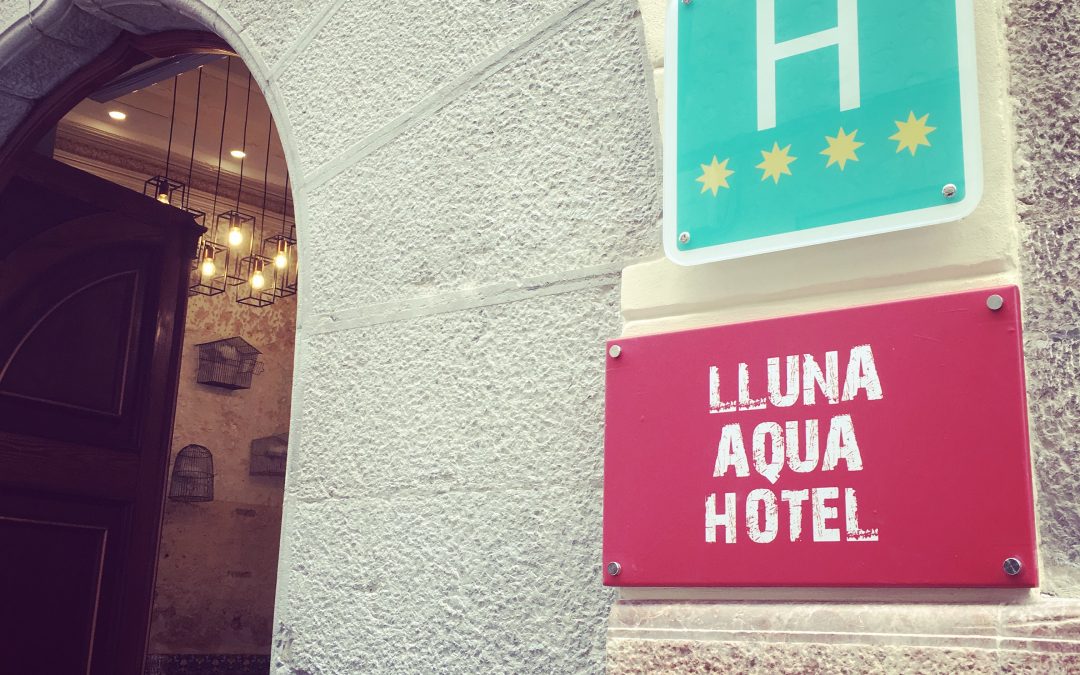
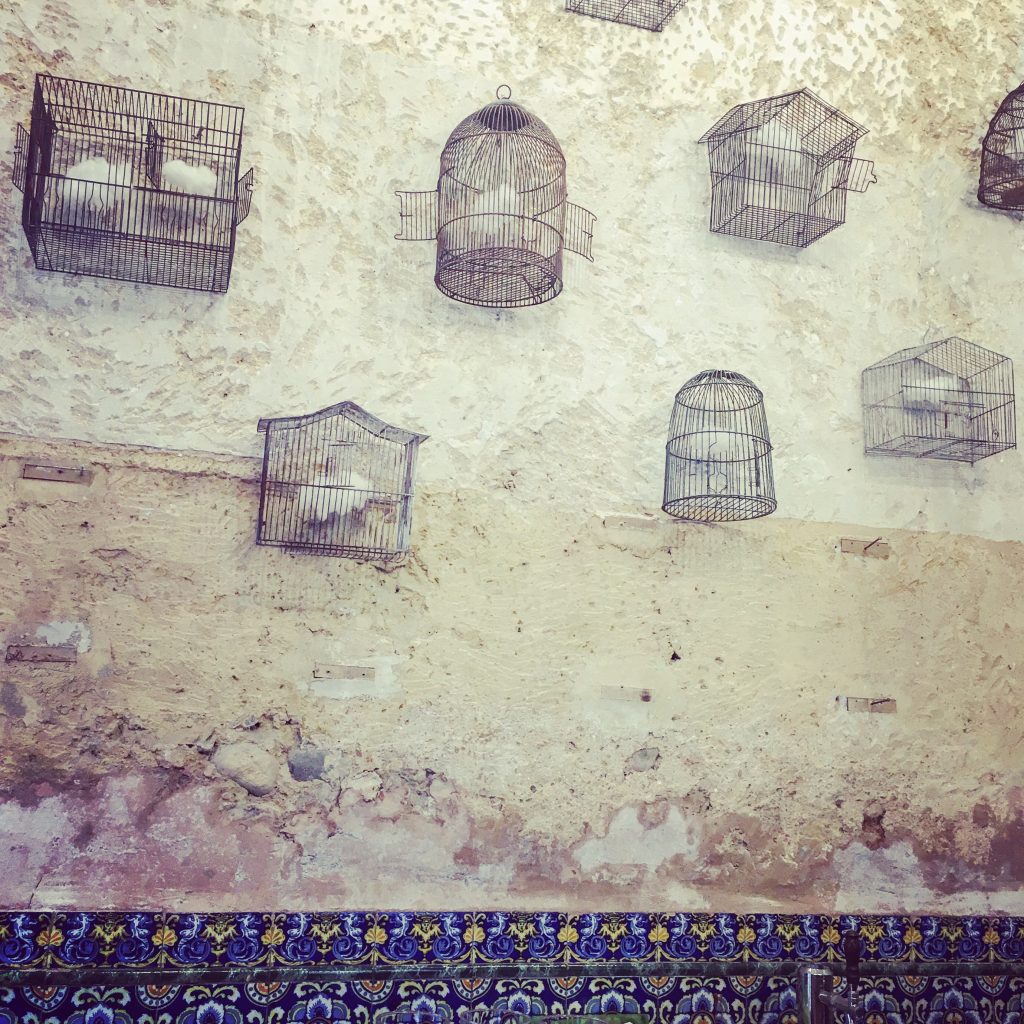
When we last visited Mallorca, one of the hotels we booked was the Lluna Aqua Hotel in Sóller. Housed in a traditional Mallorcan townhouse, which we were told had been empty for over eighty years, the renovation had only recently been completed and the hotel only opened a few months previously. It’s located on the bustling main thoroughfare of Carrer de sa Lluna, but once inside the cool interior, it’s peaceful and restful. The renovation has been beautifully done, with as much of the original interior retained and restored. Original Spanish tiles are very much in evidence, elaborate ceilings and beautiful dark wooden furniture. The main wall behind the reception area has been taken back to the the plaster, which looks lovely – and with the addition of suspended bird cages, full of fluffy clouds…
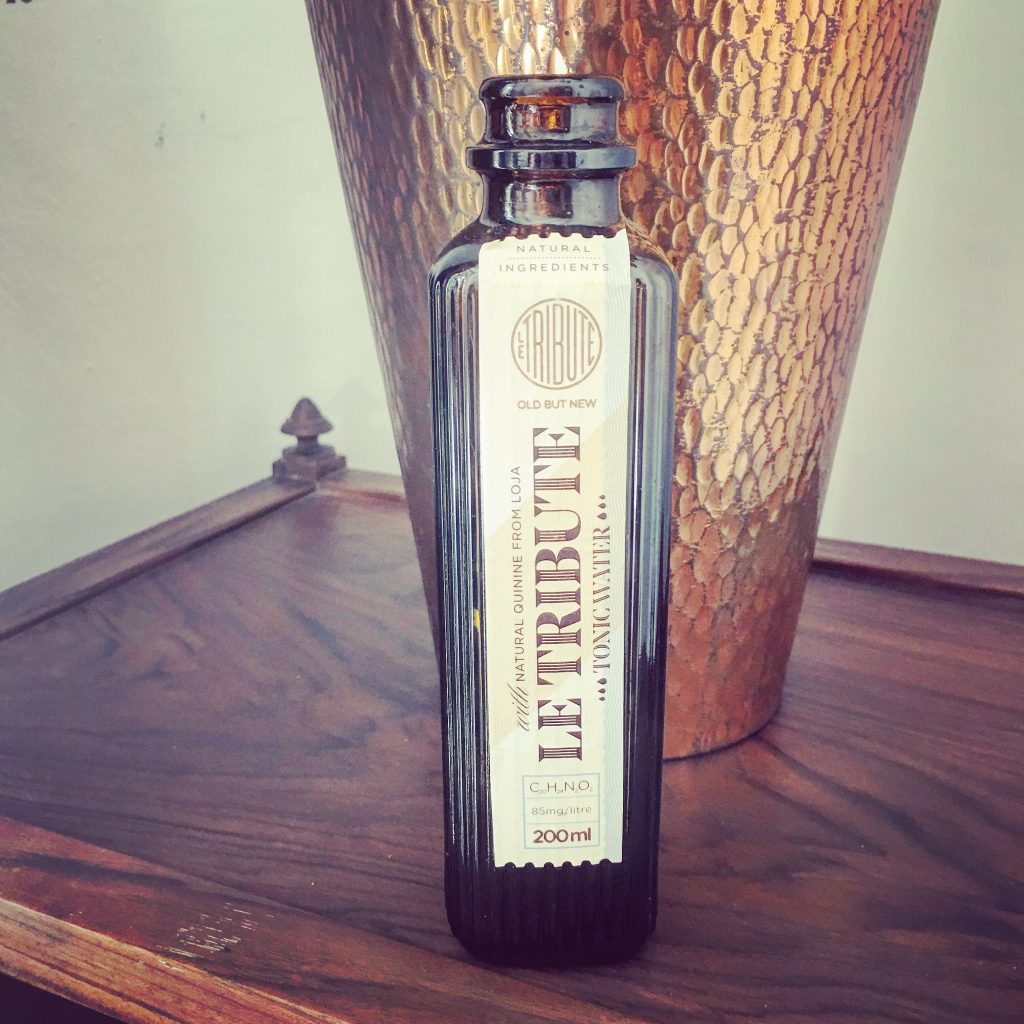
A lovely touch on arrival greeted us – a welcome Cava, meaning that check-in is a much more leisurely process. The reception staff are just lovely – Catarina especially, gave us lots of information about good places to eat (off the tourist trail). If you stay here, and she recommends places to you – go to them! She’s a mine of priceless local information and every single place we tried, that she recommended, was faultless. We had a perfect start to our stay as we were advised we’d been upgraded. The room we had originally booked had a problem with the shower and so as well as an upgrade to the only room with a terrace, overlooking the mountains, for our “inconvenience” (!) we were also informed that during our stay the mini bar would be entirely free. A marvellous start to our stay in the Lluna Aqua Hotel. Even the tonic bottles are a class act – obviously now back at home in Istria, filled with flowers.
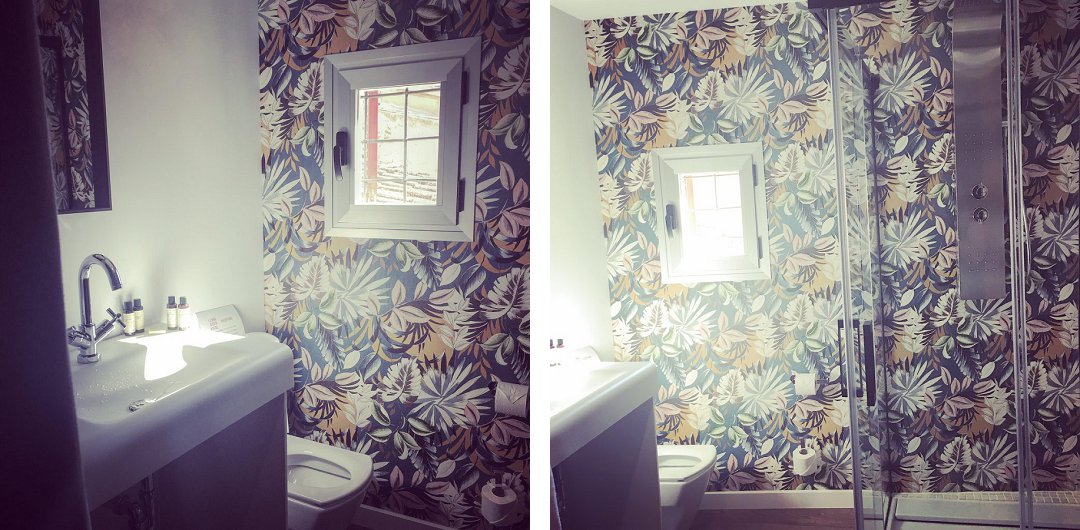
Our room was a bit of a stunner. It was unusual in that the room you walked into was the dressing room/bathroom which were separated by luscious navy velvet curtains. A big tick here – they were exactly the same as ours at home. Unusually, the bathroom was wallpapered – even inside the huge shower. I’m not sure if this was special wallpaper, or had been treated but during our stay, it all seemed OK when showering.
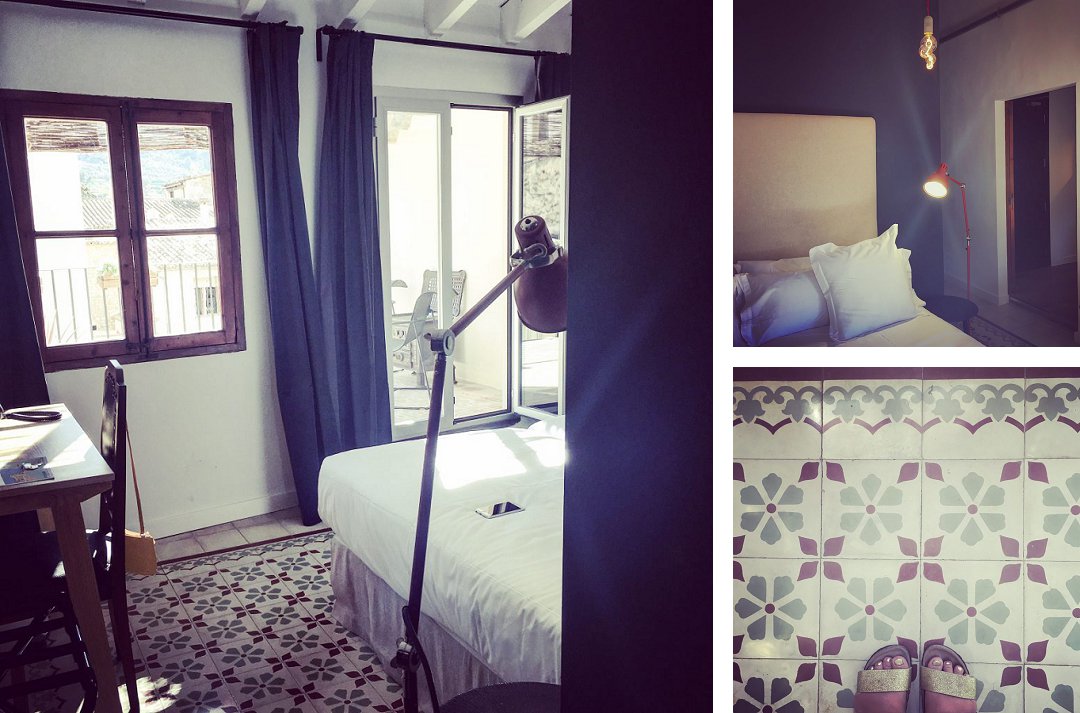
The bedroom area was just oh-so stylish, with the original tiled floor, navy velvet drapes, cool lighting and doors opening out onto the terrace.
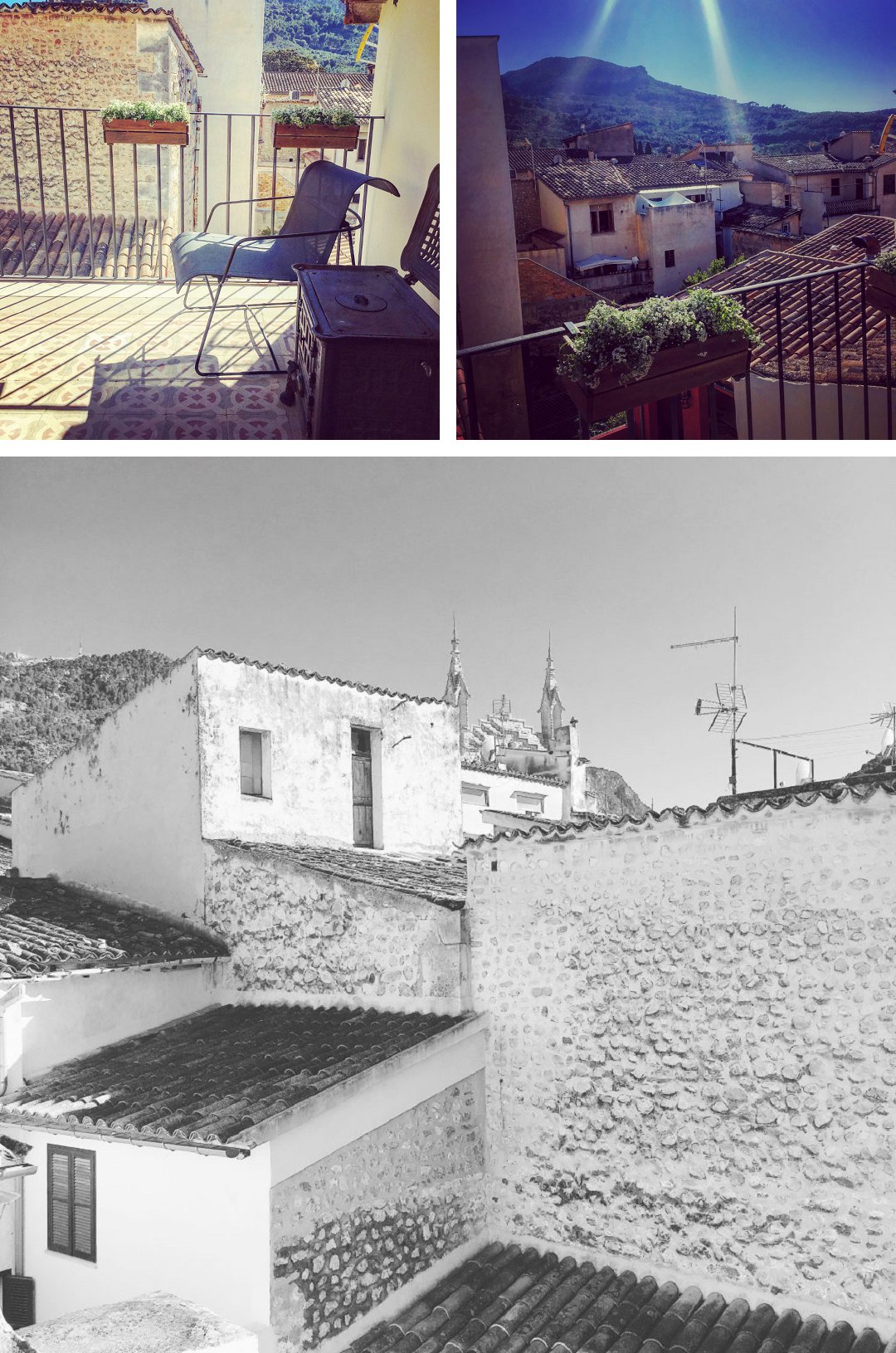
The terrace was a perfect size, with a couple of sun loungers and an ornamental wood-burner. Another tick here as it was very similar to the vintage one we own, which we’ve just sprayed gold. It was a perfect place to pop a glass of cava on, too. And those views! Across the rooftops of Sóller to the mountains beyond.
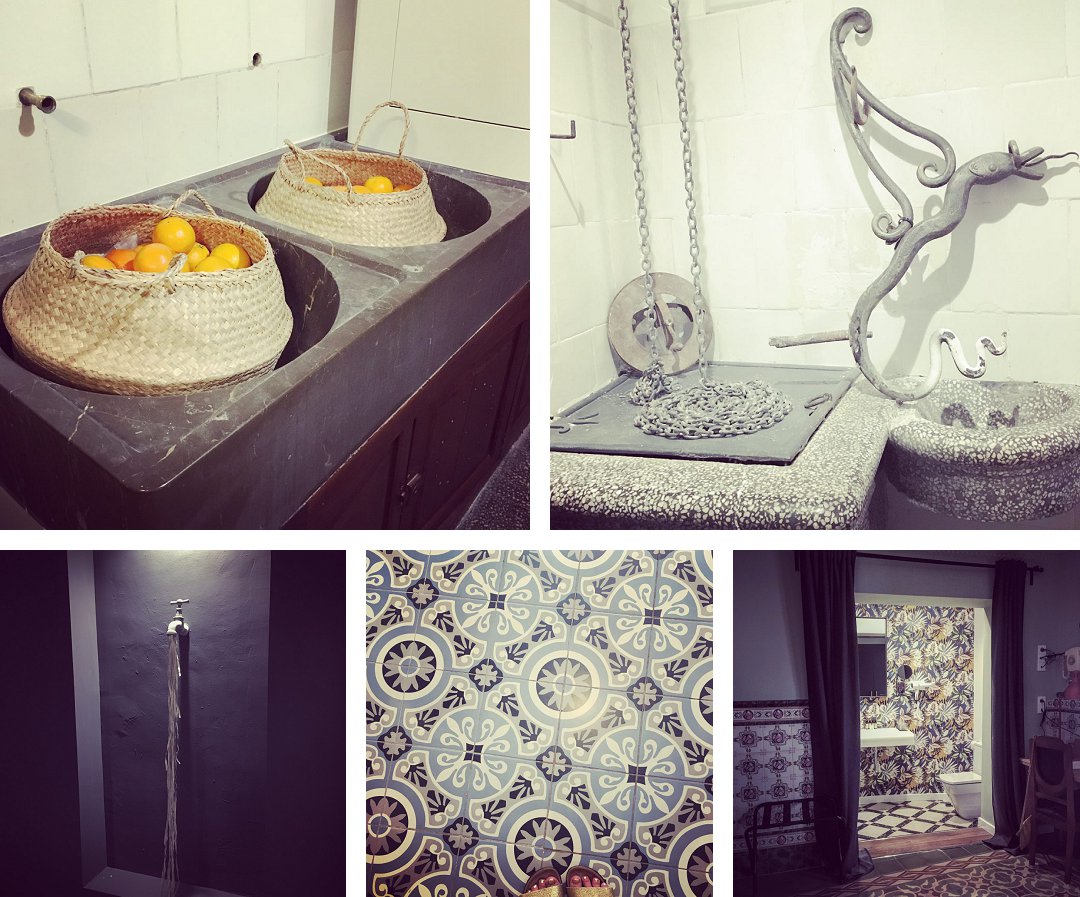
The communal areas of the hotel were again, so well thought out, designed and stylish. Deep, rich colours, metal balustrades, quirky pieces of artwork, tiles, original artefacts repurposed to bring new life to them. Just lovely – a rich source of inspiration for me to bring back to Istria.
We were quite sad to leave Lluna Aqua after two nights, but by another twist of fate – horrible next hotel – we were very lucky to find that they had one room available for the next two nights. And so, hours after checking out, we were checking back in again – and this meant we got to see another room. This room unfortunately didn’t have a terrace, like we’d gotten used to, but it was as cute as a button. Maybe not for those who want absolute privacy though, as only a pair of those lovely navy velvet curtains are there to protect your modesty…
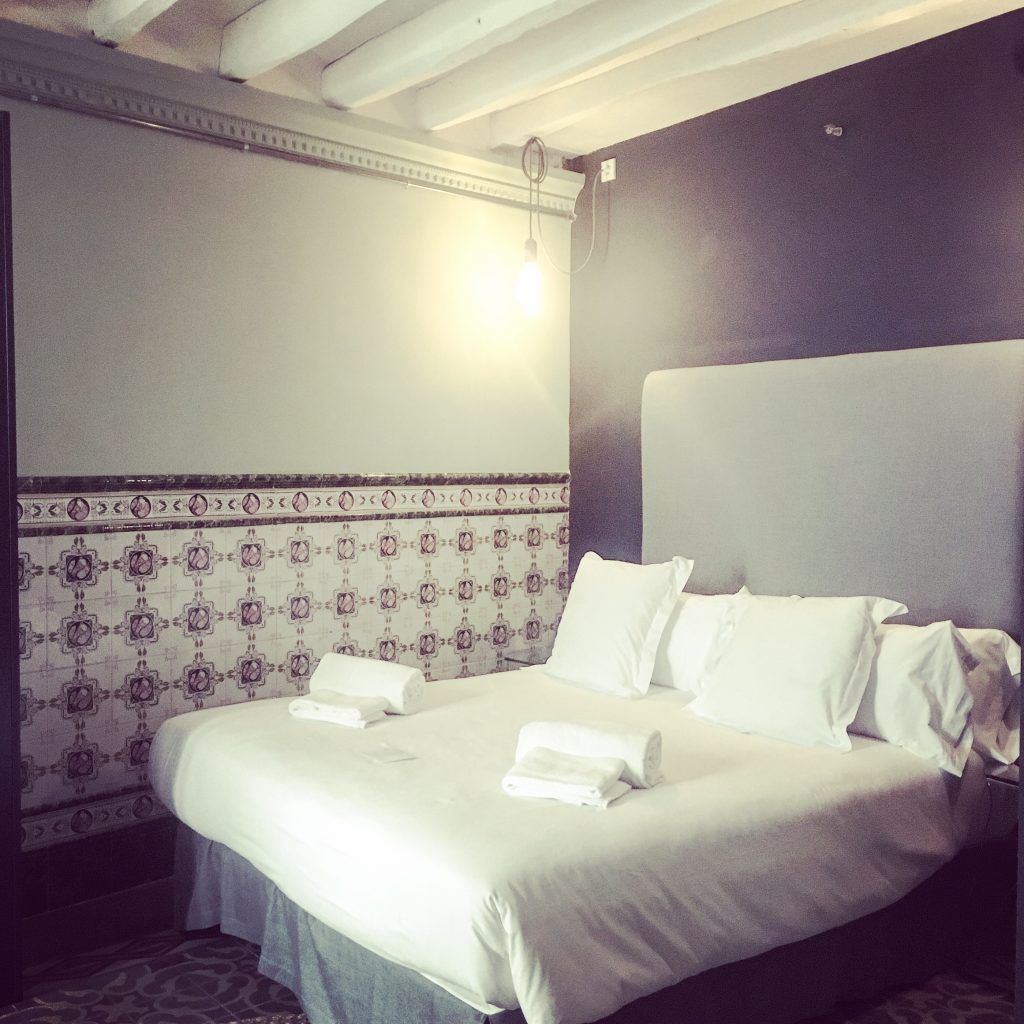
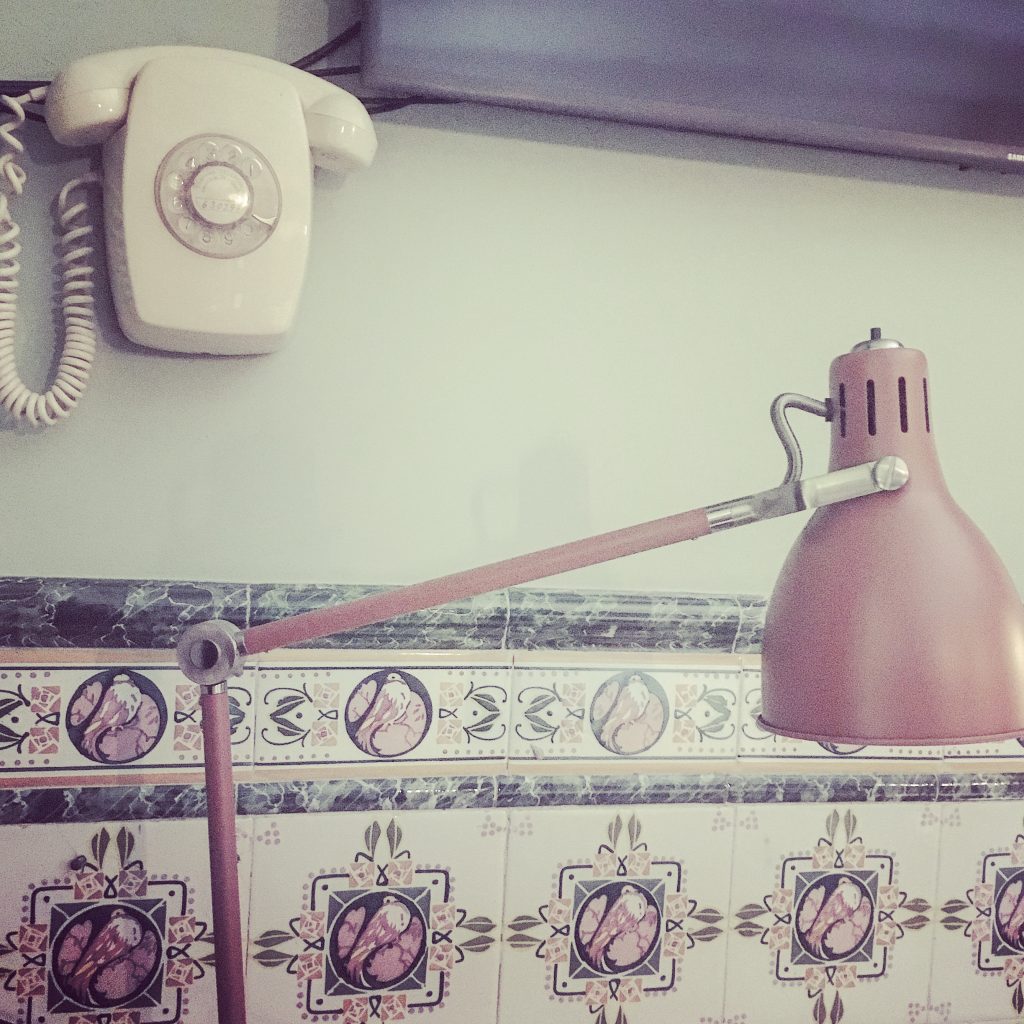
And, again those tiles. And attention to detail. Loved the quirkiness of this place.
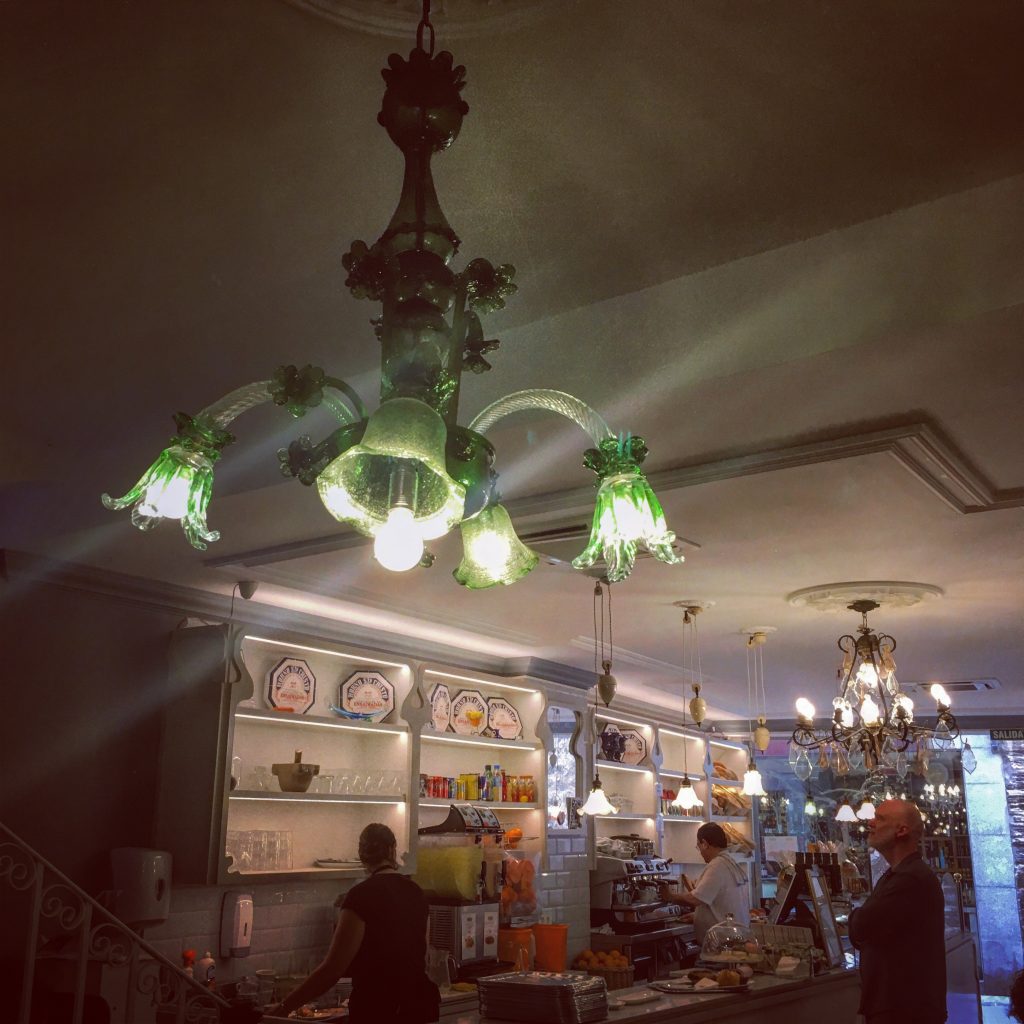
When we stayed, because the hotel has only recently opened, they were still in the process of adding the final touches to the breakfast room (which was due to open within the week), so we were given vouchers for breakfast at the beautiful bakery just next door. It’s worth a visit, just for the pastries and coffee – as well as the gorgeous interior.
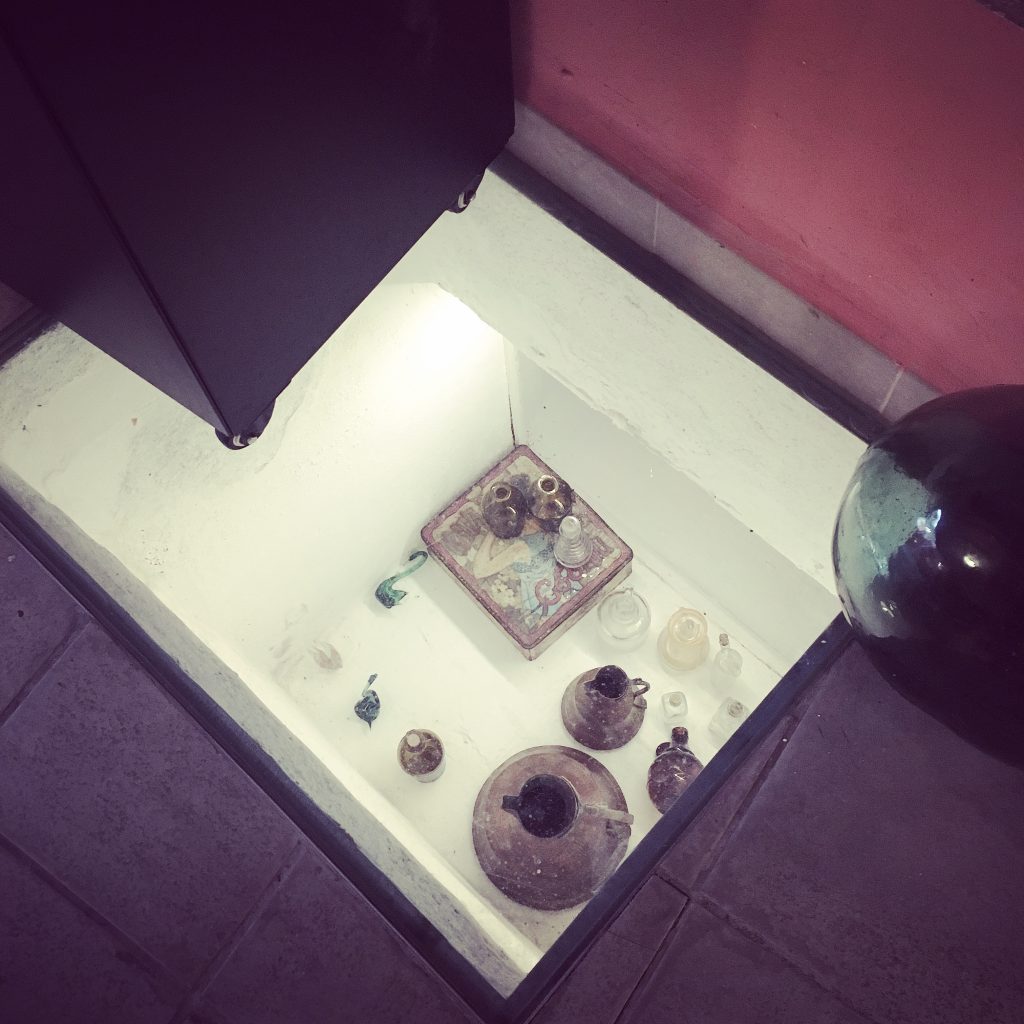
And, what really caught our attention, was the exposed well – just like ours!
As usual, this is not a sponsored or paid for blog post. It’s just what we thought of a very nice place we found – and maybe it’ll inspire you to check out Lluna Aqua Hotel, too.
by Helen | Jan 30, 2021 | Lifestyle
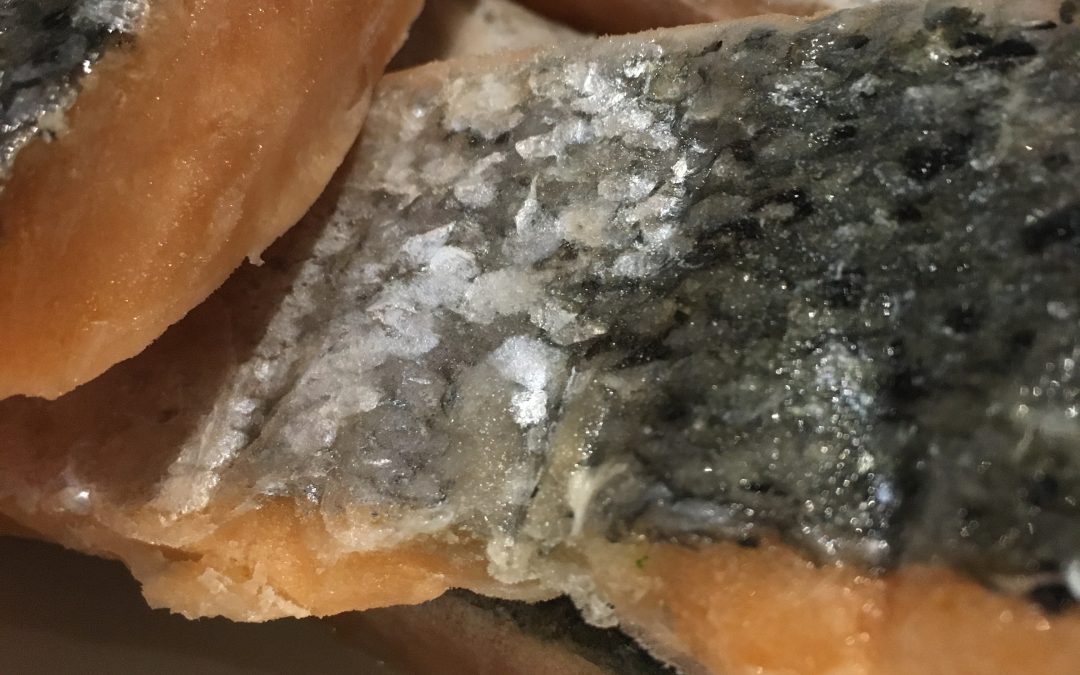
We’re doing a whole lot more cooking at home these days – as everyone is – but we’re dreaming of the time we can occasionally escape the kitchen from time to time, again. Until then though, we’re trying to vary what we eat and try out new dishes. Sometimes we do fall back on old favourites, sometimes we go for things we wouldn’t normally eat. But sometimes, we just have to go for what we can cobble together from the cupboards, fridge and freezer. I found a lovely sounding recipe, for a Salmon & Potato Bake, from Delicious Magazine, but we didn’t have all of the ingredients to hand so had to improvise. The original recipe is below, with our substitutes in brackets :
what you’ll need
- 1kg floury potatoes, cut into 3mm slices
- 1 tbsp olive oil
- 1 large red onion, sliced
- 1 tbsp plain flour
- A few handfuls of baby spinach (didn’t have fresh spinach, so used frozen)
- Butter, for greasing
- 3 salmon fillets, sliced
- 200ml double cream (didn’t have double cream so switched for mascarpone)
- 50g grated Gruyère (used a mix of provolone & parmesan)
what you’ll need to do
- Preheat the oven to 180°C/fan160°C/gas 4. Bring a pan of salted water to the boil, then simmer the potatoes for 2-3 minutes. Drain and set aside.
- Heat the olive oil in a frying pan and gently fry the red onion for 5 minutes, then stir in the flour and season well. Add the frozen spinach to the onions and gently heat until defrosted and cooked through.
- Butter an ovenproof dish and layer up the potatoes, onion and spinach with the broken up salmon, ending with a layer of potato.
- Heat the mascarpone until it liquifies, then pour over the bake. Sprinkle with the cheese and bake for 20-30 minutes, until golden and bubbling.

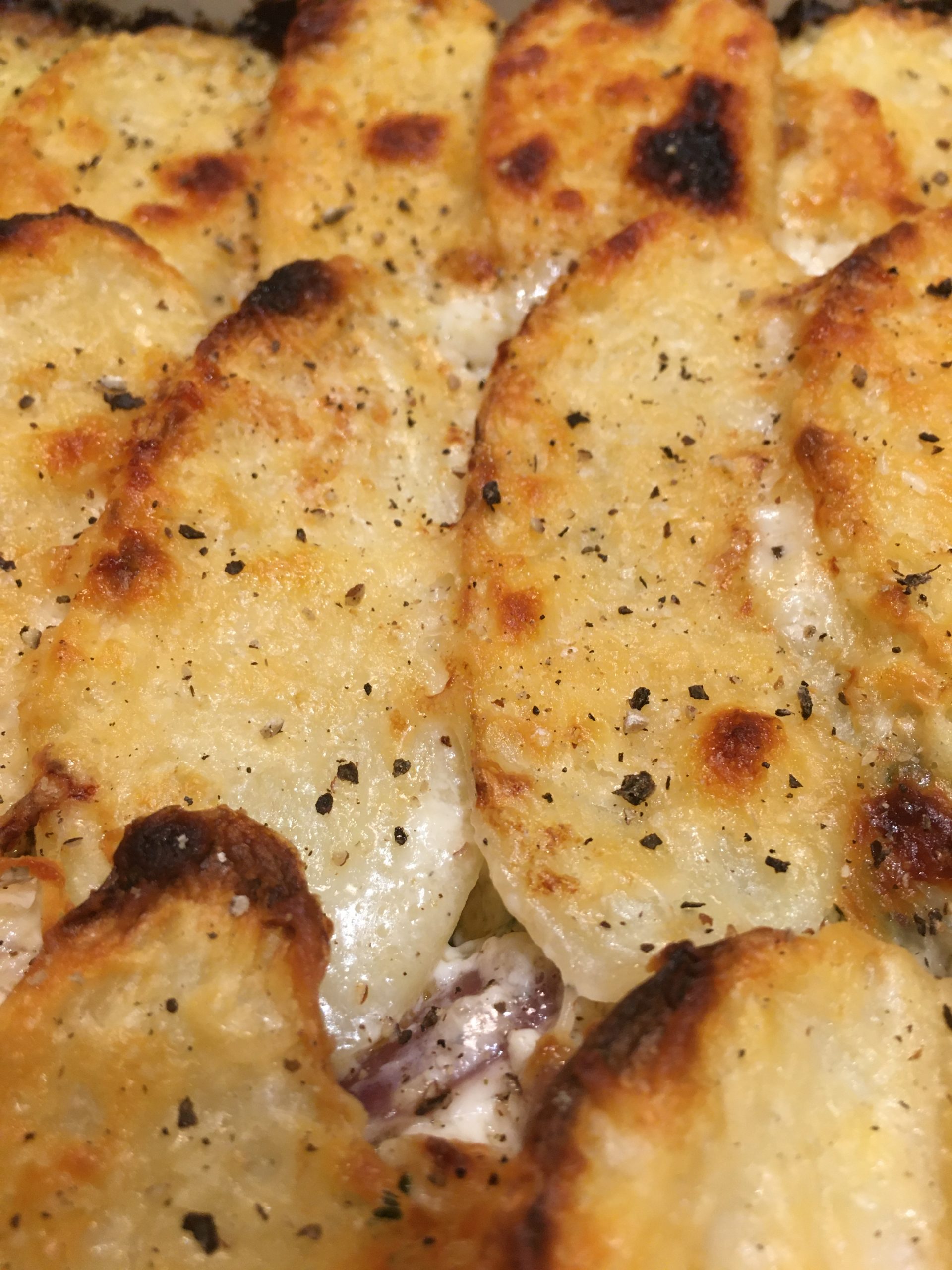
I think that if we make this again, the double cream will make a difference – marscarpone was fine, but I think the cream would just blend in a little better. It’s definitely a winter warmer and it’s a nice end-of-the-week meal as the salmon makes it feel just a little bit luxurious and more of a treat. If you make it, enjoy!
by Helen | Jan 28, 2021 | Lifestyle
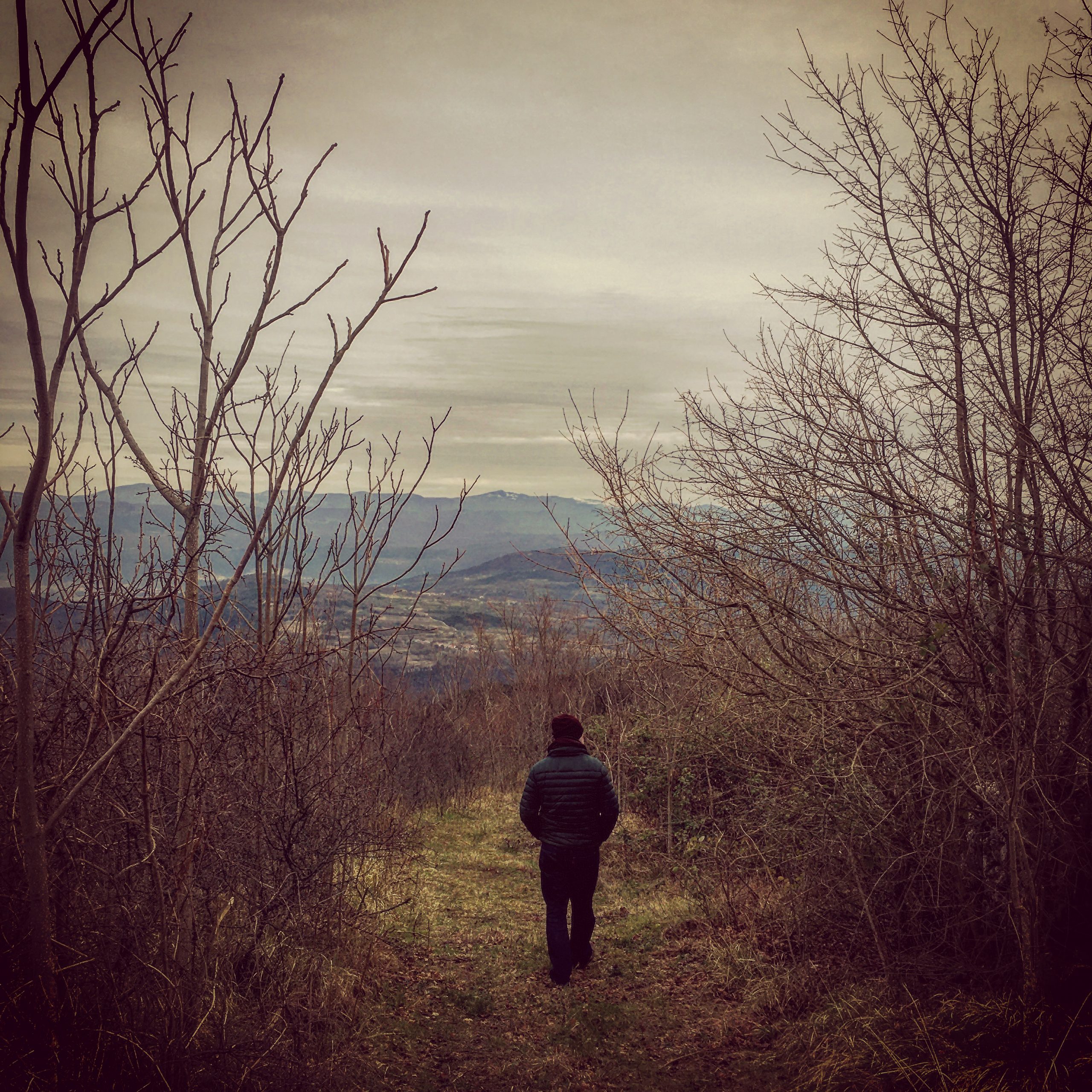
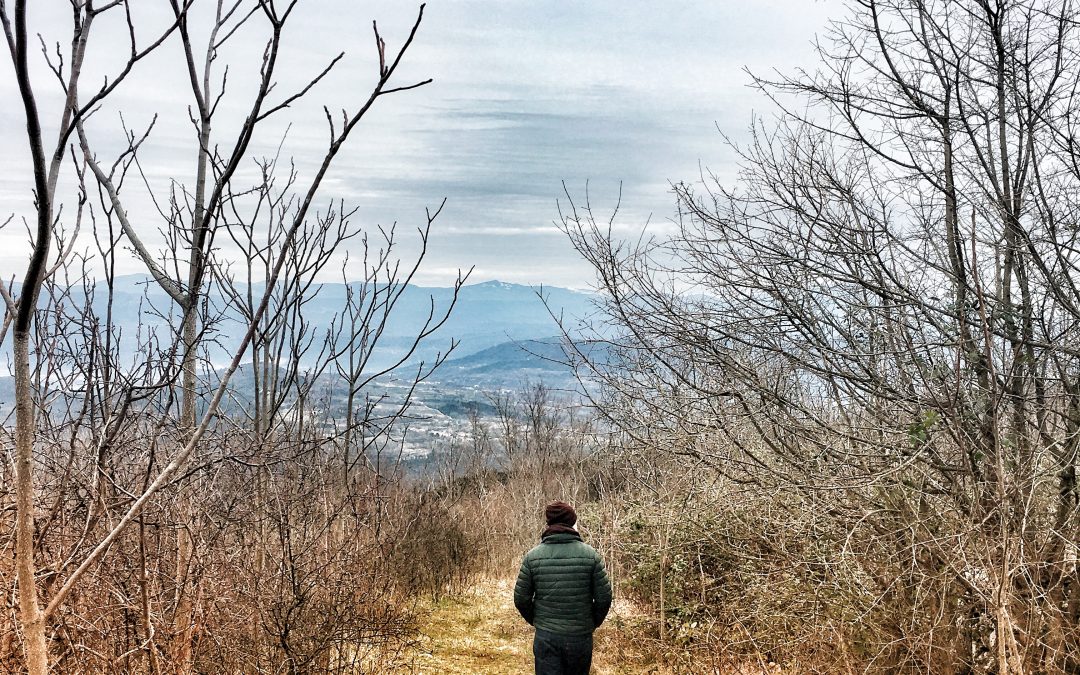
It’s absolutely freezing in Istria at the moment. That’s right, freezing. Not the wall to wall sunshine & heat we’d naively thought we’d be experiencing, all year round 😉 But, we’re also just a little bit stir crazy, having not really left our village (apart from supermarket visits) for over nine months. The same for most people, though, as we live through the craziest times. So, we’re making sure we get out and about in the fresh air every day and walk. Hard to believe, but I’m even doing it in the rain! When it’s especially cold, we don’t stray too far and tend to just walk up to the village and around and back and this gives us a good 2km walk. It’s what we did this morning, getting back to the warmth of the woodburner just before the first snow flurries of the year fell. The picture above is taken from the far edge of the village – if you carried on walking, you’d end up in Slovenia. Those peaks in the distance are the foothills of the Julien Alps. Beyond the ridge, they get higher and higher and there is enough snow for ski resorts – in usual times – to be open at this time of year. To the left of the photo is the Gulf of Trieste and the gateway into Italy. As soon as spring arrives, this view is amazing – the landscape bursts into colour and the trees become vibrant green. A bit different in January, but that’s winter for you.
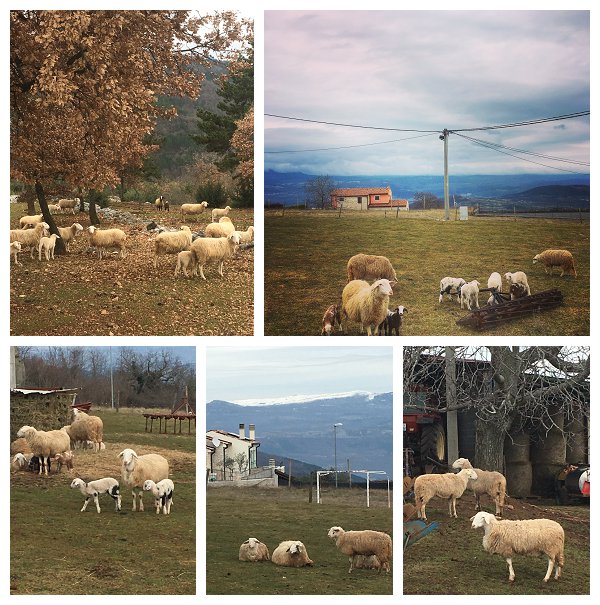
Anyway, this was what we saw on our walk this morning. As much as we loved living just off Burton Road, in West Didsbury, with all of its amenities. there’s something very special about being surrounded now by the sheep and the abandoned properties and the big, wide, expansive views. And, the silence…
The spring lambs are already in evidence – some seem to have arrived a few weeks ago, judging by their size. Unless they grow very quickly, but I’m no sheep expert. What I do know though, is that the all-white lambs are definitely the naughtiest in this particular field of sheep. Unlike their more docile and peaceful fawny brown relatives, the white ones seem to constantly run around, leaping and jumping, and headbutting any other lambs which get in their way. A lovely stop on the walk – I’ve not seen sheep so close up since I was a child, and it was nice to just stop and take in the nature around us.
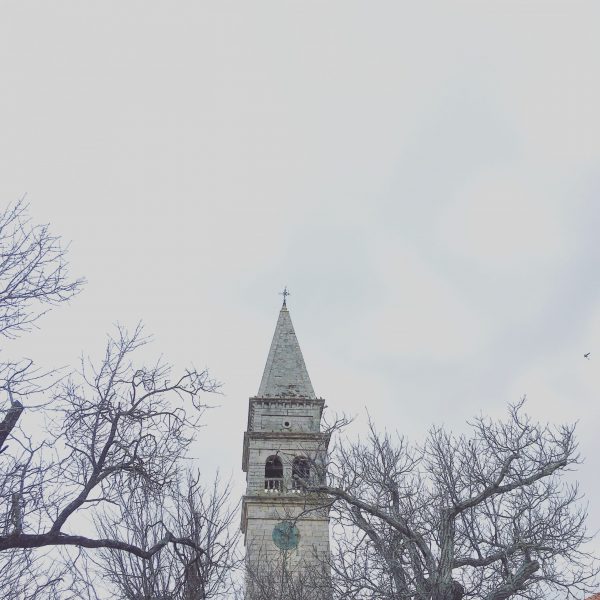
Dating back to the 1860s, this is the stand alone campanile in our village of Zrenj. It’s not attached to the church, it stands on its own – and we love that we can see it from various points in northern Istria. The bells do ring out every Sunday morning when a mass is on, and we love hearing this, as it just reminds us of being in Italy, in particular. (Our village is largely Italian and this is the main language spoken).
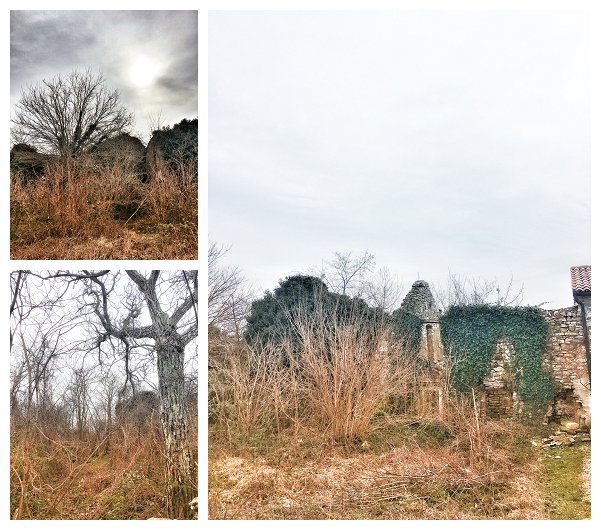
Like everywhere in Istria, our village has its fair share of abandoned buildings. All of these have stories to tell – people fleeing occupiers, or being forcibly removed during times of war and conflict, or people just dying with no-one nearby to take over the property. Property laws in Croatia are crazily complicated IF ownership of a property is not established and nailed down. Many of these buildings are now in a state of abandonment and disrepair, simply because people to whom the property has passed to, are often spread around the world. And, with out the consent of all owners, a property cannot be sold. We sincerely hope that in the not too distant future, the powers that be, look to Italy as an example for the regeneration of these communities. We avidly keep an eye on Italian property websites where abandoned houses, sometimes whole abandoned villages, are put up for sale for a nominal amount, to attract foreign investment – always with the stipulation that a pre-agreed amount must be spent on the renovation, local workers in the main are employed and the property cannot be flipped. The incentives are there to attract people who want to invest long term and be part of the regeneration process. We so hope this happens here.
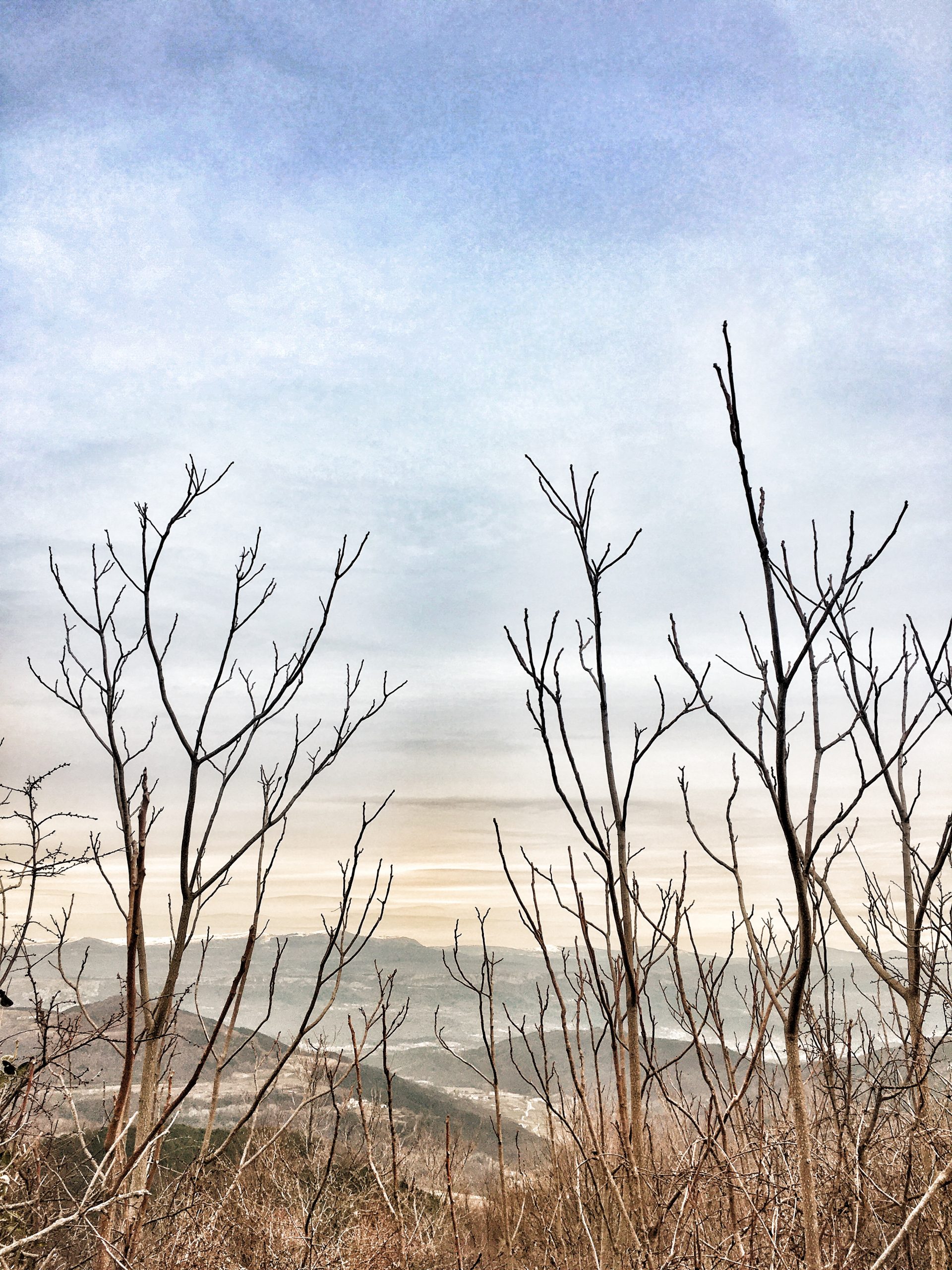
We guessed that snow must be in the air, as the sky had that milky, pinky tone to it, which made even the bleak January landscape look very pretty. We did get our snow when we got back – although it was nothing to write home about. Twenty minutes worth of flakes and then it was over. But who knows? These hills might have a dusting of snow over the coming days.
by Helen | Jan 15, 2021 | Renovation
Ah, Christmas Eve. Snuggled up on the sofa, the woodburner roaring away, lights twinkling, candles flickering, the scent of mulled wine filling the room as we wrap gifts and eat chocolates and watch festive films. That’s what it’s all about, isn’t it? It’s certainly what our plans were on the morning of the 24th, having done the last of the chores and put fresh new bedding on, with the washing machine humming away, in the background. Luckily, we needed something from the outside cellar – if we hadn’t, what next unfolded could have been so much worse, as it would probably have been well after Christmas when we next went into it. It was at this point, I heard the words I didn’t really want to hear on Christmas Eve – “I think we have a leak…”
It did certainly appear that we did – the floor was wet. The first thought was that the new boiler might have sprung a leak – but all the piping was dry and there was nothing dripping. We had had very heavy rains and we wondered if perhaps the strong winds had blown the rain under the door – but it was dry around the door. We were perplexed as we just couldn’t see where the water was coming from. The floor of this cellar room is concrete and in the centre we have interlocking black gym mats – and suddenly we started to see water coming up through the joins. We pulled them back – and we don’t recall ever noticing this before – and saw that water was indeed coming up through the sides of a concrete cover. This was opened – and there was the problem. The washing machine was on its spin cycle and the water wasn’t draining effectively. The level did drop slightly, but not sufficiently and so we knew there was a blockage – and we realised that this drain led to the septic tank outside, and the thought of having an issue with that over Christmas meant we had to act. Fast.
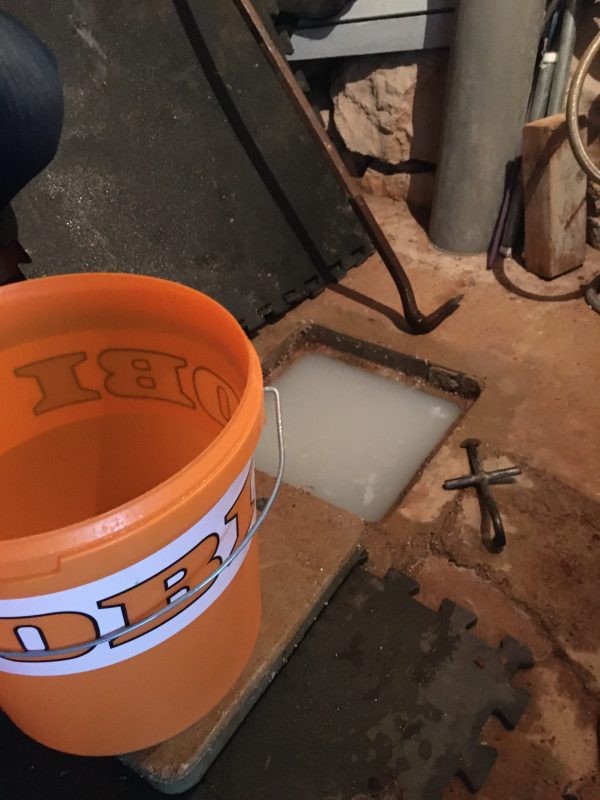
We knew there was no chance of getting anyone out on Christmas Eve, but did work out that our refuse company also empty septic tanks, but they wouldn’t be able to come out until possibly after New Year, so there was only one thing for it. One of us had to roll up our sleeves and armed with a bucket and a big can, start emptying the chamber…
I shall spare you the details, but it soon became very, very apparent that it wasn’t just the washing machine water which was causing the problem. As the level of the water dropped, due to it being emptied manually, we could see that the pipe which fed into the main chamber, under the patio, was blocked, meaning that what was going into the small chamber in the cellar – everything from the dishwasher, shower, sink, washing machine, bath, toilets – wasn’t draining correctly and so was slowly starting to back up. Like I say, if we hadn’t ventured into the cellar on Christmas Eve, I dread to think what would have greeted us next time we went in! The decision was made to then investigate the main chamber under the patio.
When we bought the house, we asked the pertinent questions you would probably ask about a septic tank, never having had one before – and we were assured that we wouldn’t even need to think about it for about ten years. I, in particular, liked that answer, and so we haven’t really thought about it. A quick google search however – which in hindsight, I should have done when we moved in – indicated that domestic septic tanks should be emptied around every 3-4 years. We’ve lived here four years…
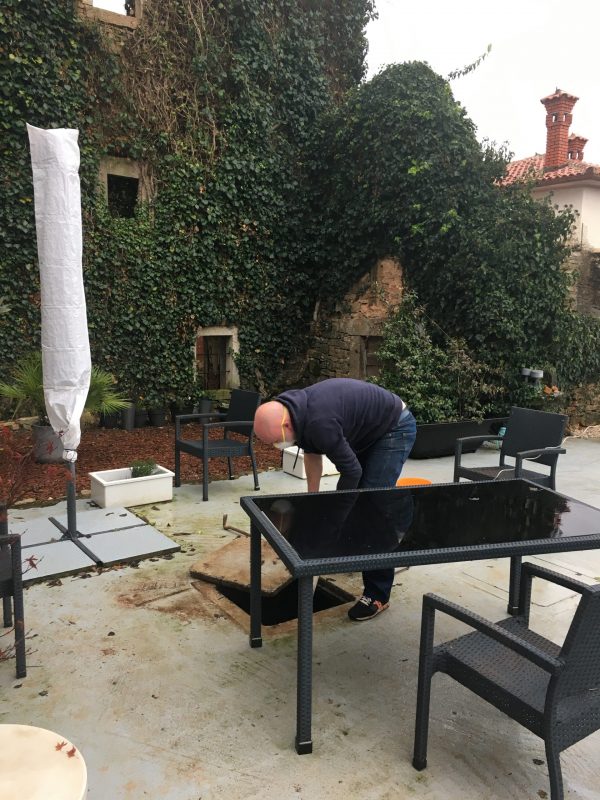
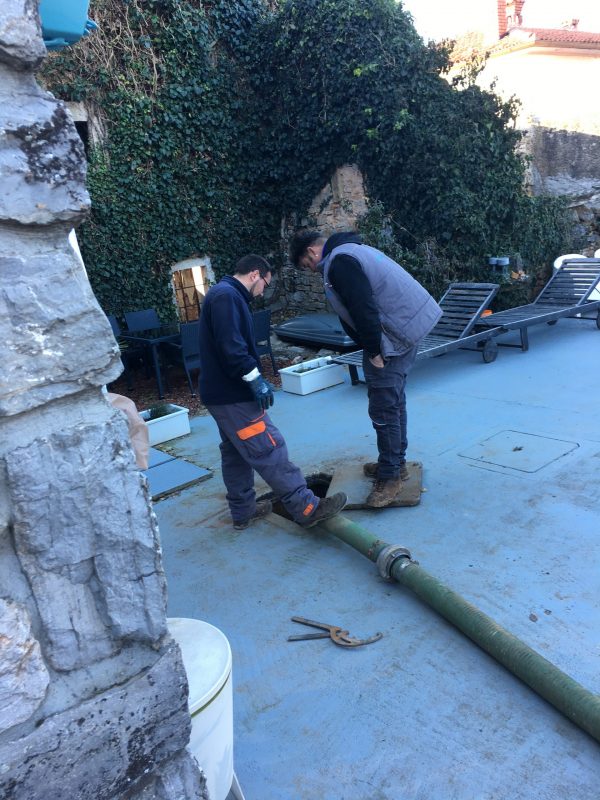
So, Christmas Eve afternoon, we’re in the garden. It’s icy cold, rainy, windy and the cover is off the septic tank. A quick peer inside told us that we needed to get the pipe unblocked pretty quickly – without plumbing rods, and nowhere to buy them from this close to Xmas, we had to use the first thing to hand. Let’s just say one of the garden umbrellas will need to be replaced come spring time ? Luckily, one of us has a much stronger constitution than the other, and the gross task was tackled – and thankfully, we soon had water running much more freely. We knew that we hadn’t resolved it, but at least we’d bought ourselves a little bit of time over Xmas. Although, we definitely considered the implications of using any appliances etc and really tried to keep everything – and I do mean everything – to a minimum.
so, how do you sort a blocked septic tank in istria?
Luckily, we’ve found out, so the new owners of our home can be rest assured that all is sorted, and we can advise what to do and who to go to. It is indeed our local refuse company – although it took a bit of persistence to get someone to assist, as emails and calls were going largely unanswered. Maybe because it was just after New Year, maybe not, because in our experience you have to be very tenacious in your dealings with utilities companies who don’t seem to possess high levels of customer service skills. However, we did finally crack it. An invoice was emailed – as I didn’t know if our septic tank was considered large or small, I went for the large option, as I knew if I’d paid for a small tank to be emptied and we had a large one, the process would have to start all over again – and was paid immediately. Then, silence. Nothing. Nada. Not even an acknowledgment of payment. The phone number I had been given to find out a date for clearance, would ring once then I’d get the “User busy” message. This went on for a good few days and just as I was about to implode, I got a call. The lorry was on its way! As happens here – you rarely get a time, even an approximation. You just need to be prepared. And of course, at home.
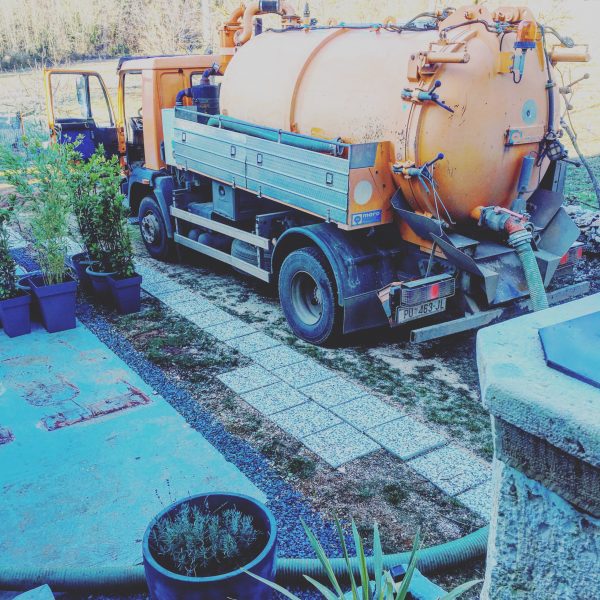
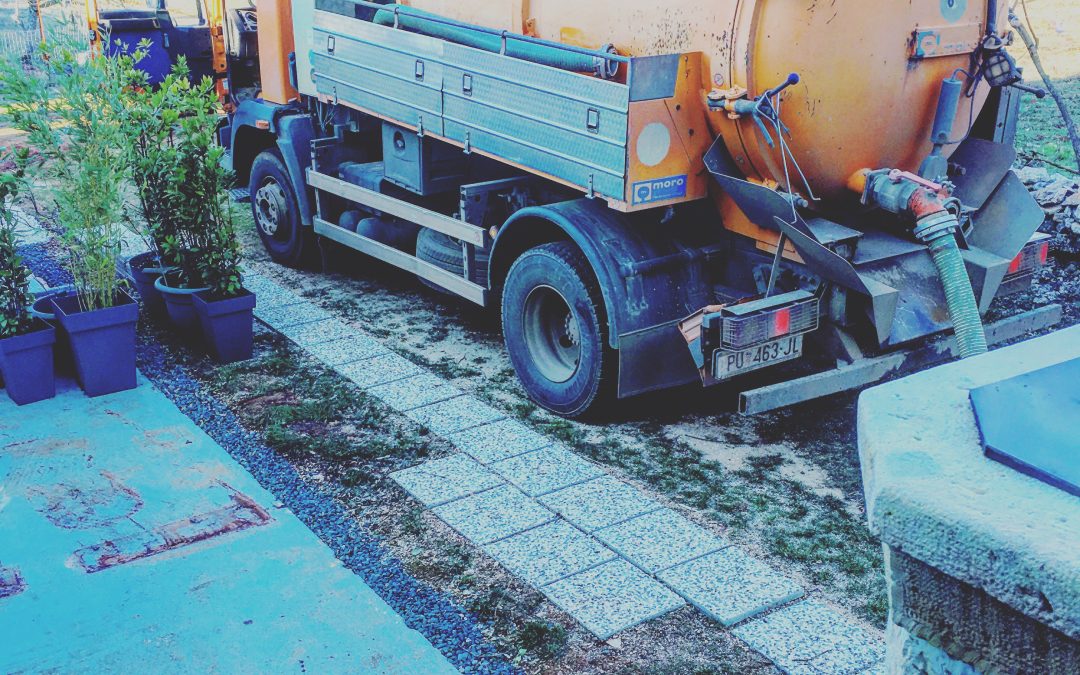
I can honestly say, I’ve never been as relieved to see a big orange lorry. Within half an hour, we were all unblocked and it was nowhere as horrific as I had thought it might be. Nor was it anywhere near as expensive as I thought it would be. I suppose we still compare things with UK prices, and so we’d thought that for a job like this – where they do kind of have you over a barrel as it’s pretty unlikely you’d be able to do it yourself – we’d be paying at least €200. Not a bit of it! €40 – result! The guys who did the work were quick and efficient and spoke perfect English – always a bonus when you are trying to establish the workings of something quite technical, and they definitely deserved the couple of bottles of wine we gave them as a small thank you.
So, a Christmas Eve was not quite as we imagined and a festive couple of weeks followed, being very careful about what entered the septic tank, but all’s well that ends well. The tank is now cleared and although we won’t be giving the advice we were given about the tanks, we think the orange lorry may not be needed for a couple of years at least…
by Helen | Jan 8, 2021 | Spain, Travel
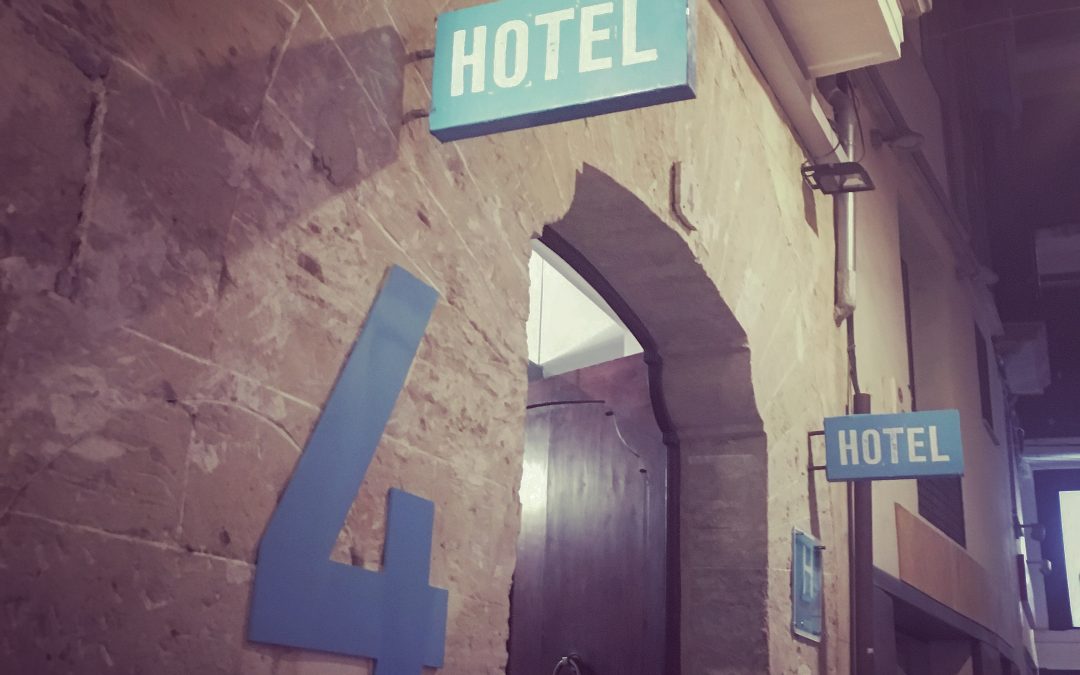
Over the last few years, we’ve been very lucky to be able to pack in a huge amount of travel – as well as actually move abroad, relocating from Manchester to Istria, in northern Croatia. We’ve spent the last couple of years renovating a stone house and exploring our new environment. But, one place has so far eluded us – Mallorca. Even though it’s always been on our radar, we’ve always found ourselves plumping for somewhere else. Until now. A combination of being very busy with our design business, cracking on with the house renovation and some pretty unseasonal weather – rain, rain and more rain – made up our minds and we booked flights to Mallorca. First port of call was Palma, and a night in the absolutely beautiful Brondo Architect Hotel.
There’s so much choice, accommodation-wise in Palma, but we have a very clear idea about the kinds of places we want to stay. Wherever we stay must be at least as nice as our home. It must be unusual. It must give us interiors inspiration. It must also be mid-range, budget wise. Too cheap, you get what you pay for. Too expensive – just silly. We’ve not got a bottomless money pit. So, Brondo Architect Hotel seemed to tick all of our boxes when we spotted it on Booking.Com.
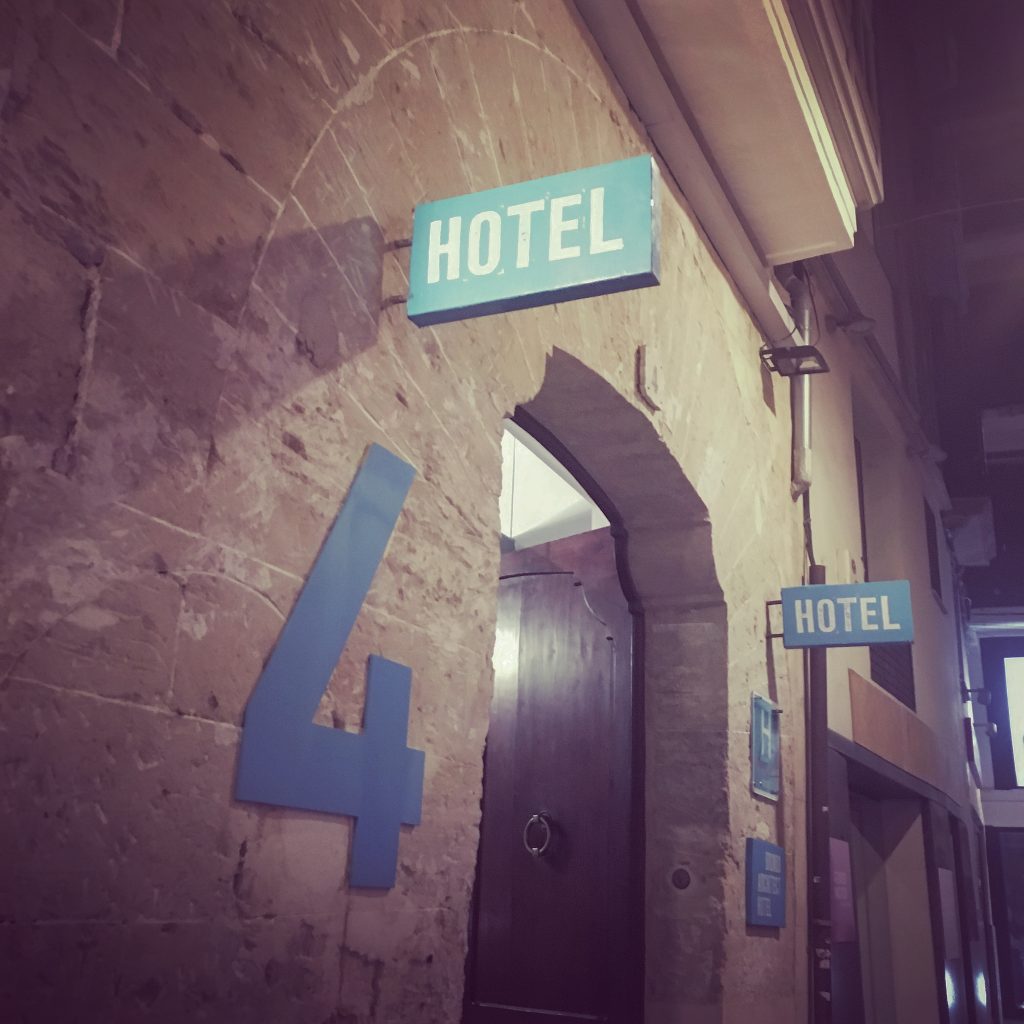
Tucked away down a cobbled side street, but less than a 10 minute walk away from Palma’s iconic cathedral, the hotel is set in a 17th century Mallorcan building. From the moment you step into the reception area, you know that this is going to be a special experience. A huge eye-catching mural, featuring Rubenesque women dominates the entrance – it is bold and brassy and totally in keeping with the style of this unusual hotel. Public areas feature quirky artwork, astonishingly beautiful Spanish floor tile, exposed brickwork and copper piping with striking lighting features.
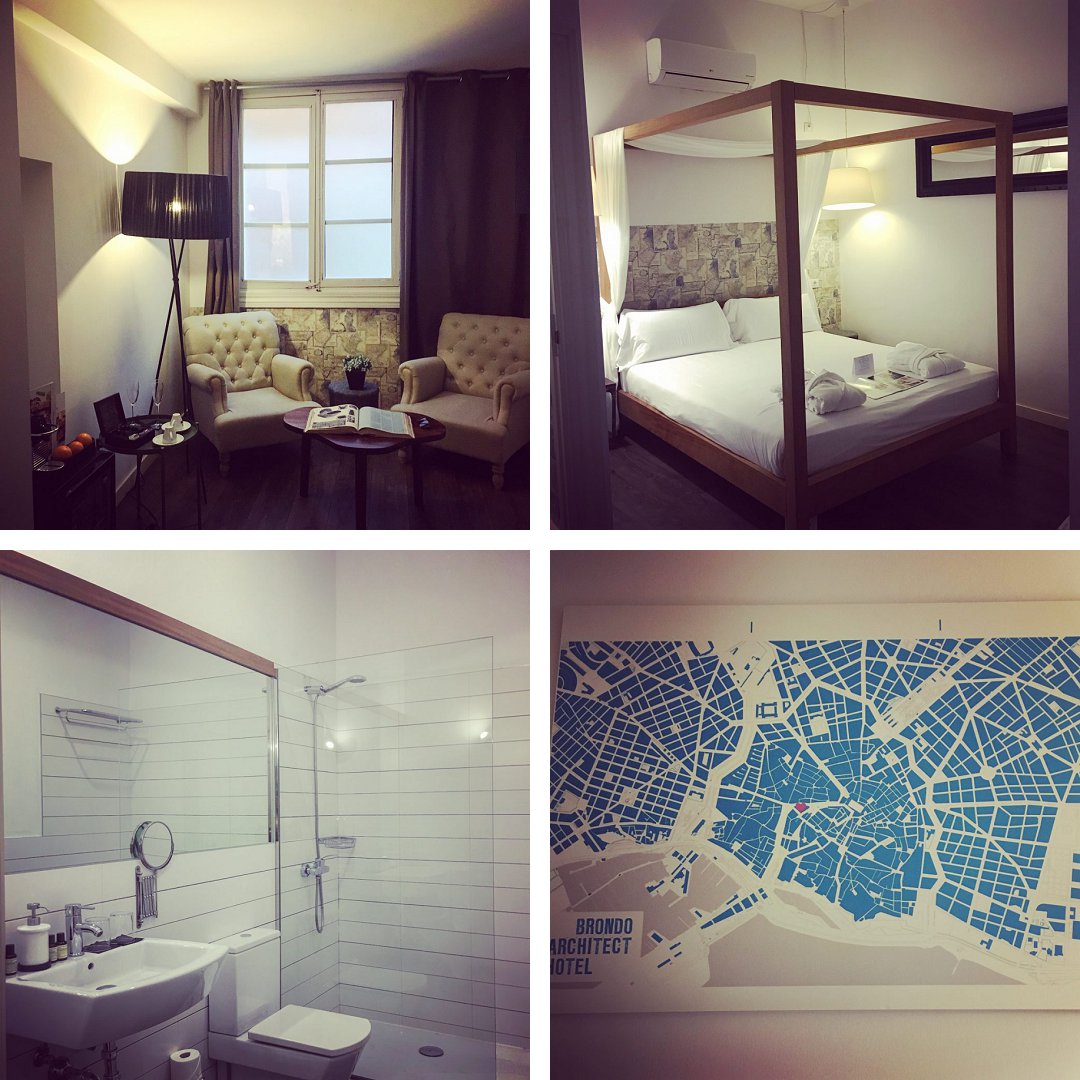
Our room was more of a junior suite, with a large bedroom and seating area, and a big separate bathroom, with an adjoining corridor. The decor and furnishings were really lovely – a super comfy four poster bed, two squishy armchairs, great artwork, map wallpaper. A stylish mix of retro and modern.
Our stay was short, unfortunately – but, we will return as we genuinely loved this hotel – so we didn’t get to experience the roof terrace. There’s also a gym, and massages can be arranged. However, we did enjoy a welcome drink (a nice touch) on the terrace outside the restaurant. We stayed early season, so there didn’t seem to be too many guests, which was lovely as we largely had this decked courtyard area to ourselves. Eclectically furnished with low sofas, brightly coloured parasols, big cushions, olive trees and bouganvillea and mis-matched tables and chairs, this is the perfect spot for an early evening drink, before heading out into the bright lights of Palma.
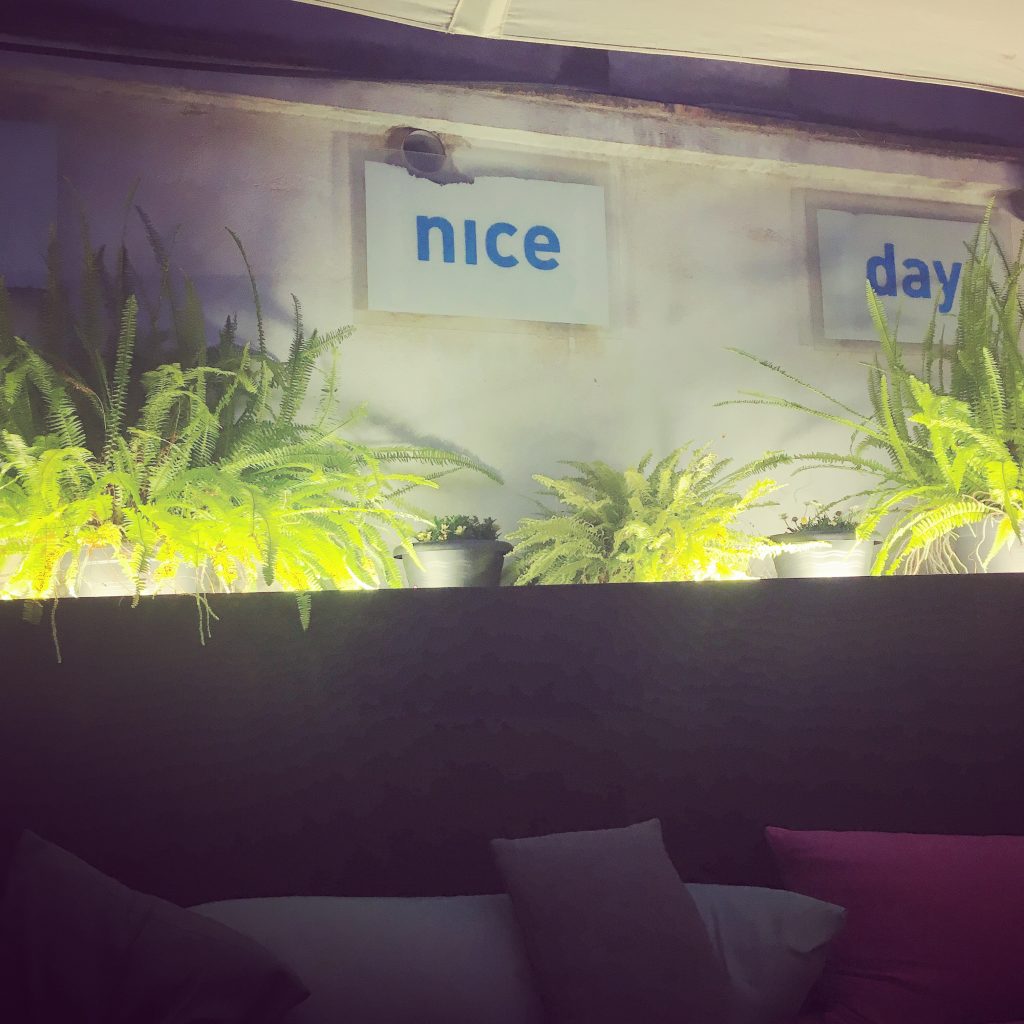
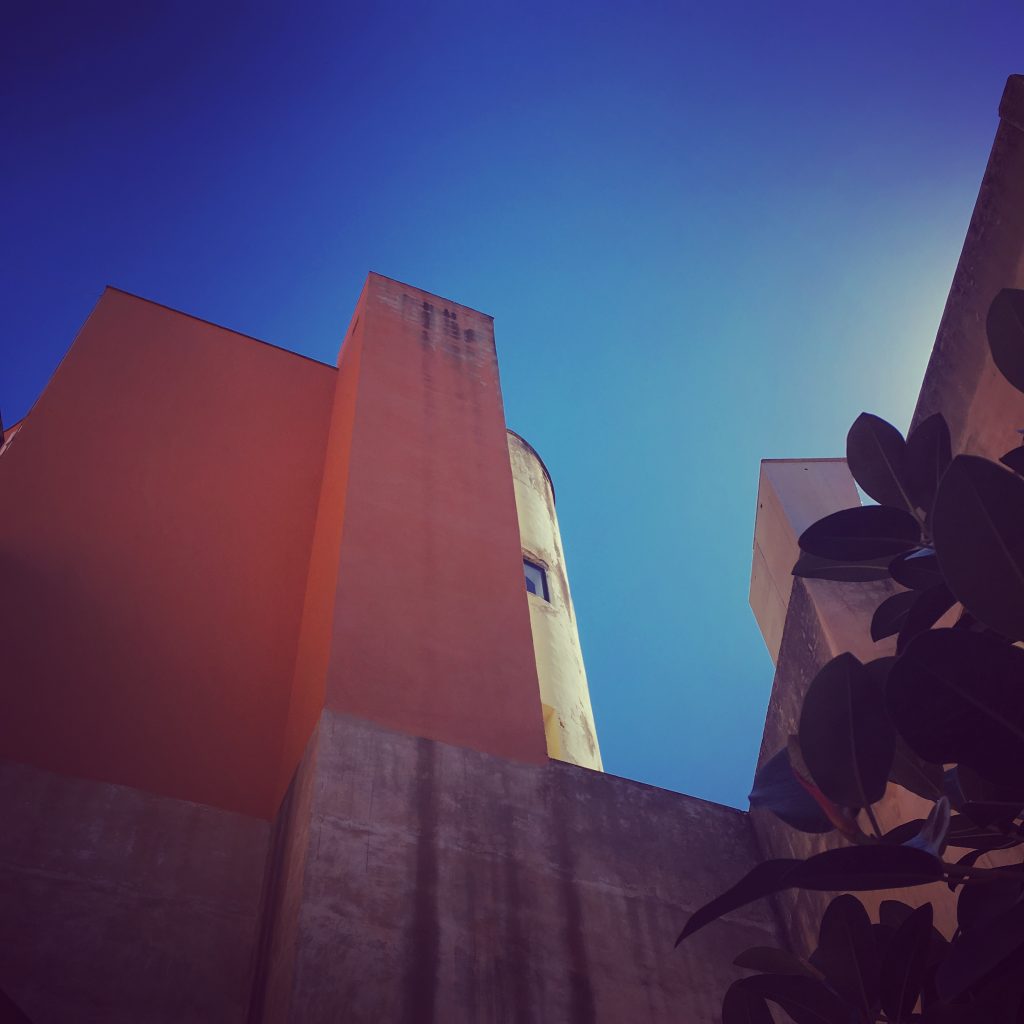
Morning coffee, in the warm May sunshine, was an absolute treat on the terrace. Those colours. And that sky…
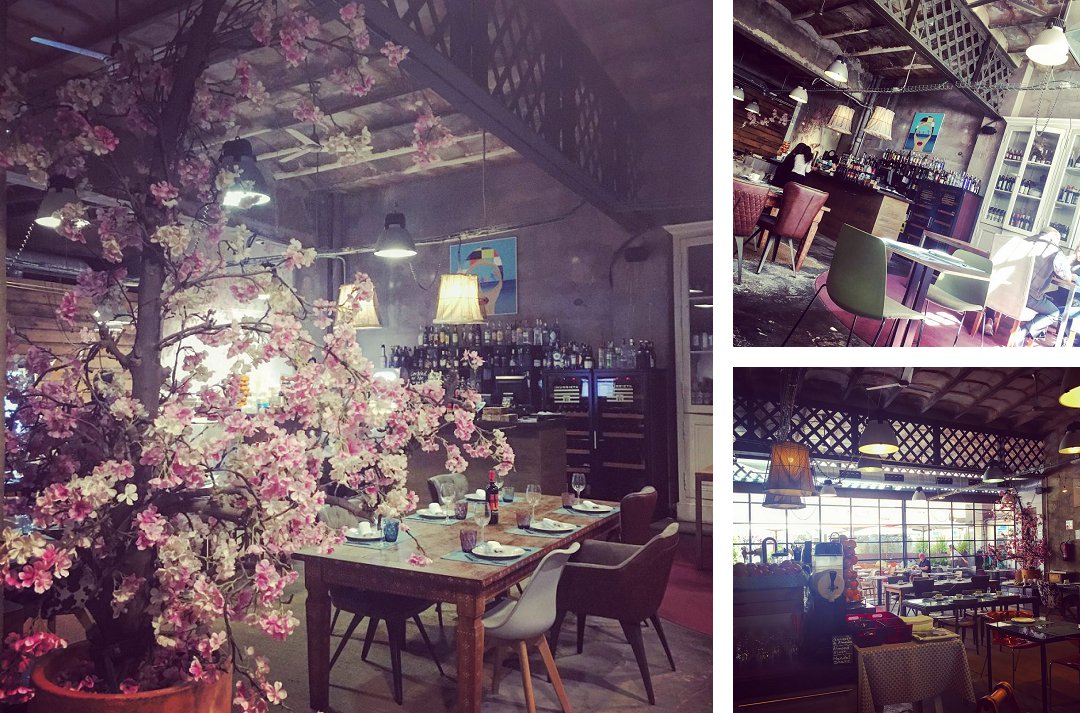
The restaurant is quite simply, stunning. Packed full with interesting and unusual objects and pieces of furniture – and a very pretty cherry blossom tree – it’s the perfect place to enjoy breakfast. And, what a breakfast! There’s a huge choice – pastries (sweet and savoury), pies (yes, pies for breakfast!), cold meats, cheeses, fruit, youghurts, juices, breads and a really good hot selection. I always tend to avoid the hot options, which have usually sweated all morning in silver catering trays. But this one was exceptional – the food is obviously refreshed regularly, rather than allowed to sit and become rubbery, and we enjoyed a Spanish style full English. Very, very tasty.
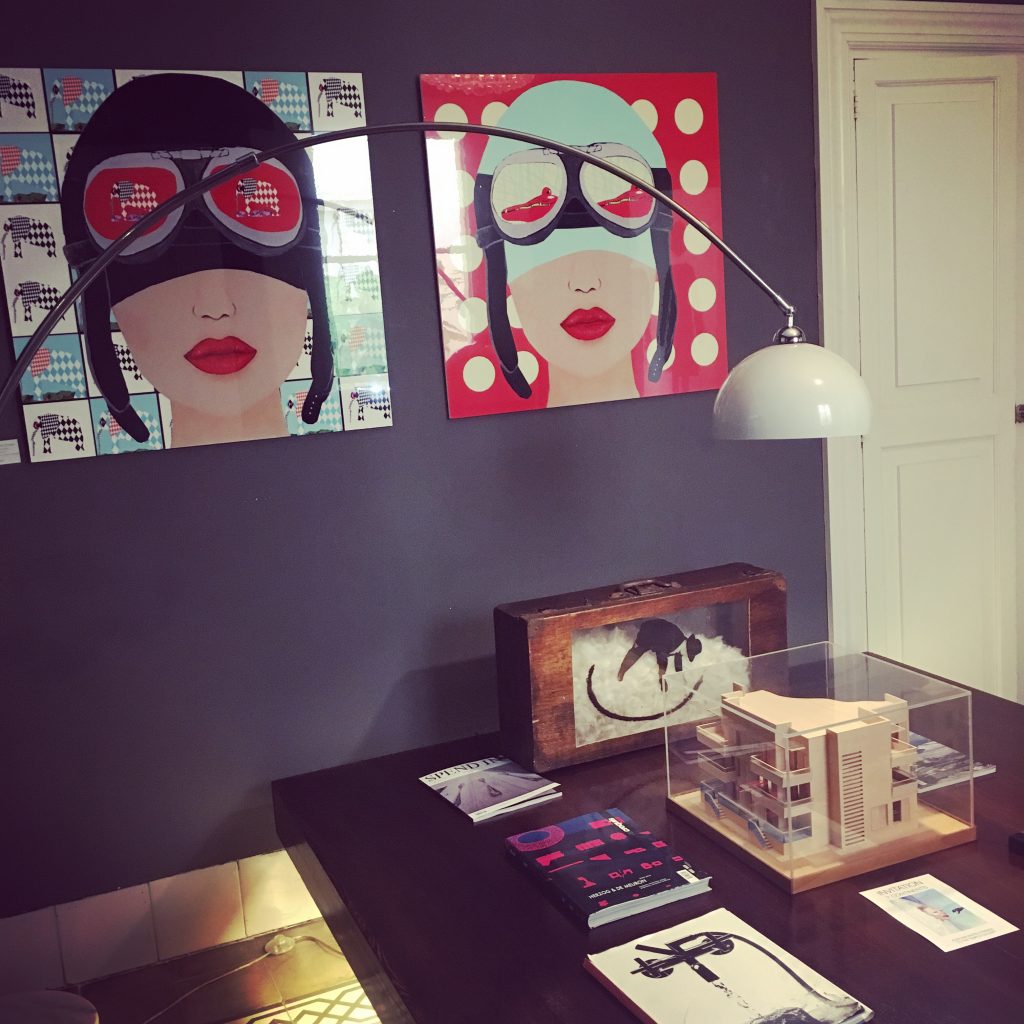
Communal areas are filled with quirky artefacts and artwork.
The hotel is located on a pedestrianised side street, but we found a car park, just a 5 minute walk away which meant that we could dump the car and not worry about parking restrictions etc. Brondo is also really centrally situated, so wandering the labyrinth of Mallorcan streets is a joy.
I’m delighted that we opted for this hotel for our first night – and by sheer coincidence, as we had absolutely no idea when we booked that they were connected, our next stop was the exquisite Lluna Aqua Hotel in Sóller. The sister hotel of Brondo, and the second in the tiny chain of Unusual Hotels…
This is NOT a sponsored post. We paid the full price as quoted when we booked & have received no payment for this blog. We just wanted to share this lovely find of a hotel in Palma.
by Helen | Dec 16, 2020 | Lifestyle
Well, it’s definitely been a funny old year. Since returning from our Christmas road trip, back to the UK, in January, we have been nowhere. Coronavirus quickly put paid to our usual kind of year. No eating out. No mini breaks. No visitors to us, meaning that we’ve not seen family friends since last Christmas – thank goodness for Zoom! Travel restrictions and quarantines are still in place all across Europe and specifically in the countries we’d drive through (there and back) and add in full blown Brexit, and all that that will entail come 1st January, we’re not able to do our road trip this Xmas. However, plans are afoot with family to celebrate Xmas in the summer, and we suspect some festivities may occur with visiting friends, too. So, this all means we are spending our first Christmas, at home, in Istria.
This time of year has always involved much travel for us. Even when we lived in England, travel was still a massive part of the festive season, so it will be quite strange to be in one place. Although we might be able to do a bit of winter sightseeing in Istria, we think we’ll largely be at home, so we are going big on ensuring the house is as Christmas filled as possible. Usually, we don’t do much decorations-wise, as we’re not at home. We do usually have a tree – and when we were in Didsbury we used to have a real tree outside, meaning no needles dropping indoors – but that’s about it. Well, not this year. After a 2020 to forget, we’re going out with a sparkle or two ✨✨
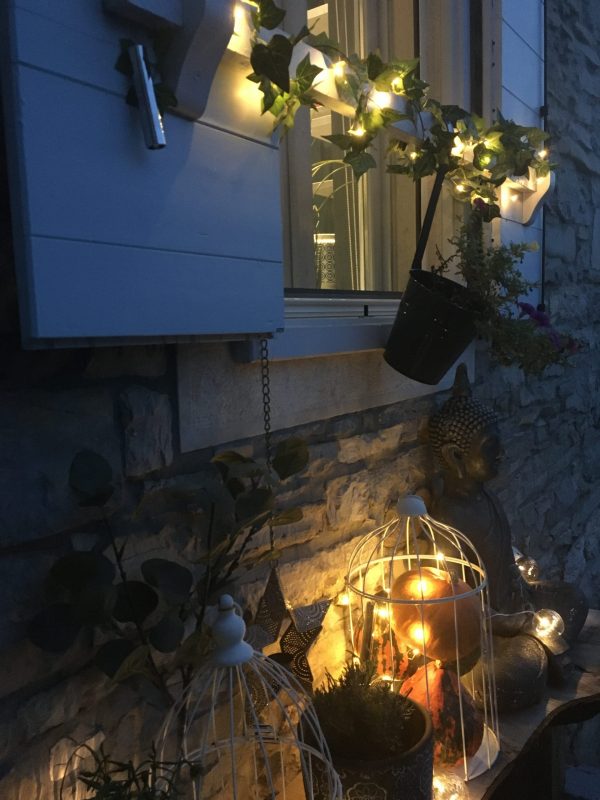
The outside area has played a massive part in our lives this year and we’ve finally (we think) completed the front of the house. Now that it’s all tidy and very pretty (even in winter, for the first time), we wanted to create a bit of a festive feel outside. The kitchen window shutters are rarely closed so we’ve used the bar which keeps them open as a focal point. A long garland of faux ivy has been wrapped around it and around that, we’ve wrapped tiny LED lights. The cherry wood bench underneath still has the birdcages filled with beautifully coloured pumpkins, from back in October. We’ve only had one pumpkin casualty and that was one I sprayed gold which decayed under the film of spray and then collapsed in a pungent mess when picked up… The others – delicious hues of oranges and greens and light blues – are still going strong and look very pretty with lights twisted through the birdcages. The glass-effect summer bauble lights have been brought down from the trees and these also wind their way around the bench.
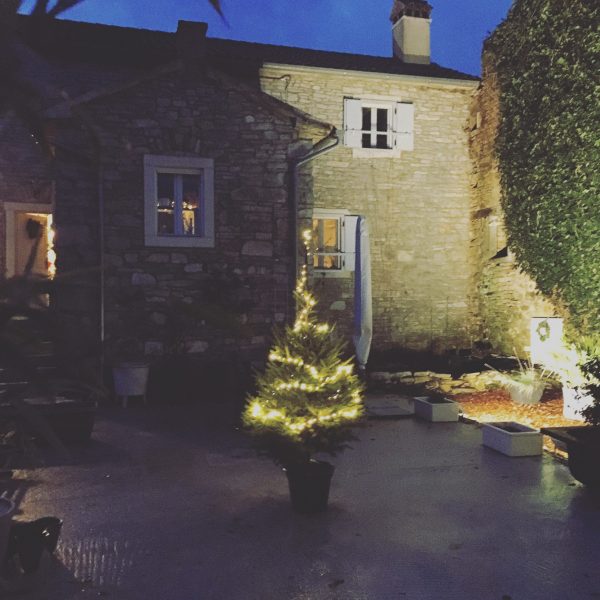
We’ve once again opted for a real tree outside. This potted Norwegian Spruce will be cared for until we finally move and can plant her up. She does look very lovely on the patio when lit up 🙂
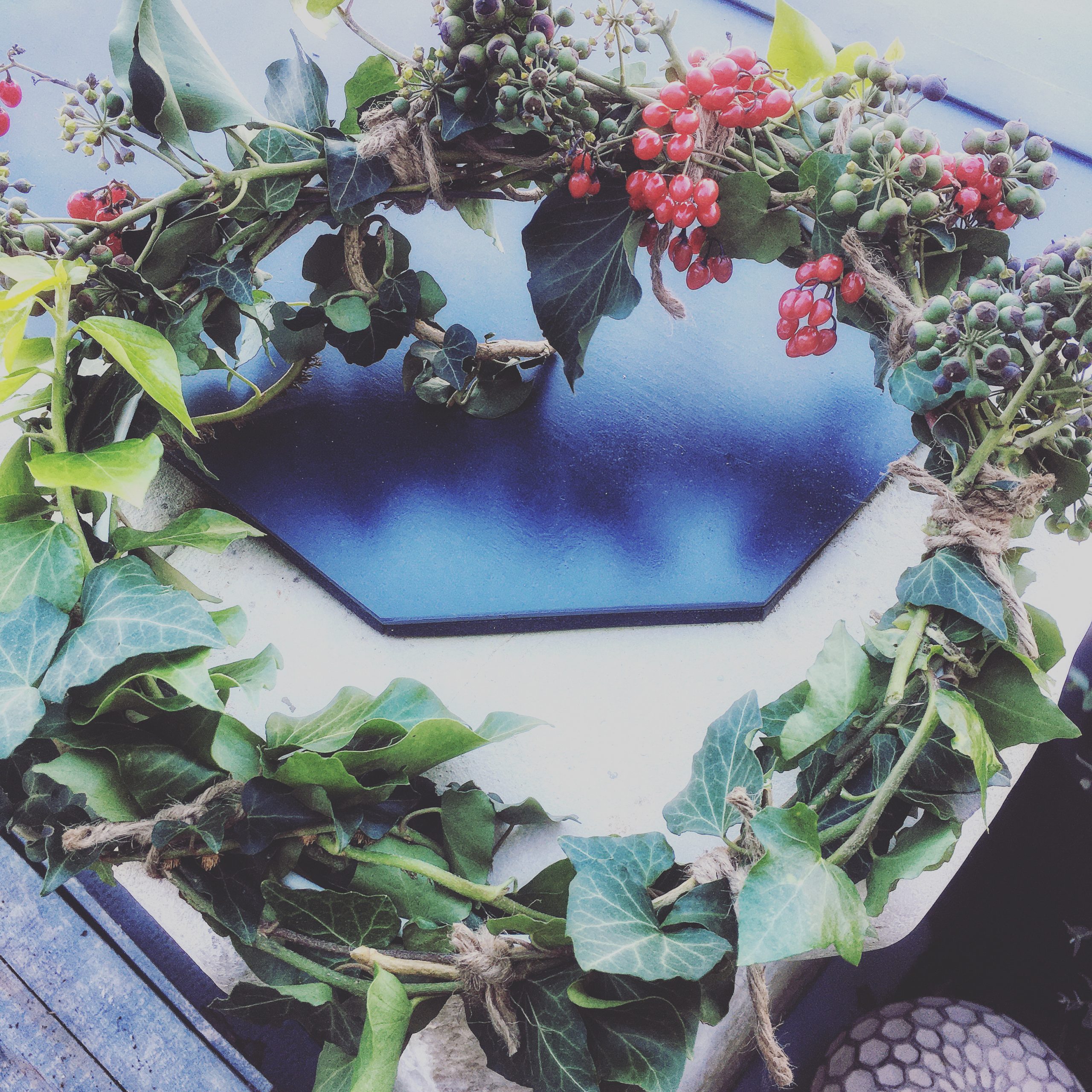
Over the summer. I had a circular willow wreath which was wrapped with lights and hung inside the shed, so that it gave off a soft light in the evening. This wreath has been wintered-up. Again, garlands of faux ivy have been wrapped around it and orange berries inserted into the willow. Hey presto – a Christmas wreath for the front door.
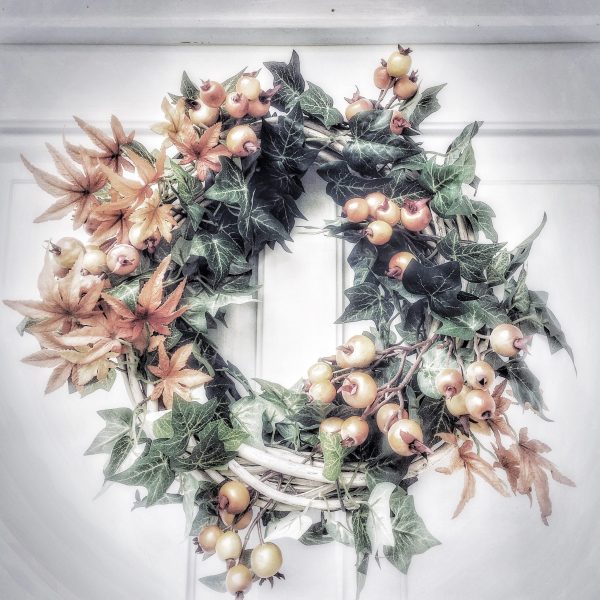
I don’t think we’ve ever had a Christmas wreath before, but this year we’ve actually got two – although the second one came about by mistake. High winds had seen to the solar lanterns in the trees and all that was left of three of them was one of the hoops that formed one of the bases. This was about to be thrown away, along with all of the vines and berries which we’d cut back, when an idea formed…
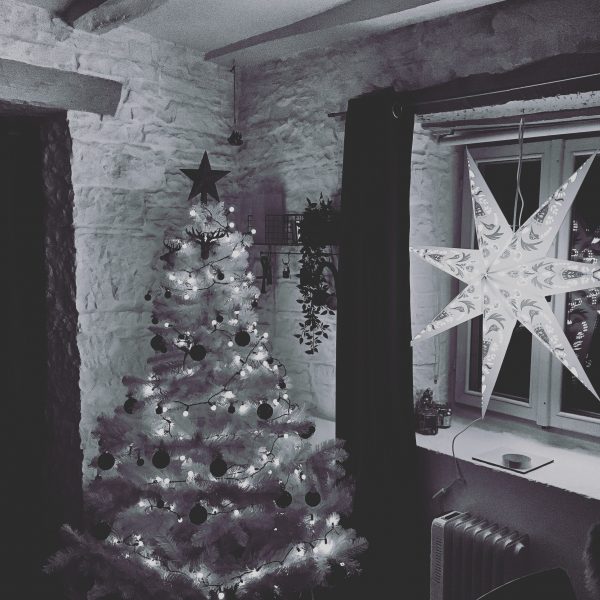
Indoors is where we’ve taken December to a whole new level for us. Because we’ve never been here before over Xmas, it was decided that the house would this year, become a cosy retreat, full of twinkling lights and candlelight and woodburners burning brightly. The dark feature walls in the living room and the well room come into their own in the winter months and so we’ve been beavering away creating our own hygge haven. A fake white tree – another first! – is now sitting prettily in the well room, adorned with black baubles and a black sparkly star. Our big white stars (IKEA old-timers) hang at each of the windows and can be seen when driving down the hill from the village.
Croatia does seem to embrace Christmas as enthusiastically as back at home, and so we’ve had no problems sourcing decorations. Many do seem to be a lot less mass-produced (although supermarkets do the stock ’em up & pile ’em high with glitter baubles) and so we’ve found a lot of very unusual decorations. These wooden carved decorations are all from a store called TEDI – not sure if these are in the UK but is along the lines of The Range. Sadly, as we can’t travel to closer bigger cities such as Trieste or Ljubljana, we can’t get accessories from little independent shops, but hey-ho, we’ve tried our best with the restrictions we’re under.
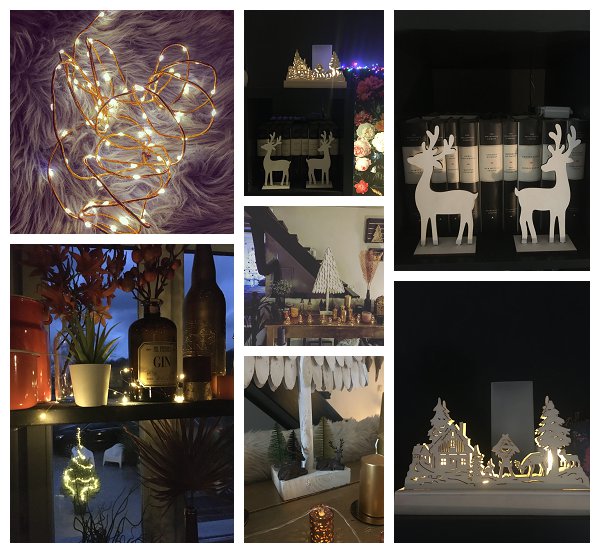
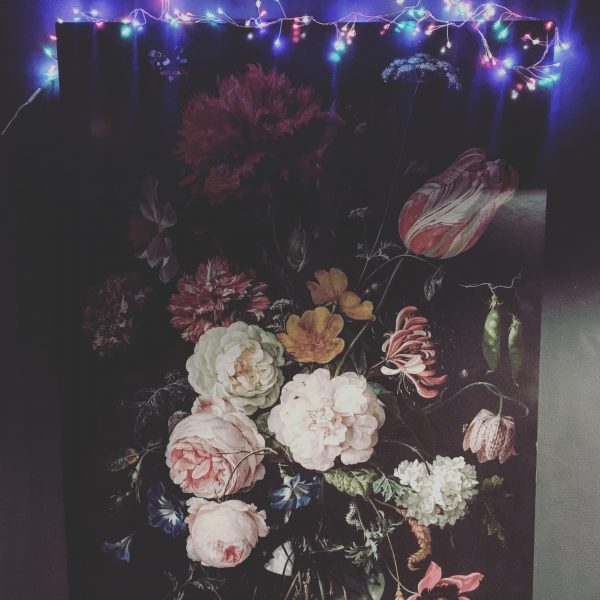
By accident, I also bought some multi-coloured LED lights, on copper wire. I think the copper misled me, and I thought the tiny bulbs might be white, but no – they are every colour under the rainbow. And, with eight settings, I could have them flashing, flickering, racing. Many ways to bring on a hallucinatory state. Luckily, the last setting is static – and static it is…
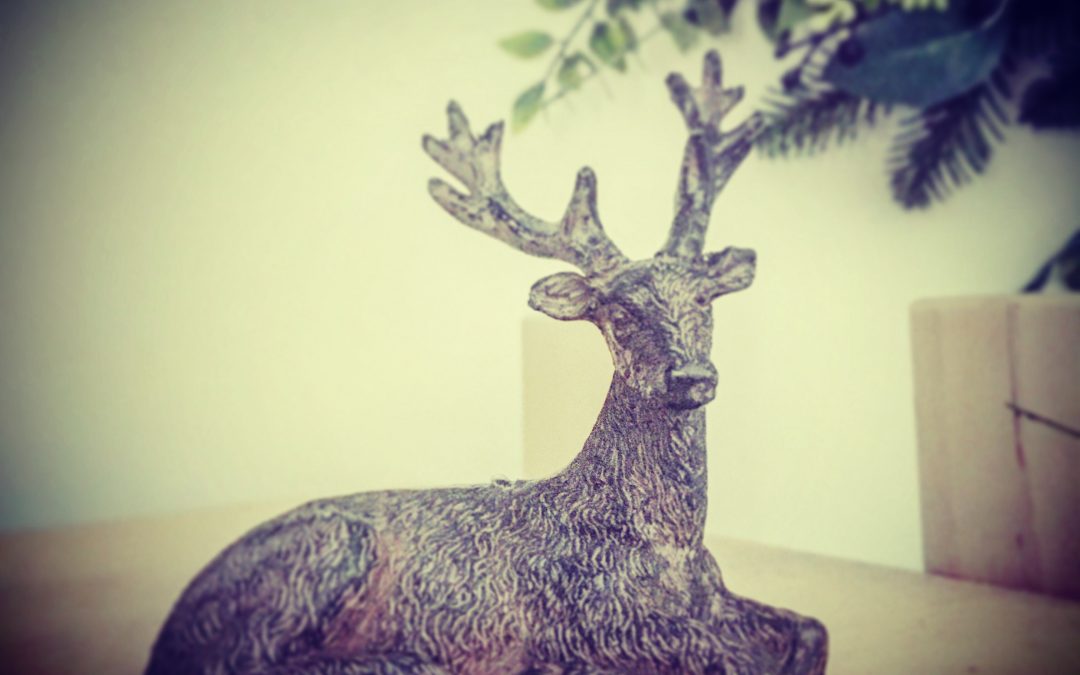
In a nod to our new surroundings, we have introduced a bit of a deer theme…
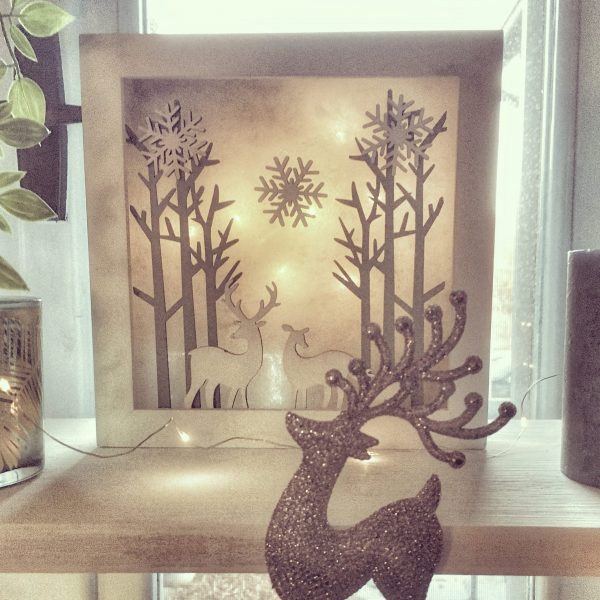
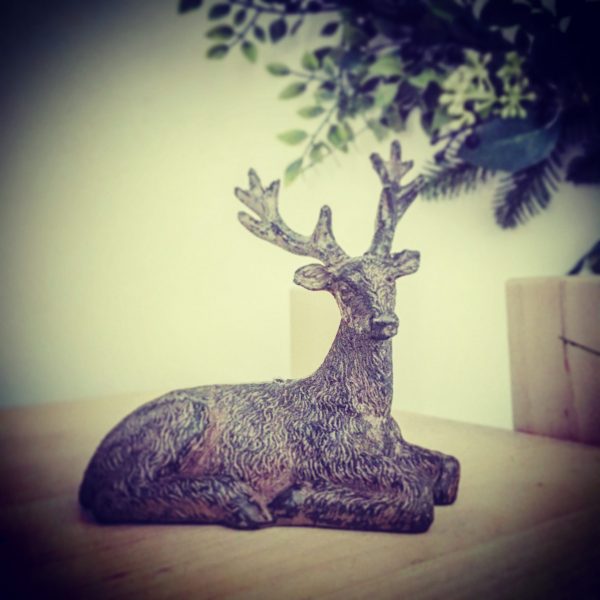
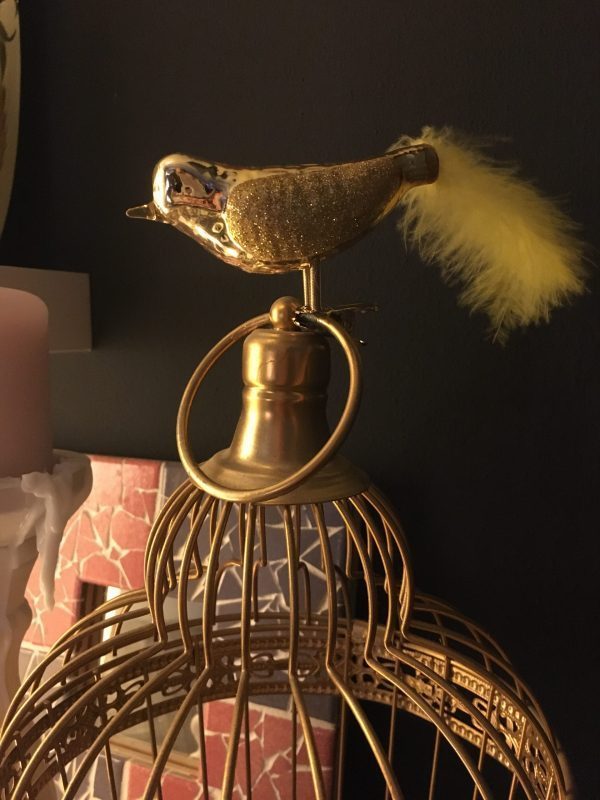
Not sure if we have sparkly gold birds, with yellow feather tails around here, but just in case we do, and we’ve not seen them…
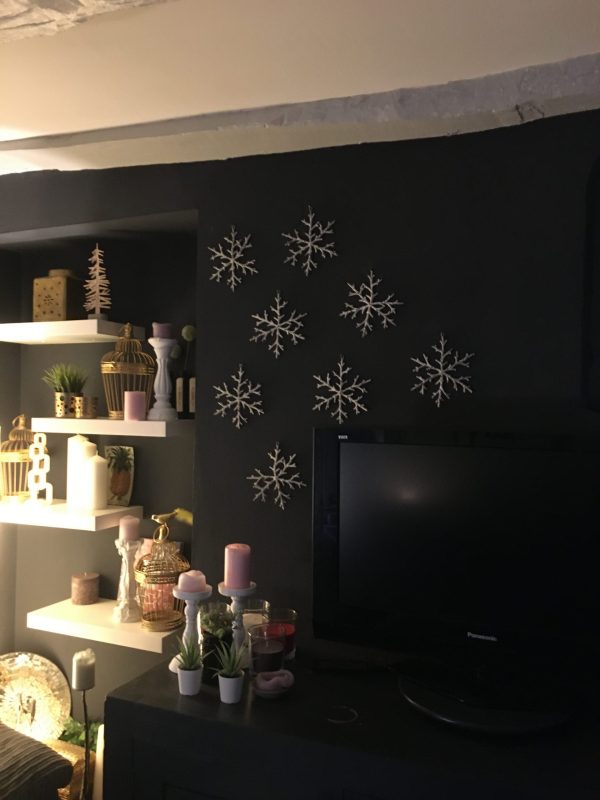
Even a ropey old wine rack which was about to be taken to the tip, got the gold spray pain and LED light treatment. A new life and something salvaged…
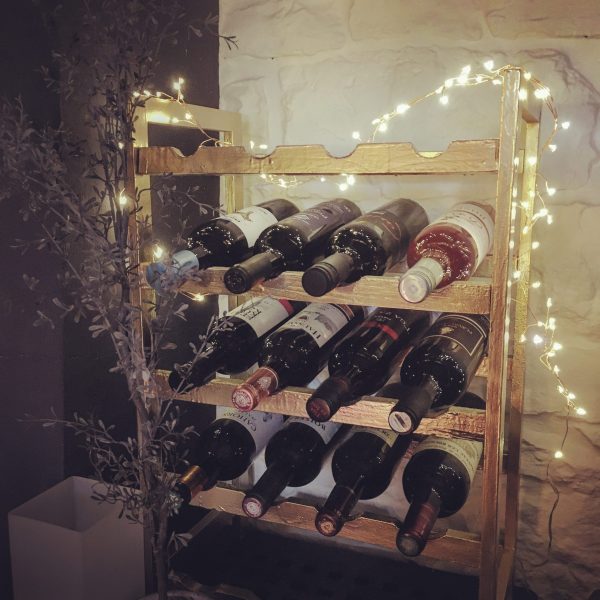
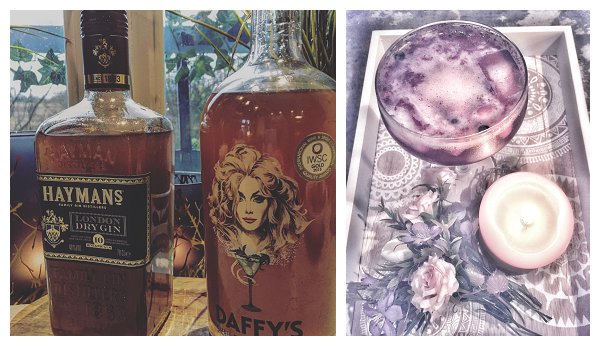
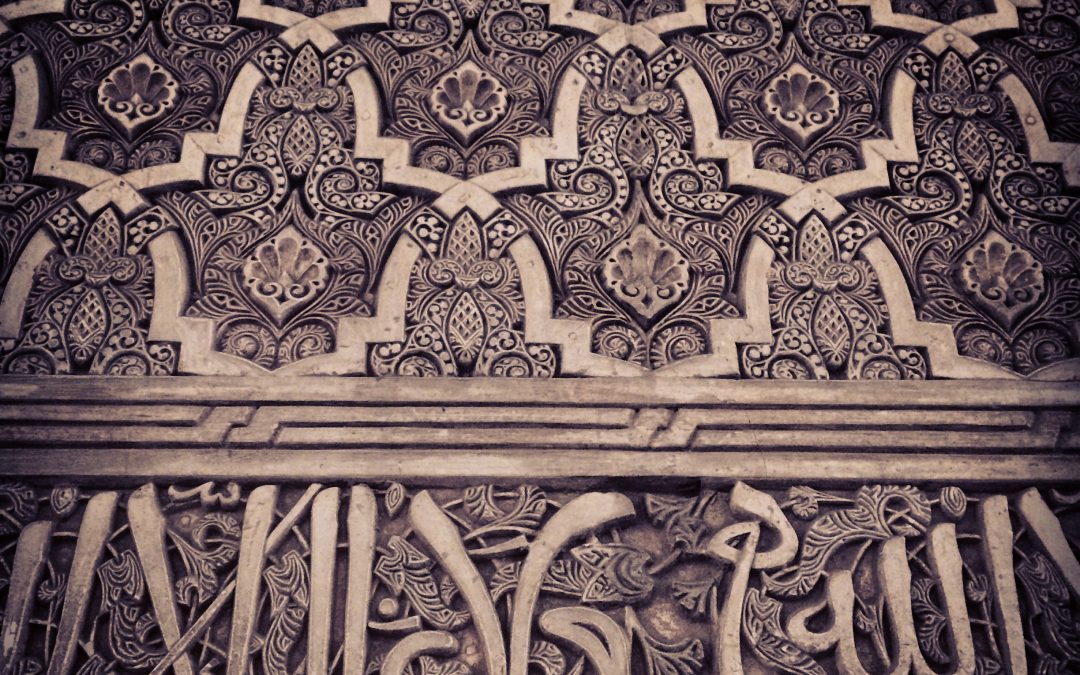
I think I’m quite liking getting into the decorative spirit, and even though I have *promised* I’ll buy no more, I can’t really say that I’ll keep this particular promise. It is Christmas 2020, after all! And, our homemade damson gin and blackberry gin is ready. So cheers, saluti and zivjeki…
by Helen | Dec 11, 2020 | Spain, Travel
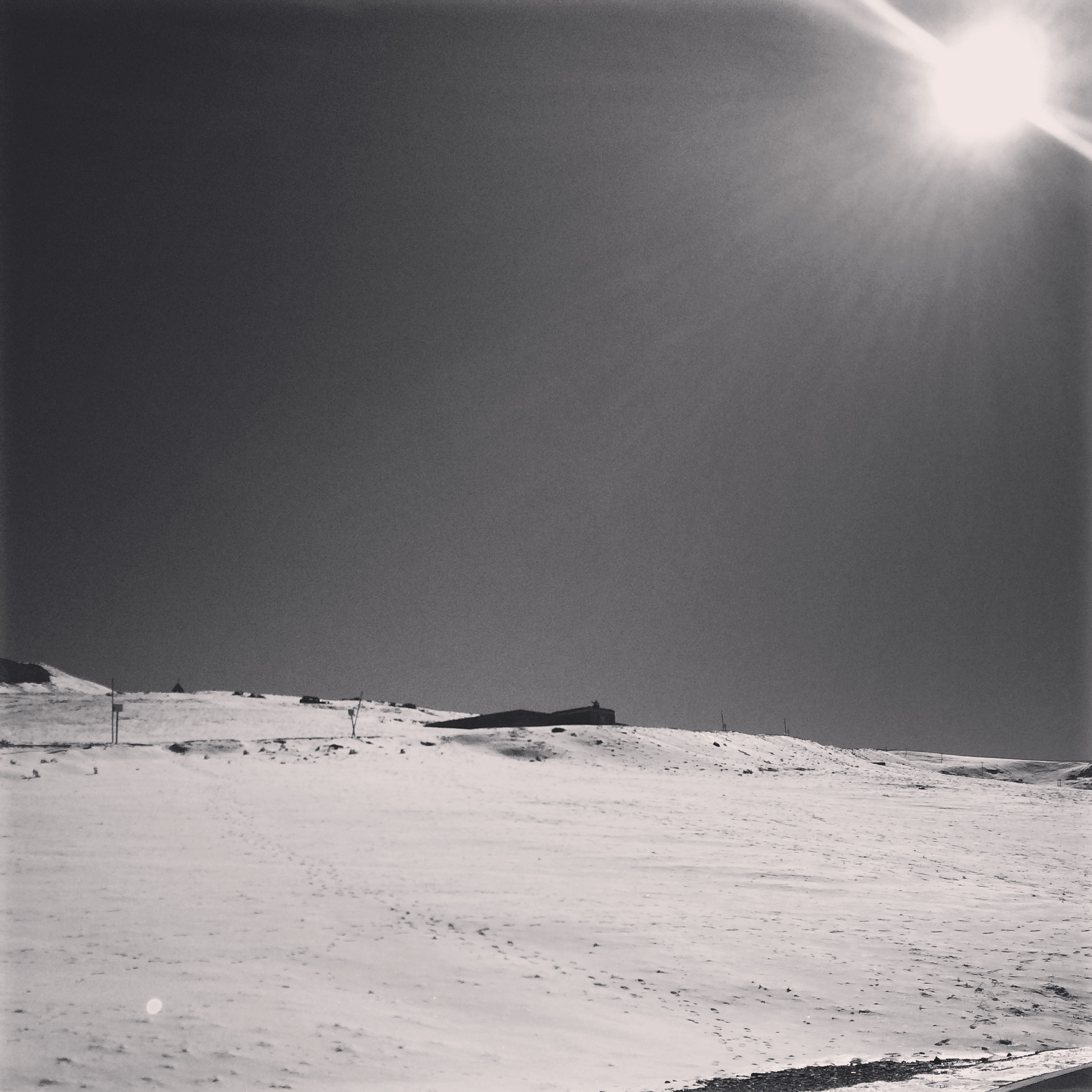
The absolute beauty of Andalucia. One moment, you can be lying on a beach – this was in November – and the next, up in the snow of the Sierra Nevada mountains. With a trip to the Alhambra, in between.

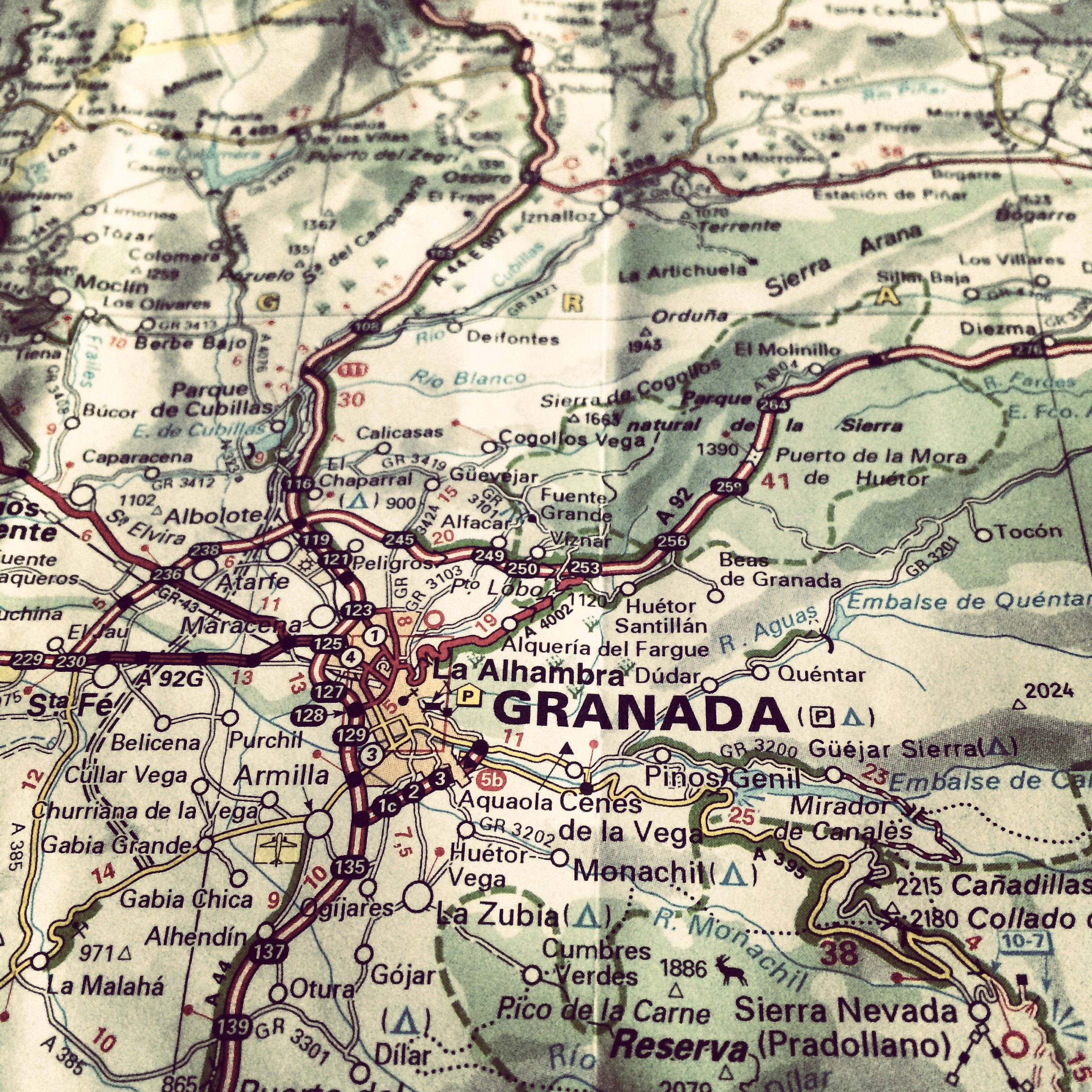
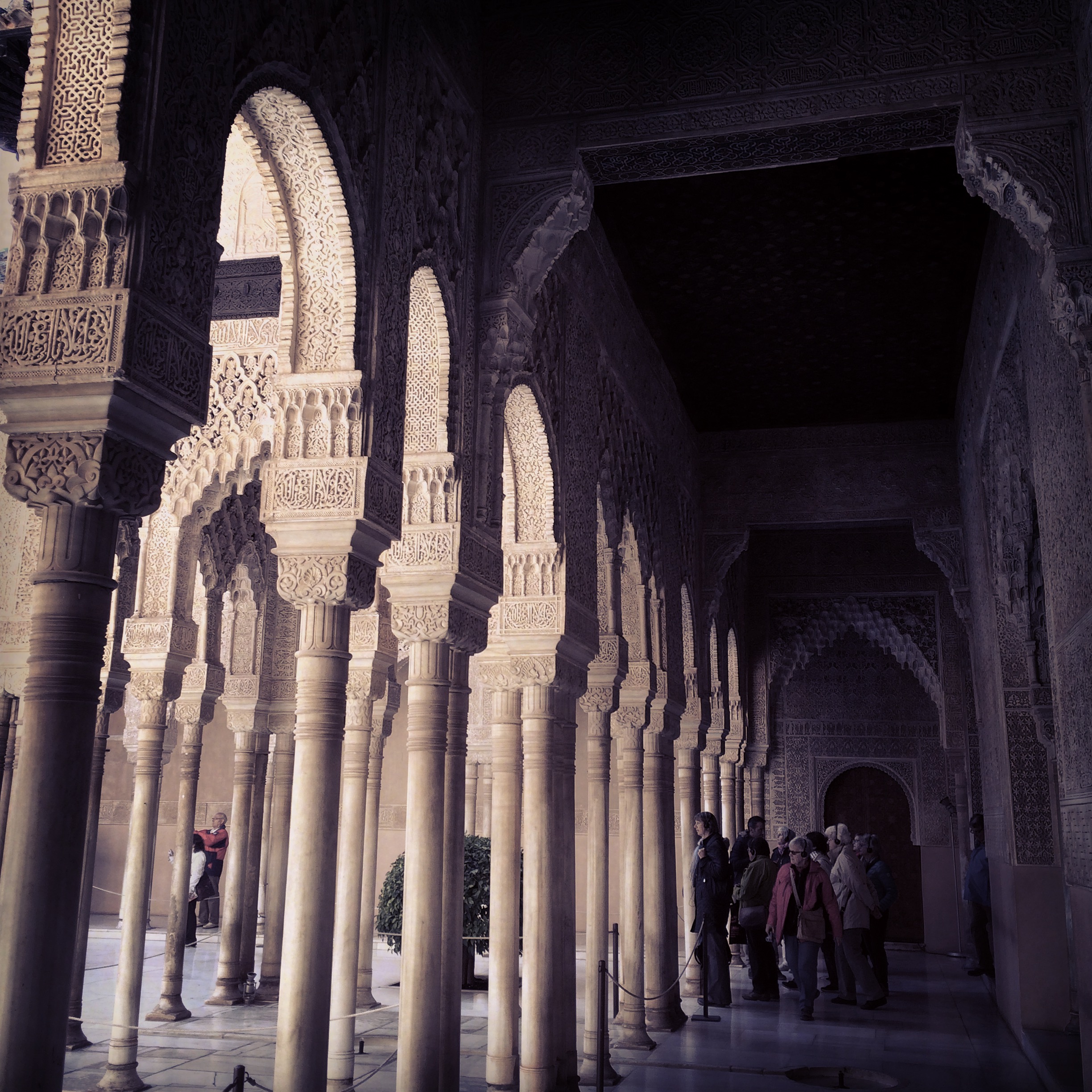
the alhambra palace and generalife gardens
So, a bit about the history of the Alhambra, from alhambradegranada.org…
The Alhambra was so called because of its reddish walls (in Arabic, («qa’lat al-Hamra’» means Red Castle). It is located on top of the hill al-Sabika, on the left bank of the river Darro, to the west of the city of Granada and in front of the neighbourhoods of the Albaicin and of the Alcazaba.
The Alhambra is located on a strategic point, with a view over the whole city and the meadow (la Vega), and this fact leads to believe that other buildings were already on that site before the Muslims arrived. The complex is surrounded by ramparts and has an irregular shape. It limits with the valley of the river Darro on its northern side, with the valley of al-Sabika on its southern side and with the street Cuesta del Rey Chico on the eastern side. The Cuesta del Rey Chico is also the border between the neighbourhood of the Albaicin and the gardens of the Generalife, located on top of the Hill of the Sun (Cerro del Sol).
The first historical documents known about the Alhambra date from the 9th century and they refer to Sawwar ben Hamdun who, in the year 889, had to seek refuge in the Alcazaba, a fortress, and had to repair it due to the civil fights that were destroying the Caliphate of Cordoba, to which Granada then belonged. This site subsequently started to be extended and populated, although not yet as much as it would be later on, because the Ziri kings established their residence on the hill of the Albaicin.
The castle of the Alhambra was added to the city’s area within the ramparts in the 9th century, which implied that the castle became a military fortress with a view over the whole city. In spite of this, it was not until the arrival of the first king of the Nasrid dynasty, Mohammed ben Al-Hamar (Mohammed I, 1238-1273), in the 13th century, that the royal residence was established in the Alhambra. This event marked the beginning of the Alhambra’s most glorious period.
First of all, the old part of the Alcazaba was reinforced and the Watch Tower (Torre de la Vela) and the Keep (Torre del Homenaje) were built. Water was canalised from the river Darro, warehouses and deposits were built and the palace and the ramparts were started. These two elements were carried on by Mohammed II (1273-1302) and Mohammed III (1302-1309), who apparently also built public baths and the Mosque (Mezquita), on the site of which the current Church of Saint Mary was later built.
Yusuf I (1333-1353) and Mohammed V (1353-1391) are responsible for most of the constructions of the Alhambra that we can still admire today. From the improvements of the Alcazaba and the palaces, to the Patio of the Lions (Patio de los Leones) and its annexed rooms, including the extension of the area within the ramparts, the Justice Gate (Puerta de la Justicia), the extension and decoration of the towers, the building of the Baths (Baños), the Comares Room (Cuarto de Comares) and the Hall of the Boat (Sala de la Barca). Hardly anything remains from what the later Nasrid Kings did.
From the time of the Catholic Monarchs until today we must underline that Charles V ordered the demolition of a part of the complex in order to build the palace which bears his name. We must also remember the construction of the Emperor’s Chambers (habitaciones del Emperador) and the Queen’s Dressing Room (Peinador de la Reina) and that from the 18th century the Alhambra was abandoned. During the French domination part of the fortress was blown up and it was not until the 19th century that the process of repairing, restoring and preserving the complex started and is still maintained nowadays.
Our visit took place in November and we guessed it wouldn’t be quite as packed as in the summer, so chanced tickets when we arrived, and bought General Day Tickets which were approximately €15 each. These gave us access to a lot of the site, including Alcazaba, the Nasrid Palaces, the Generalife and Gardens.You can purchase a separate, less expensive ticket for just the gardens, but as the one we bought included the Gardens, we could also visit the Walk of the Cypresses (Paseo de los Cipreses), Unirrigated Land (Secano) and Saint Francis´Gardens (Jardines de San Francisco.). Your ticket will give you a time of entry and there is queuing system to enter – although obviously in November this was quite short. If you intend to visit in the summer months, come prepared for the heat and a long wait.
Once inside, the site is extensive and can be a bit overwhelming. Even if you’re not a history buff, it’s probably advisable to know a little bit about the Alhambra so that it makes sense. However, it is awe-inspiring and around every turn, your jaw will drop.
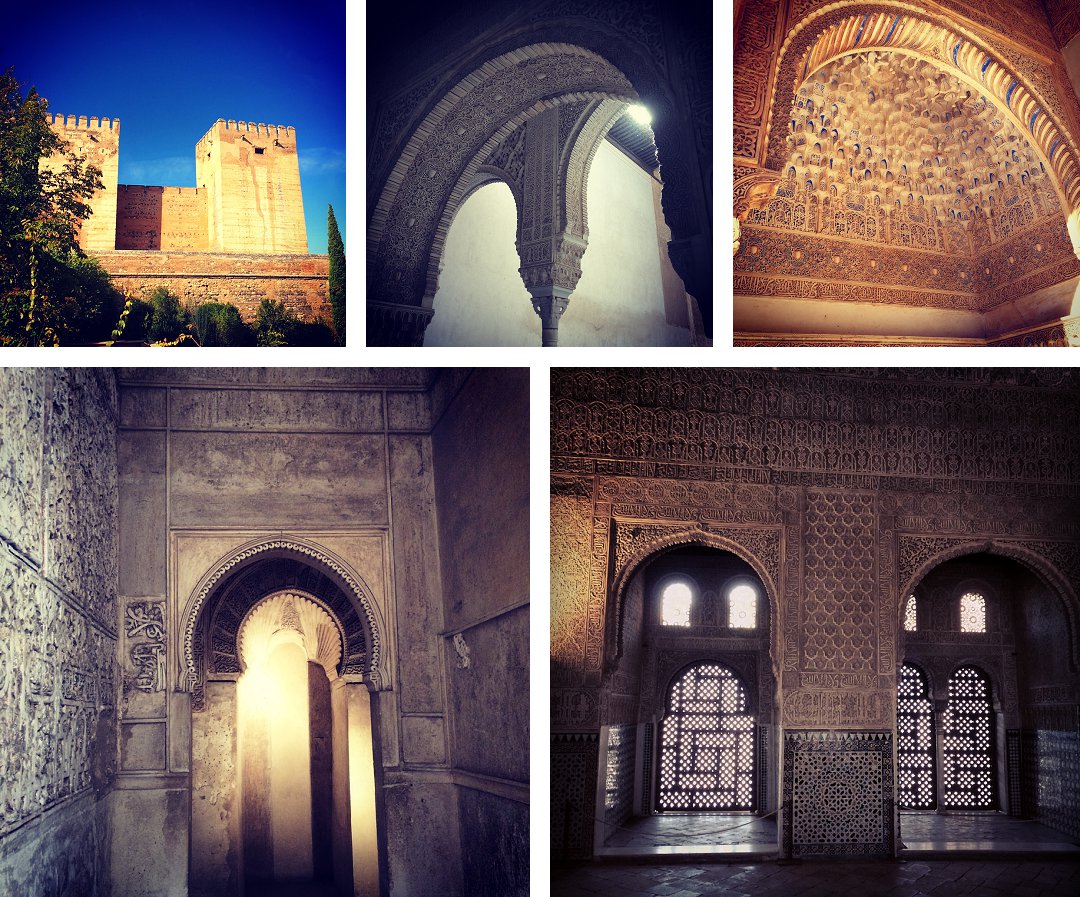
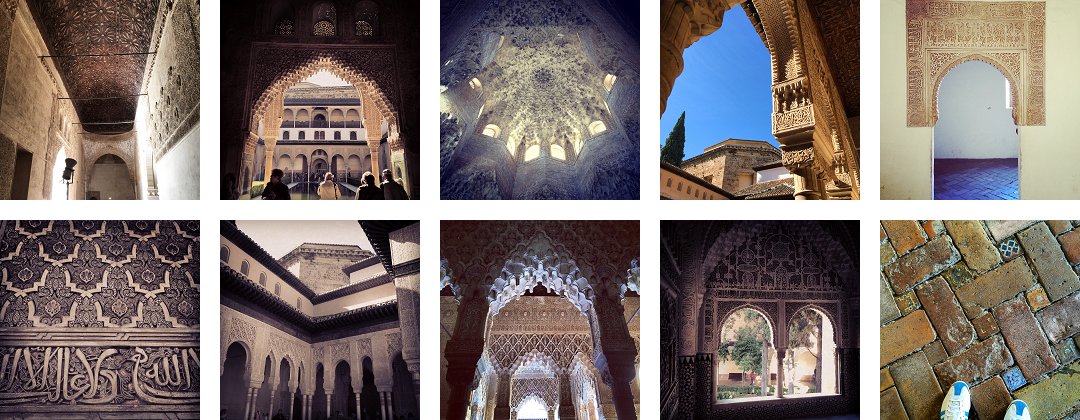
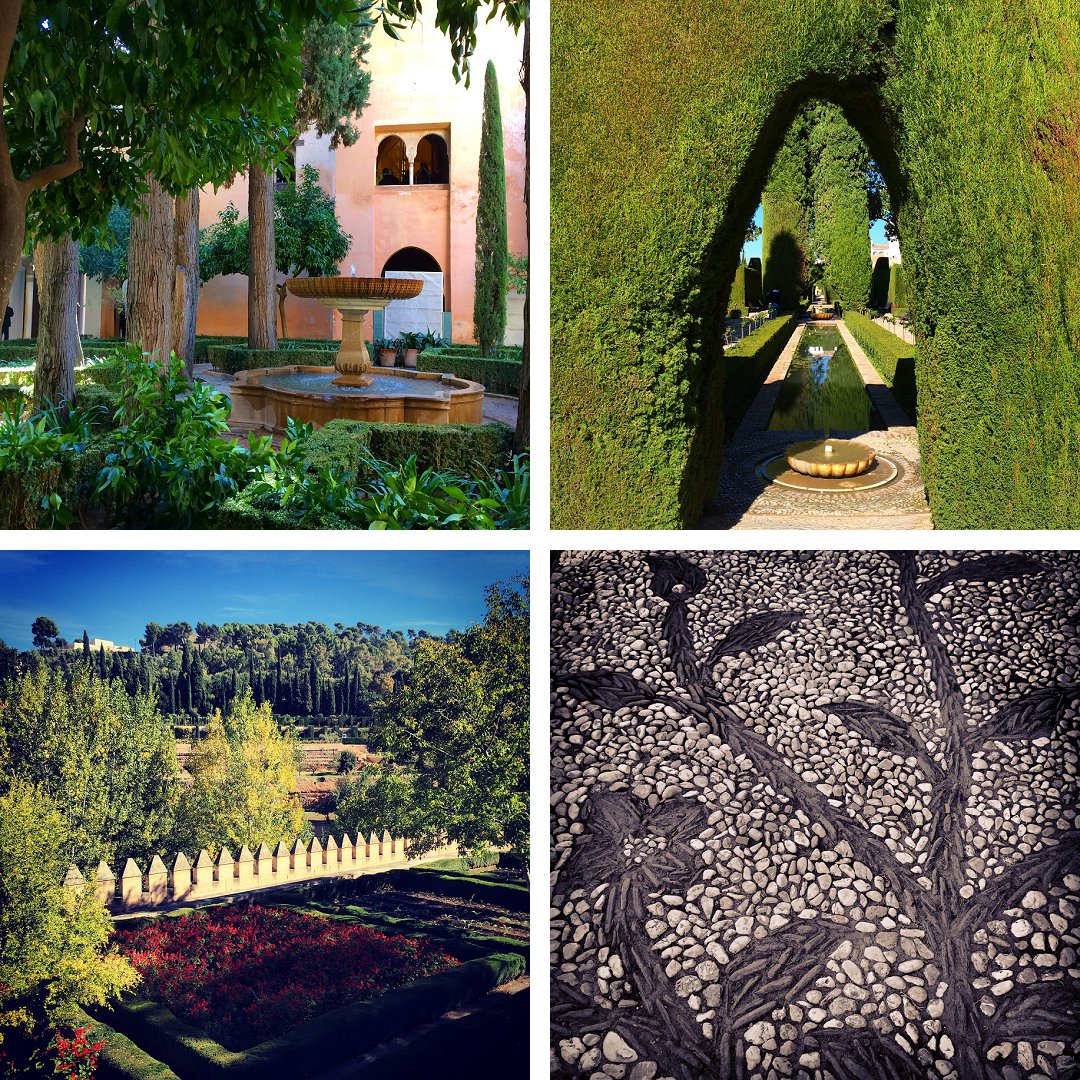
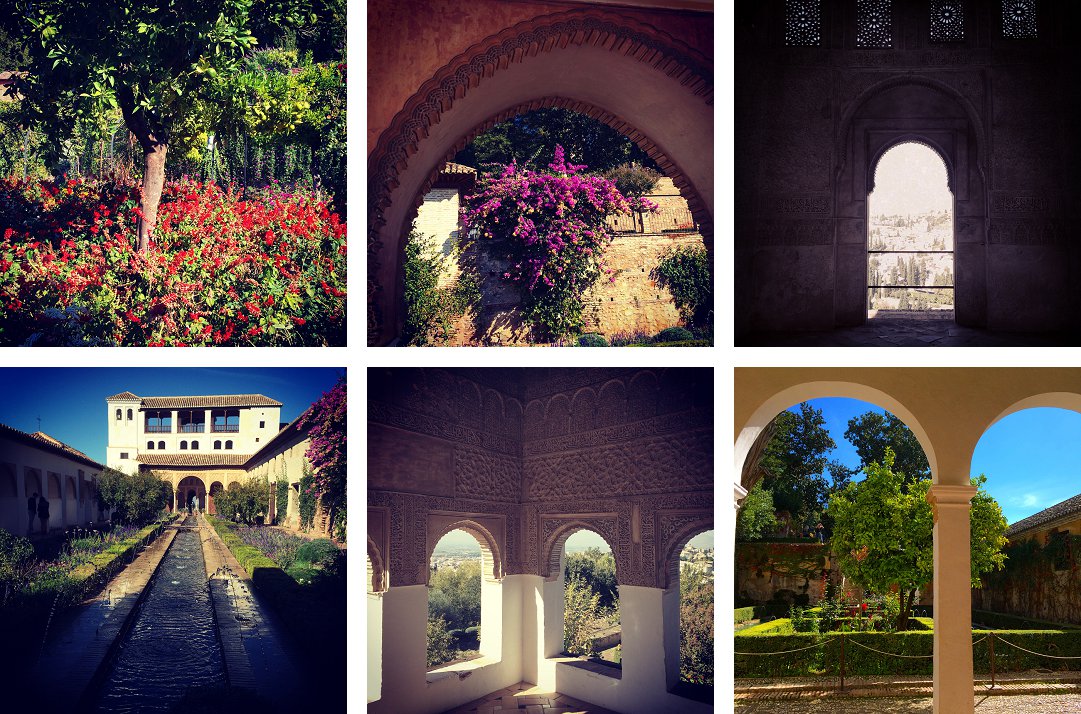
These photographs were taken in NOVEMBER. And, right at the end of November, too. A time of year when we’re used to it being grey and overcast – and even if sunny, there’s no colour to speak of. But not in Granada. The gardens are still full of colour and life and vibrancy. The sky, blue and cloudless. Perfect autumn weather. And a perfect time of year to visit this stunning Moorish site, which will make your jaw drop regularly, as you take in its vast splendour and beauty.
by Helen | Dec 7, 2020 | Italy, Travel
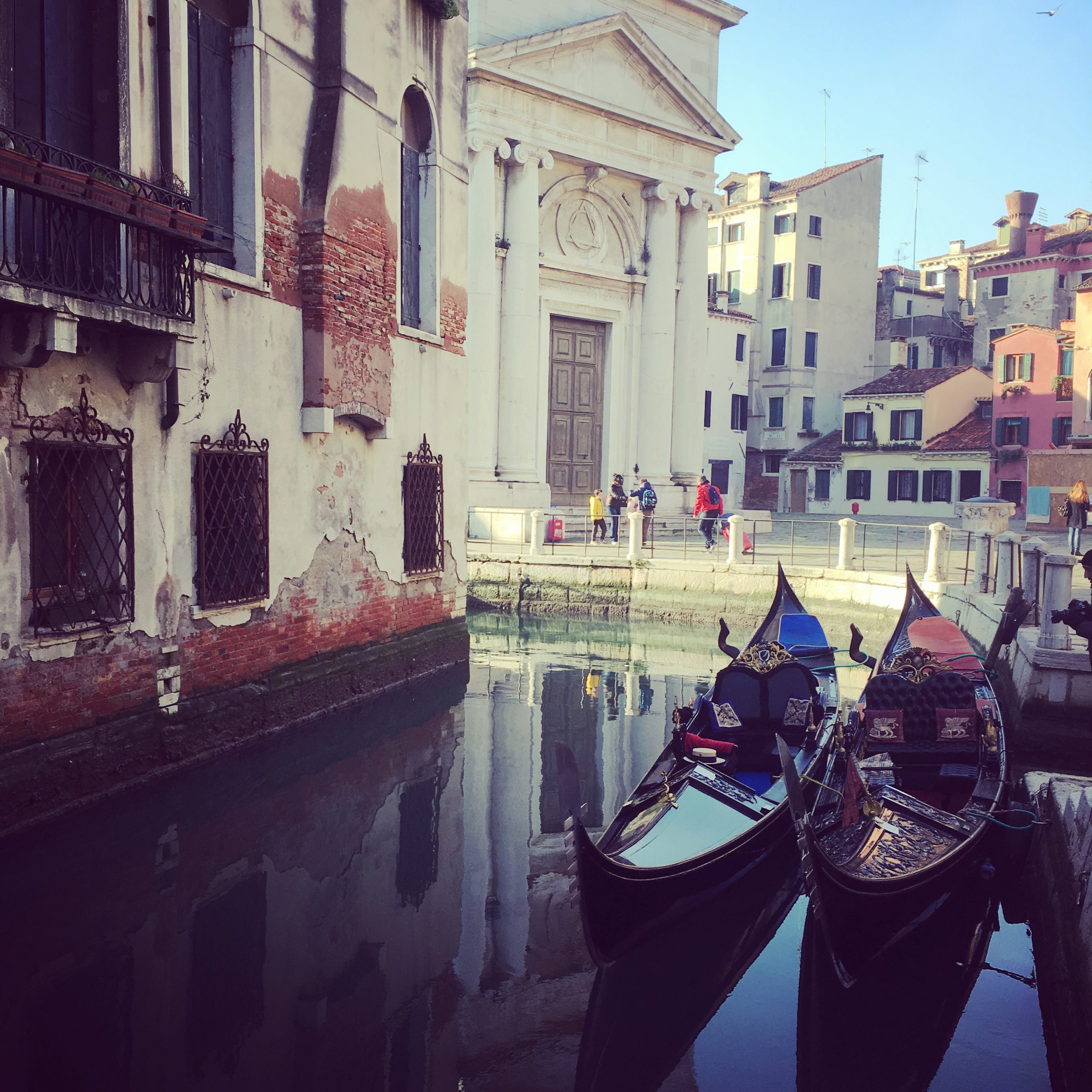
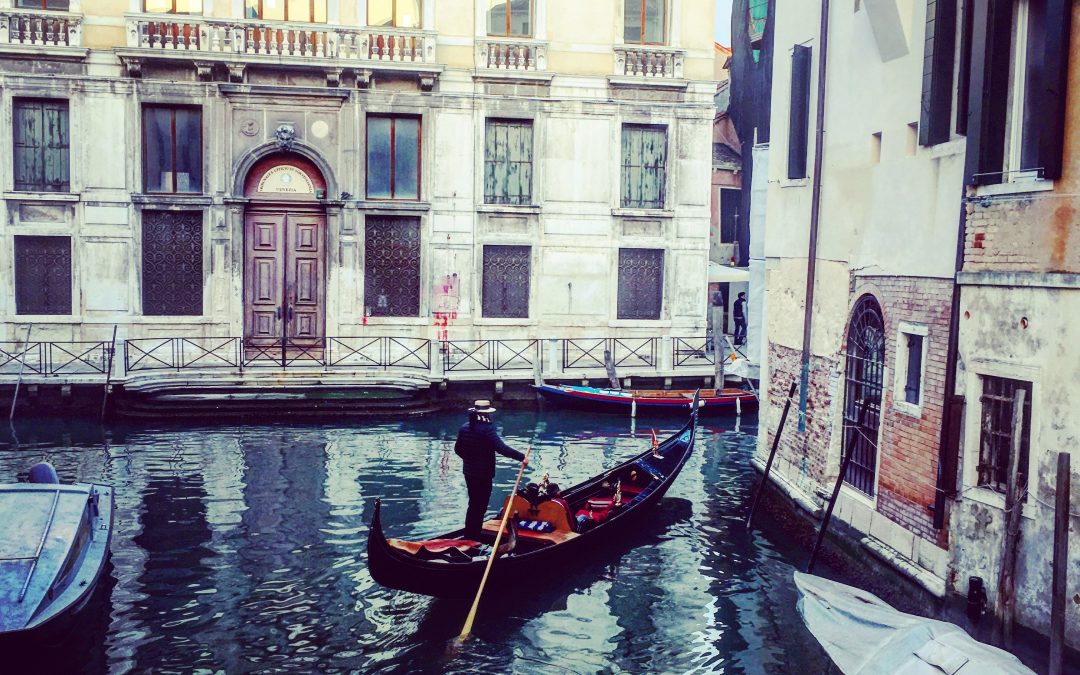
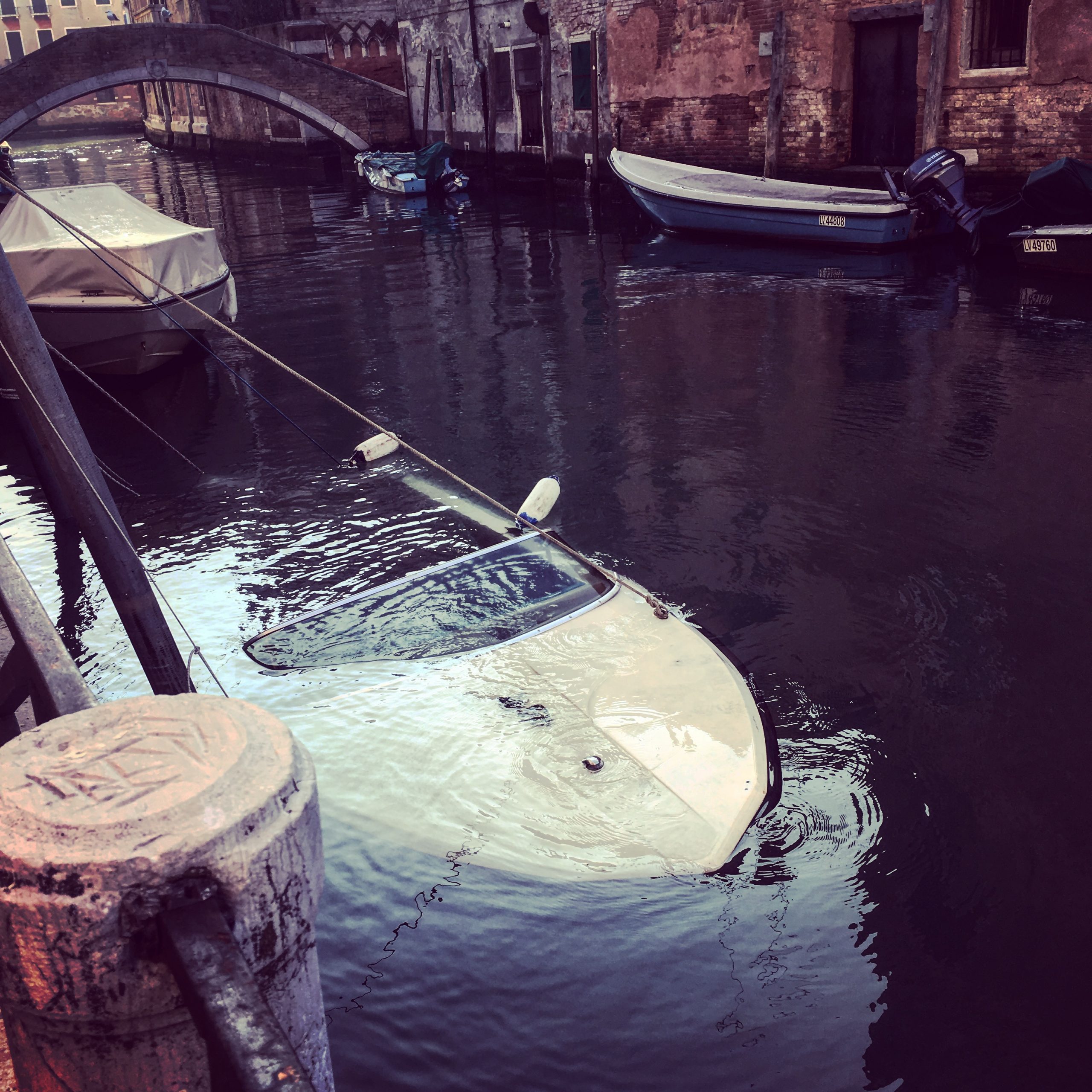
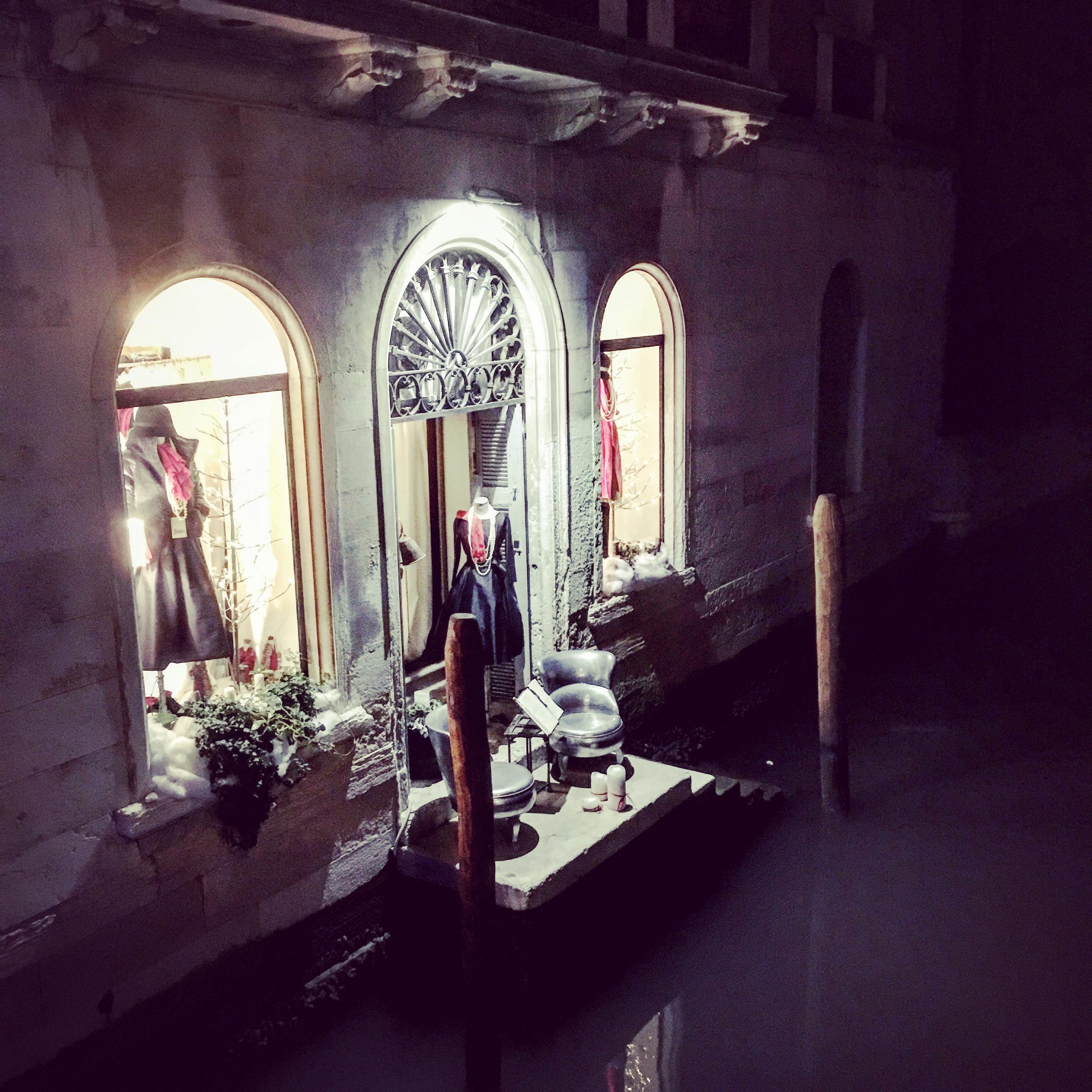
Winter is a gorgeous time of year to visit Venice. I’ve only been once in the summer and it was crowded. And hot. Accommodation was much more expensive and I think I just found it all a bit of a faff. So, whenever we go now, we choose to go in the colder months. You definitely can’t guarantee the weather and it’s always best to be prepared for the rain and the cold. And, as we found out in 2019, the Aqua Alta, when we experienced the worst flooding the city had known for many years. But other times, we’ve hit lucky and have had glorious sunshine and crisp weather. We even had the Carnevale when we visited in February and had totally not realised it was happening. Often though, it can be grey and cloudy, but this definitely doesn’t detract from the beauty of this city, and when the clouds break, and the wintery sunshine comes through, well – you just can’t beat Venice…
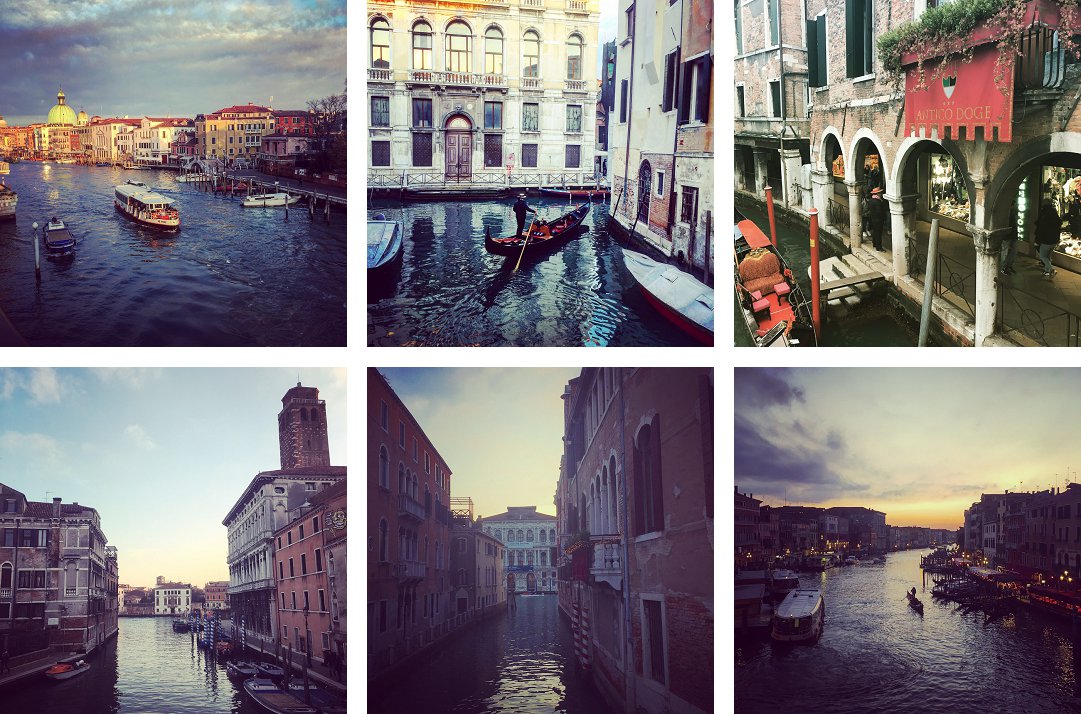
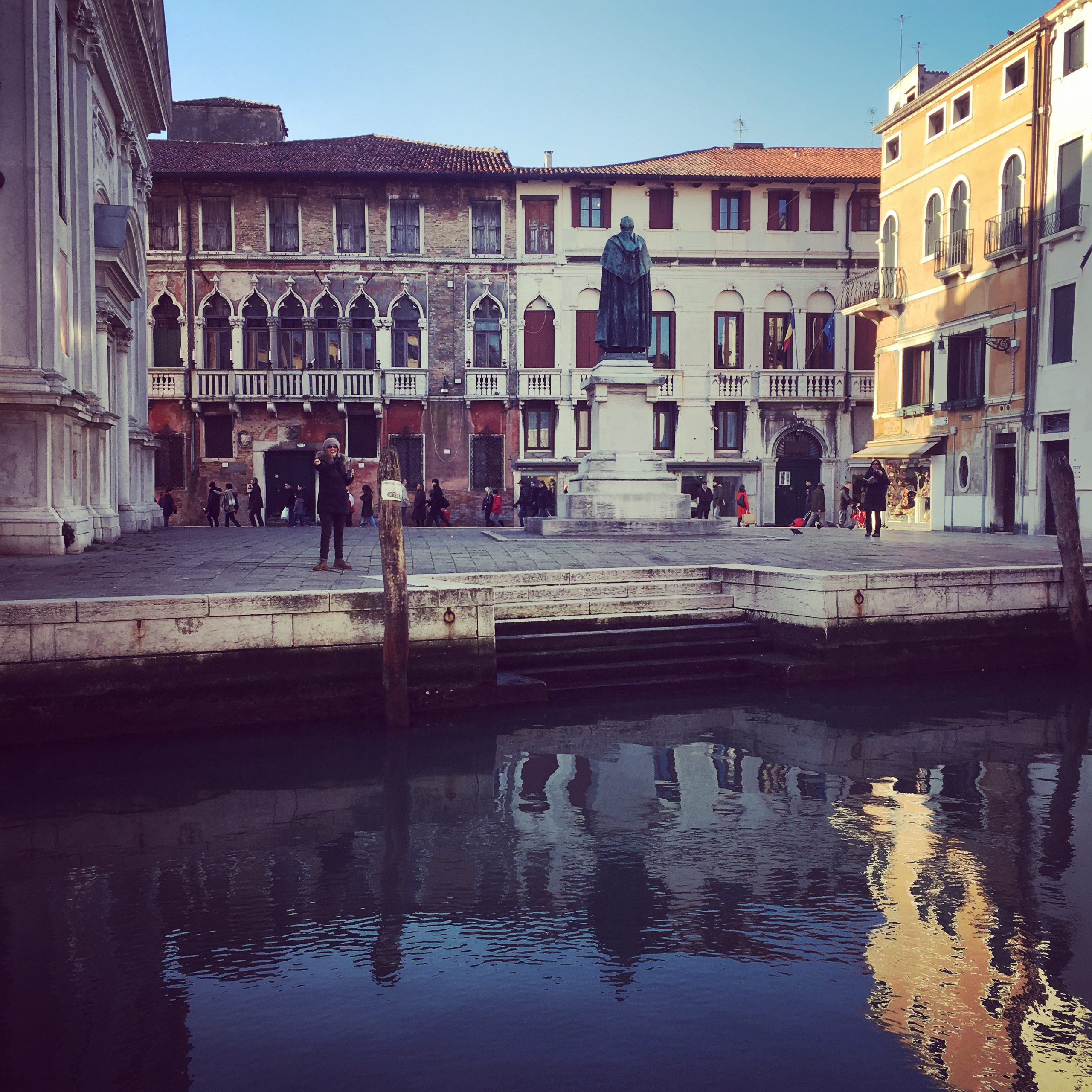
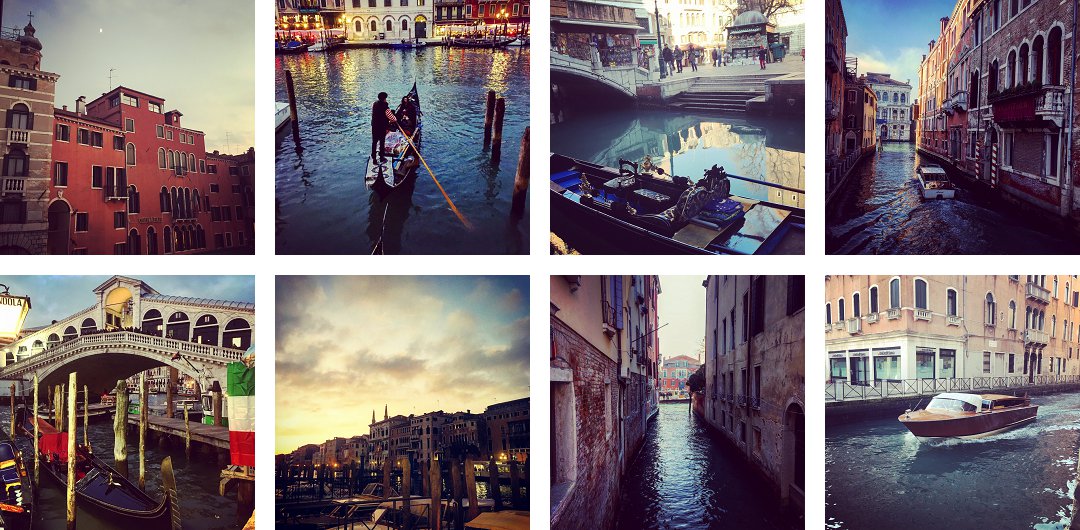
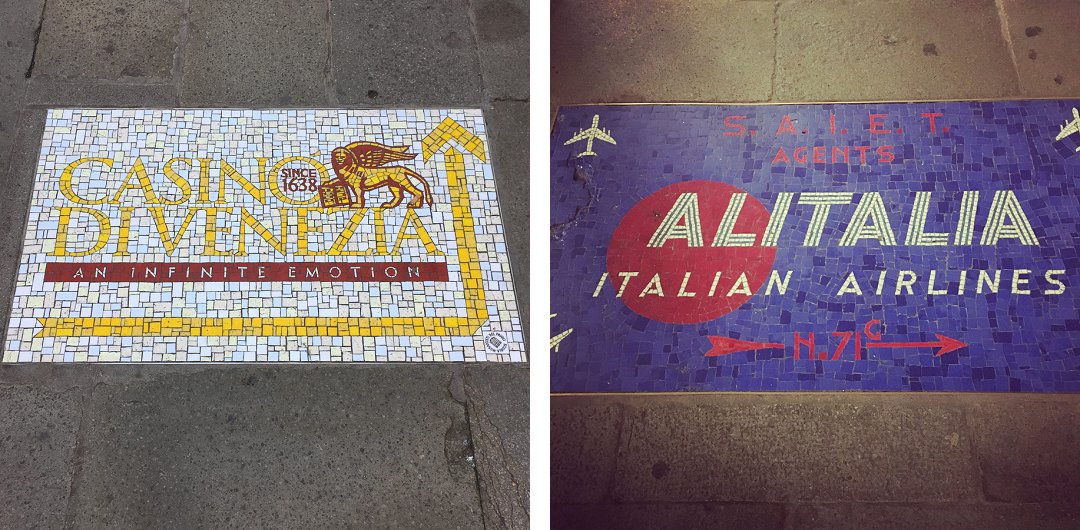
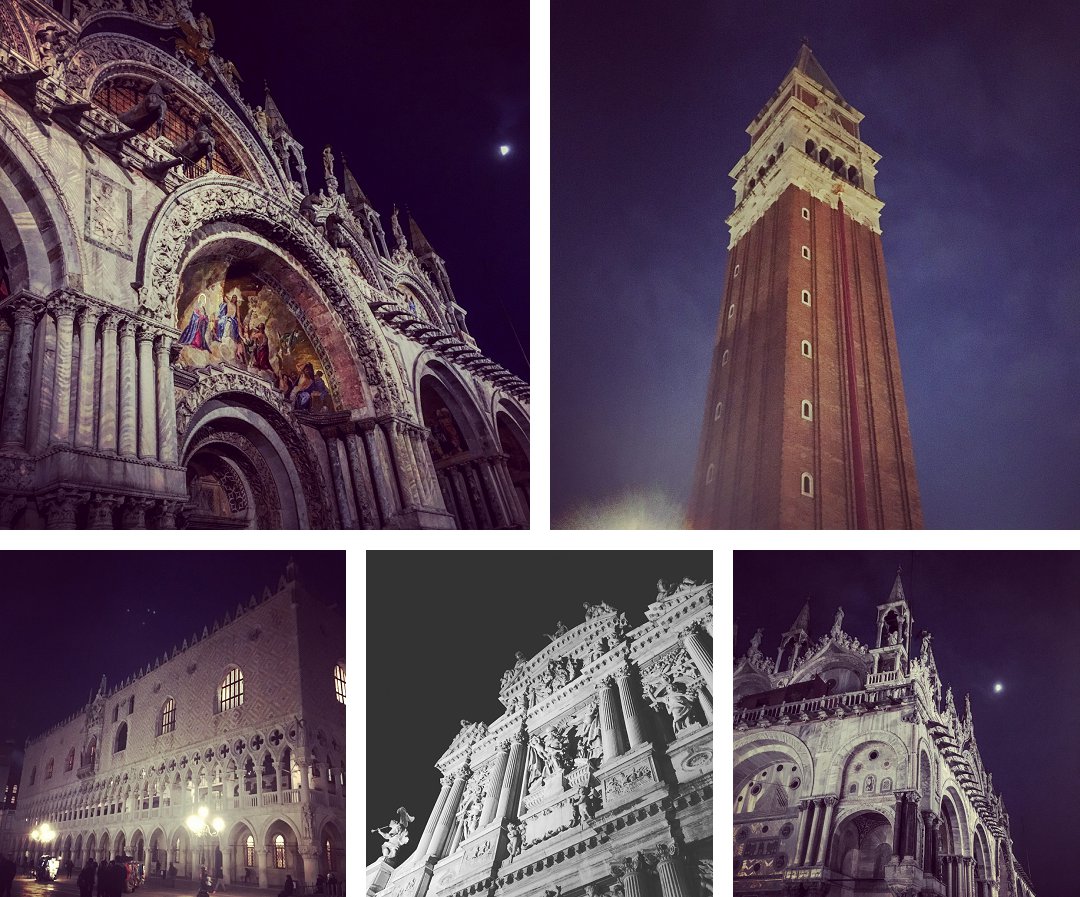
December is lovely, too, because the city is gearing for up for Christmas, and I can’t think of many places I’d rather be as the huge tree is lit up in St Mark’s Square, and the lights start to twinkle across the city.
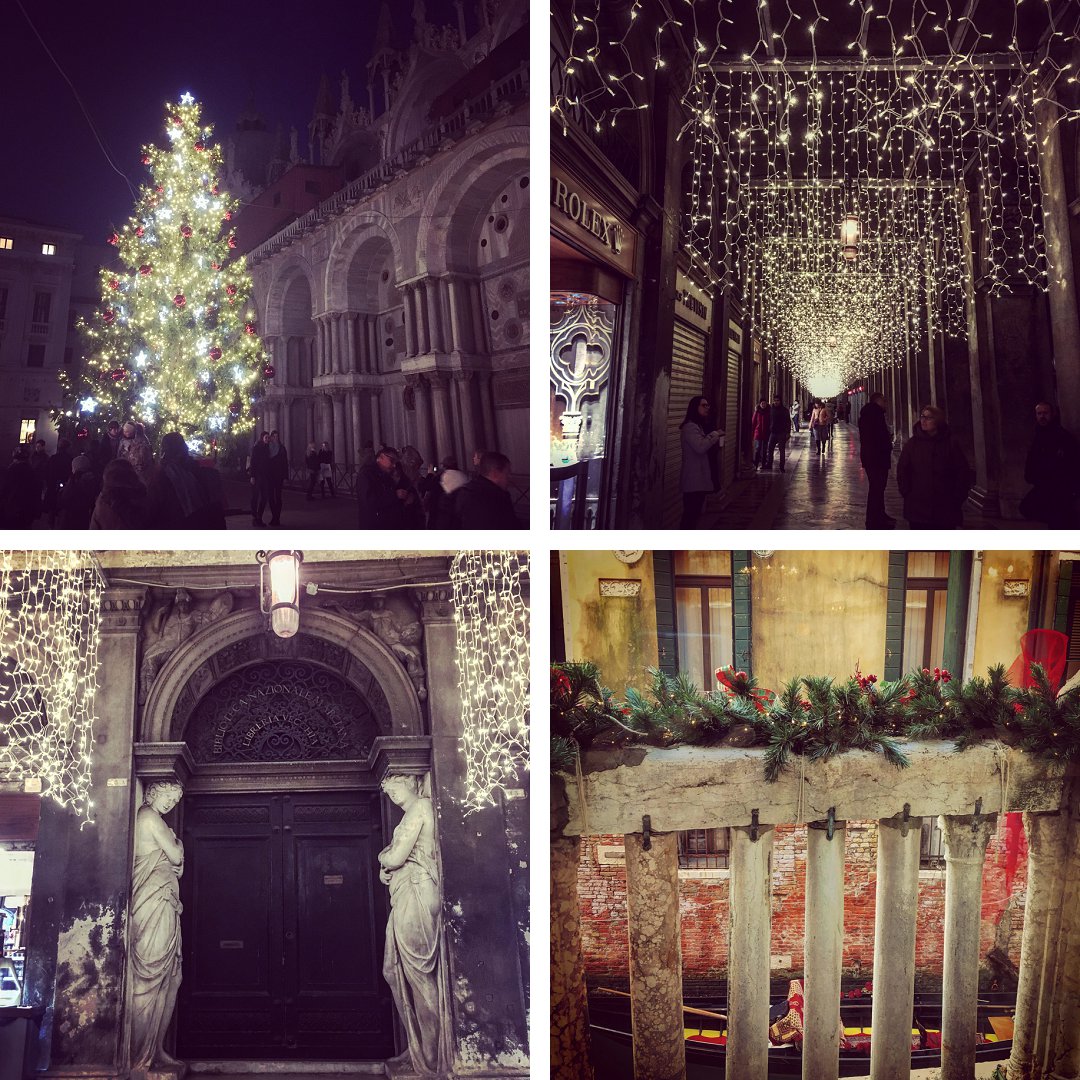
We keep returning to Venice because it’s now very accessible from where we live in northern Istria, and because however many times we go, we obviously always discover new areas and new sights to discover. New restaurants and bars, and new hotels and apartments. It’s a city we will keep returning to, and imagining when we are there, that we are residents…
by Helen | Dec 3, 2020 | Renovation
We’ve never had a garden big enough to accommodate our cars. In every house we’ve lived in, parking has always been outside, on the street. Apart from having to usually fight for parking space outside our house in West Didsbury, we’ve never really considered parking. Until now.
When we moved into the house, we had a big elderflower tree and a grassed area. The shovels and spades etc were being used to mark out what we thought might be a pool – that was knocked on the head pretty quickly! Cars used to be parked along the side of the house, but the grassed area there was starting to become worn, so we decided to use the grassed area below. The tree wasn’t very healthy so it was removed and we then had somewhere better to park the cars.
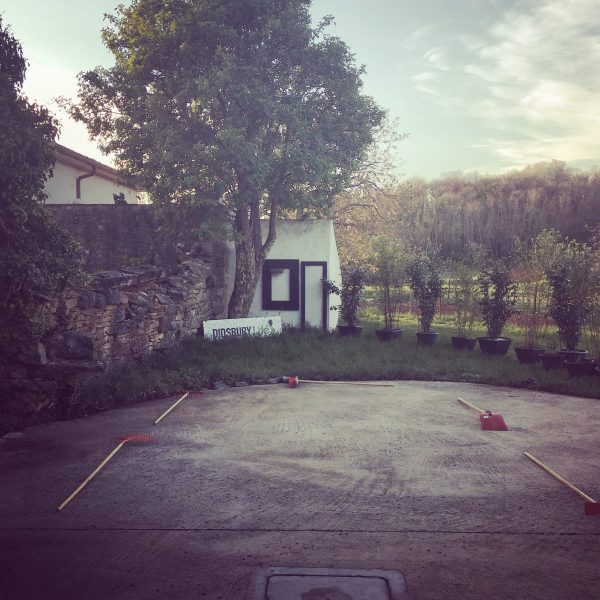
However, over the three and half years we have been here, this area has become more and more messy. Constant driving across it meant that the grass all but disappeared – although hardy weeds survived. With much building work going on in the house, lorries would often park up here, to drop off sand or stone or wood, and so the soil would be constantly getting churned up. And the soil we have here is thick, rich red soil, which, when it’s rained, is like clay. Looks lovely in the fields, not so much when dragged through the house on the soles of your shoes. So, a decision was recently made. The area was going to be sorted, and another project added to the list of jobs we wanted to do to ensure that our home was looking her very best.
Like all jobs we attempt ourselves, we grossly underestimated both how long it would take and how difficult it would be. But, you live and learn.
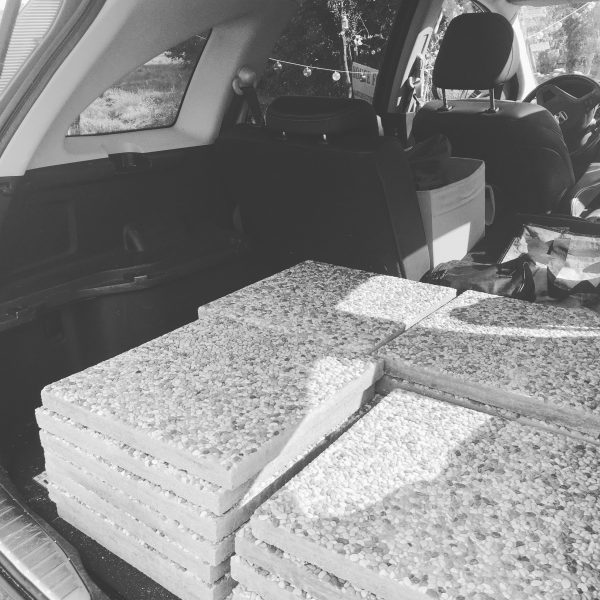
The first attempt involved the purchasing of a lot of flagstones – these were pretty inexpensive and we figured with a bit of leveling of the soil and plastic sheeting, we’d be good to go.

Of course, first rookie error – we didn’t think it through, because we wanted a hard surface down quickly, before the winter rain arrived – was that as soon the cars were driven onto the flags, some of then cracked immediately. We hadn’t really dug down and embedded them, so we had to have a rethink. Concrete was an option which we considered, but however we did it, it was agreed that the digging had to commence so that we could make the area as level as possible. And again, we didn’t think this through. With a wheelbarrow and a pick axe, we thought it would take a couple of hours or so – but how wrong we were…

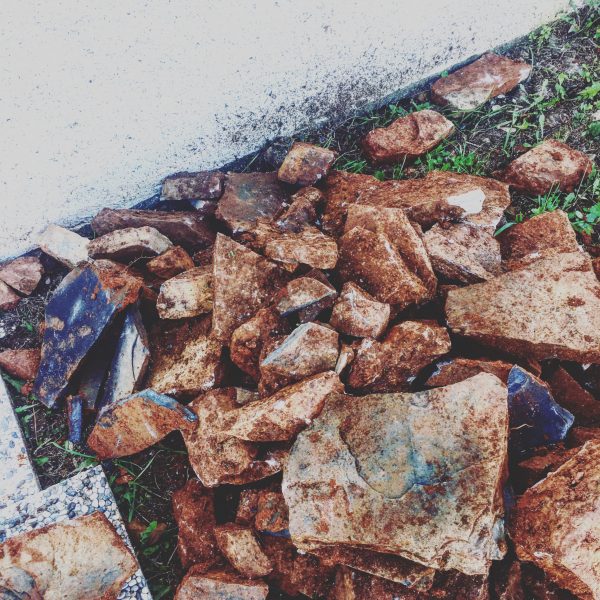
We soon discovered where the outbuilding, which had been demolished before we bought the house, had gone. Buried. Under the soil. From slates to huge corner stones, the outbuilding was still there…
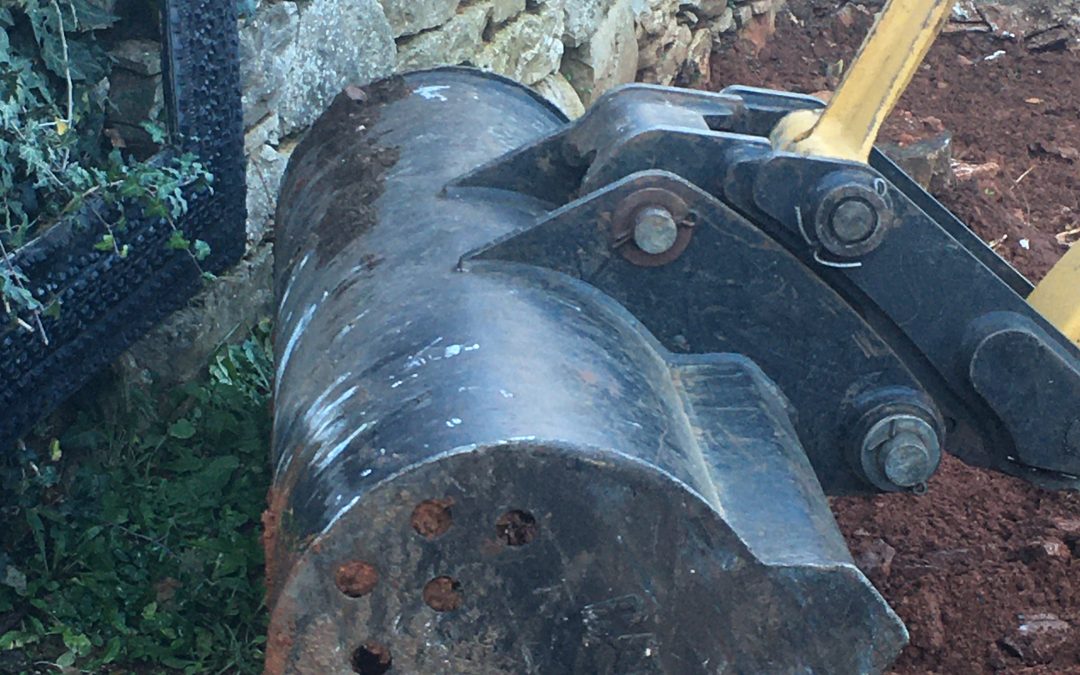
We quickly figured that we’d still be digging this time next year and that we needed a bit of advice. Working with our builder it was decided that a digger was needed and that the best solution, once the area was flattened, would be to backfill with a mix of stone and sand, compressed with a proper machine and then a top layer of Istrian stone chippings put down. This sounded like the perfect solution and all was arranged.

A full lorry load of rubble and soil was excavated and taken away, although we did retain some of the more beautiful stones as we had an idea for a wall…
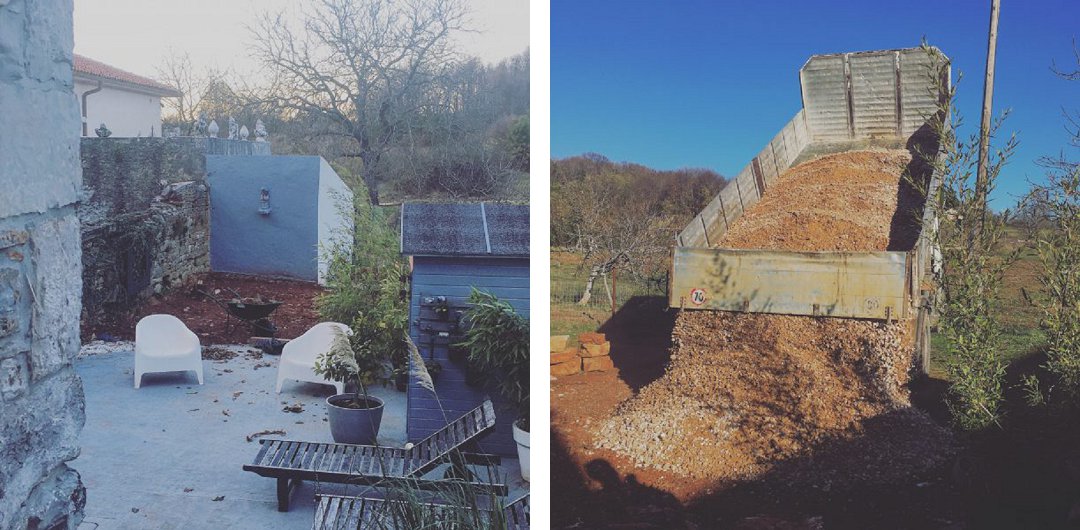
Very early, on a very cold Saturday morning in later November, the first delivery arrived and not long after, with some good rake action, the area was covered, and the cars were driven back and forth to begin the process of compressing the material.

One of the things which has delighted us the most about doing this work, is that the excavation has now properly revealed the curved edges of the patio. Once this is repainted in the spring, it will definitely come into its own.
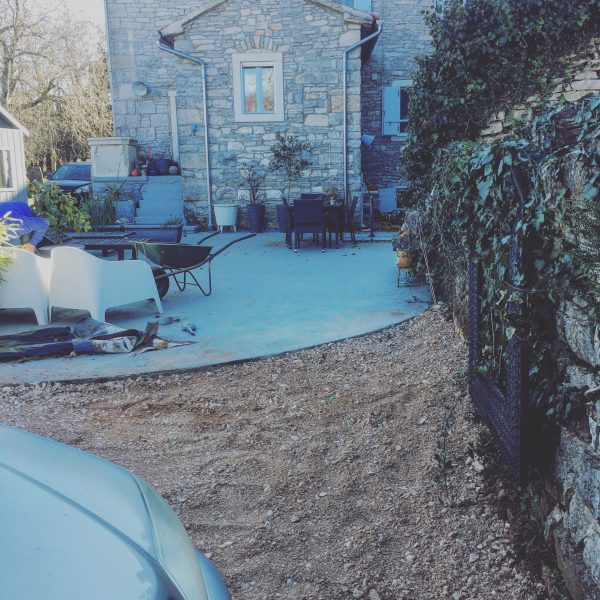
To finish this part of the job off properly, a machine was used to totally flatten the stones and when done, we had the hard area we’ve been wanting. And no more red soil.
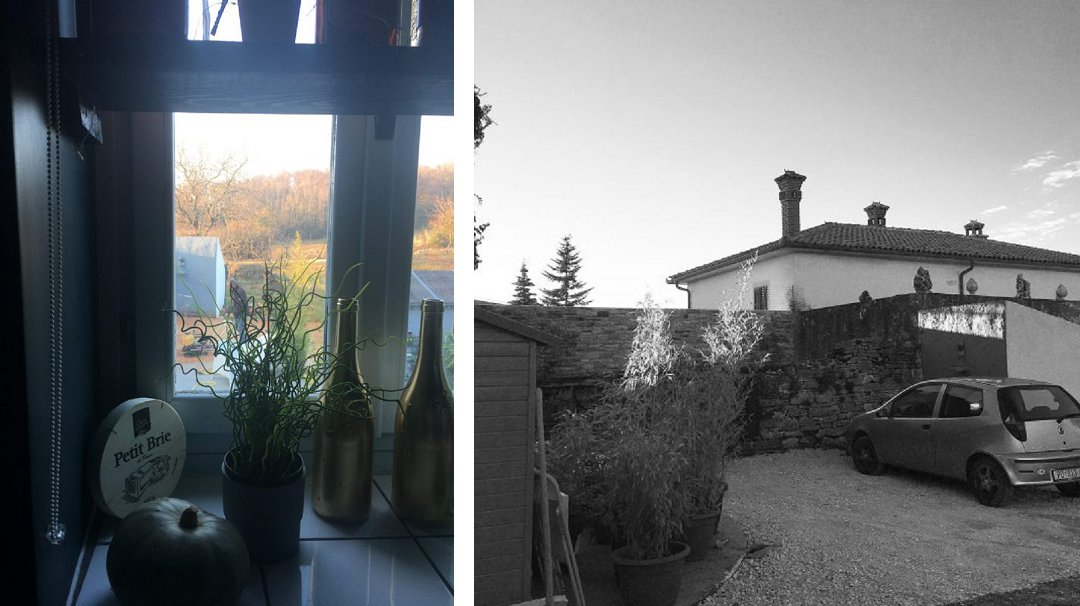
The final piece of the jigsaw was the delivery of the top stones – beautiful milky white Istrian stone chippings.

And, within a couple of hours, it was done. What a transformation, for relatively little cost and done much more quickly than us attempting it with a pick axe and a shovel. The stones we’d saved were used to create a little wall at the front of our property, to finish things off. Heather plants and pink oleanders – which we hope will burst into colour, in the spring – create something more visual and definitely enhance the entrance to the garden now.
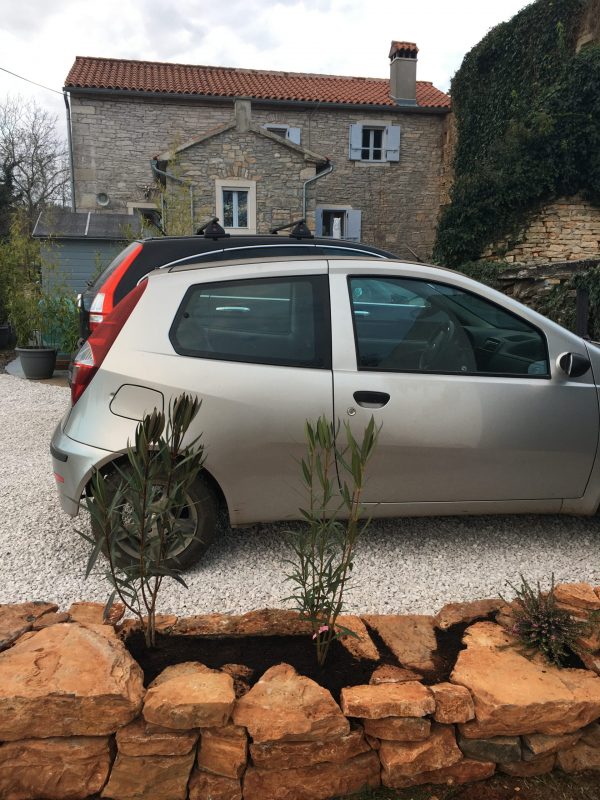
We are delighted with the finished result. No more trailing mud into the house and with a specific area for the cars, the garden just seems so much more complete. The next plan will be to maybe construct a pergola over this area, which will be planted up with climbers. But, that may be something for the future…

by Helen | Nov 16, 2020 | Interiors
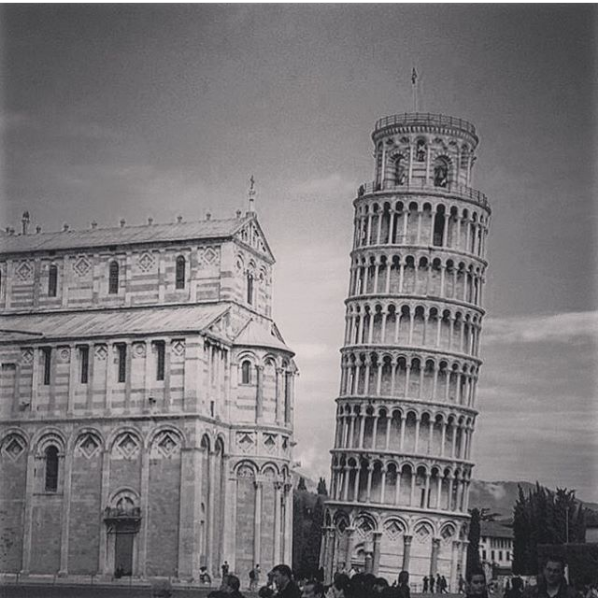
One of the things that we’ve always meant to tackle, but never got around to it, as there always seem to be other jobs which take priority, is the levelling of a number of our window sills. Some are level, but some, including one in the living room, are still in their Istrian stone state – therefore wonky. They are deep and recessed so perfect for a bit of accessorising, but anything that is placed on them, has a bit of a Leaning Tower of Pisa look about it.
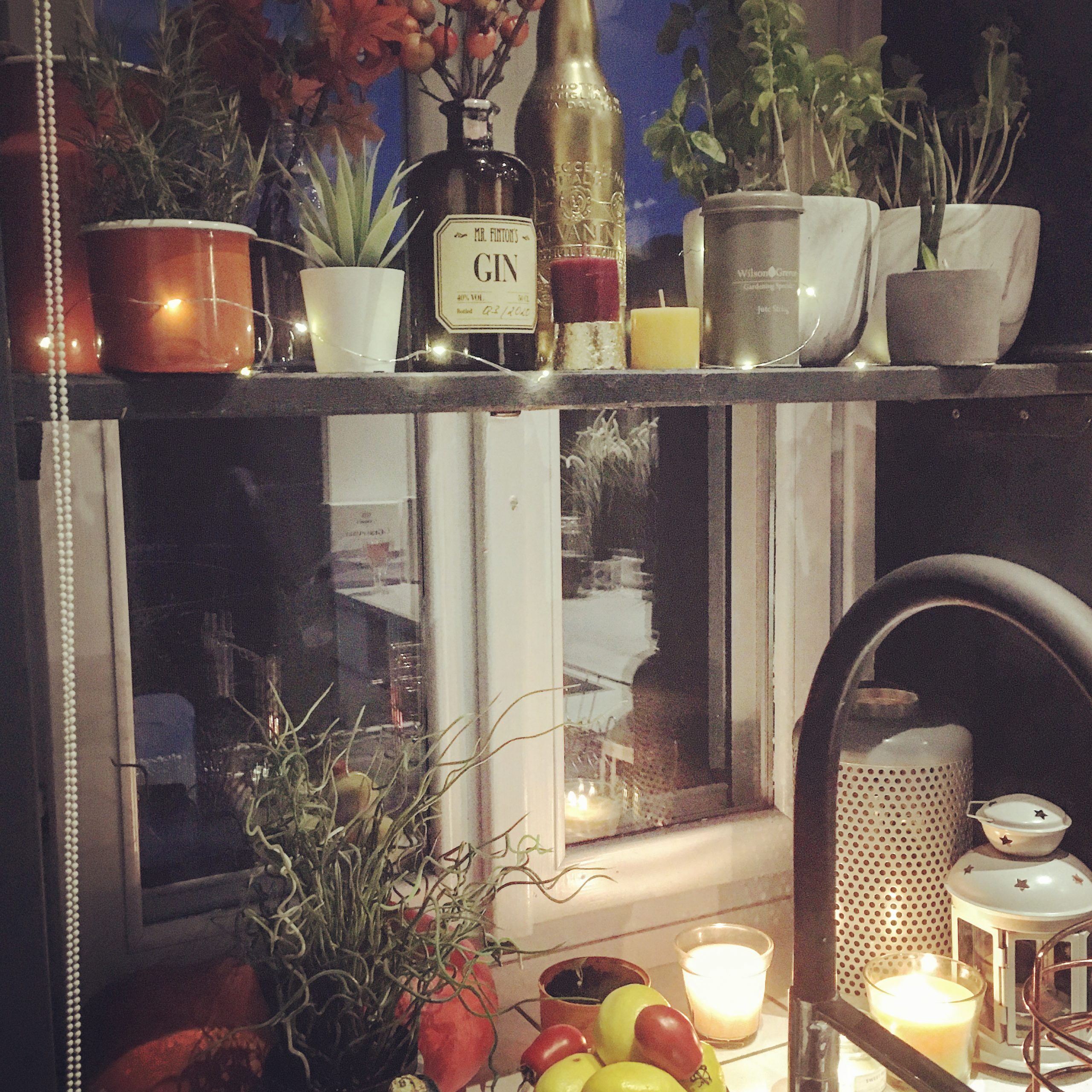
So, after adding a window shelf to the kitchen window, it was decided that this could be a quick fix solution for the living room window. The intention is still to have the window surround and sill plastered, but it depends on how long we are here for. At the moment, we don’t really fancy doing messy work which will ultimately end up with us decorating, so the shelf it is. Another reason for this shelf, is to accommodate the broadband fixed line router. It can be temperamental and likes to be right in the line of vision of the pole in the garden from which the cable comes into the house – and we’ve found the higher up this router is, the less temperamental she is. But resting on the back of the sofa was never go to be a long term solution.
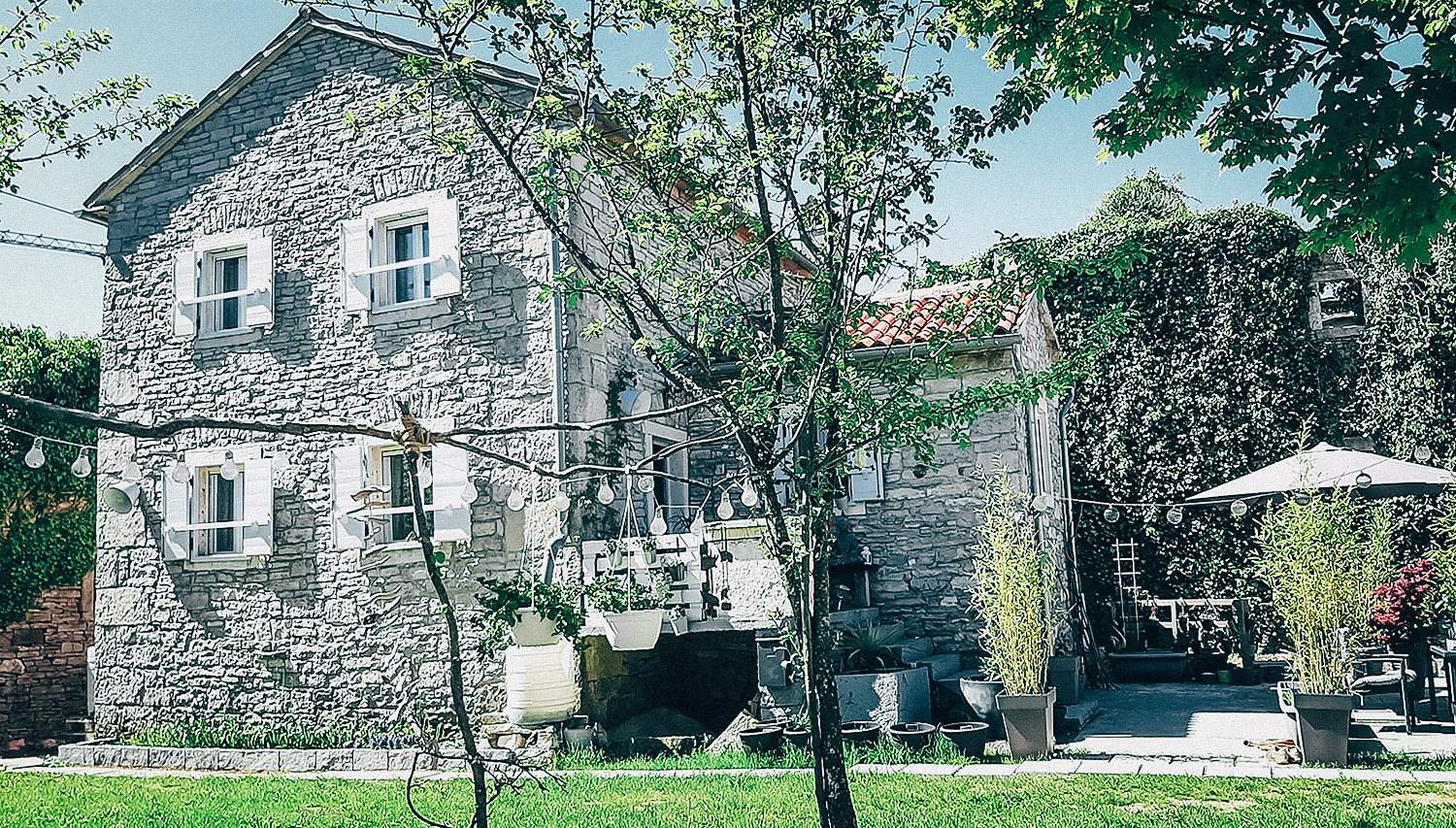
Where we live isn’t built up at all and without our garden lights, the house would look very dark at night time. The garden does look pretty magical when the green wall is up-lit – as you drive down the hill from the main village, it looks like a castle wall. Albeit a very small one. But it is eye-catching and we wanted the windows of the house to be a pretty. (“Top lights” are a thing in Croatia – a bit like Italy – and so we wanted to introduce a bit of lighting ambience…) Hence, another reason for the window shelves, to give us a bit of additional height and to create something a bit more interesting.
The shelves just lift off, so in summer they will be removed, so that windows can be open (they open inwards). But, in winter, there’s no chance of them being open, so we can be a bit over the top in terms of dressing the windows. Come mid-December, they’ll be Christmas-ed up, especially as it’s looking like we’re here for the festive season, but at the moment, we’ve gone for a slightly more subtle approach…
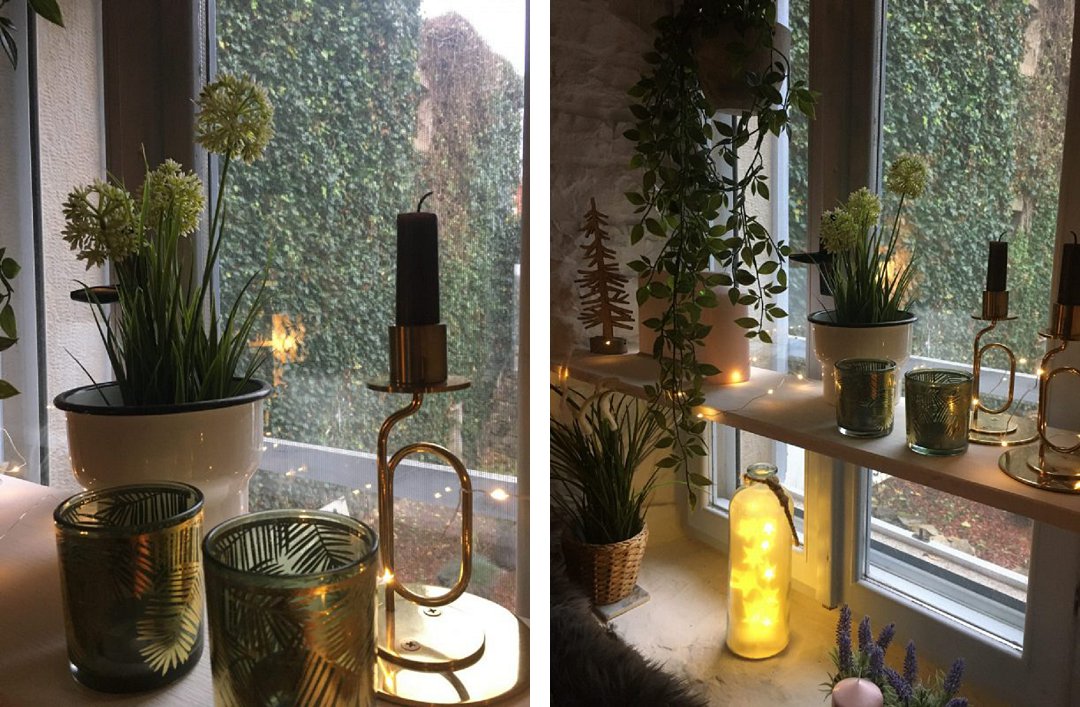
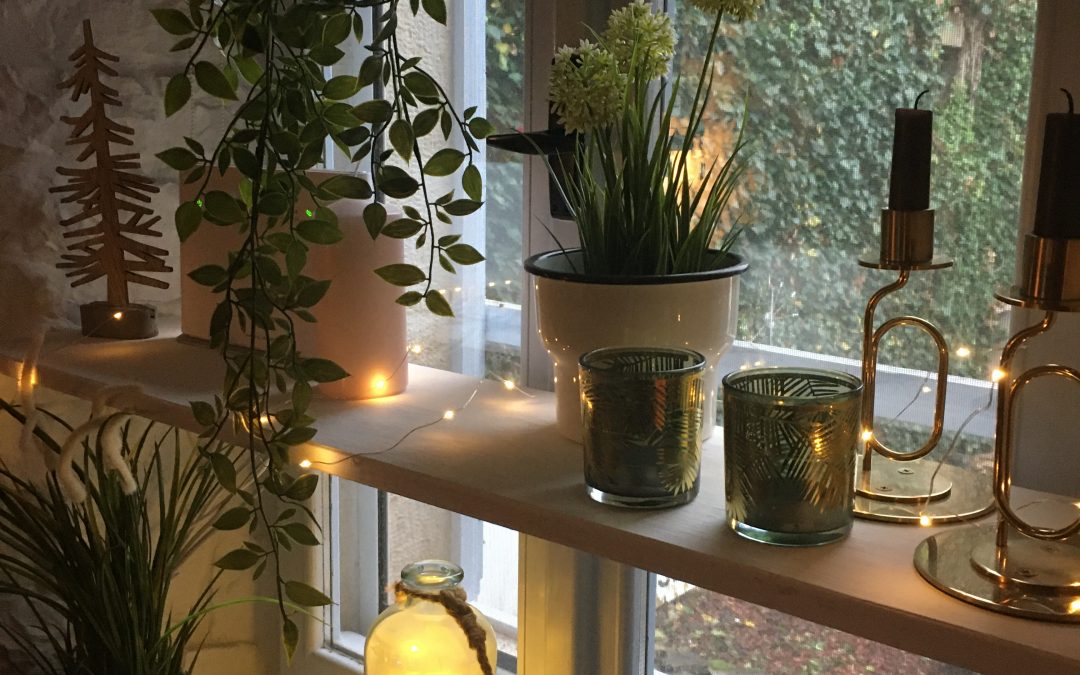
The shelf is just a piece of very inexpensive pine, cut to size and painted white. The router seems very happy in her new elevated position. A string of tiny LED battery operated lights add a bit of twinkle and a shelf not a shelf if it hasn’t got tealight holders for additional flickering lights. I’d love to have the green fingers to keep plants alive and thriving, but I don’t and so all plants are faux. But they never die, which is a result for me! Most of the accessories which currently sit on the shelf are from UK shops or are probably available in the UK :
- Wooden fir tree & pink pillar candle : Søstrene Grene, Stamford Quarter, Altrincham
- LED starlight in glass bottle : The Range
- All plants, aluminium cream pot & gold candlesticks : IKEA
- Green glass tealight holders : Dunelm
- LED string lights : Jysk
We’re definitely not overlooked, so don’t need the privacy that these shelves offer, but when I think back to our West Didsbury house, these would have been perfect, especially at the rear of the house. I think what I love about them most, is that once the brackets are on, the shelf just sits on top and so can be removed as and when necessary. It also means that I can change things around quickly and create different looks and moods without spending anything at all – all I’ve done here is move things from different parts of the house. We decided against putting a shelf up on the opposite window, as it have just felt a bit too much – and the sill on this particular window has been finished so we do have a flat surface. However, I couldn’t resist a kitchen window shelf. And this one is perfect for pots of herbs, as well as a bit of ambient lighting at the front of the house…