by Helen | Nov 23, 2021 | Spain, Travel
We’ve not visited Nerja for a while, but when we still lived in Didsbury, we did visit often. We were very lucky that we had a friend with a family apartment there, and so if there was availability, we could make a booking and do a quick getaway from Manchester. We tended to visit in the spring and autumn, as we found it to be much less crowded and temperatures were much better for exploring the region of Andalusia. When we go abroad, we’re not keen on two weeks on a sunbed. Although we do relax, we also like to get to know places, and Nerja is a great base for getting out and about. From here, we’ve explored Almeria, Granada, the Sierra Nevada, Malaga, Seville, Cadiz and Tarifa. All not to be missed.
But, we’ve also made sure we’ve explored Nerja and got to know it well. And, the more we’ve got to know it, the more we’ve really grown to like it. Initially, we thought it would largely be an ex-pat community, and so not somewhere we’d keep going back to. It obviously does have a large Brit community, but it’s also much loved by Scandinavians, Dutch and Germans – if licence plates are anything to go by – bringing a much more cross-cultural feel. And whilst there are bars by the beach, showing football and serving all day breakfasts and Sunday roasts, these don’t dominate. If you want this you can have it, but there’s also so, so much more. And that’s what we like about Nerja. It’s easy if you want it to be, but if you want to absorb a bit more of Spain, you can do that too.
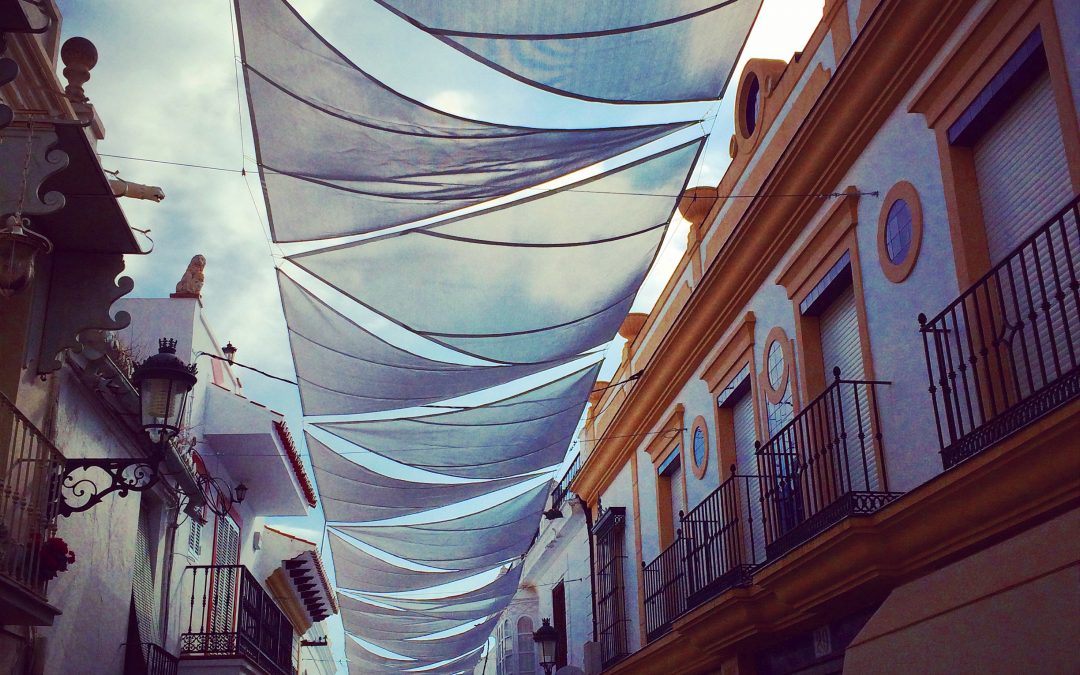
There are lots of urbanisations, up on the surrounding hills – typical modern, white washed town houses, with balconies and roof terraces if you are high enough. And, because they are built on hills, most aren’t overlooked and all will have some kind of a view of the sea, even if you need to stand on your tip toes and squint. But, from wherever you are if you are up here, it’s only a shortish walk down to the beach and the old town. There are buses, and if you take the car, plenty of car parks. The old town, with its large plaza, winding cobbled streets, white washed buildings and the famous Balcon de Europa, is very, very beautiful.
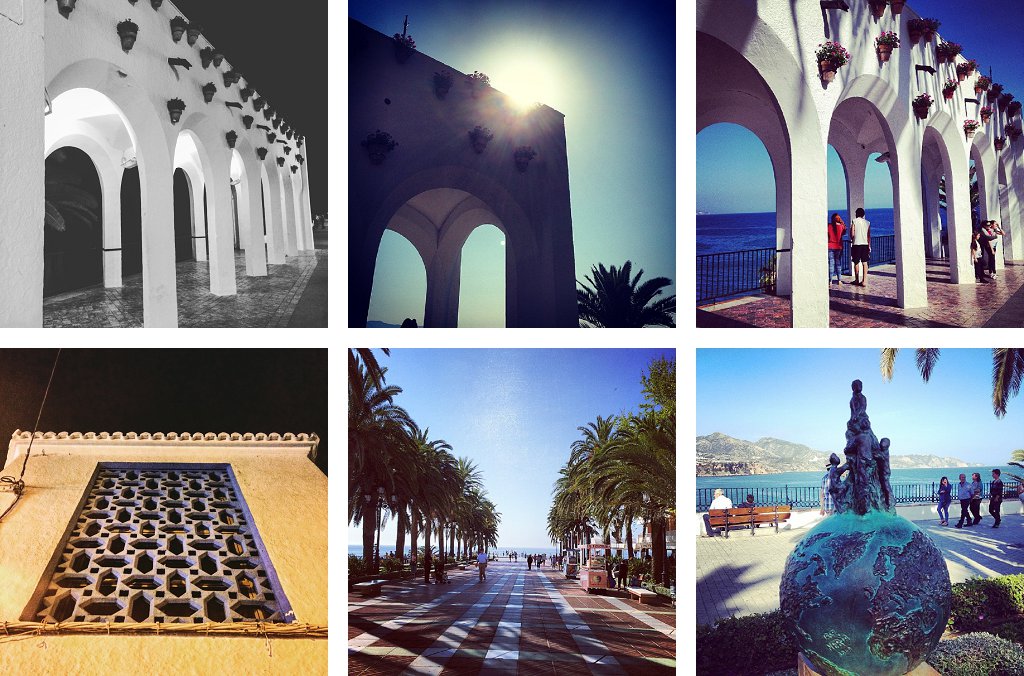
balcon de europa
Balcón de Europa is a beautiful pedetrianized balcony, from where you can look over the Mediterranean sea, and is one of the most popular places in Andalucía. It has spectacular panoramic views of the Sierra Almijara mountain range and the coast with its beautiful beaches, sandy coves and rocky outcrops.
beach life
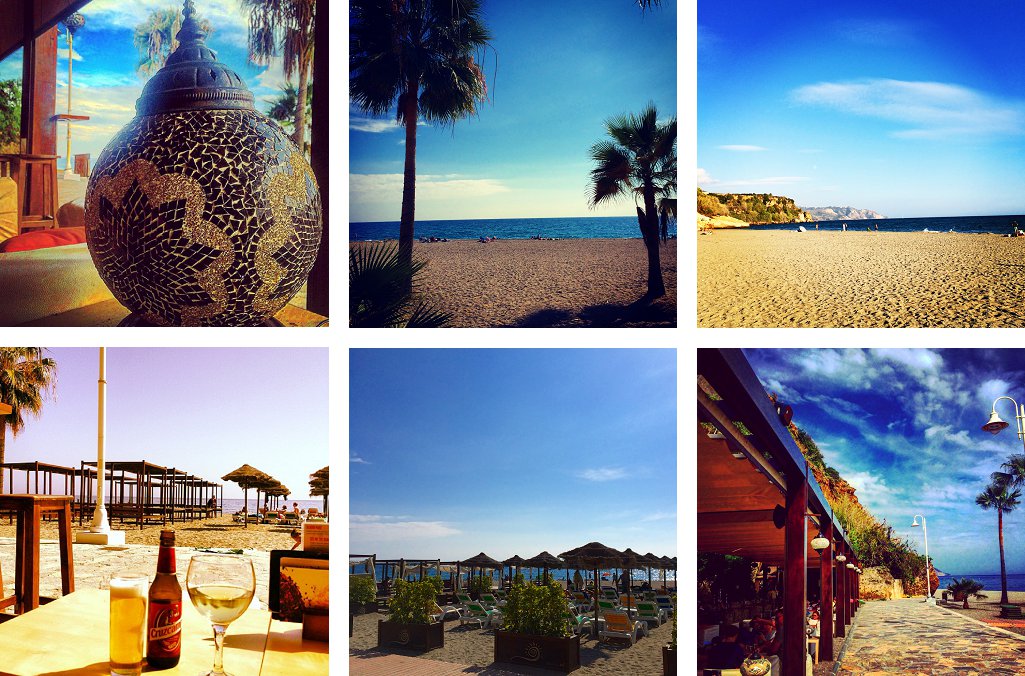
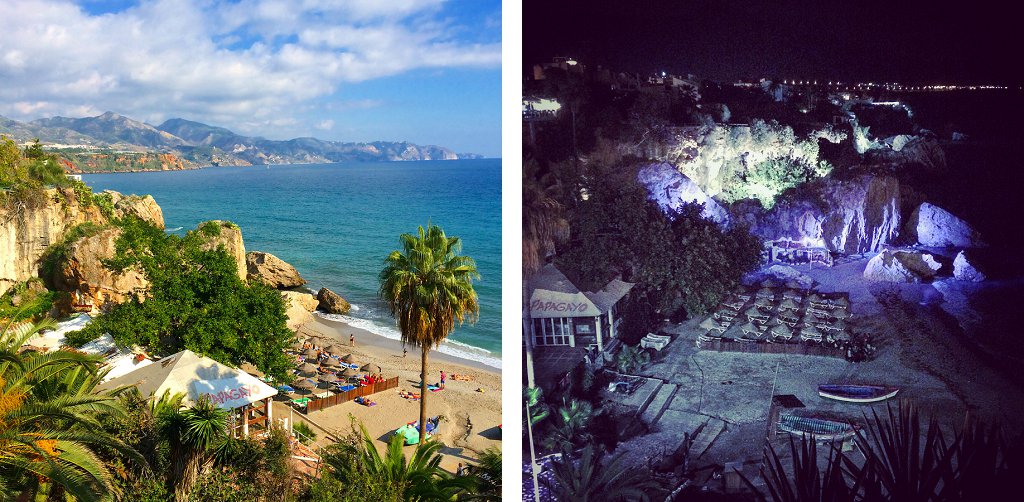
The main beach in Nerja seems to be Burriana. It’s extensive and is large enough to accommodate lots of people without the feeling of being hemmed in. Multiple bars, restaurants, shops (selling everything you could need for a day at the beach as well as many, many clothing stores) and estate agencies, line the road along the beach. And, on the beach, there are even more bars and restaurants. Our favourite part of Burriana is to the far right as you look in from the sea. The bars are a bit more chilled and laid back, and the restaurants not lined with staff trying to persuade you to come in. The kind of places where if you do come in, great. If not, you’ll probably come in, on your next visit. The final bar is definitely our preferred one – very Moroccan in feel, with big sofas, lanterns, throws and a feeling of space. The added advantage is that just in front, but far enough away to stop you feeling over-crowded, are super comfy sun loungers and big cabana beds, with billowing curtains. Maybe because this is right at the end of the beach, and so not in the melee of volleyball nets and water sport hire cabins, it always seems quite empty when we go. Perfect!
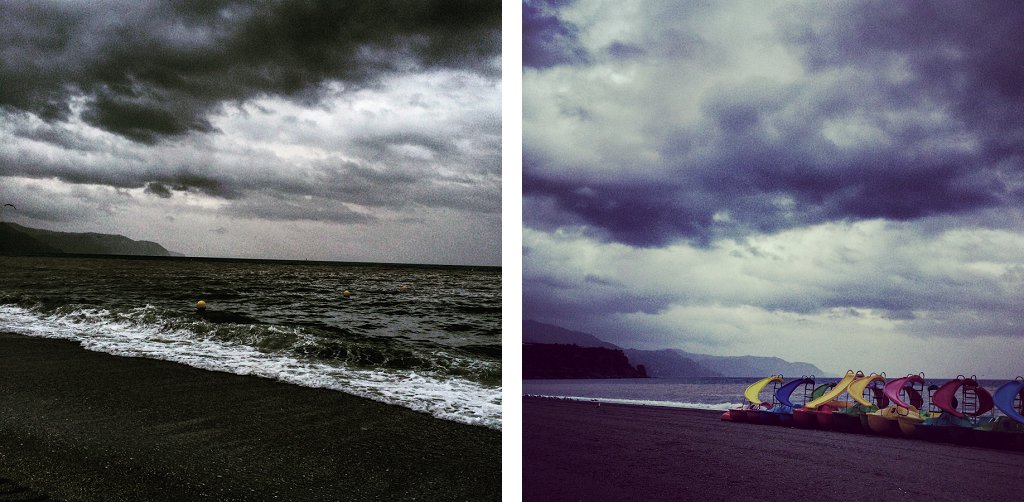
It’s definitely not always sunshine on Burriana Beach – we have experienced torrential rain and flooding, too…
There is another beach – Calahonda – underneath Balcon de Europa, which is very pretty, although more of a large cove than a beach.
nerja old town
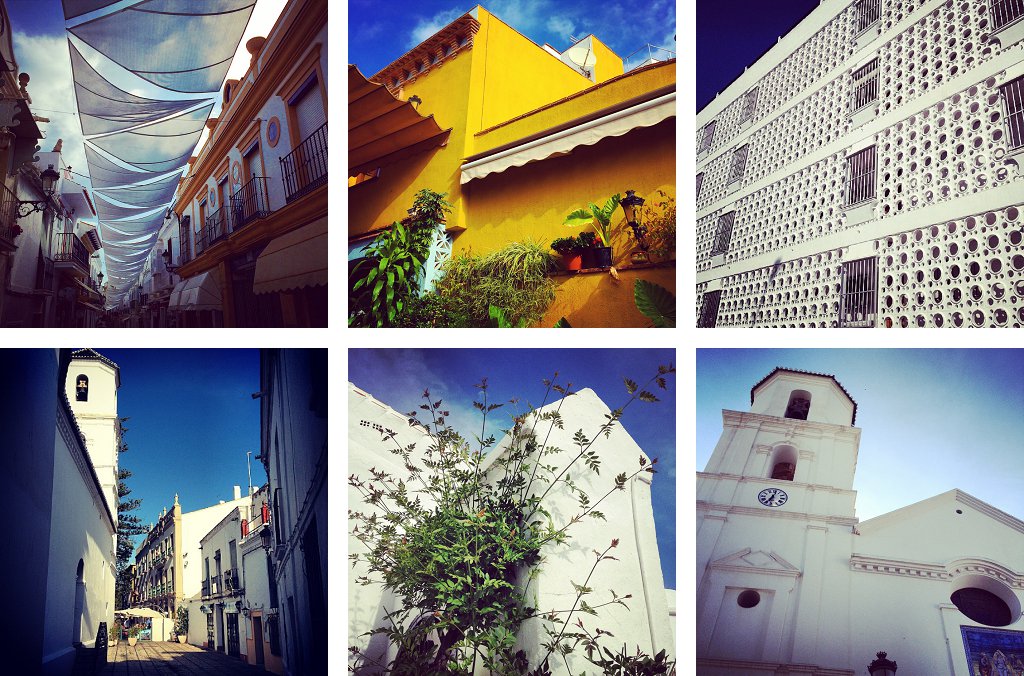
Like all Andalucian towns and villages, white is the predominant colour for buildings, with the odd pop of colour here and there. And, like all Andalucian towns and villages, once off the main plaza. the streets wind up and around and down, making them a pleasure to explore, especially when it’s cooler. As Nerja is quite large, there are a lot of shops and restaurants, so if you want retail therapy followed by a slap up meal, it’s the place for you.
by Helen | Nov 7, 2021 | Italy, Travel
One of the joys of staying in Venice, is trawling the internet beforehand, to find where you are going to stay. We’ve stayed in apartments and hotels, and thankfully have never had a bad experience. I do spend a lot of time reading reviews, scrutinising websites, looking a photographs, identifying the location and what’s in the vicinity. I think a bit of homework always pays off, as I’ve seen places we’ve rejected online, in reality, and for a variety of reasons, our research has always paid off.
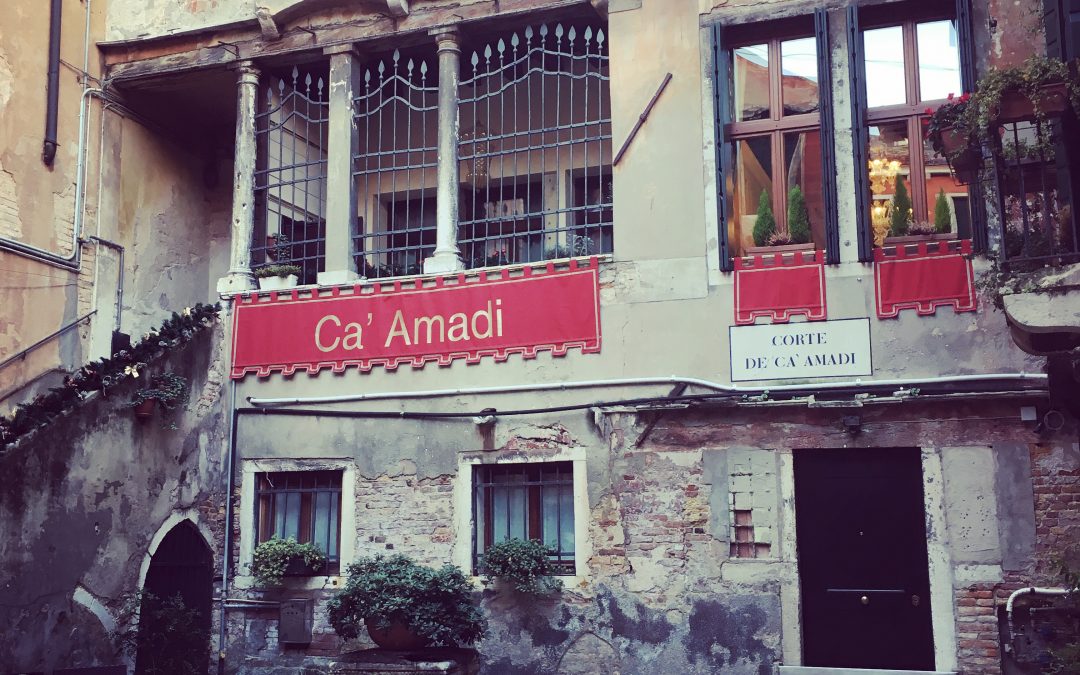
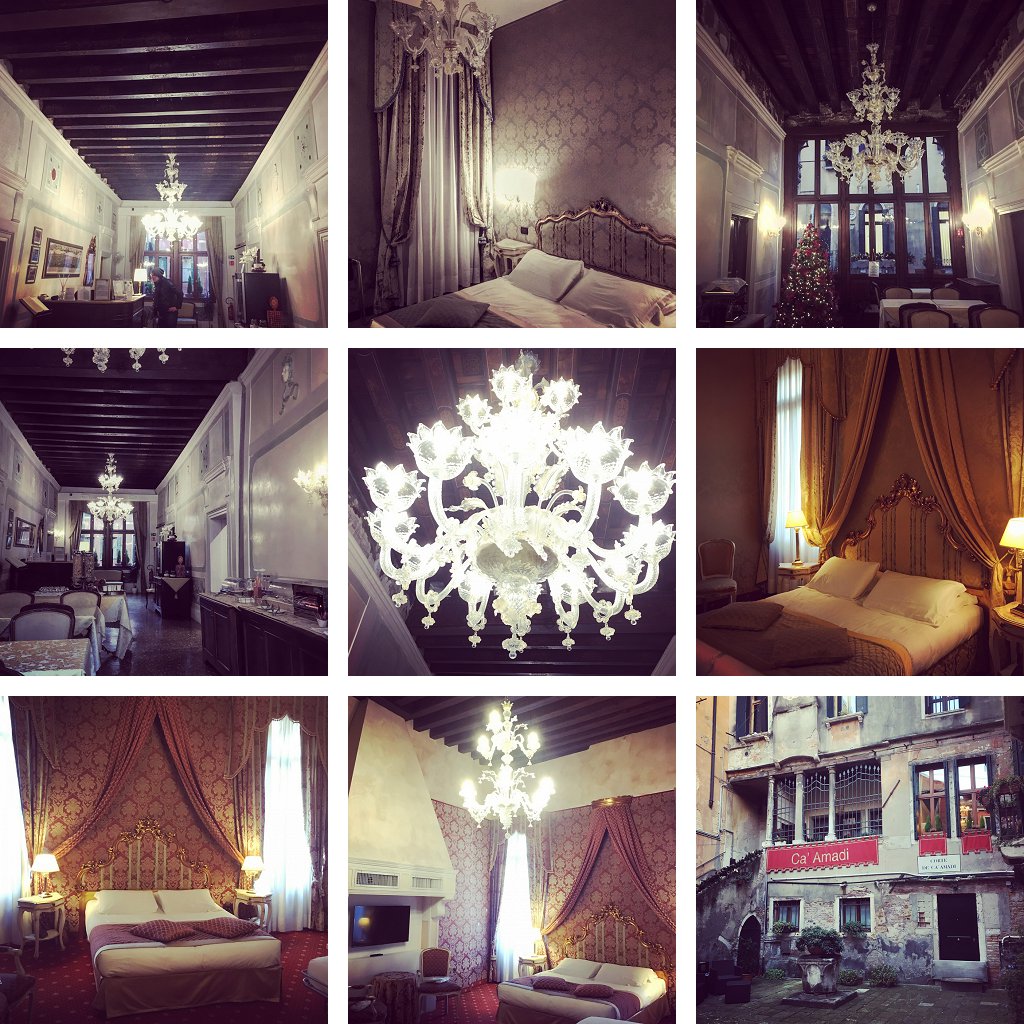
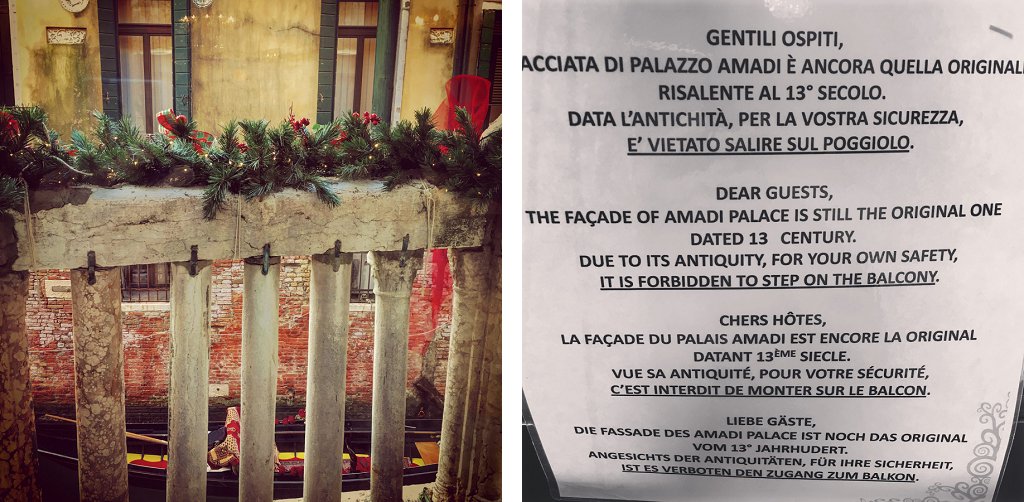
Ca’ Amadi is a hotel we’ve stayed in twice, and on both occasions, have loved it. It’s initially quite tricky to find, because it’s in a courtyard, off an alley, off a road, but perseverance pays off. Google Maps, in the centre of Venice is a bit hit and miss, but it’s not too far from the Rialto Bridge and so if you keep this as your main bearing point, you’ll eventually find Ca’ Amadi, On our first visit, it was clearly in the early stages of a renovation, as scaffolding was up outside and on the second visit, interior work was happening. From checking out the website recently, it’s clear the renovations have been completed because it’s now even more beautiful than when we stayed. It’s a very authentic Venetian residence, once home to the family of Marco Polo, no less. As stated on the website…
This small boutique hotel is housed in the noble floor of a palace dated 13th century and still preserves many traces of its long history. Entering the hotel, you’ll be welcomed in a large salon with ancient wooden ceilings, facing on one side a picturesque canal and a typical Venetian court on the other. In this place, full of memories and emotions, you’ll be able to relive the splendour of the Republic of Venice and, at the same time, enjoy the most modern comforts. History, culture or just a break in the frenetic daily life: at Ca’ Amadi every traveller can find what he’s looking for.
And, if you are ever in this area of Venice, forget eating out anywhere near the Rialto Bridge – and take our advice and visit Il Milion, reputedly the oldest osteria still opertaing in Venice. With a tradition extending back more than 300 years and a location near the rear of San Giovanni Crisostomo, this restaurant is named after the book written by Marco Polo, Il Milion, describing his travels. In fact, it occupies a town house once owned by members of the explorer’s family, just like Ca’ Amadi, which is literally about thirty metres away.
At Osteria Il Milion, a simple, nine-table restaurant set in a tiny courtyard across from the home of Marco Polo near the Rialto Bridge, you will find some of the finest local seafood. One of the city’s oldest dining establishments, its name is derived from a story about Marco Polo, who was said to exaggerate the millions of things he had seen and the millions of miles he traveled, earning the ironic nickname, “Il Milion.” The food here, most notably the tagliolini with spider crab, risotto with scampi and zucchini, and John Dory and grilled polenta, has clean flavors that are not masked by sauces, butter, or cream. The ingredients are so fresh and intense that there is no reason to hide them. “I eat here every day,” says owner Roberto Bocus, “so it has to be good.”
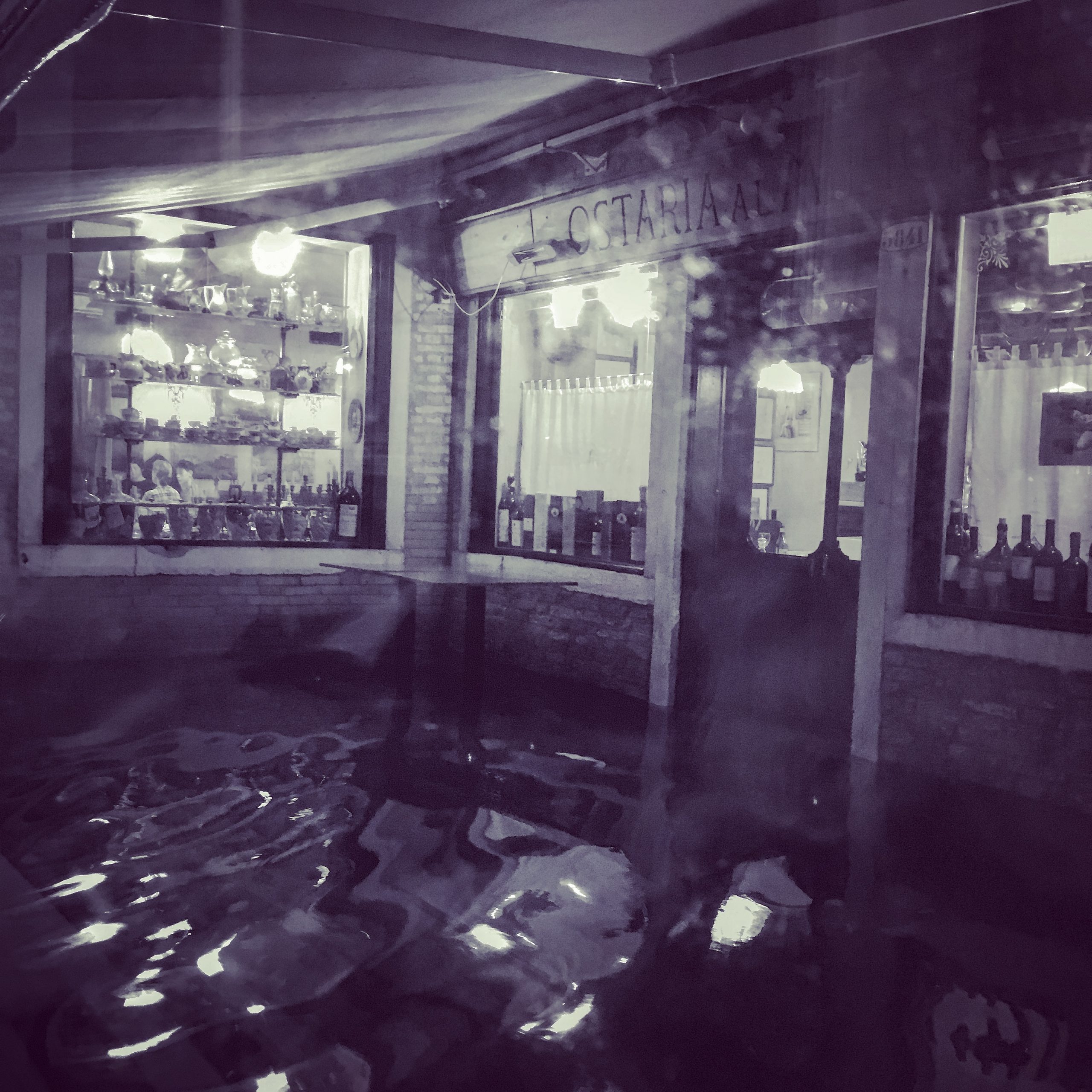
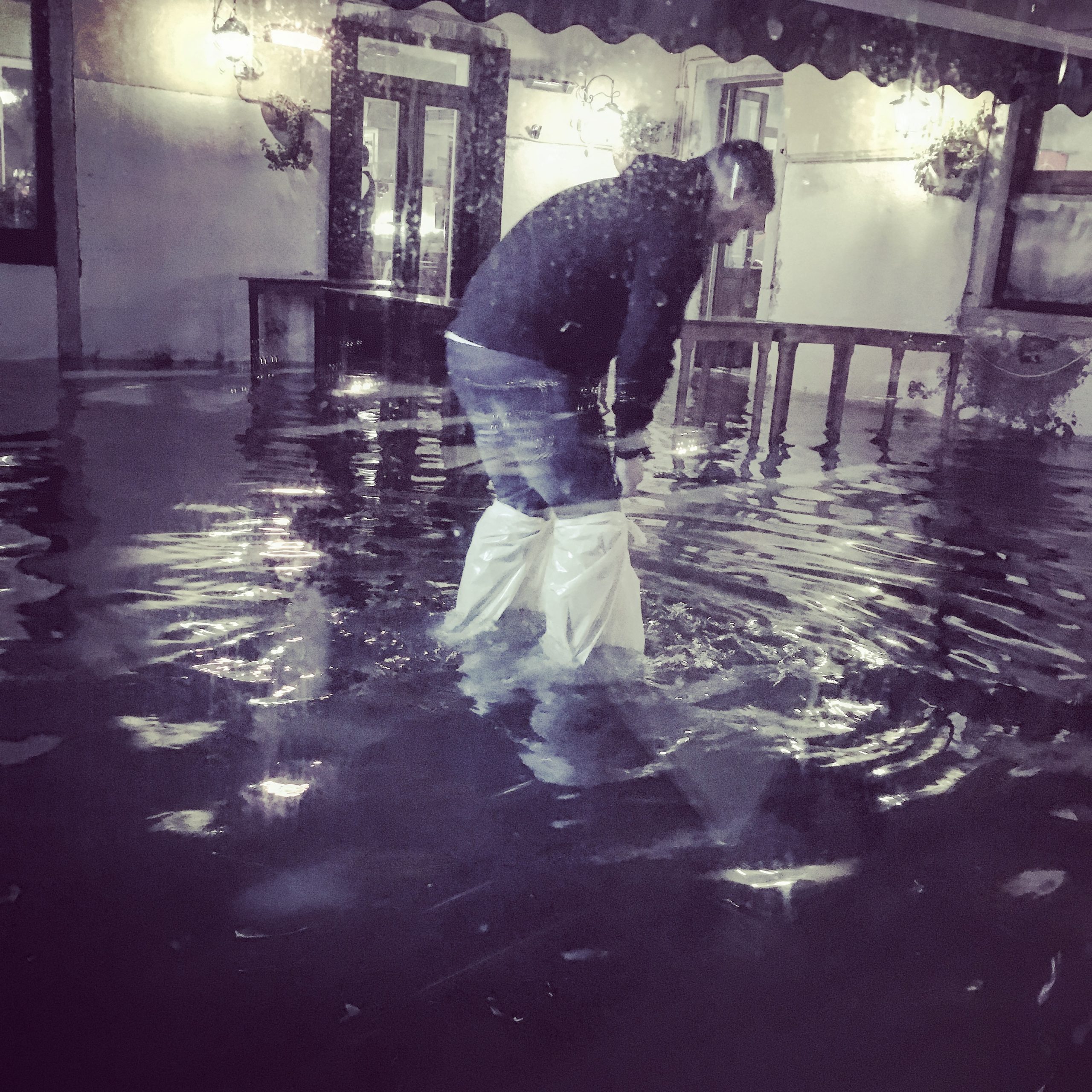
And, if you take our advice and eat there, do make sure that you order the Spaghetti con le Cipolle – I promise you will never have tasted onions as sweet. We’ve eaten there a few times, and again every meal has been memorable – perhaps none more so than the Aqua Alta of 2018…
by Helen | Oct 8, 2021 | Slovenia, Travel
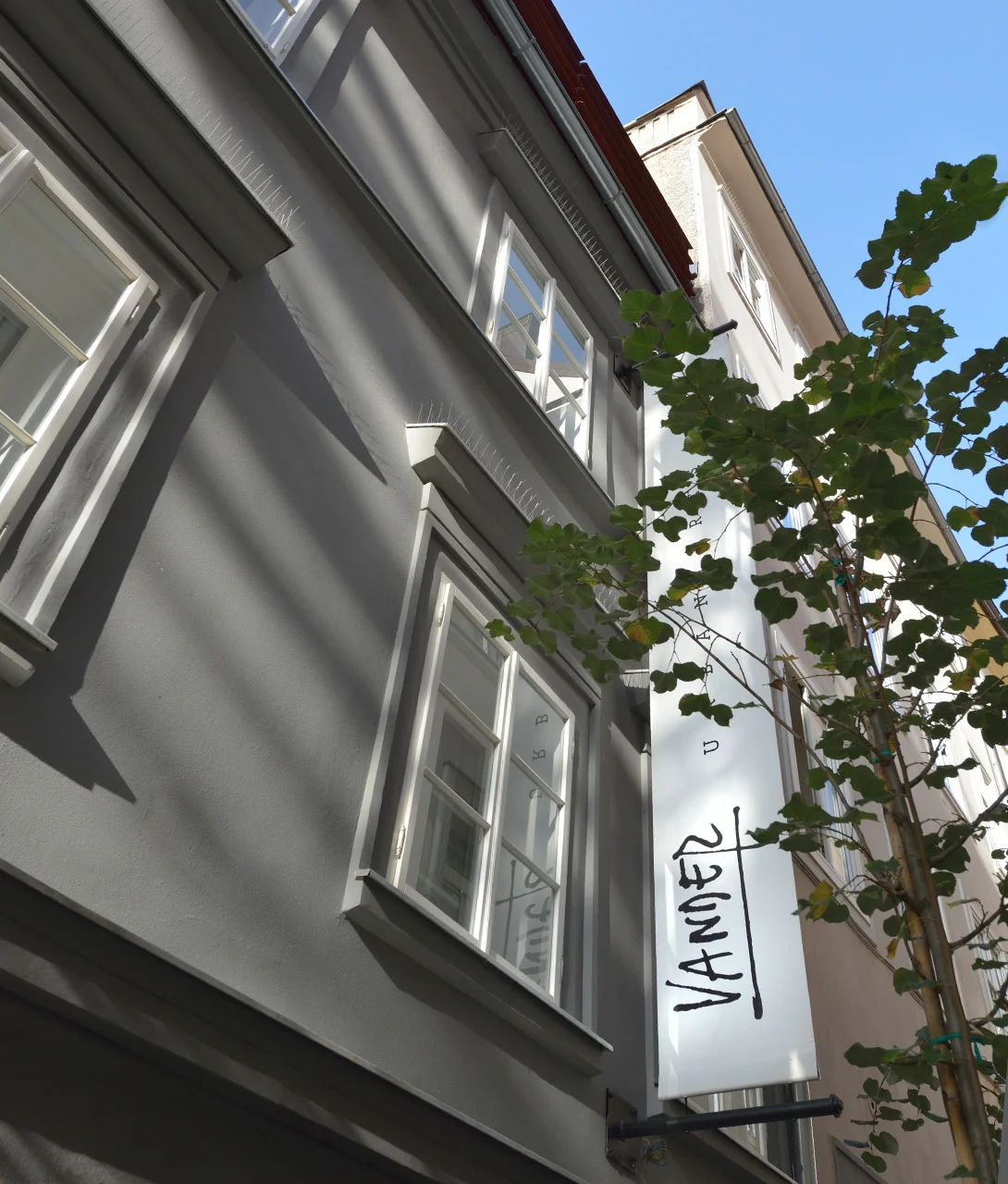
Image credit : https://www.designhotels.com/hotels/slovenia/ljubljana/vander-urbani-resort
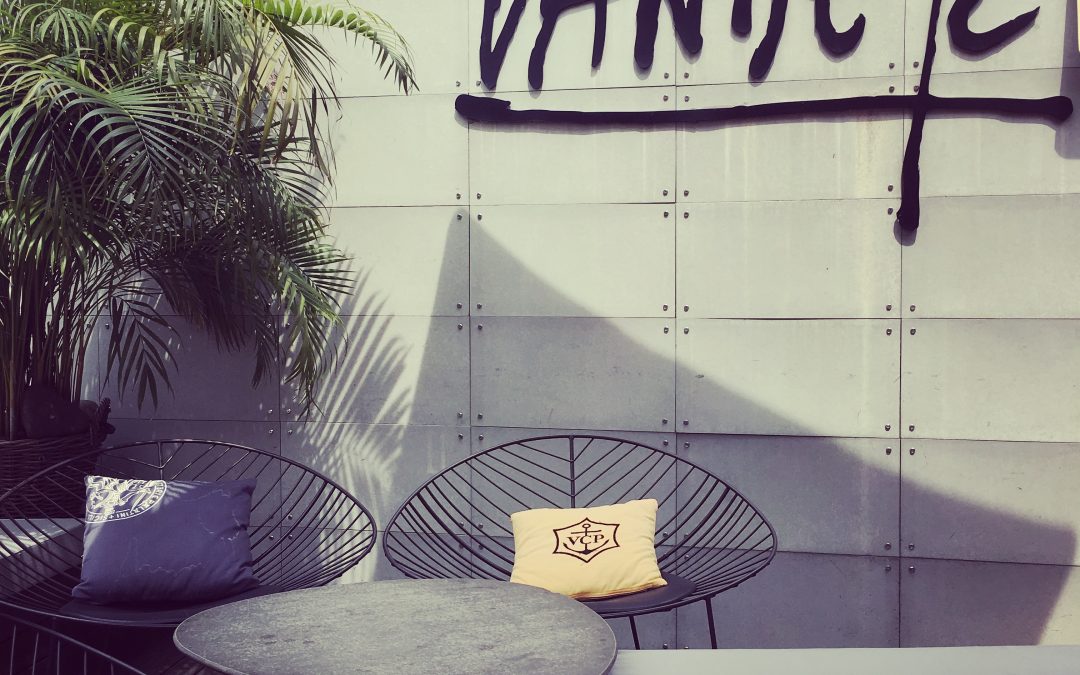
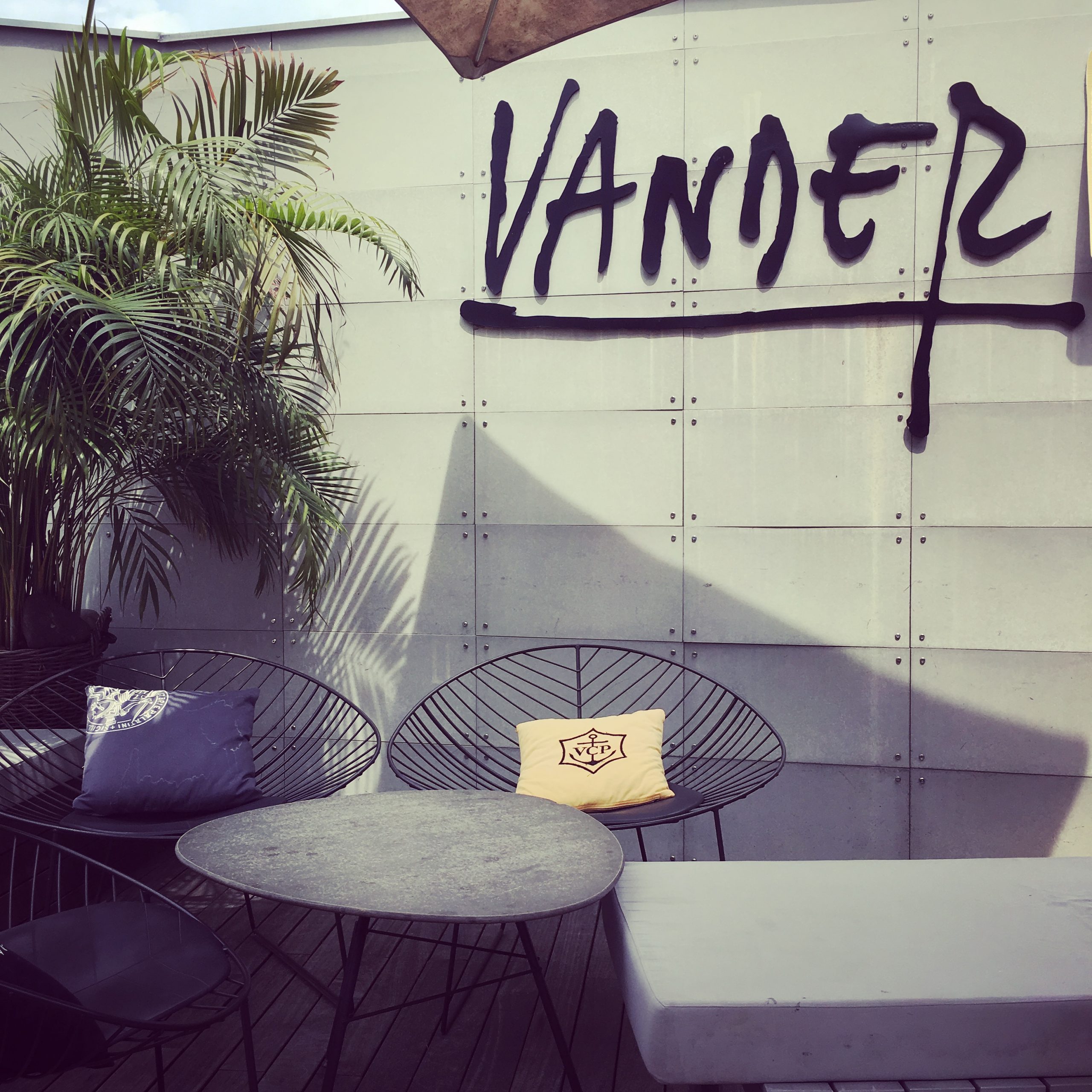
On the banks of the Ljubljanica River stands a very elegant townhouse, which has been renovated and is now the the Vander Urbani Resort. Part of the Design Hotels Group, it is described as having :
Plush amenities and interesting design quirks create sophisticated, airy spaces in subtle yet sensuous colors. The interior design follows a steady line, which runs almost imperceptibly from building to building. All spaces are light and airy with a careful selection of colors and materials. The rooms and suites, as well as the restaurant, wine cellar, and lounge, feature high-end materials, exquisite design pieces, and plush amenities that culminate in highly sophisticated yet homey comfort.
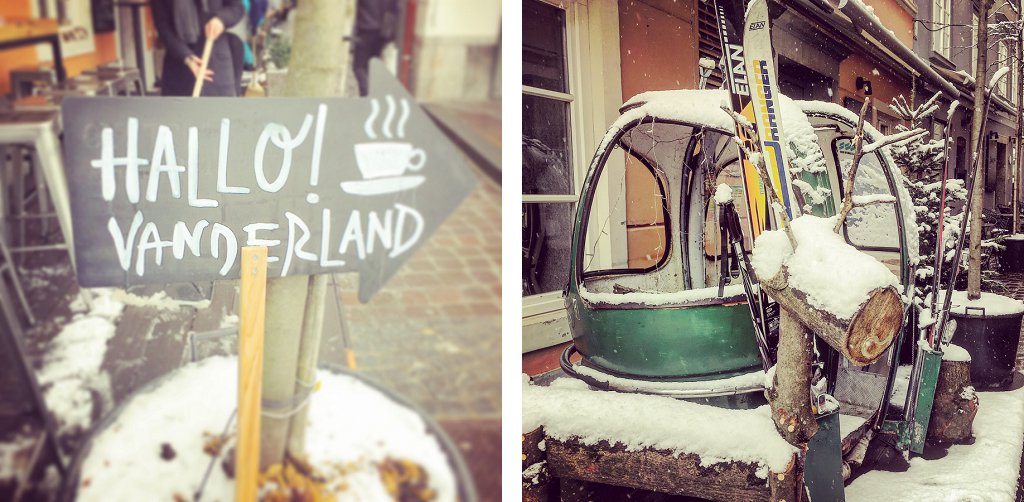
A beautiful traditional Baroque townhouse externally, internally it is super modern, sleek and effortlessly cool. Its location is pretty hard to beat – overlooking the willow tree fringed river to the front and just below the castle on the hill. Cobbled streets wind along and around the hotel. Set up to function in all weathers and seasons, outdoor seating and tables provide the perfect setting for alfresco dining. It’s absolutely beautiful in the winter especially, as all tables have heaters and complimentary blankets and faux sheepskins are provided. I’m not sure if it’s a permanent winter fixture, but we even managed to bag the ski lift for outdoor drinks on one visit. Quirky and beautiful, especially as it was snowing.
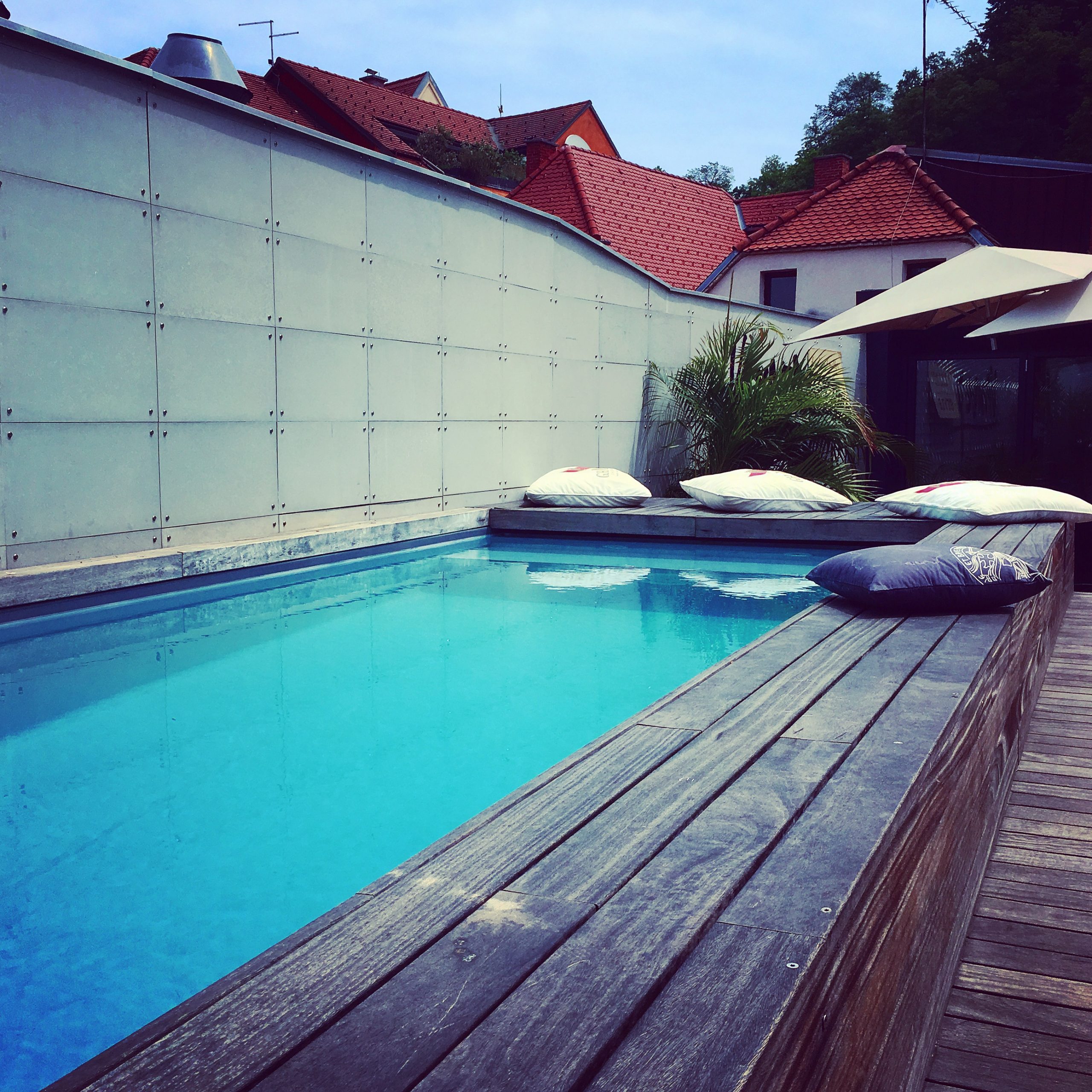
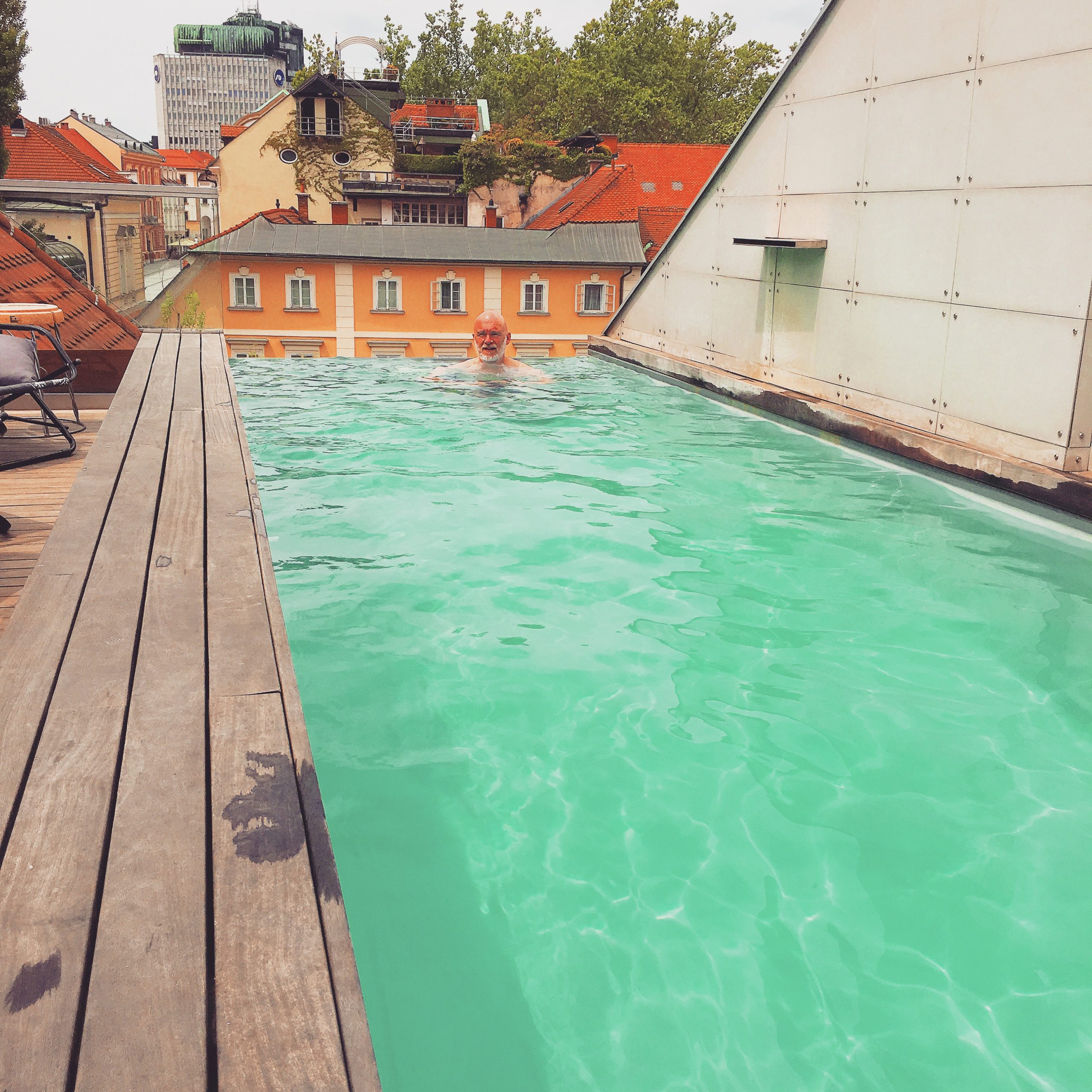
However, warmer months are as special too, in this hotel, as it has has the advantage of having a rooftop infinity pool. This really is the star of the show, offering sweeping views out over the city and up to the castle. No one from the street below can see you, and it’s only for guests, so it really feels like a relaxed, private oasis.
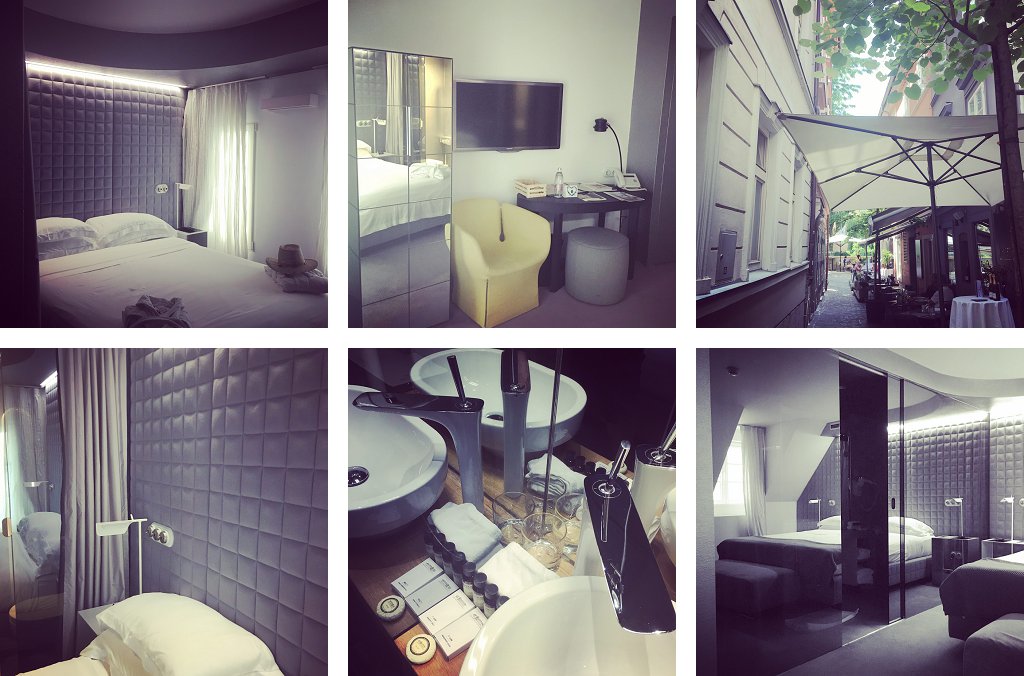
The room we were allocated was funky in design and style – with the thing that I hold above everything else in a hotel room. A super comfy bed, with exquisite bed linen.
Breakfast is a bit special, too. As well as an extensive continental fare, cooked options are also available, enabling you to have a leisurely start to your day in Ljubljana.
I think the hotel is well worth a visit in the summer, but if I’m to be honest, I think it’s in the winter, in the snow, when it shines brightest. It’s not a budget hotel, by any means, but if you can plan ahead, there are deals to be had, and in any event, it’s the kind of place where you might visit if you wanted to treat yourself, or if it was a special occasion. Go for it, if you visit Ljubljana – you won’t regret it.
by Helen | Oct 6, 2021 | Lifestyle
When we first moved here, unless I could get candles at IKEA in Trieste, I used to wait until our trips back to the UK to raid the shelves of TK Maxx and HomeSense and fill up the boot of car with coloured jars of scented lusciousness. We had too many other things to work out, for me to even mention trying to find the kind of shop that would satiate my candle obsession. But, they had to be found, because once autumn sets in, our house very much lends itself to becoming a hygge haven. Once we got to know Ljubljana, I sought out shops which would enable me to satisfy my cravings…
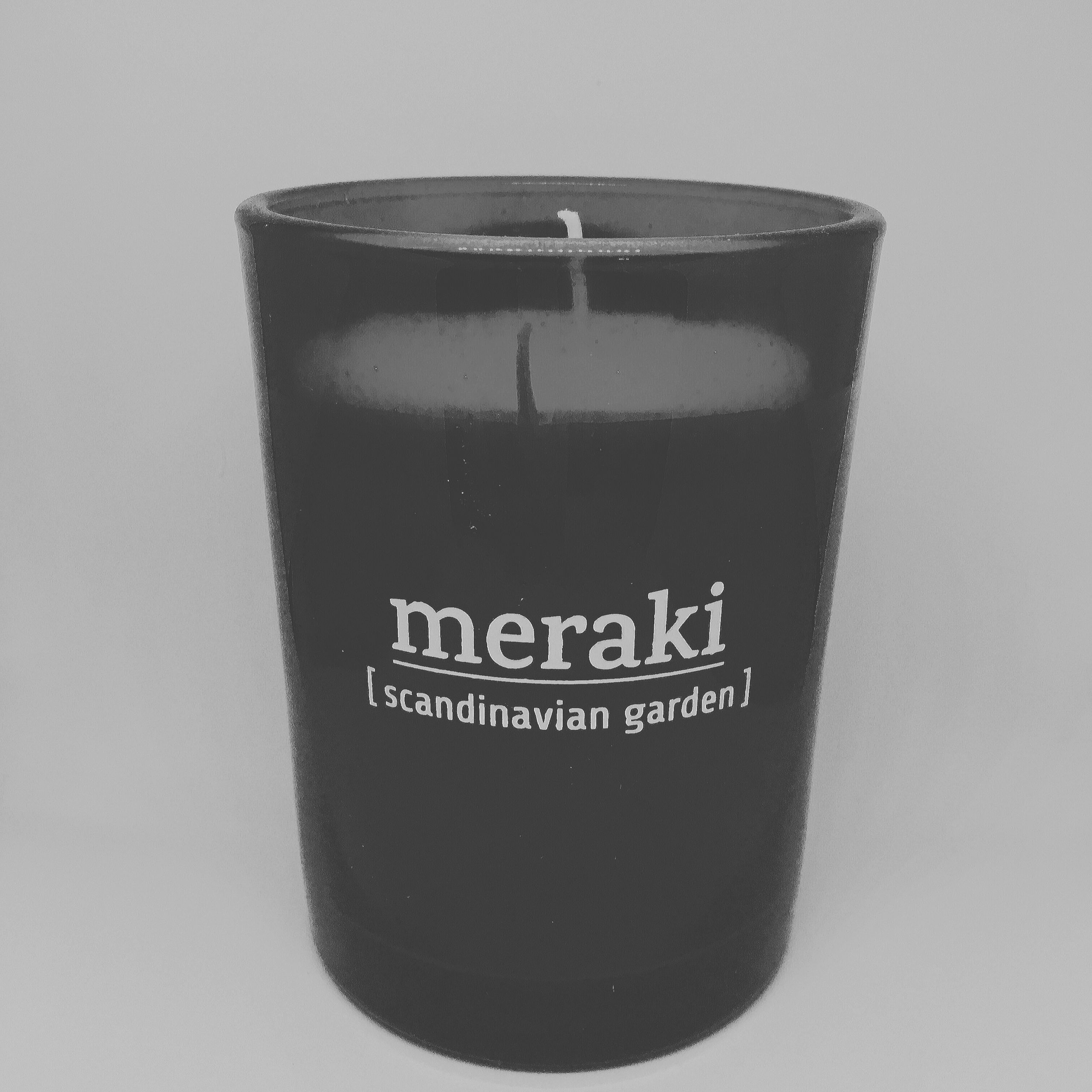
And of course, now that I do know my way around retail therapy options now, in our Istrian home, I’m never short of a candle. Or fifty. But, when I discovered JouJou Botanicals, via an account I follow on Instagram, things changed. Not only could I buy online, but the process was easy and the delivery extremely swift. If there’s one thing that’s not quick or easy here, it’s dealing with ordering and delivery – it can be done. Of course, it can. But, it can be protracted and if the website you’re ordering from does not have an English language version, you’ll spend quite a lot of time translating various parts of the website.
However, the JouJou Botanicals website is not only beautifully designed, with branding we definitely approve of, but it’s also in English – and has the familiar look and feel of the kinds of websites we design. As soon as I placed my order, I got an immediate email confirmation, plus an invoice. And, within three days of ordering, I took delivery of a lovely package.

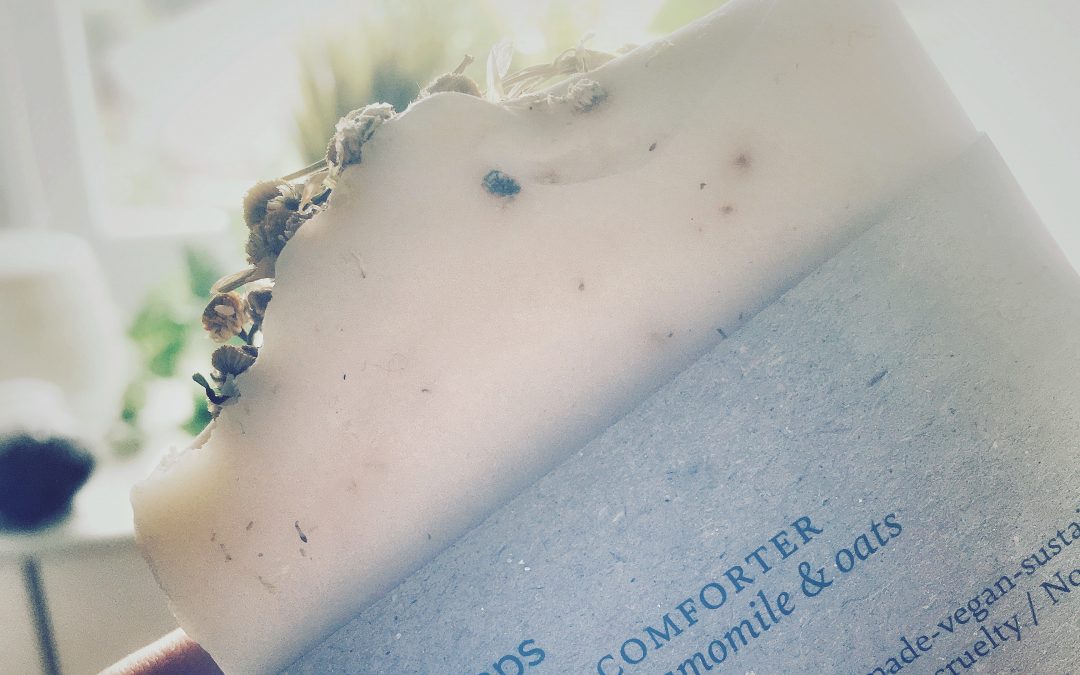
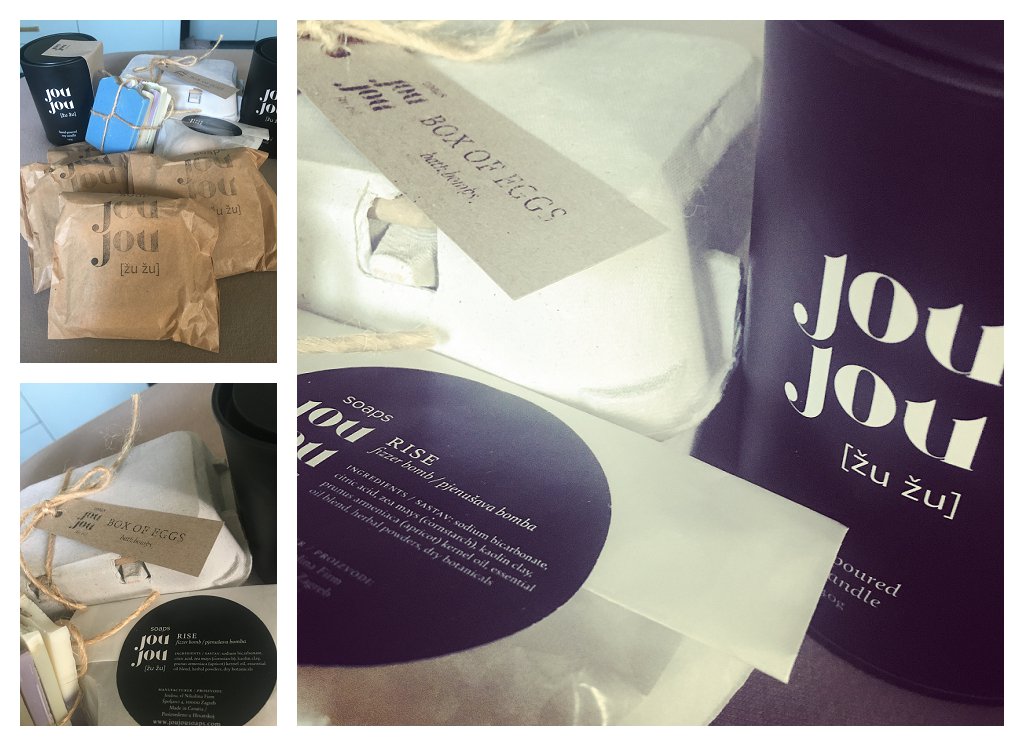 The website also sells a range of soaps and bath products – made in small batches, which are all vegan, palm oil and cruelty-free. And, incredibly pretty. So, although candles were my initial priority, I couldn’t resist stocking up on these gorgeously fragranced bathroom products. Which, I cannot wait for family and friends to enjoy, hopefully come the spring, when travel restrictions have gone and the weather is warming up again. Feast your eyes on these pretties…
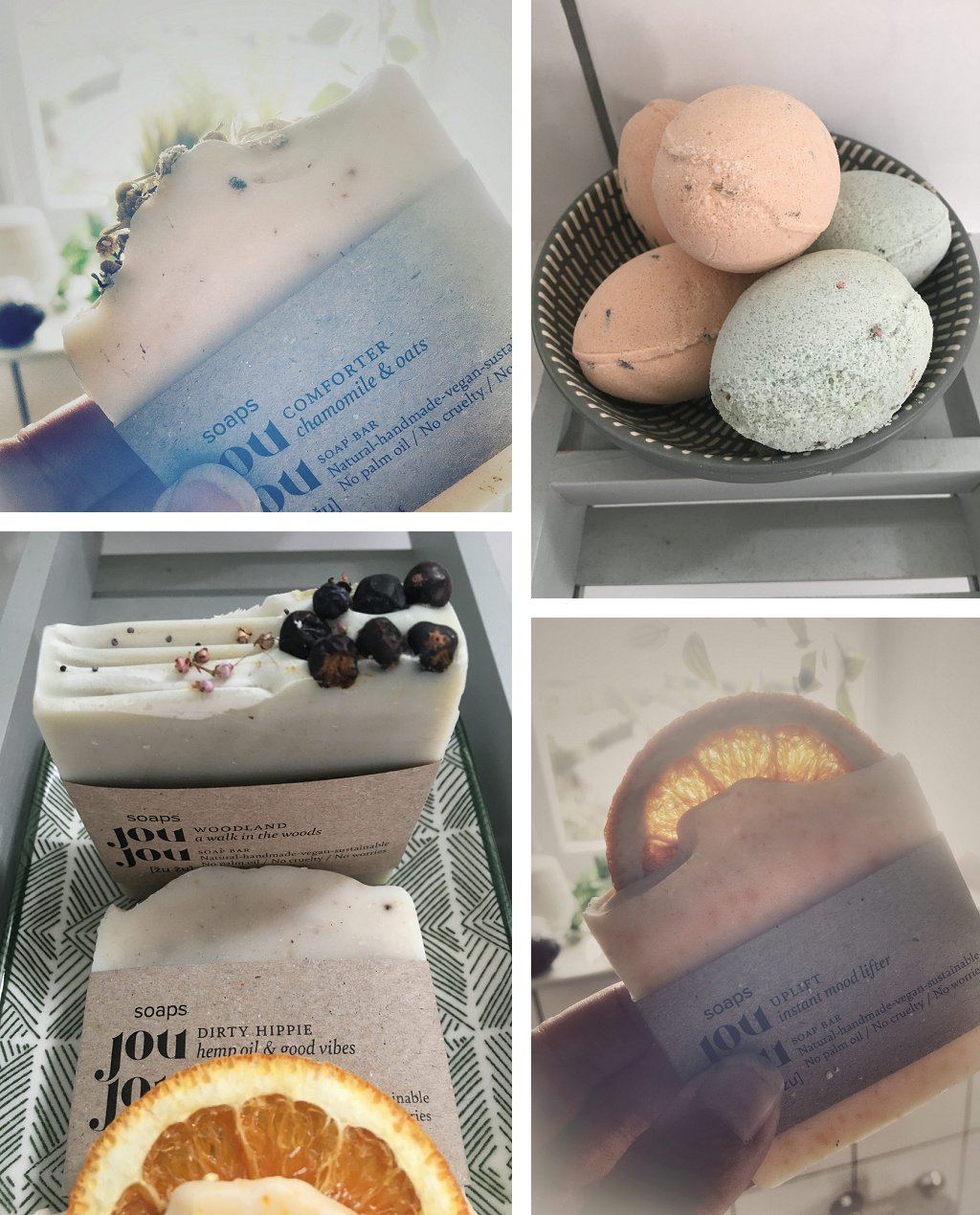
I love the attention to detail with these products – the packaging, the fonts used, the ingredients, the subtle (definitely not over-powering) aroma. The perfect accessories for any bathroom! And, my fail on the candle front. Two was far too few – they’re long gone now – so another order has been placed. And, I’m guessing by the weekend, my living room will smell as delicious as my bathroom.
Sadly for UK friends, JouJou don’t do international delivery. But I am sure, I can work out a way to introduce these gorgeous products to you…And how lovely to once again be able to support a brilliant, independent business.
This is not a sponsored post. JouJou Botanicals have not asked that I review their products. All products I have ordered have been paid for in full.
by Helen | Sep 29, 2021 | Lifestyle
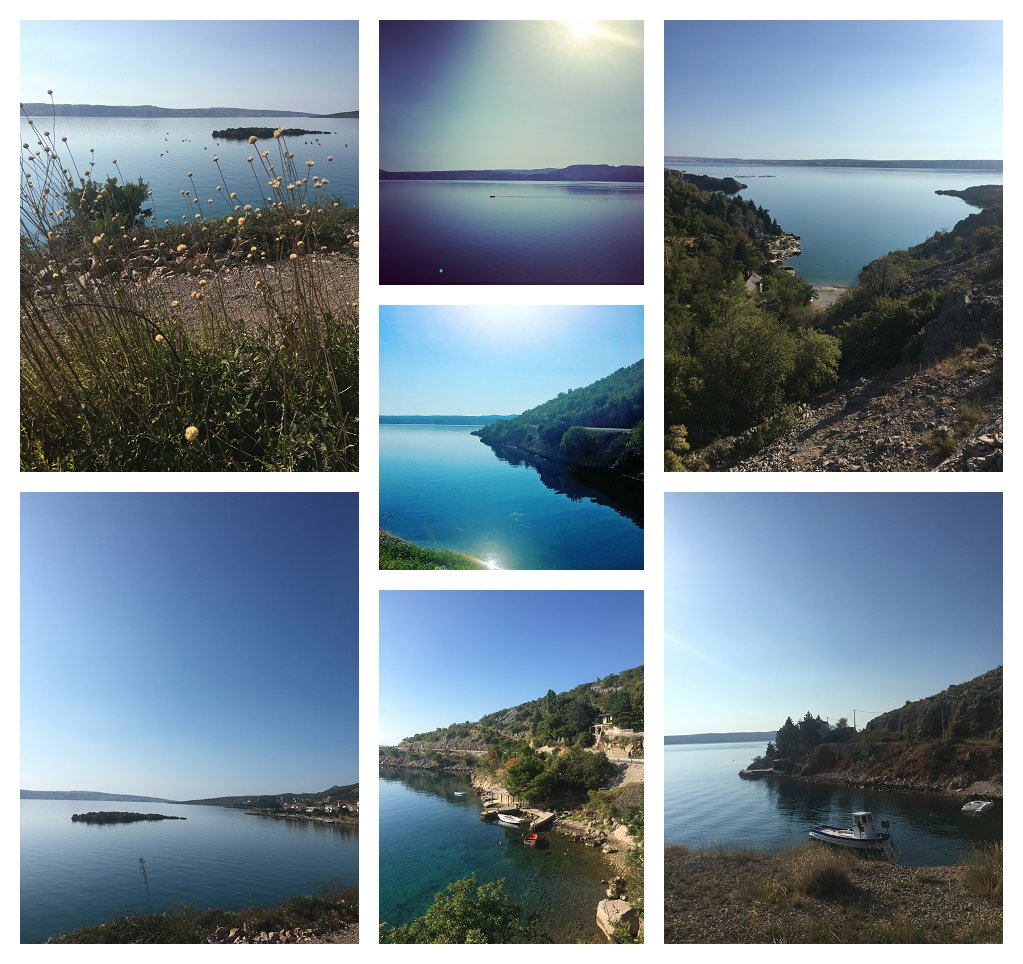
Šibenik is an absolutely delightful city, on the dalmatian coast of Croatia. We’re up in northern Istria, so it is quite far away from us – just over 400kms – but as the drive is largely along the E65, the Adriatic Highway, it’s a pleasure to do. The road literally hugs the sea, for miles and miles and miles and sweeps around the most dramatic bays, with plunging cliffs and turquoise waters. Think the Amalfi Coast, without the tourist buses and log-jams. For a lot of the way, it was just us and the views. The islands of Krk, Rab and Pag also run parallel to the road. With all of the towns on the western sides of these islands, the landscape of each, facing the E65, is almost lunar-like. The islands look like sleeping elephants rising out of The Adriatic – just stunning.
 And so to Šibenik, more of which in a separate blog, as the city itself, and the boutique hotel we found, are deserving of their own write-up. This blog is all about an amazing restaurant we found, deep in the heart of the old city – Restoran No 4. It doesn’t appear to have a website and its Insta account hasn’t been used on a regular basis. Unsurprising, as the waiter told us that they don’t really advertise themselves, as they don’t really need to. It’s situated off one of the many higgeldy-piggedly white marble paved streets up in the old town. A carved wooden sign, stating “Restoran No 4 Fish & Steak” points up a narrow alleyway, with the menu underneath. We were sold on the menu immediately, for me especially the white fish fillet dish with leeks, courgettes and carrots, and decided that we’d book an outdoor table for the evening.
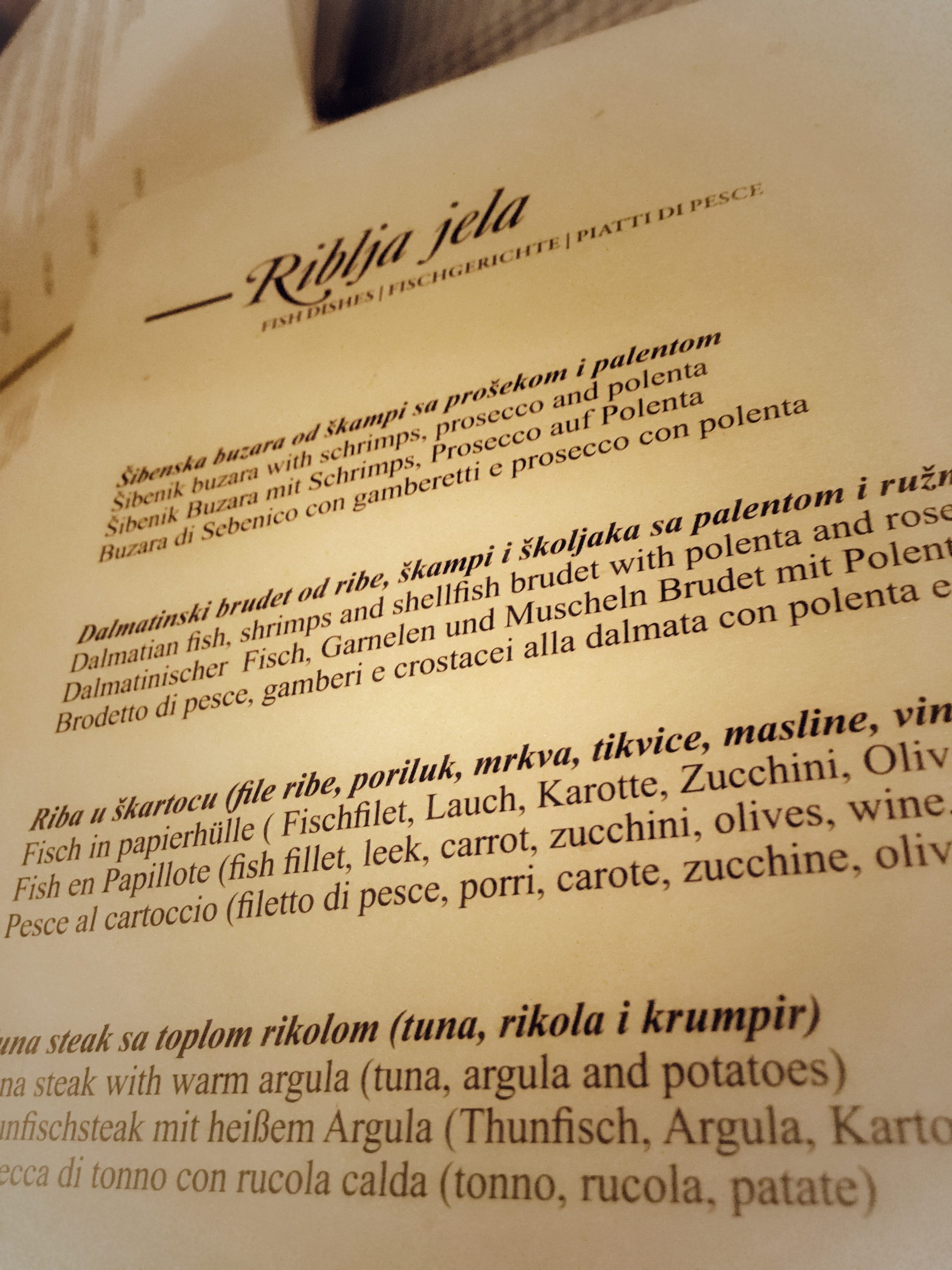
The little alleyway was set up for evening dinners – a row of tables for two, with candles in wallholders already in evidence. A result even before we sat down. What we didn’t notice however, was the internal courtyard beyond, where we were lucky enough to secure a table. When we arrived for our 8pm table, the restaurant was full – although tables still placed apart to adhere to Covid regulations – so we were delighted to have a reservation in this courtyard.
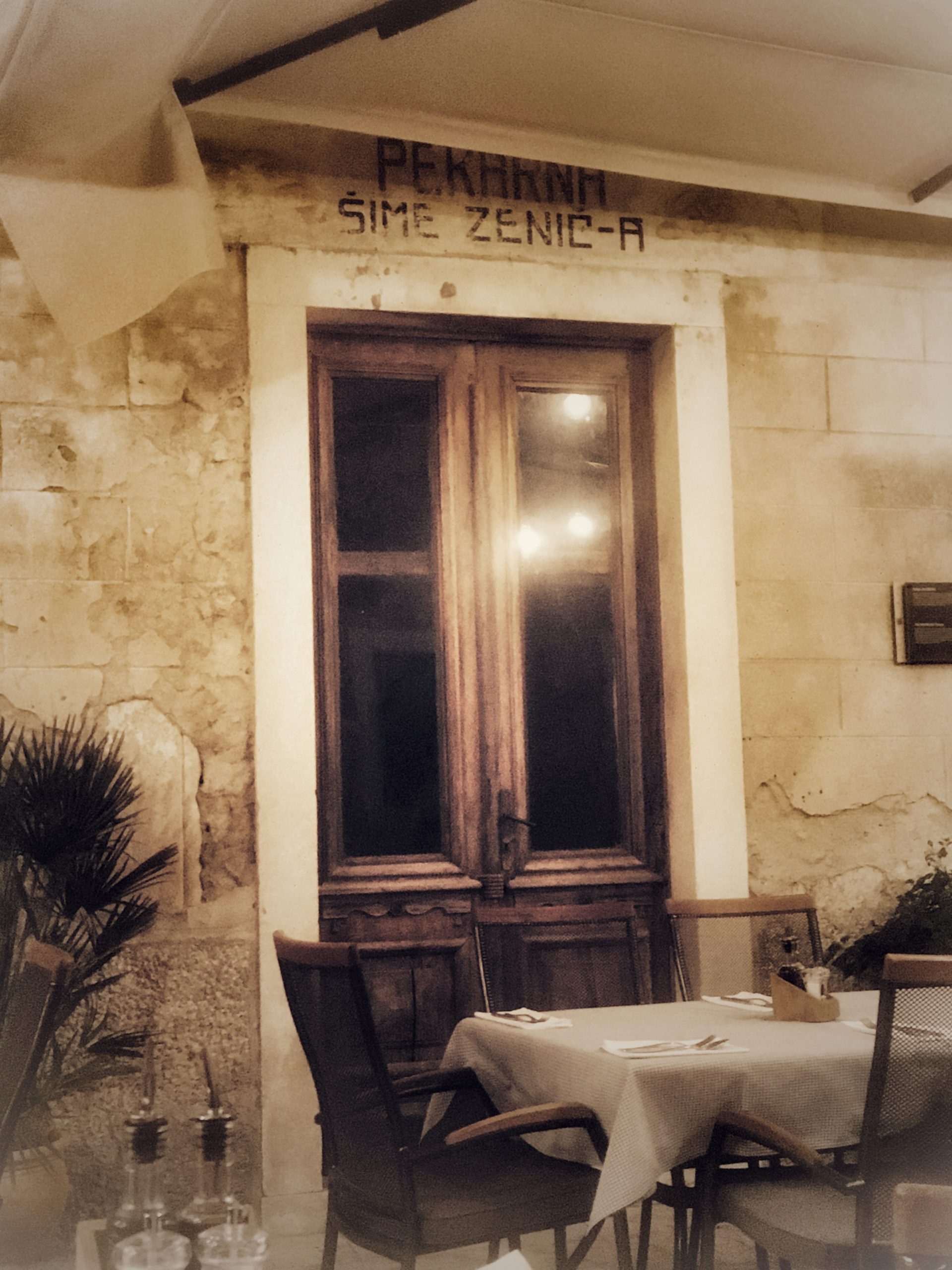
I say courtyard, but in reality this space would have been a communal area, for the people who lived in apartments up and around the square, and businesses who operated from it. On one side, an artist lived and had his studio here, right up until he died. It hasn’t been taken over and so has a feeling of faded grandeur and elegance. The old bakery, long since closed, is still in evidence, with the faded ghost sign above the door. On one side of the square, sits a beautiful church, the ancient facade being a backdrop to the restaurant. To the side of the church, an ancient Venetian style stone staircase leads up to an apartment. And, unlike the other buildings, these apartments are still lived in, evidenced by people coming and going, between the tables, returning home or leaving for an evening out. Amazing.
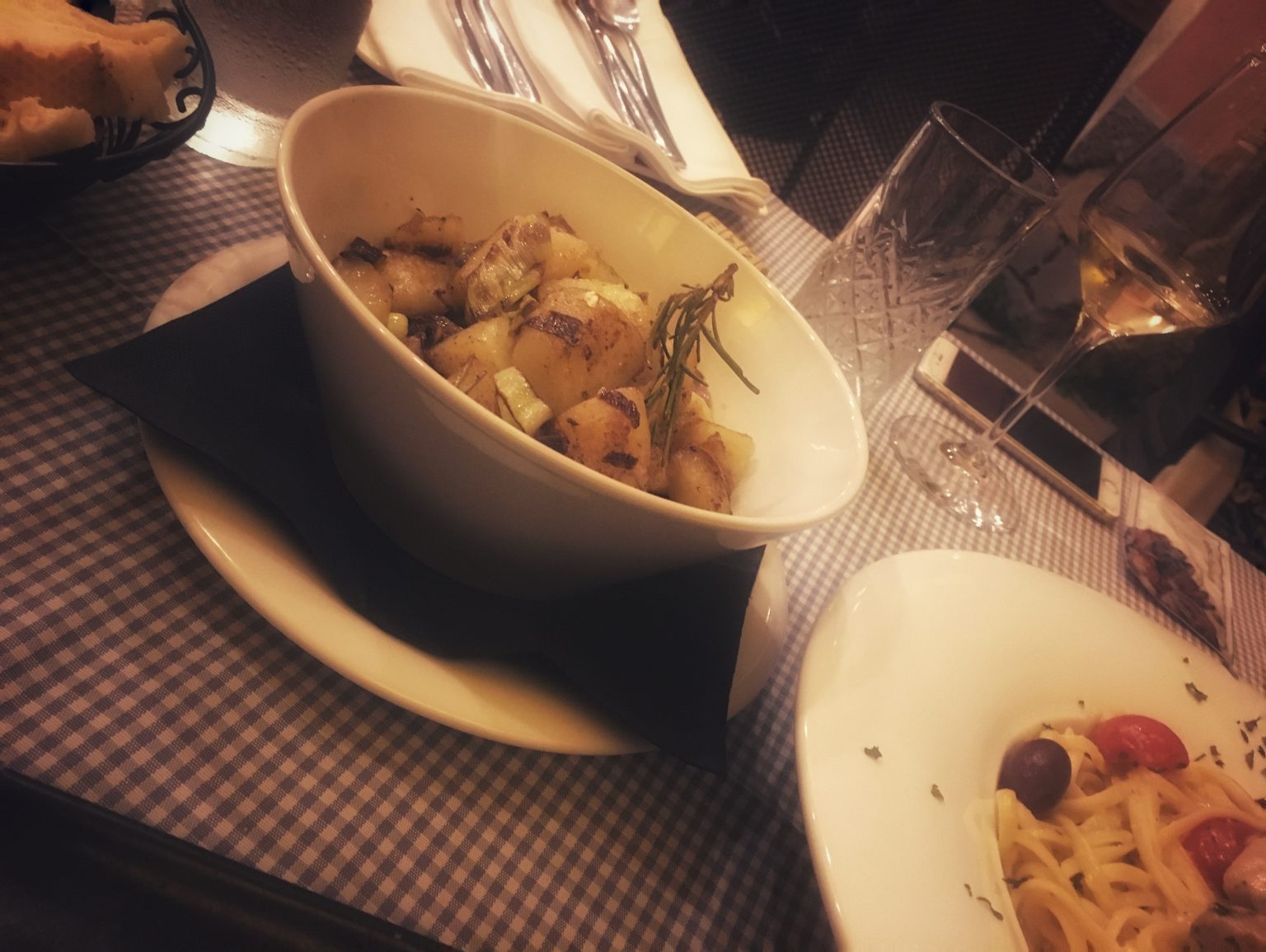
So, the food. Wow. For a really moderately priced restaurant – given its setting and location – the food was outstanding. So good in fact, we decided to eat there again, the following evening. A very unusual thing for us to do. Not realising quite how filling the portions were, we opted for a mixed platter starter on the first visit – Dalmatian proscuitto and cheese, with walnuts, peppers, chilli jam and whipped cheese. And the most delicious sourdough bread. Mains were the fish that I spotted earlier on the menu in the afternoon – a fillet of the most succulent Dorado fish, baked in paper with leeks, carrots, zucchini, tomatoes, olives and white wine, and a chicken breast, filled with cheese and olives, wrapped in proscuitto and served with polenta slabs and pesto. Although these would have been sufficient, with hindsight, we just could not resist the roasted potatoes with rosemary and bacon pieces. Potatoes will never be the same again, thanks to Restoran No 4…
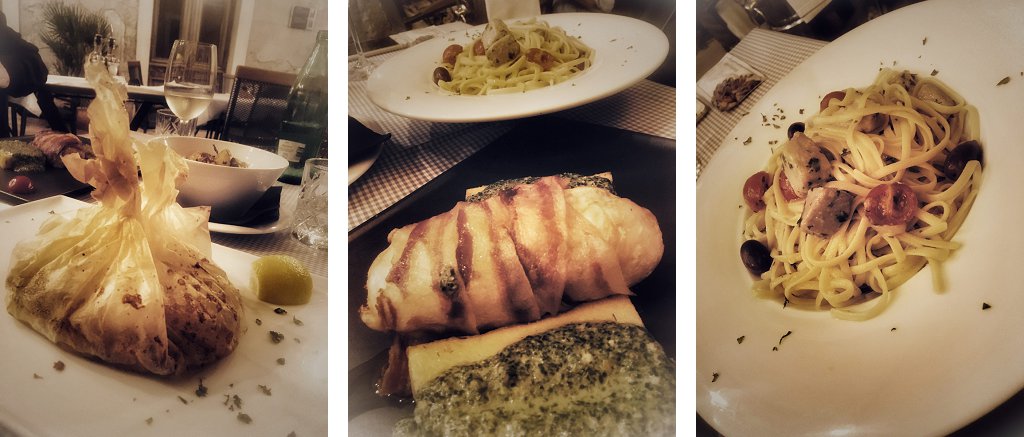
On night two, I opted for the chicken dish and the other choice was Linguine with Tuna. and, those potatoes…
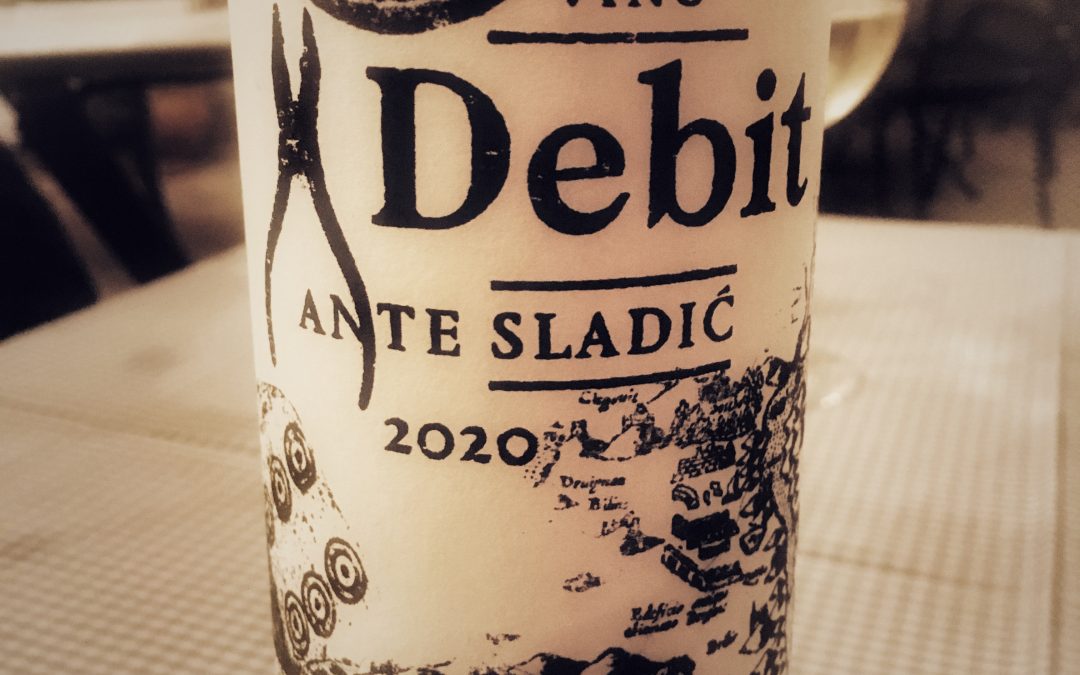
There were only three desserts on the menu – Panna Cotta, Almond Cake and Cheesecake – and on both nights, we were determined to at least share one, having seen all three being delivered to various diners. However, we were so satiated on both nights, that we’ll need to revisit, and maybe leave sufficient room for said desserts. We were also introduced to a new Dalmatian white wine – Debit. Although nowadays considered to be an indigenous white variety from the region of North Dalmatia, it is actually thiught that it originated in Italy, in the vicinity of Bari. In Croatia, it is mostly grown in Dalmatia, where it is one of the predominant white grape varieties, and is considered a perfect accompaniment for white fish and chicken dishes. Another spot on recommendation from our waiter…
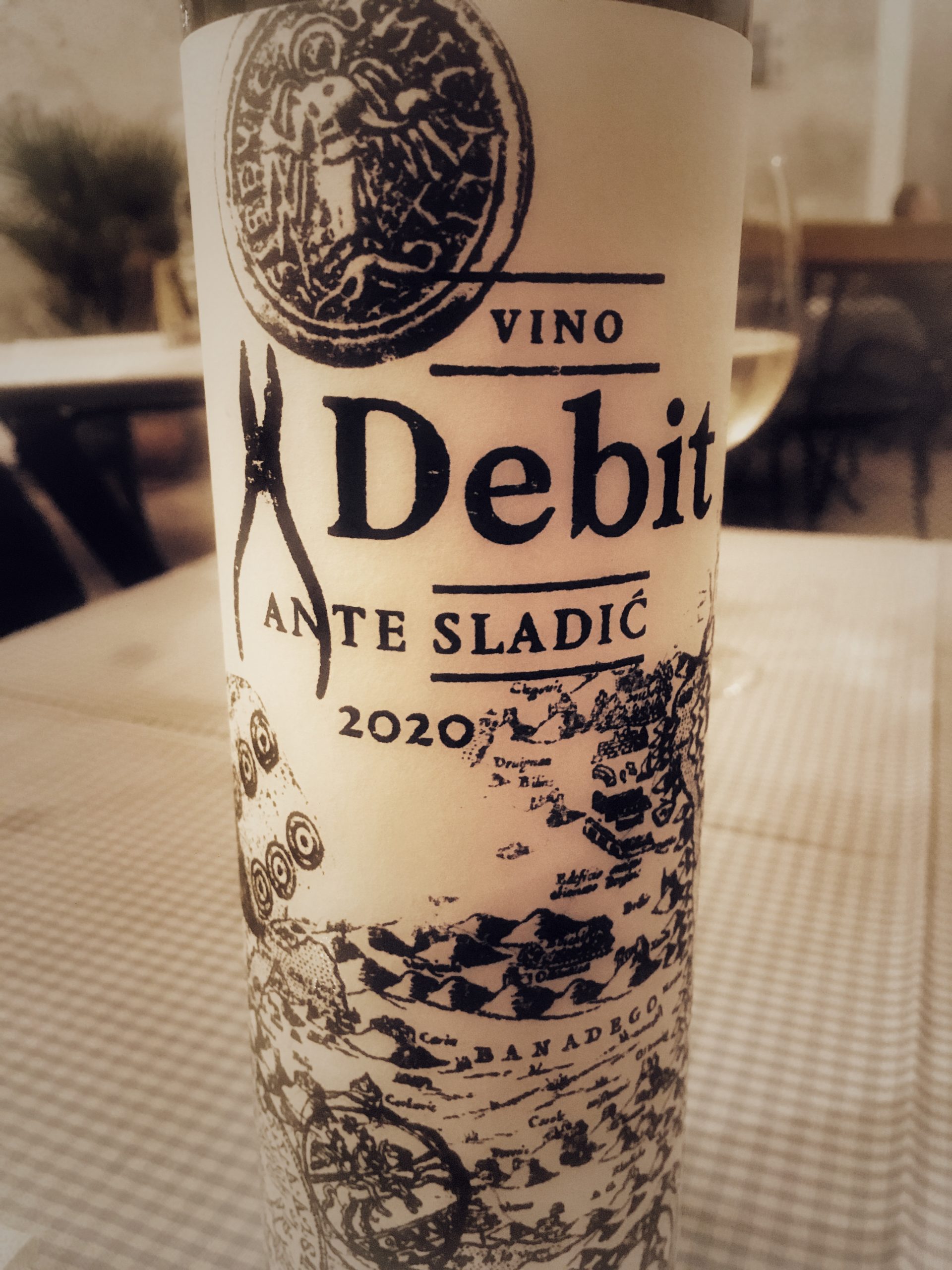
This is not a sponsored post and we were not paid, in any way, to write about and recommend Restoran No 4, and we paid in full, both nights, for our food and drink. We just thought that the restaurant was pretty amazing, and if anyone is thinking of visiting Šibenik, you won’t go far wrong if you dine here.
by Helen | Sep 18, 2021 | Croatia, Travel
After a long hiatus from travel, and after getting our second vaccinations, we decided to do a bit of exploring this summer. Croatia has managed the pandemic well, so far and there are still strict regulations in place for travel, so we felt comfortable about beginning to explore where we live. Travel in the past has usually involved flights, ferries and/or long car journeys. This one, in August, involved a car journey and a ferry – although to be fair, we’re now located right next to the northern Croatian islands, so a ferry to Cres island, lasting only 20 minutes, was more than bearable.
The kind of accommodation was really difficult to secure in August. I have a rule of thumb – if where we are intending to stay, doesn’t look at least as nice as where we live, we look elsewhere. And, with travel having recently opened again up to Croatia, a lot of European travellers clearly had the same idea. Lošinj was our island of choice as we’d heard great things about, but were beginning to think we’d need to change our plans and look elsewhere as good availability was a real scarcity. Then I found The Dolphin Suites, in the very picturesque harbour town of Veli Lošinj and made a booking immediately, for The Garden Suite, a self contained apartment with outdoor space and access to the main pool and gardens. It’s definitely been one of our better finds!
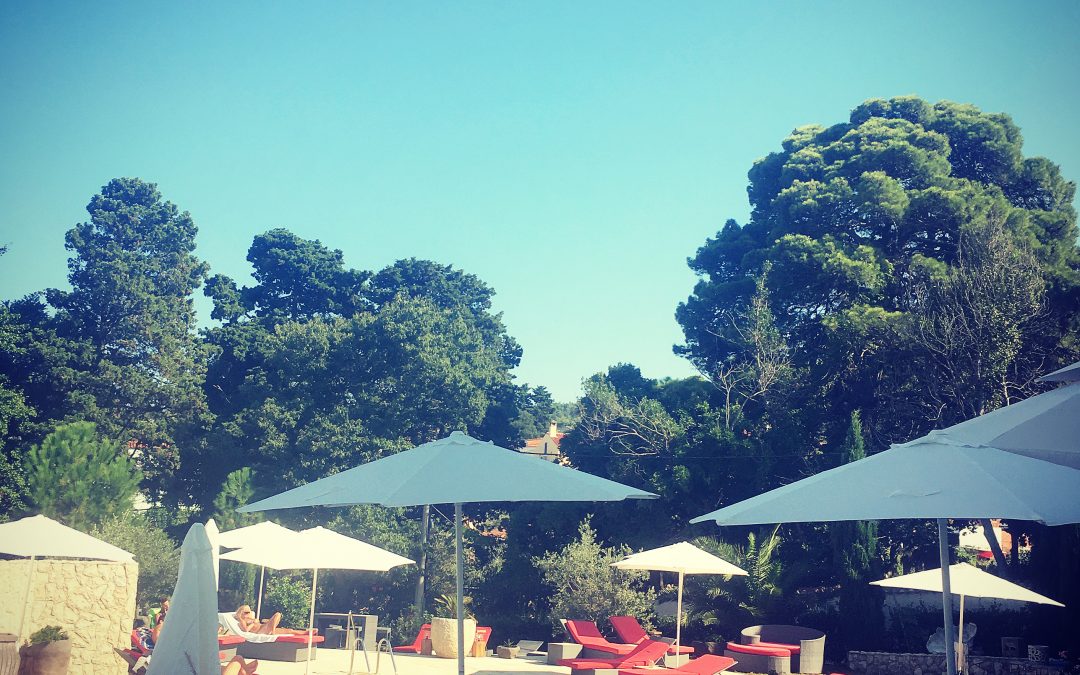
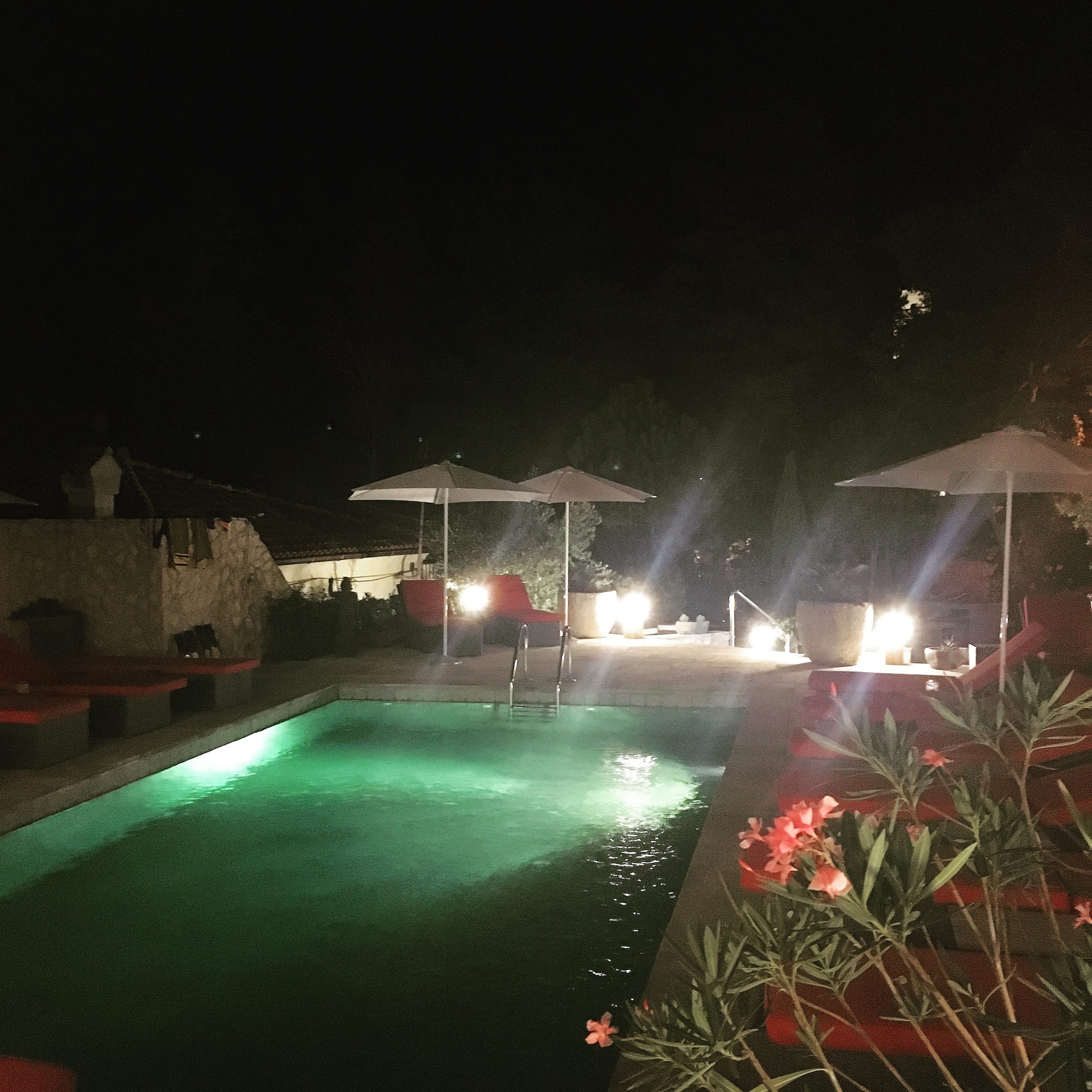
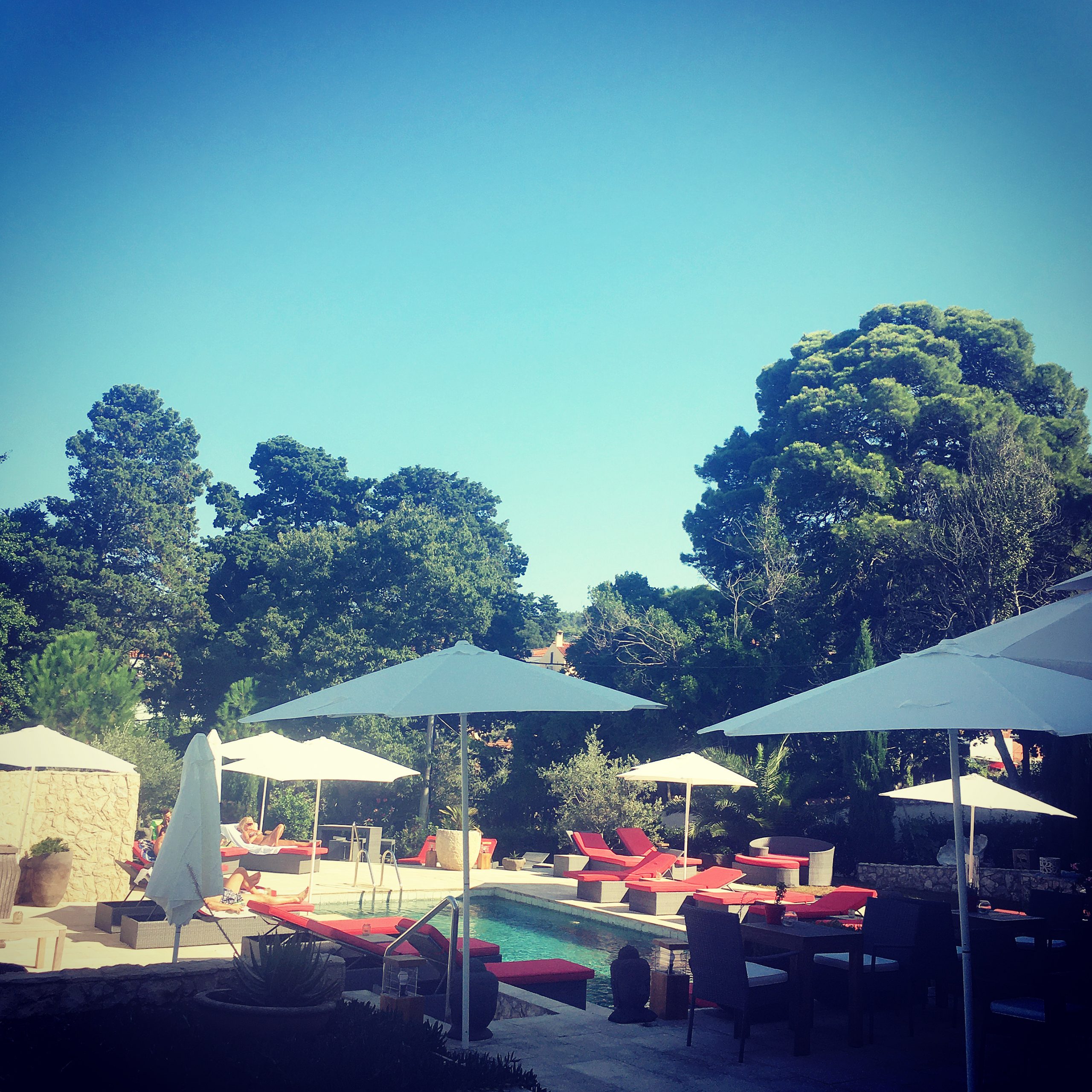
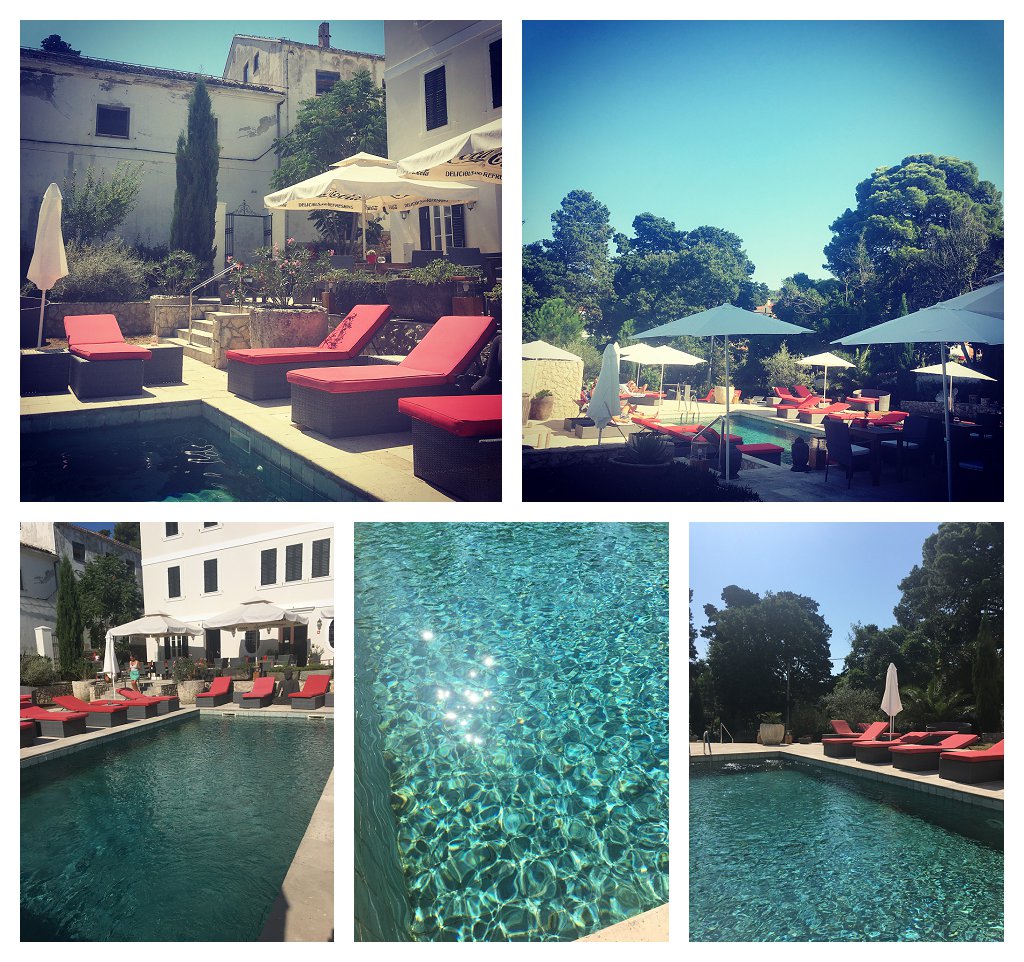 The old schoolhouse has been beautifully, and very sensitively, renovated. Now an elegant villa style building, it is enclosed by a a high wall and therefore is very private – despite being in the centre of the small harbour town. The outdoor areas are immaculate. Scrupulously clean red sun loungers, and umbrellas, fringe the pool. Which is one of the prettiest pools I’ve seen. It’s an original tiled pool – very retro – and so lovely because it doesn’t have that false bright blue hue to it. There’s an Indonesian vibe going on, with Buddha statues half hidden behind huge potted plants. At night, this area is particularly pretty, as it’s lit up.
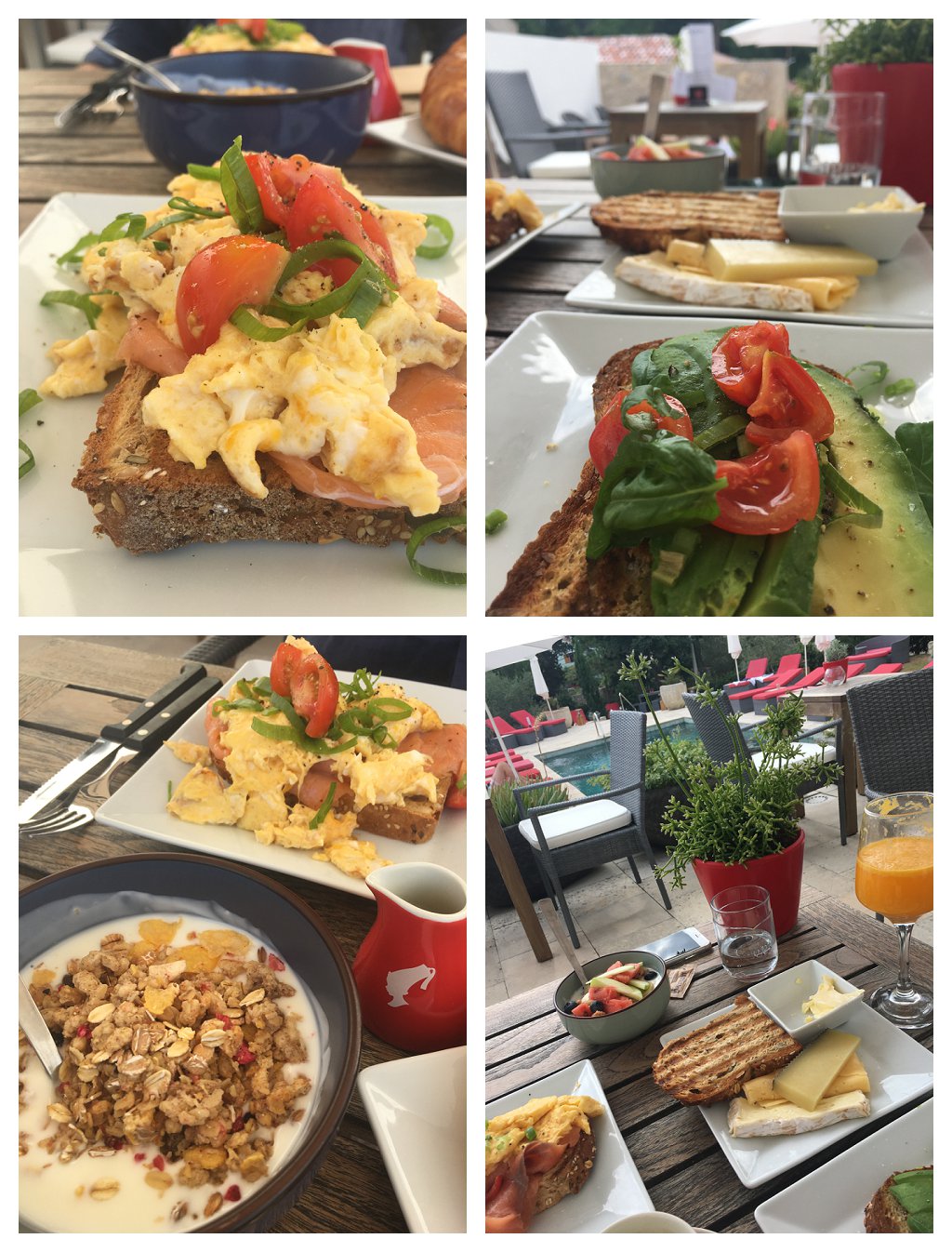
Technically bed and breakfast, this boutique accommodation also offers evening food – more of which later, as it deserves a paragraph of its own. Breakfast is buffet style, but because of ongoing Covid restrictions, it actually became a very leisurely affair. A daily menu (which doesn’t change but doesn’t need to as it is very extensive) of what is available is delivered to your breakfast table – on the terrace, above the pool – and you just tick whatever you want. However much you want. And, as often as you want. The breakfasts we had here were up there amongst the very best we’ve had. Options included smoothies, fresh juices, teas, coffees, granola, cold meats, cheese selection and fresh fruit. The hot selection is quite simply, outstanding – particular favourites of ours were the smoked salmon and scrambled eggs and the avocado. Both are served on homemade granary/nutty toast and garnished with thin slivers of tomato and spring onion. And, the portions are large. Very large.
So, to that evening food. Because we found The Dolphin Suites to be so utterly relaxing, on a couple of occasions we left the pool area quite late and didn’t fancy moving too far from our little Garden Suite. I was told that they offered a “bar snack” selection in the evening and so on the first night we chose to opt for this, we thought we’d get not much more than crisps, nuts etc.
Oh, my word. How wrong were we?
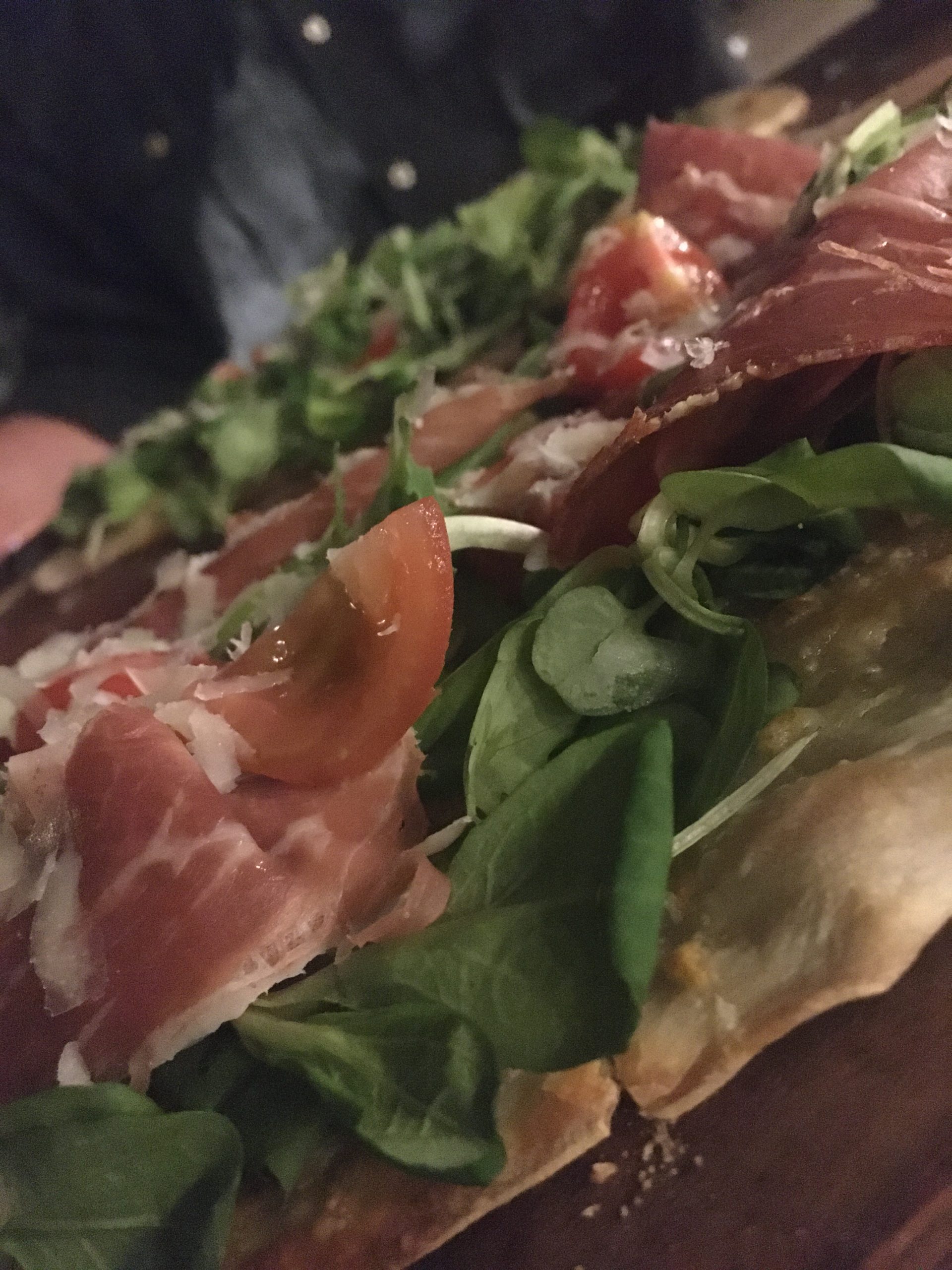
Forget bar snacks, and think more exceptionally well cooked, innovative and beautifully presented street food. Over the course of our stay, we actually ate here three nights – obviously meaning that we do need to return to Veli Lošinj, to closer explore the restaurants. The manager – a lovely, lovely Dutch guy called Marnix – has completely nailed it, we think, on the food front. We tried a variety of dishes. On the first night, we went a bit tapas style with mixed cheeses, olives, veggie nachos, potatoes and dips, and it was more than enough. But our interest had been piqued by the mention on the menu of Flammkuchen, described to us as kind of German pizza. A bit more delving and we discovered that flammekueche, or tarte flambée, is a speciality of the region of Alsace in France, on the German border. It is composed of bread dough rolled out very thinly in the shape of a rectangle or oval, which is covered with fromage blanc or crème fraîche, and then toppings added. Similar to a white pizza, but also very different. The toppings we chose were rocket, rocquefort & pear and proscuitto, feta & rocket. Astoundingly delicious. And, absolutely nothing what we imagined a “German pizza” was going to be…
As were eating our Flammkuchen, a couple at a nearby table were served something with such a delicious aroma that we had to ask about it. “Stew”. Now, I love a stew, so I was sold on this and decided on our last night, we’d eat here again and try this. Also on the menu was Indonesian Chicken Soup, so we thought in-for-a-penny-in-for-a-pound. We do largely stick to a vegetarian diet but can sometimes be swayed by a good meat dish – and these were very, very good. The soup was wonderfully spicy, with lean, lean chicken fillet pieces – replicated a few times since we’ve returned. And the stew – oh, wow. The tenderest, tenderest cubes of beef, in a rich wine sauce, with potatoes and carrots – and served in a hollowed out bun. A great touch, as it soaked up the juices. No photos of these dishes however, as they were wolfed down so quickly. Testimony to how good they were. So, there you go – “bar food”…
The privacy afforded by the Garden Suite was perfect for us. All other rooms are accessed via the main reception, but we were able to just head around the corner and into our own space. No meeting other people, unless we wanted to. And with a little outside area, with very comfy furniture, which was perfect for an early evening vino and a listen to our own music. The room was spacious and like the rest of the accommodation, sparklingly clean. The shower was powerful and very spacious and the toilet was separate to the washing area. We have absolutely no complaints about the level of accommodation – and we (“I”) am very fussy – and would more than happily return to this suite.
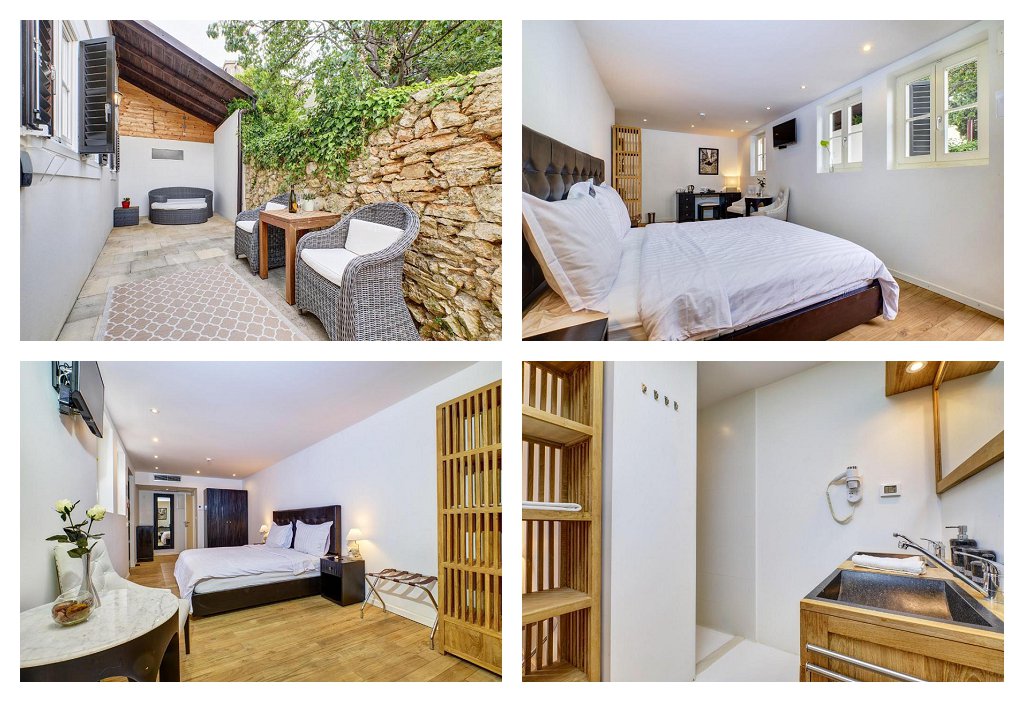
Photos : www.booking.com
Parking is free of charge, in a public (but very safe) car park nearby, and the harbour is a ten minute walk away from The Dolphin Suites. Veli Lošinj is tiny – the port, which is where you’d want to be, can be explored in under an hour. But you would then want to re-explore and re-visit as it’s just so very beautiful. We’re now looking forward to returning to the island in the autumn, to discover what life is like, when it’s not quite as hot…
by Helen | Aug 19, 2021 | Lifestyle
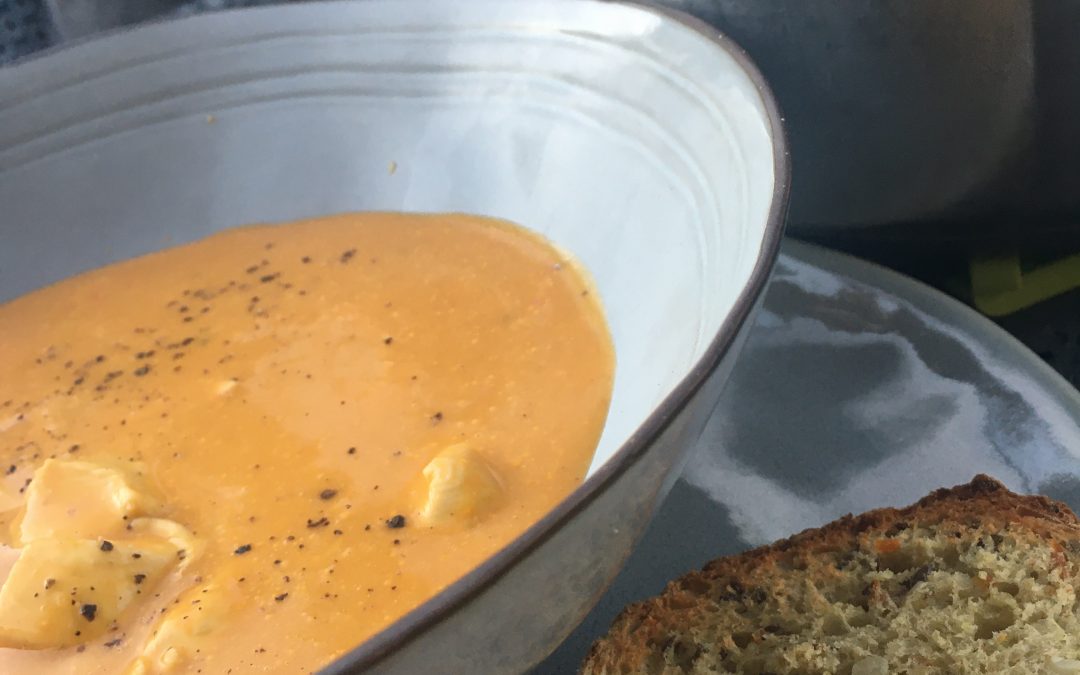
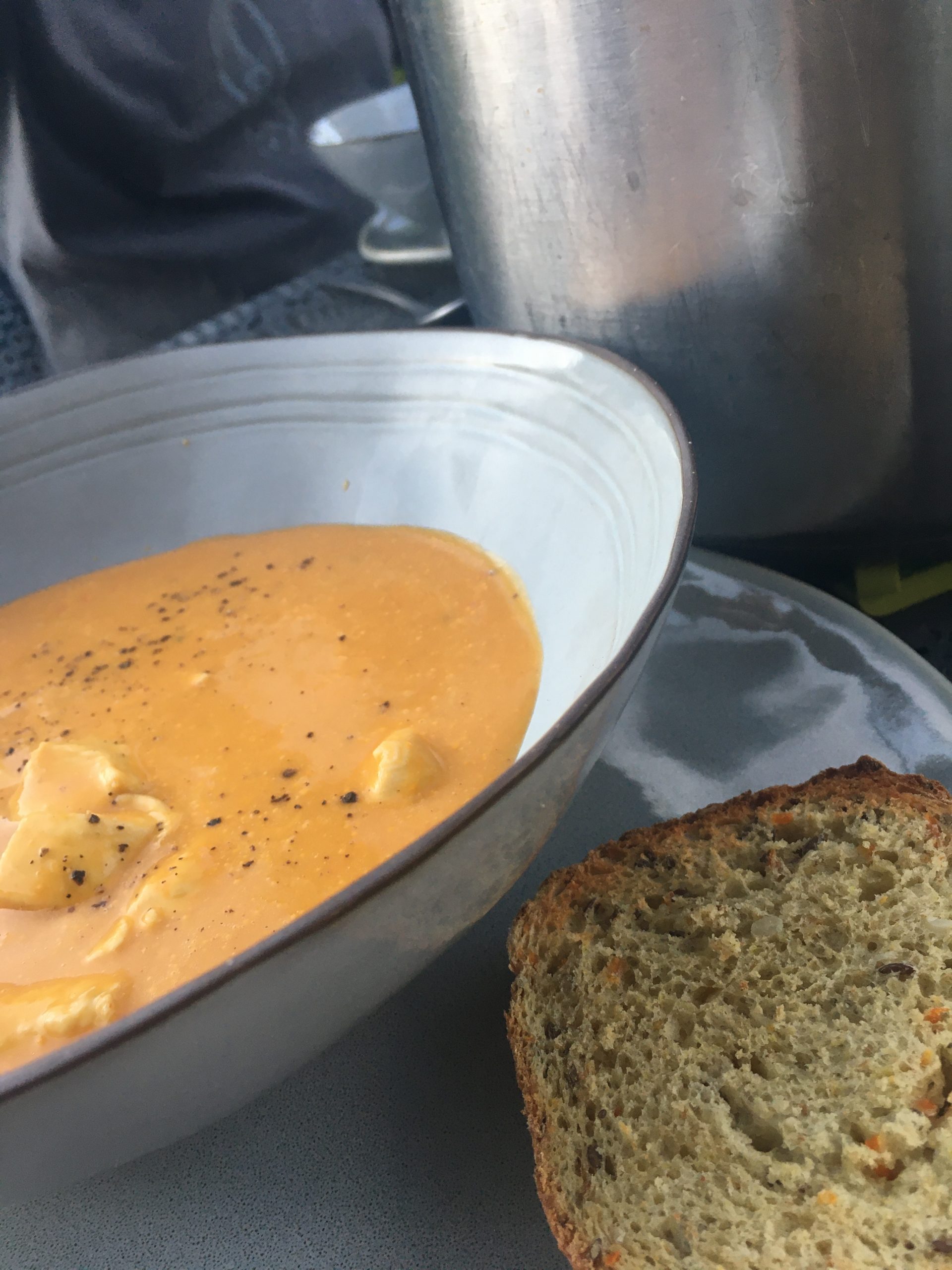
I’m not sure why we would have this soup if on the menu when eating out, but we never actually made it ourselves. Until now.
I think I just assumed because of its flavoursome quality and spiciness that it would be a real faff. Plus, we don’t tend to eat a lot of meat at home, so chucking in the chicken element, just complicated things. Well, we’ve now got ourselves and made a big batch of it last night. Utterly delicious and wildly simple to cook, in a relatively short time. Plus, the added bonus of not too much washing up.
what you’ll need
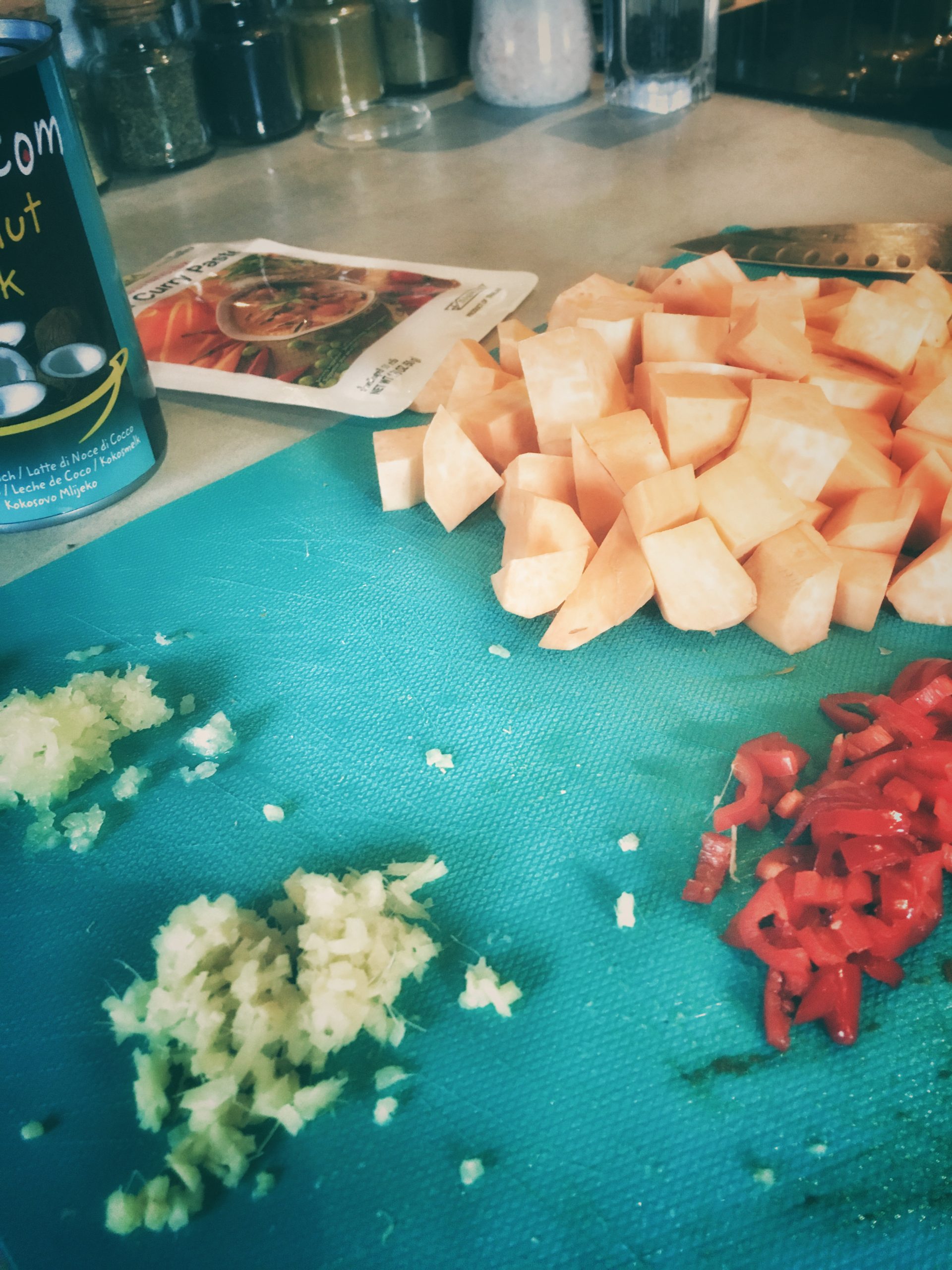
- Sweet potatoes (four, peeled and chopped into cubes)
- Large clove of garlic, sliced thinly
- About a 2cm piece of fresh ginger, thinly sliced
- One stem of lemongrass, peeled and bashed up to release the flavour
- Red Thai curry paste
- Two or three fresh chillies, de-seeded and chopped
- Veggie (or fish) stock
- Coconut milk (one can)
- Very lean chicken fillets, cut up quite small
- Brown sugar (about a teaspoon)
- Splash of lime juice
- Fresh coriander (leaves for garnish & stalks for flavour)
- Coconut oil
- Salt & pepper to season
what you’ll need to do
It really couldn’t be simpler. Heat the coconut oil gently and saute the garlic, ginger, chillies, coriander stalks and a handful of leaves and lemon grass for about 10 minutes, over a low heat. Add the cubes sweet potatoes, the stock, the Thai red curry paste, sugar, lime juice and the coconut milk. Bring to the boil, slowly, and then simmer until the potatoes have softened. Whizz the mixture with a hand blender and when smooth, add the chicken pieces and heat through for no more than 5-6 minutes. Check that the meat is white – if it is, your soup is ready. Sprinkle with fresh coriander leaves. We served ours with the most amazing toasted brown bread, with carrot, from Lidl (in Istria, so may not be available in the UK), but I suppose any kind of bread (toasted or not, depending on your taste) would work as well. Or pitta bread, or naan or flat bread. I think the next time we do this, I’ll add rice noodles, cooked separately and then when the soup is ready, poured over the top.
A perfect supper dish, for a late summer’s evening. And, I imagine, for a cold winter’s night. Perfect, therefore, at any time.
by Helen | Aug 19, 2021 | Renovation
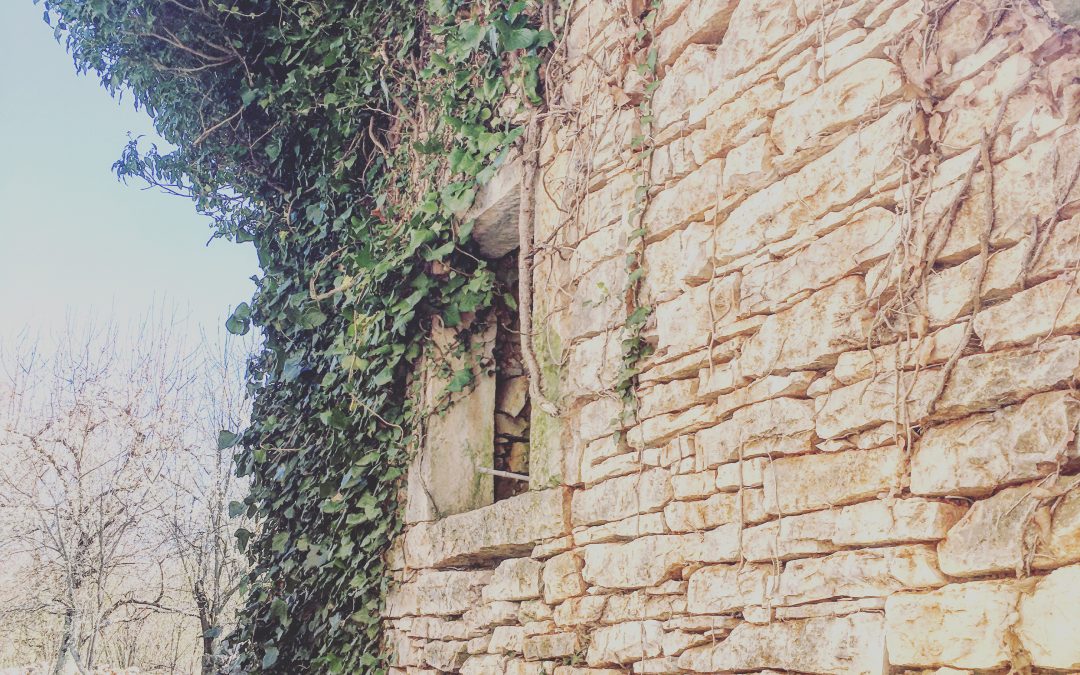
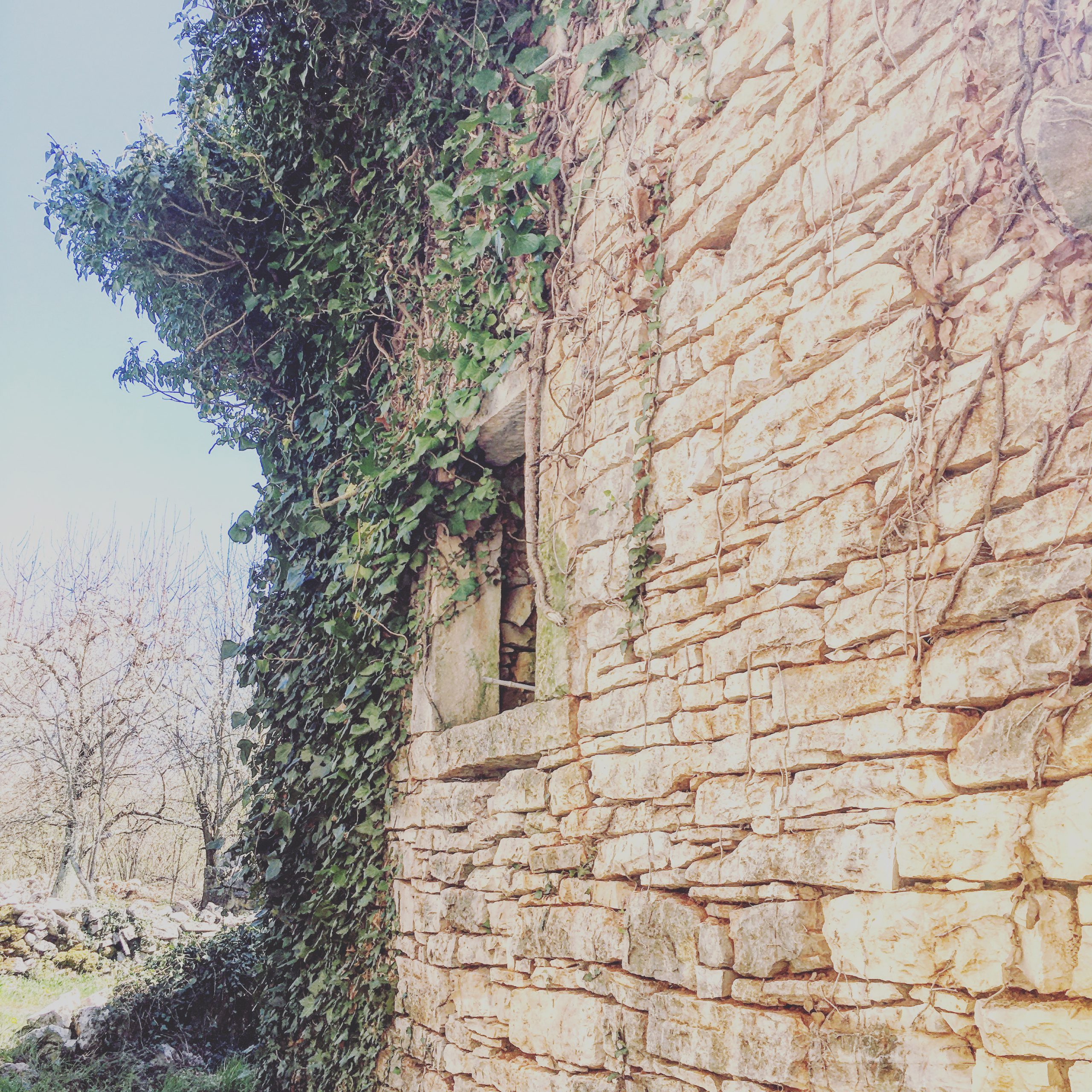
A small, abandoned cottage – in need of much TLC – sits behind our main house. It belonged to one of our neighbours and when he offered to sell it to us, we decided to go for it. The little house, which we think was possibly connected to our house many, many years ago, is very close, and we didn’t wasn’t someone else seeing its potential and snapping it up, as all of a sudden we’d have lost our much valued privacy. With the house, we also purchased a parcel of land, meaning that the potential of the dwelling really increased.
It’s small. The floor space is approximately 6m x 4.5m, but it is tall enough to have at least a mezzanine level, or if carefully designed, two floors. The roof would most definitely need to be taken down – over the years, vines and ivy have twisted their up and out through the slate tiles. It looks very magical, but not the safest. The building is constructed completely of beautiful, milky Istrian stones. Again, I’m no builder, bit I would imagine if the cottage was to be renovated, the easiest way to do might be to take it down, stone by stone, and rebuild. The small windows have Istrian stone lintels – a big bonus, as these are quite pricey if bought new. We know this because we had to buy four, for our new kitchen window.
We’ve cut and stripped back much of the vines, although ensuring that the sturdiest ones, which could potentially be holding it all together, were left in place. The roof greenery has been left intact – although we can access the roof, it wouldn’t be at all safe to actually get onto it so a cherry picker would be required. This was all part of the grand plan when we bought the property, but our plans changed pretty quickly, as they have a tendency to do…
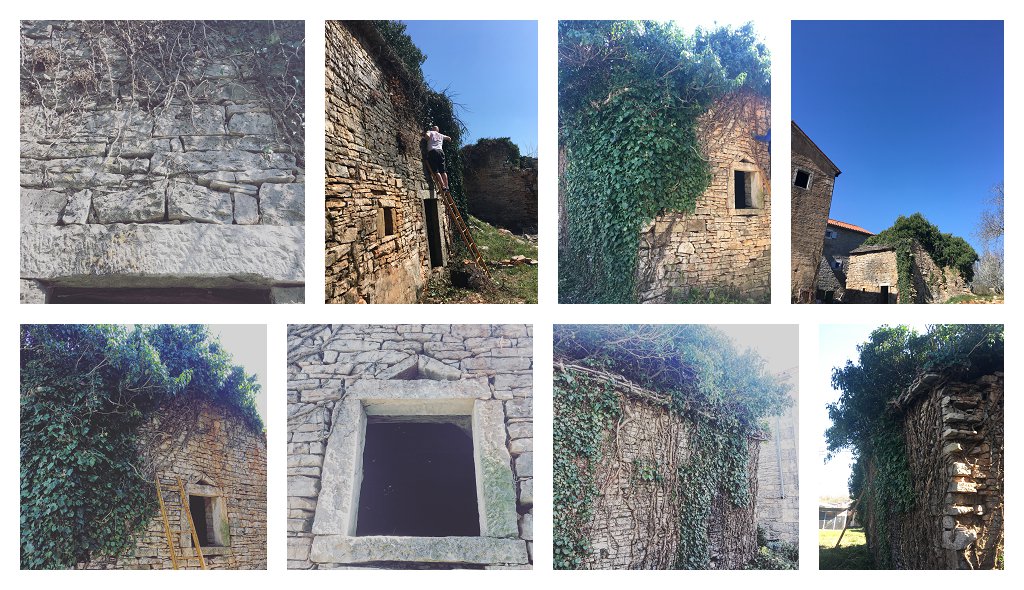
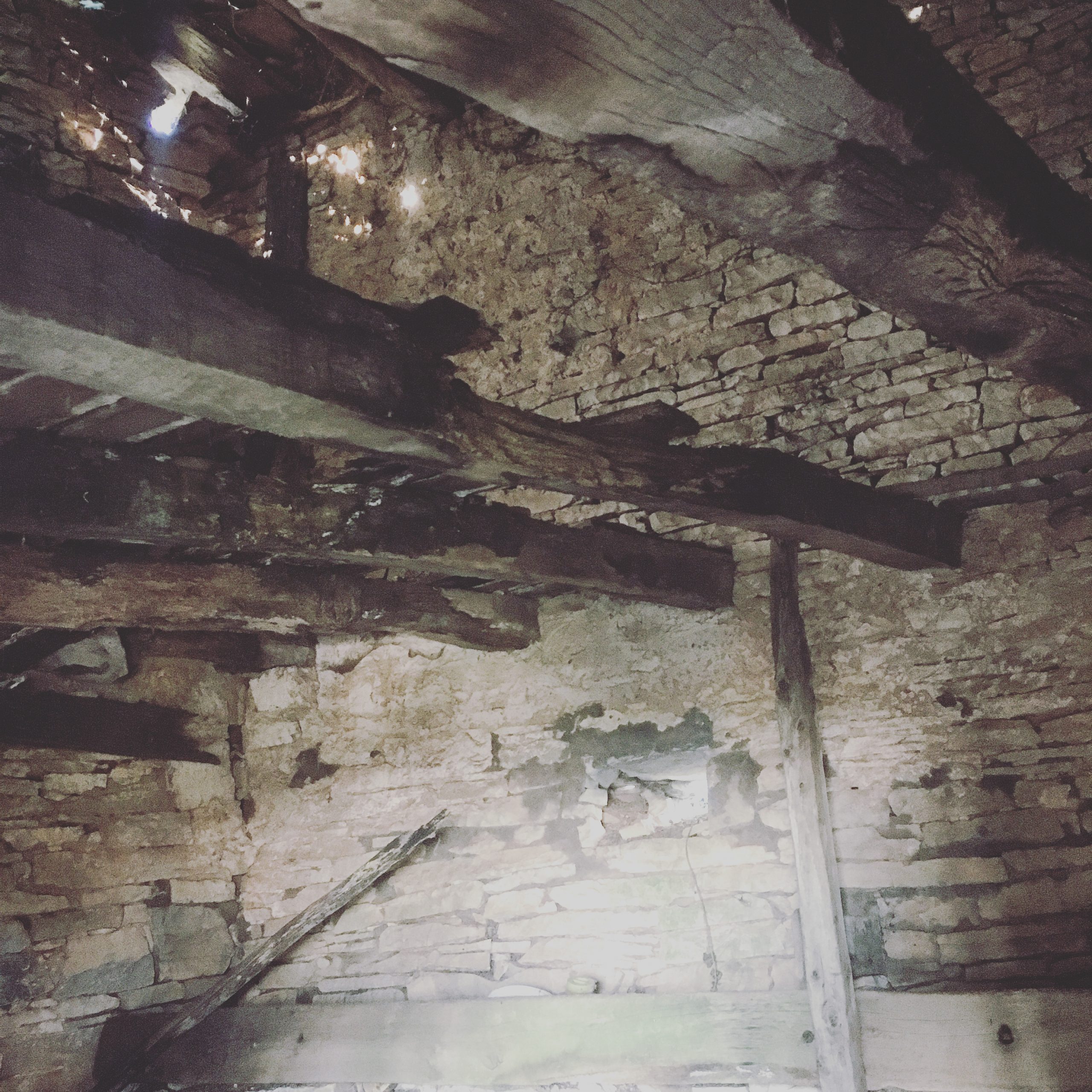
Internally, there’s not much to see. We think it was originally a barn for animals, so we’ve unfortunately not uncovered anything which could be salvaged. But, small as it is, it would make an amazing annexe – perfect for a bijou holiday rental, a granny flat OR, if the main house was rented out in the holiday season, this could be where you could camp out.
Even though we’re no longer intending to renovate the stone cottage, as our intention now is to move, we do still scour Pinterest and have turned up some gorgeous examples of what could be done with it. Feast your eyes…
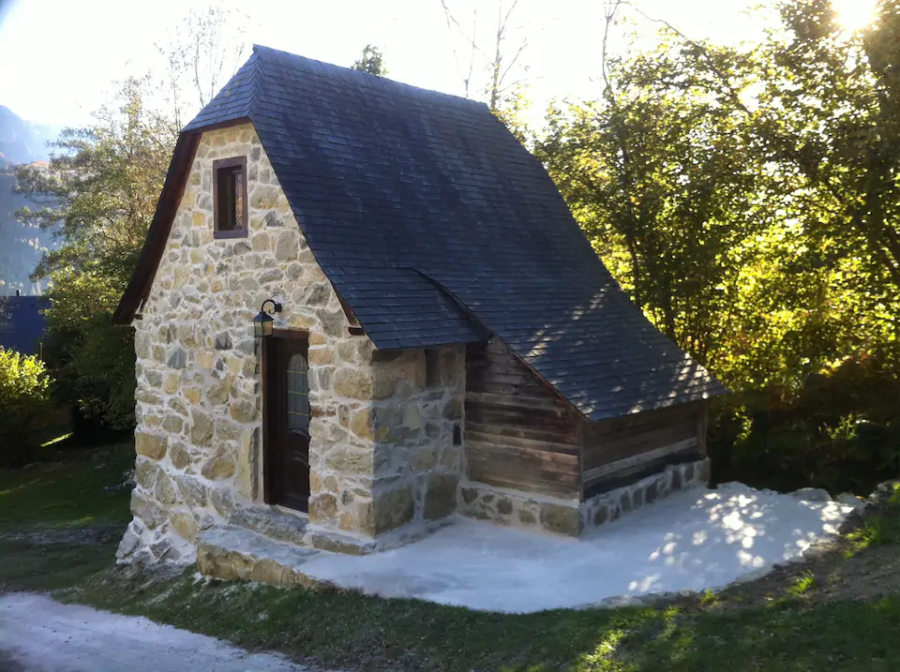
https://tinyhousetalk.com/charming-stone-tiny-house-moulin-de-liar/
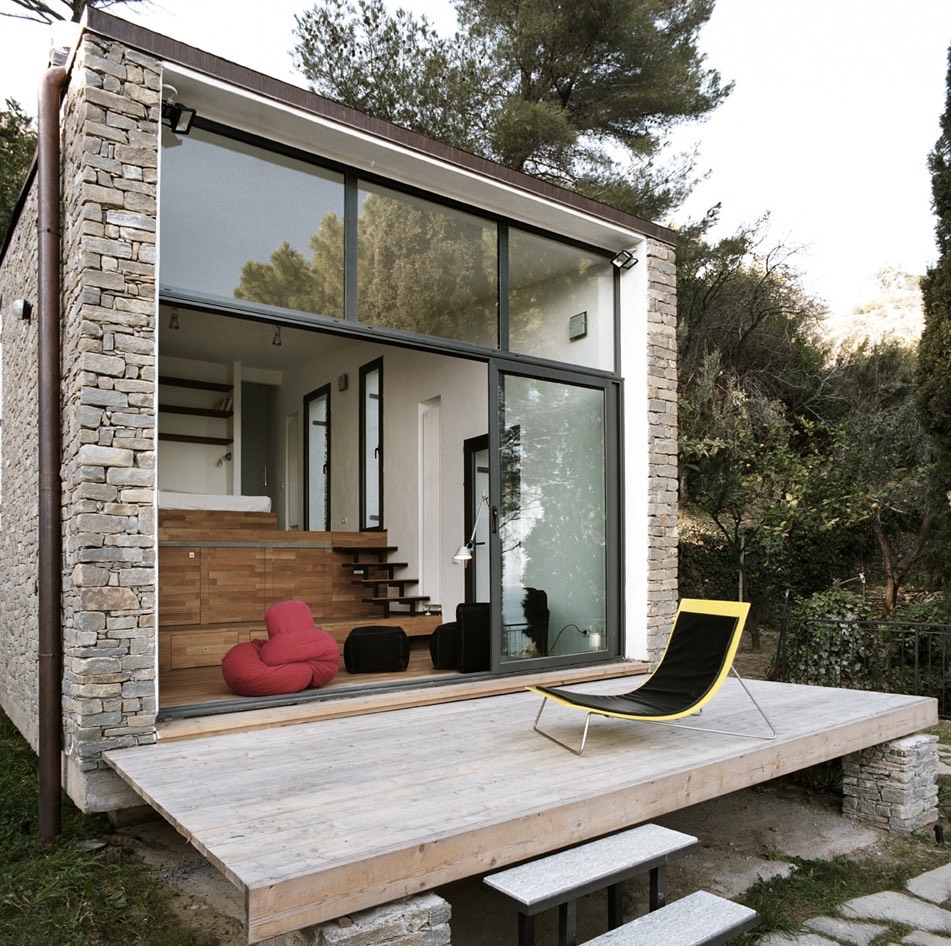
https://tinyhousetalk.com/376-sq-ft-modern-brick-tiny-home-with-ocean-views/
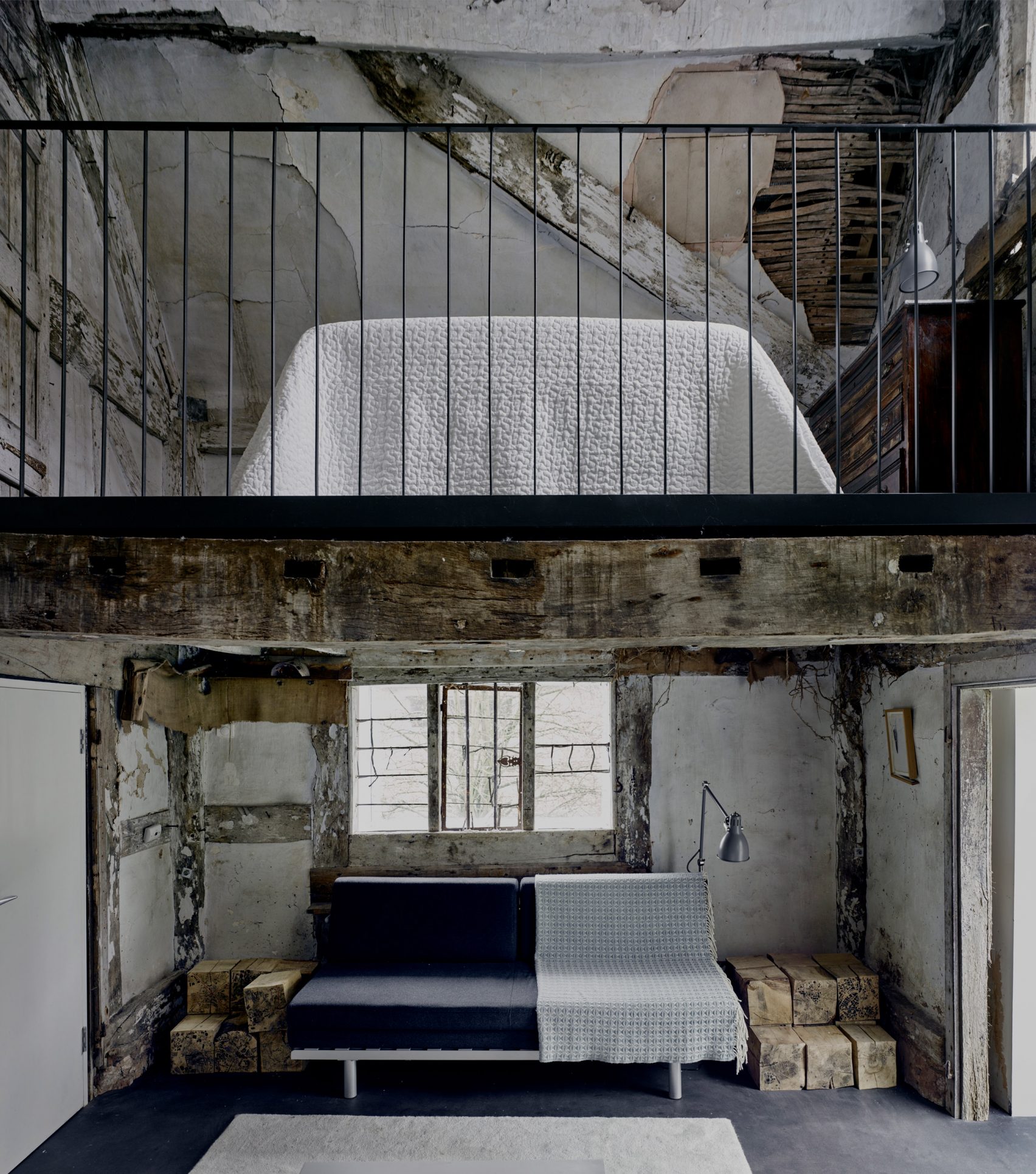
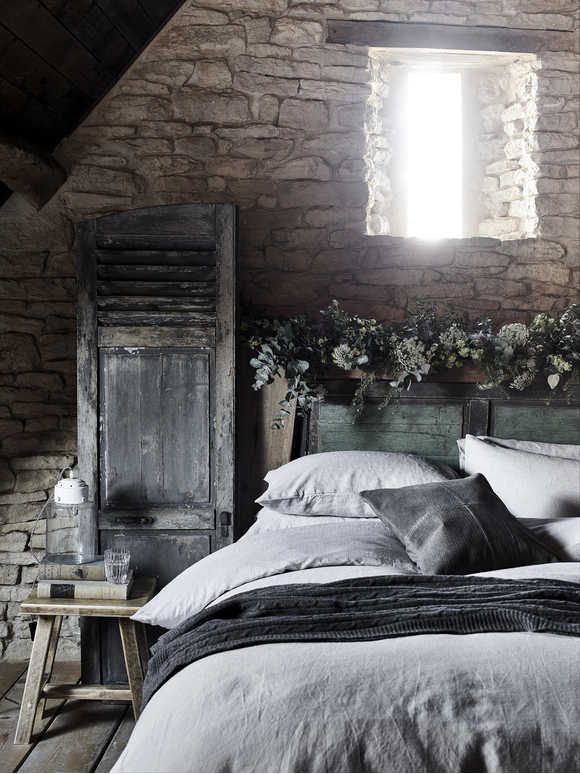
www.nordichouse.co.uk
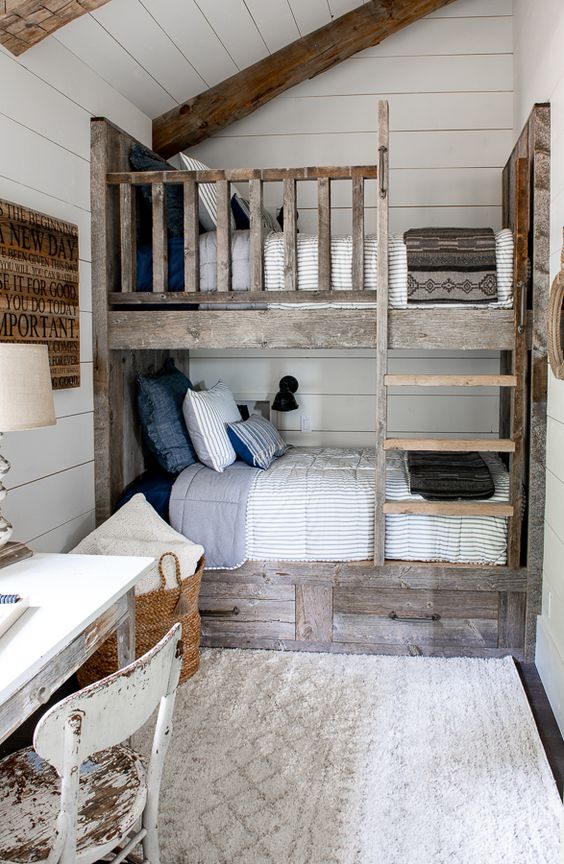
The image below, although not entirely practical, has to be my favourite. It’s so magical and internally looks so much like our little cottage. Perfect for a photoshoot…
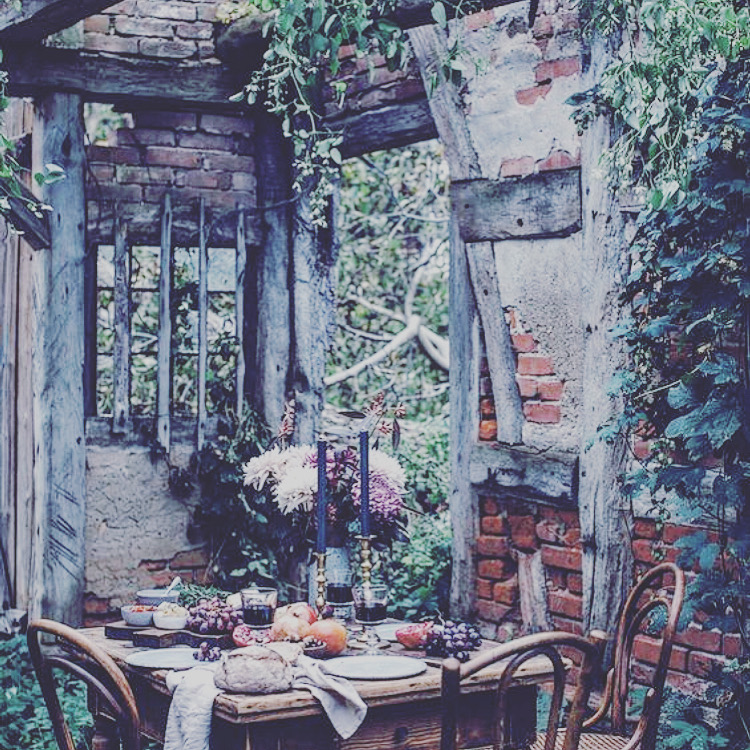
(Uncredited images from Pinterest. If you are the photographer – or you know who is – please get in touch and we will obviously credit you for your beautiful images).
by Helen | Jul 28, 2021 | Lifestyle
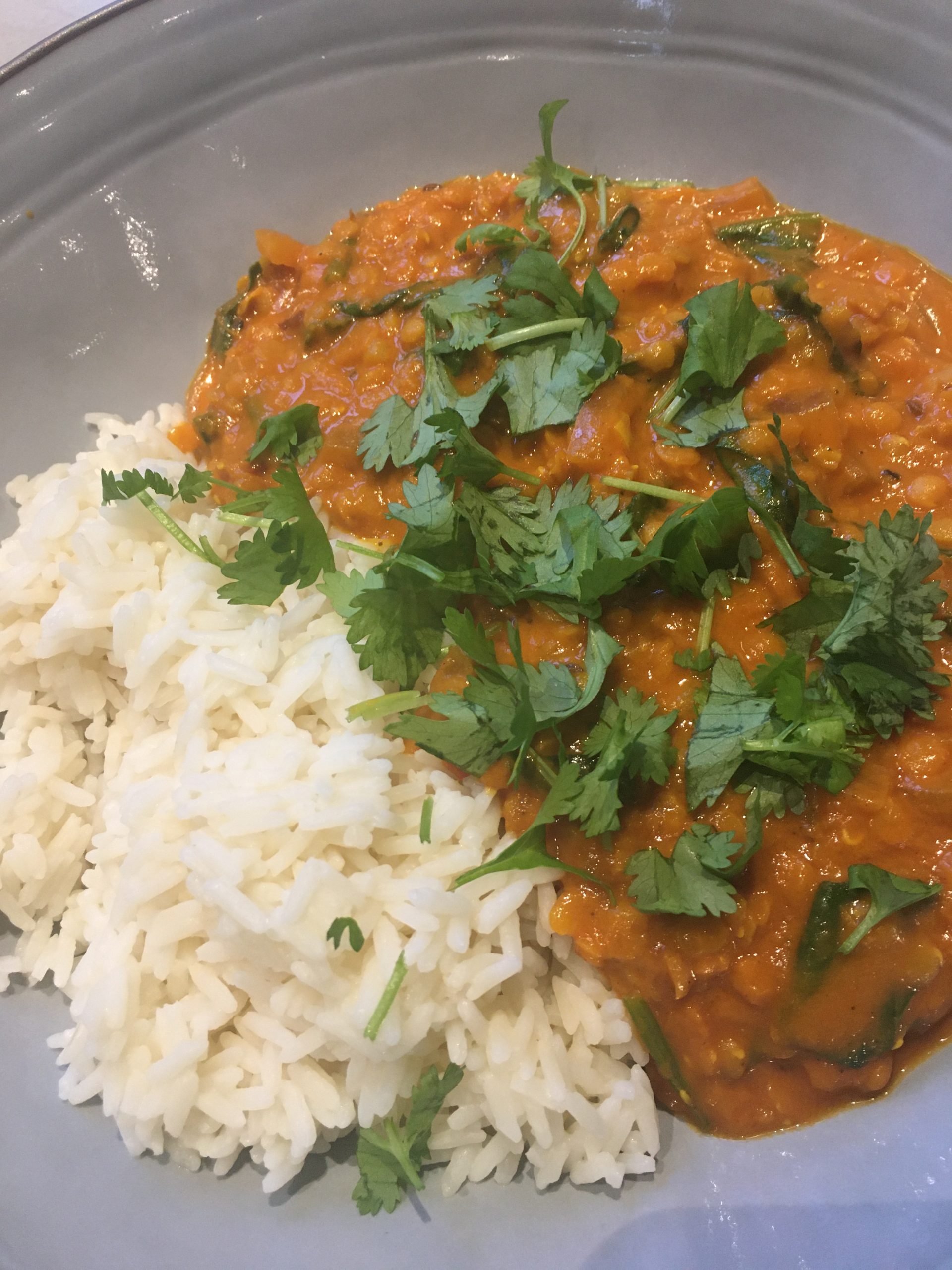
It’s not a difficult dish to make, but there are many, many recipes out there for dahl. I think however, we’ve found the perfect recipe, because of the balance of flavours and texture. I found it on this website, but the author of the recipes/blogs goes into so much detail that the recipes ad ingredients are almost lost and it involves a lot of scrolling and clicking away from adverts, so I’ve posted the essentials below, if you want to test out this dahl.
what you’ll need
- 1 teaspoon olive oil or coconut oil
- 2 onions diced
- 3 garlic cloves finely chopped
- 1 tablespoon fresh ginger peeled and grated
- ½ finely chopped red chilli (or ½ tsp dried chilli flakes)
- ½ teaspoon cumin seeds
- ½ teaspoon coriander seeds
- ½ teaspoon mustard seeds
- 2 teaspoon ground turmeric
- 1 teaspoon garam masala
- 1 cup (200g) dried red lentils, uncooked (rinsed and drained)
- 1 can (14oz/400ml) chopped tomatoes or passata
- 1 can (14oz/400ml) coconut milk
- 500ml vegetable stock
- Salt and pepper
- Juice of half a lemon
- 2 handfuls fresh spinach washed
- Fresh coriander to garnish
what you’ll need to do
-
Heat the oil in a large pan over a medium heat. Add the onion and cook gently for 5 minutes. Add the garlic, ginger and red chilli and cook for a few minutes.
-
Grind the cumin, coriander and mustard seeds lightly in a pestle and mortar, then add to the pan, along with the turmeric and garam masala and cook for 1 minute.
-
Add the lentils, tomatoes with their juice, coconut milk and stock, then stir to combine. Season with salt and pepper and cook on a medium/low heat for 15-20 minutes until reduced and thick. If you have time, you can leave it a little longer on a very low heat for even more flavor (just stir often and check it doesn’t scorch on the bottom of the pan).Taste and add more chilli if desired.
-
Stir in the lemon juice and spinach until it wilts.
-
Serve warm with rice, naan bread or poppadoms.
Maybe it’s because you don’t cook the lentils first that the texture of this dahl is just a little different. It’s kind of creamy and “nutty” at the same time, so has a bit of oomph to it. Too often, when I’ve order a dahl, I’m disappointed because it’s on the lentil soup side of things. Not this one. Strong, bold flavours and extremely filling so plenty left for your lunch the next day.
by Helen | Jul 27, 2021 | Renovation
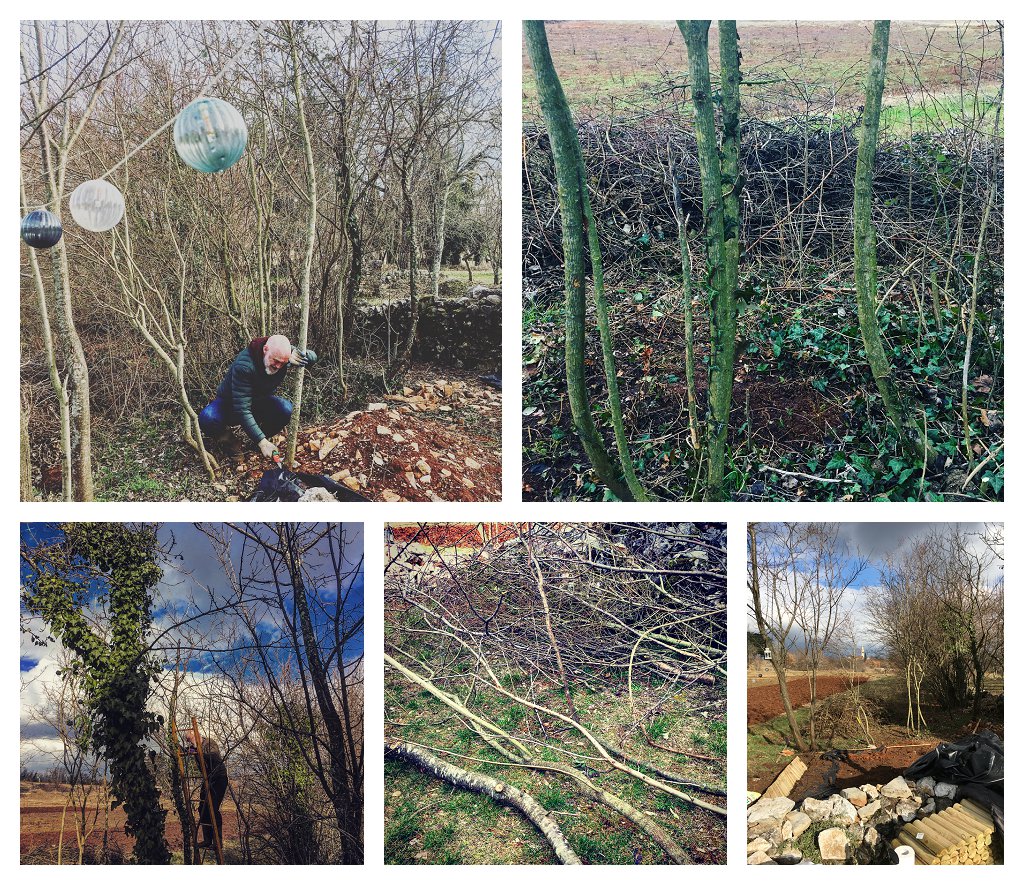
After over a year of lockdown and travel restrictions, we’ve finally been double jabbed and now that we can access the EU vaccination certificate, the prospect of travel is on the horizon. Not immediately, but the prospect is there. In the meantime however, we’re going to enjoy the garden we have been working hard on creating, since early spring. Building works on the house have now finished, so there’s no more mess in the garden. Meaning that we’ve able to tackle it properly. Way back in February, we started on the little patch of land which is communally owned (but no-one so far seems to have taken responsibility for it), just to the side of the house. Trees, vines, ivy, weeds etc were cleared and a small wooden fence put in, to create a lavender patch. The area was also cleared of stones and levelled.
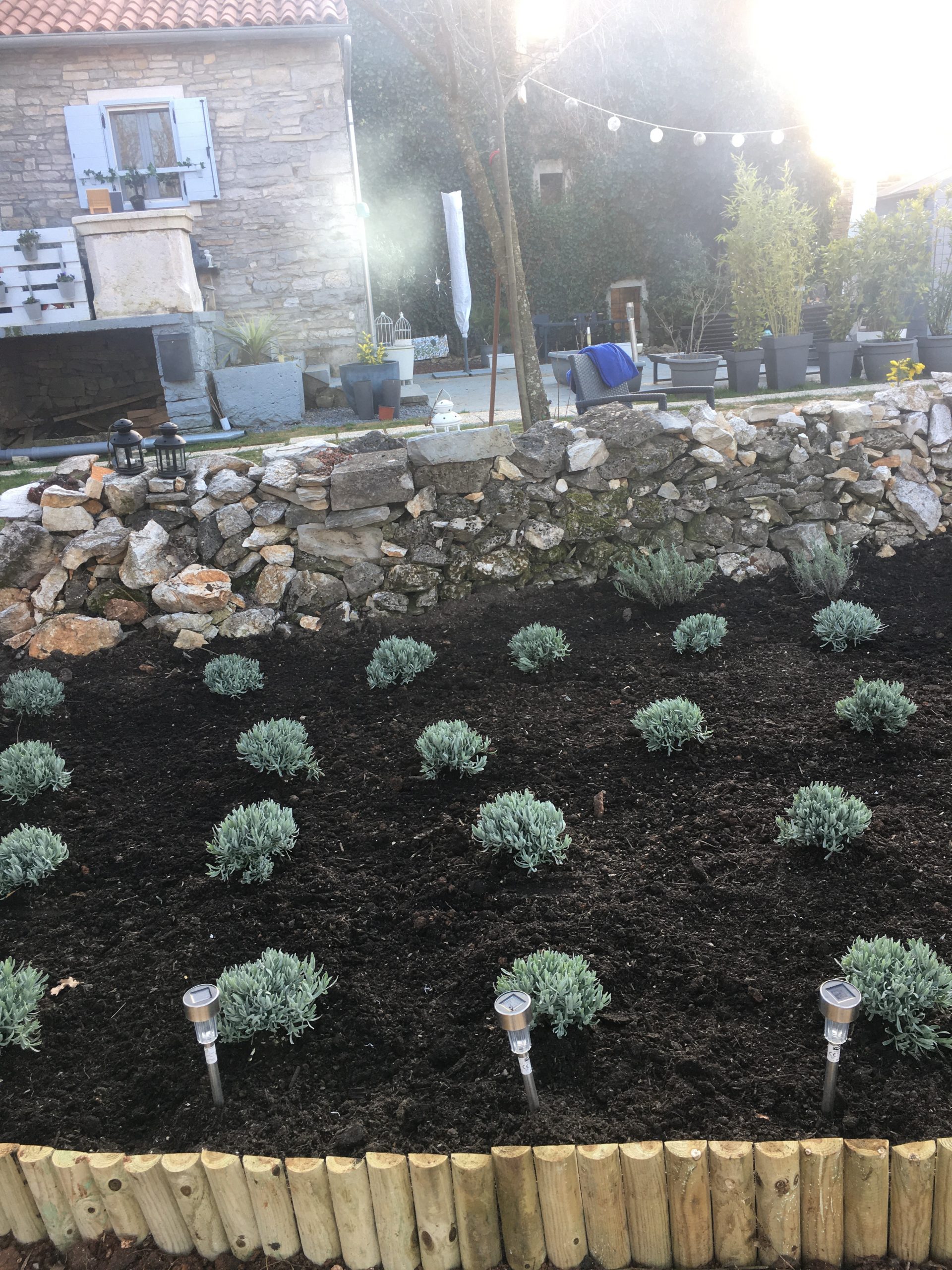
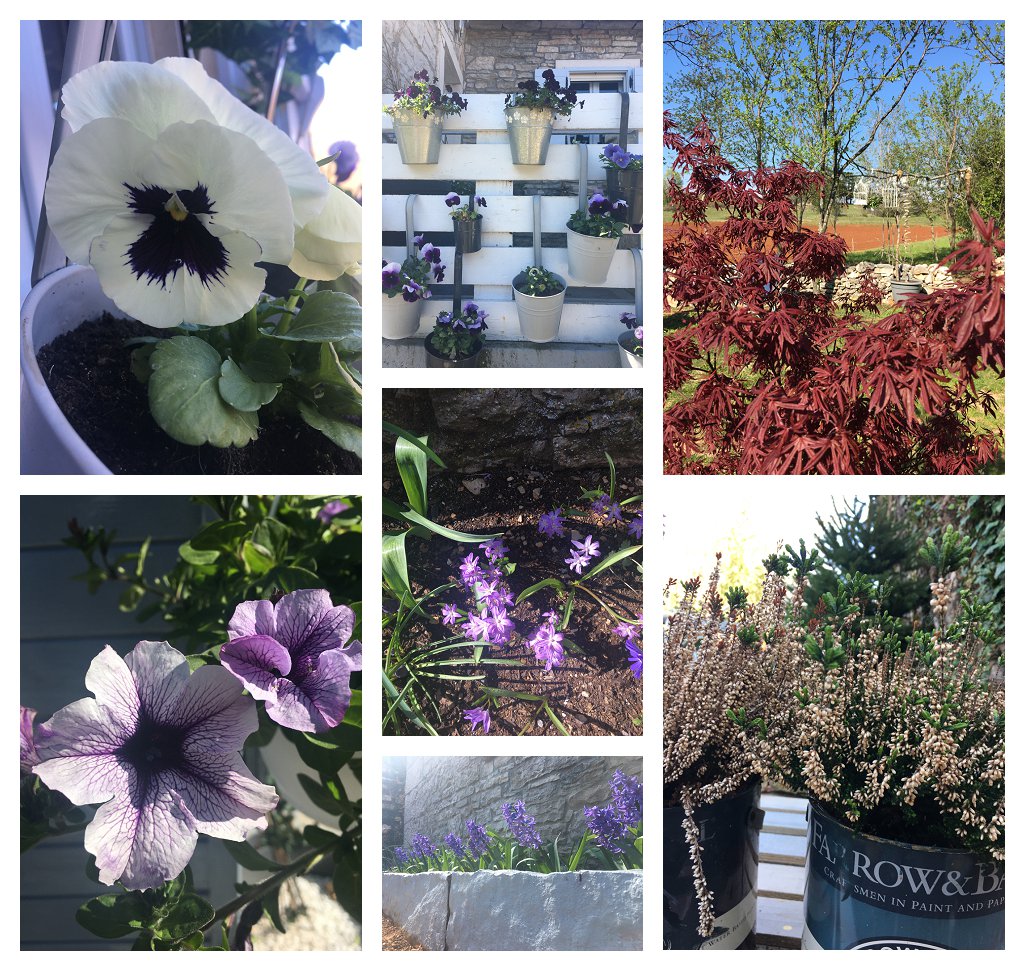
Spring has felt very long, but finally summer has arrived. February, March & April were spent sowing wildflower seeds, seed balls, sunflowers, dahlias, new potted plants and climbing roses. Most mornings were spent doing a “tour of duty” around the garden – pulling out weeds, checking on new growth, nurturing and watering and feeding. And, we think it has finally paid off..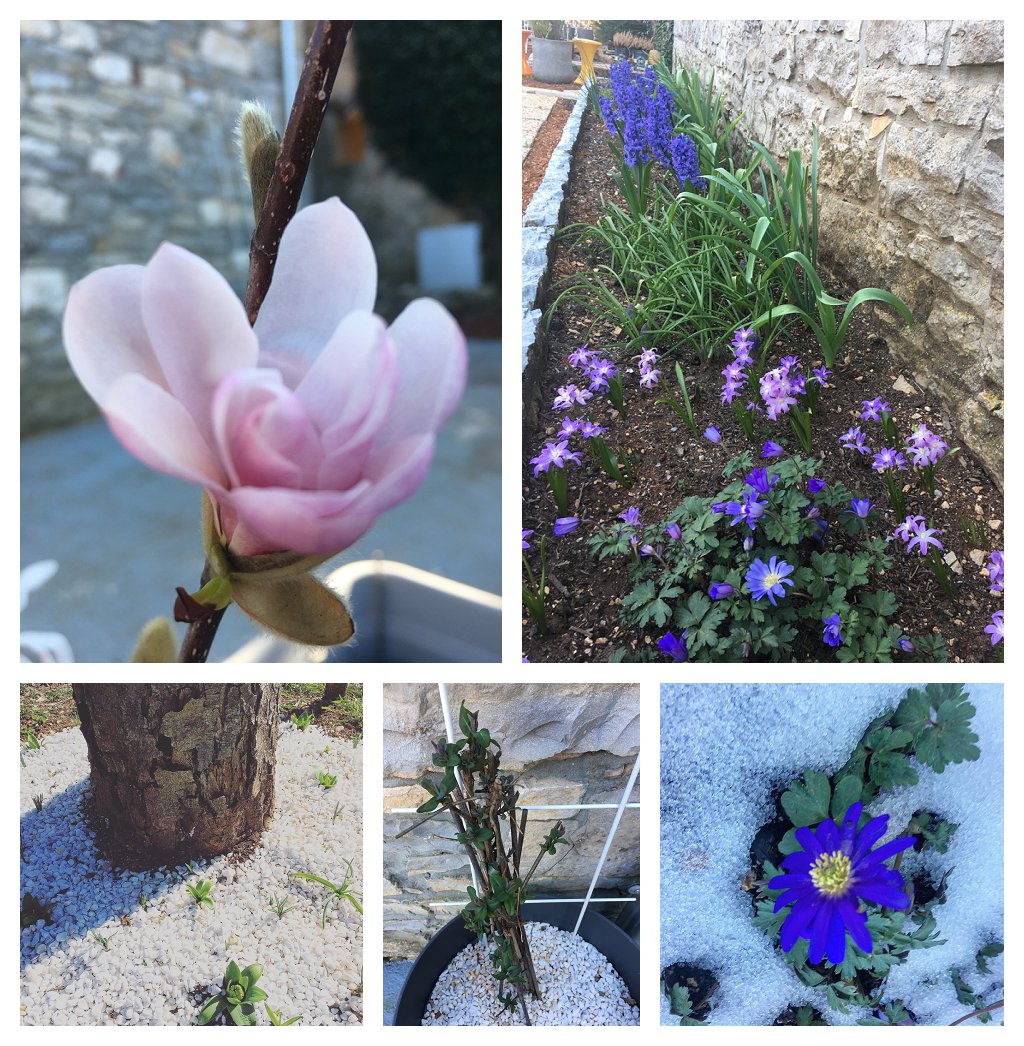
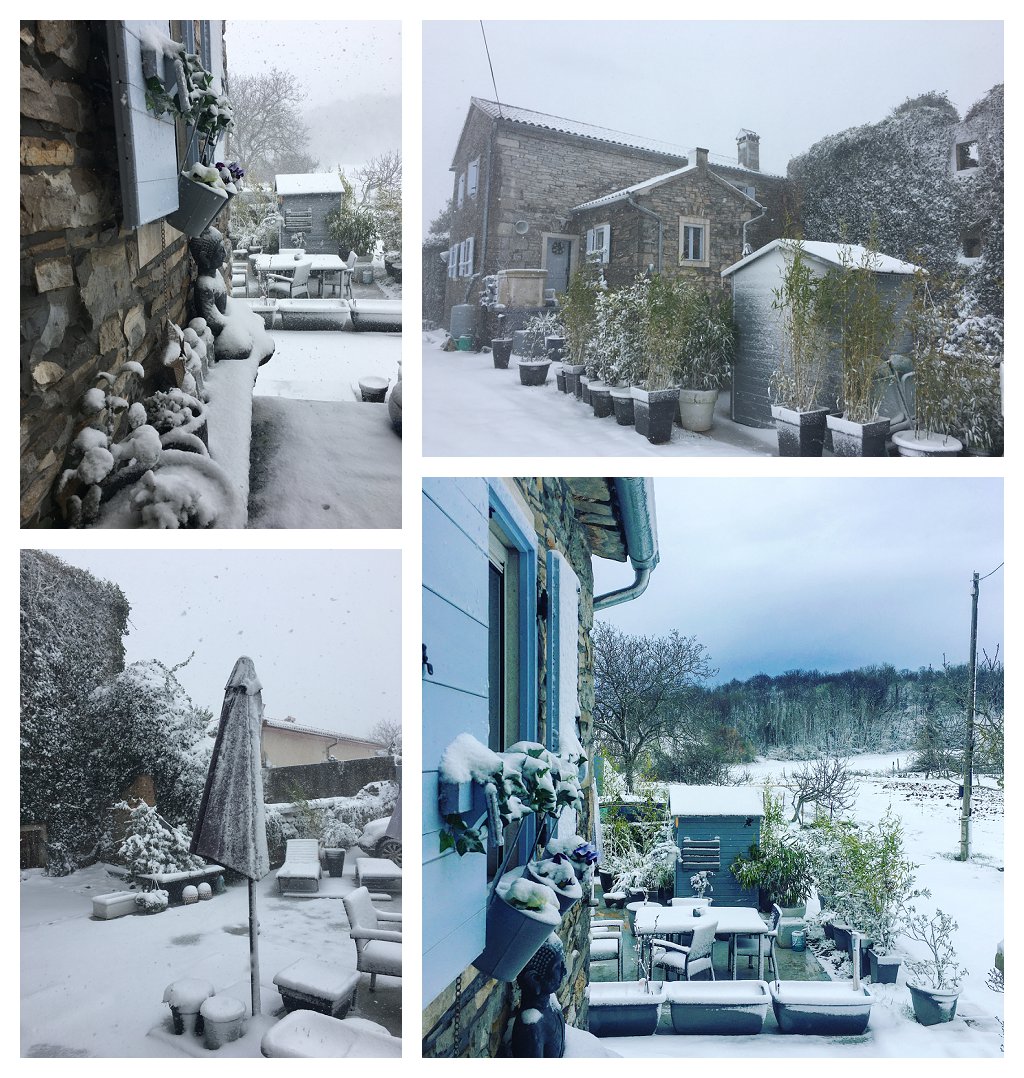
 Of course, in the middle of the growth spurt, we did have a very, very cold snap and we thought that our beautiful new growth would perish. But, as we know, nature is nothing if not hardy.
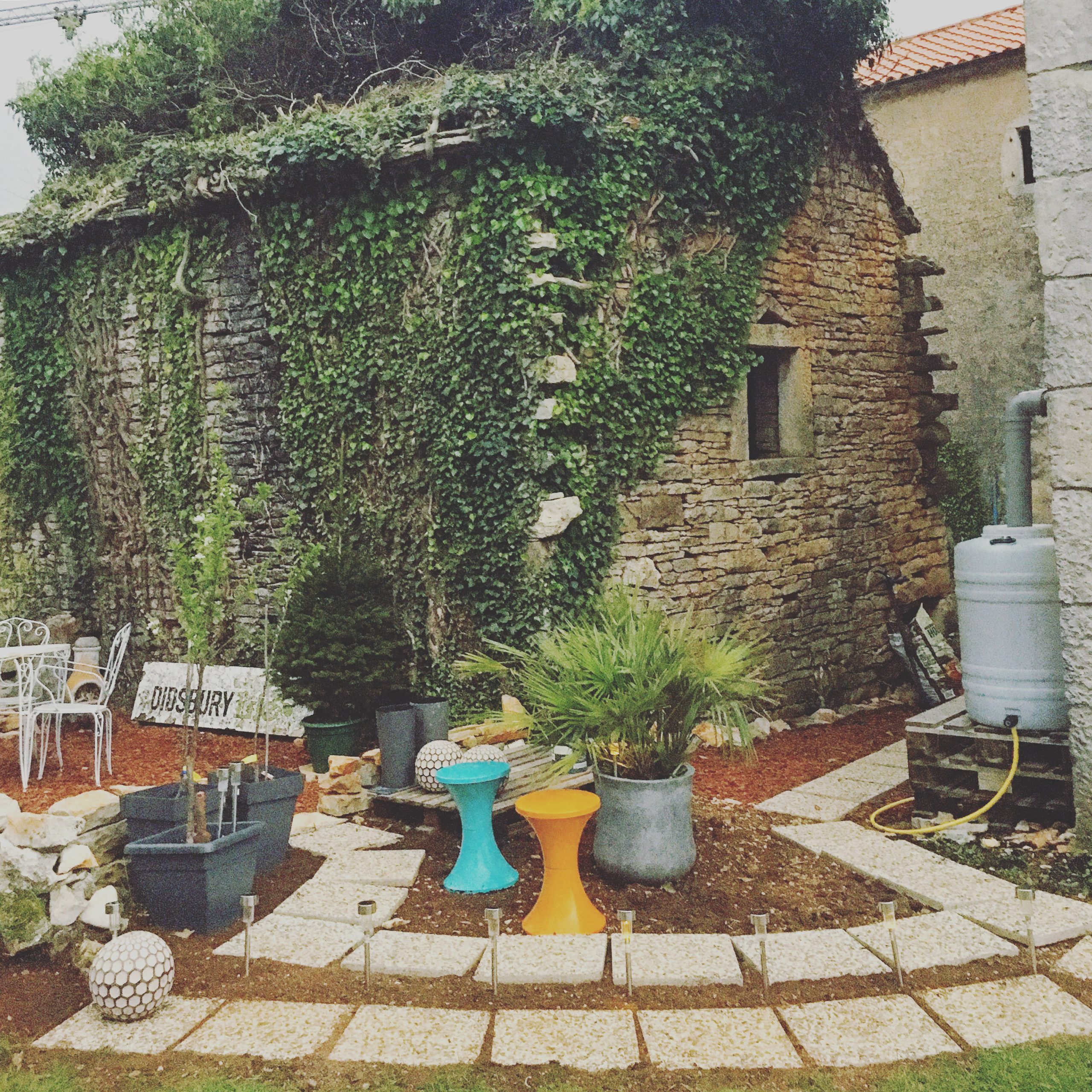
 Once the snow had thawed, our attention turned to the land around our little abandoned house to the rear of the main house. This was also cleared of stones and vines and weeds, and black plastic sheeting laid, before being covered with red bark. We also created a stepping stone path to the back of the house, using spare flagstones to create curves for interest, which were infilled with wildflower seeds. Solar lights have made a huge difference, as this part of the garden is now lit up at night.
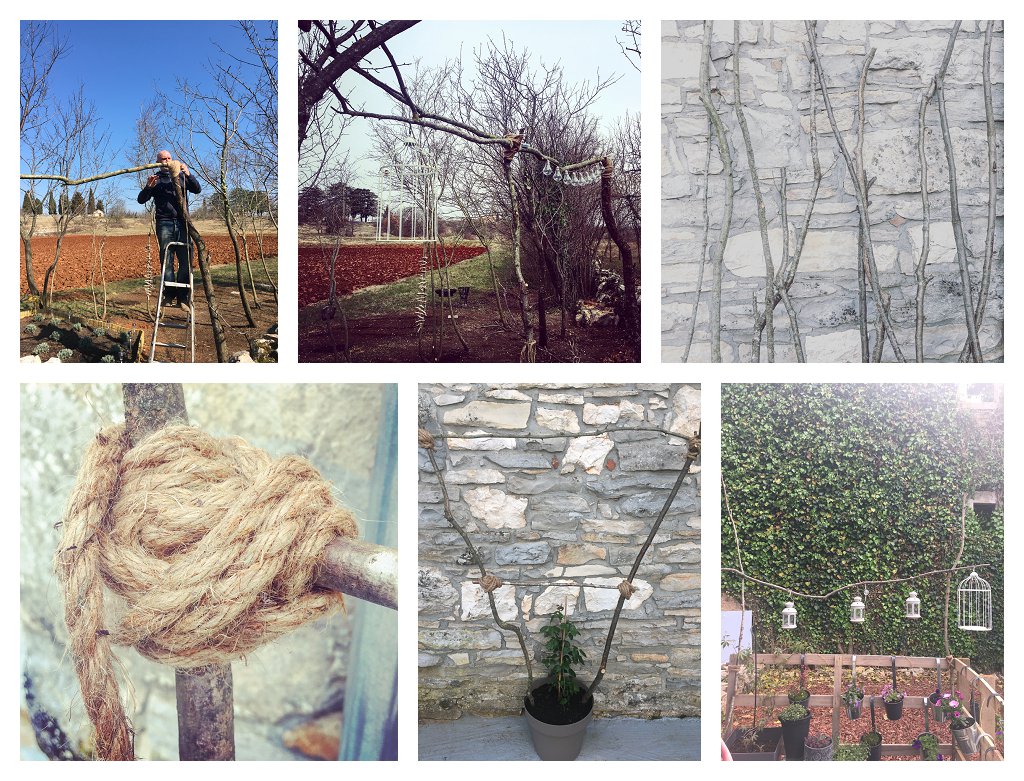
We also ensured that we used cut down branches – they became supports for the climbers, including our honeysuckle and wisteria. An old log crate was also chopped up and recycled, part of it being utilised as a “fence” to hang plants from and encourage one of Virginal Creepers to entwine its way around it.
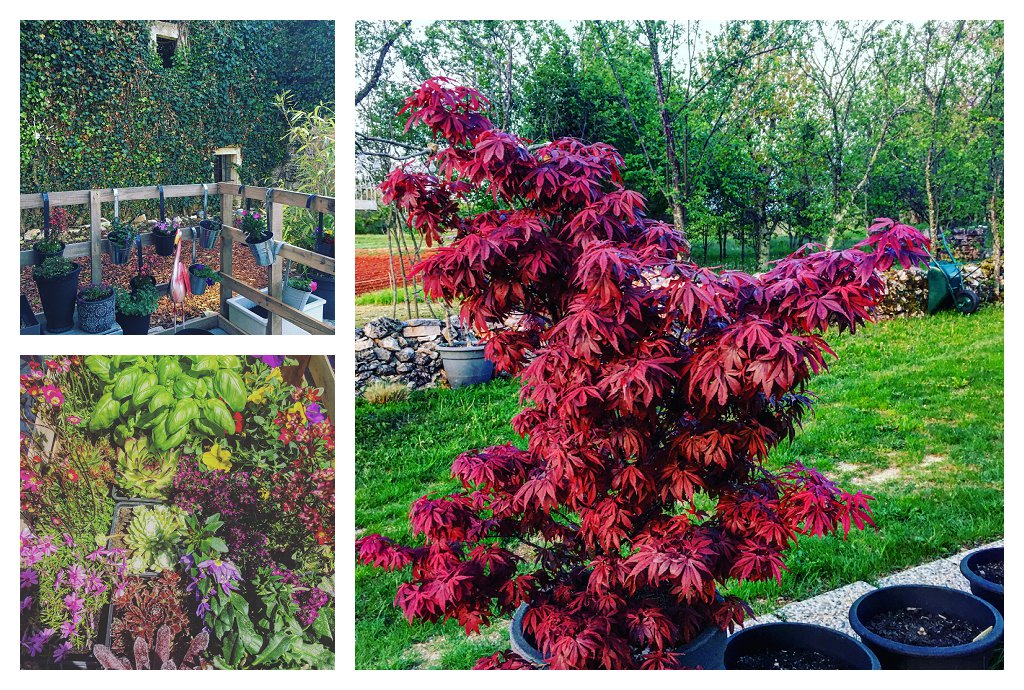
 Over the last couple of months, the garden has exploded into a riot of colour. It’s looking so pretty, we’ve decided that new sunbeds and an outdoor L-shaped sofa were in order. More of that in the next blog, but here’s a snapshot of what’s been emerging..,
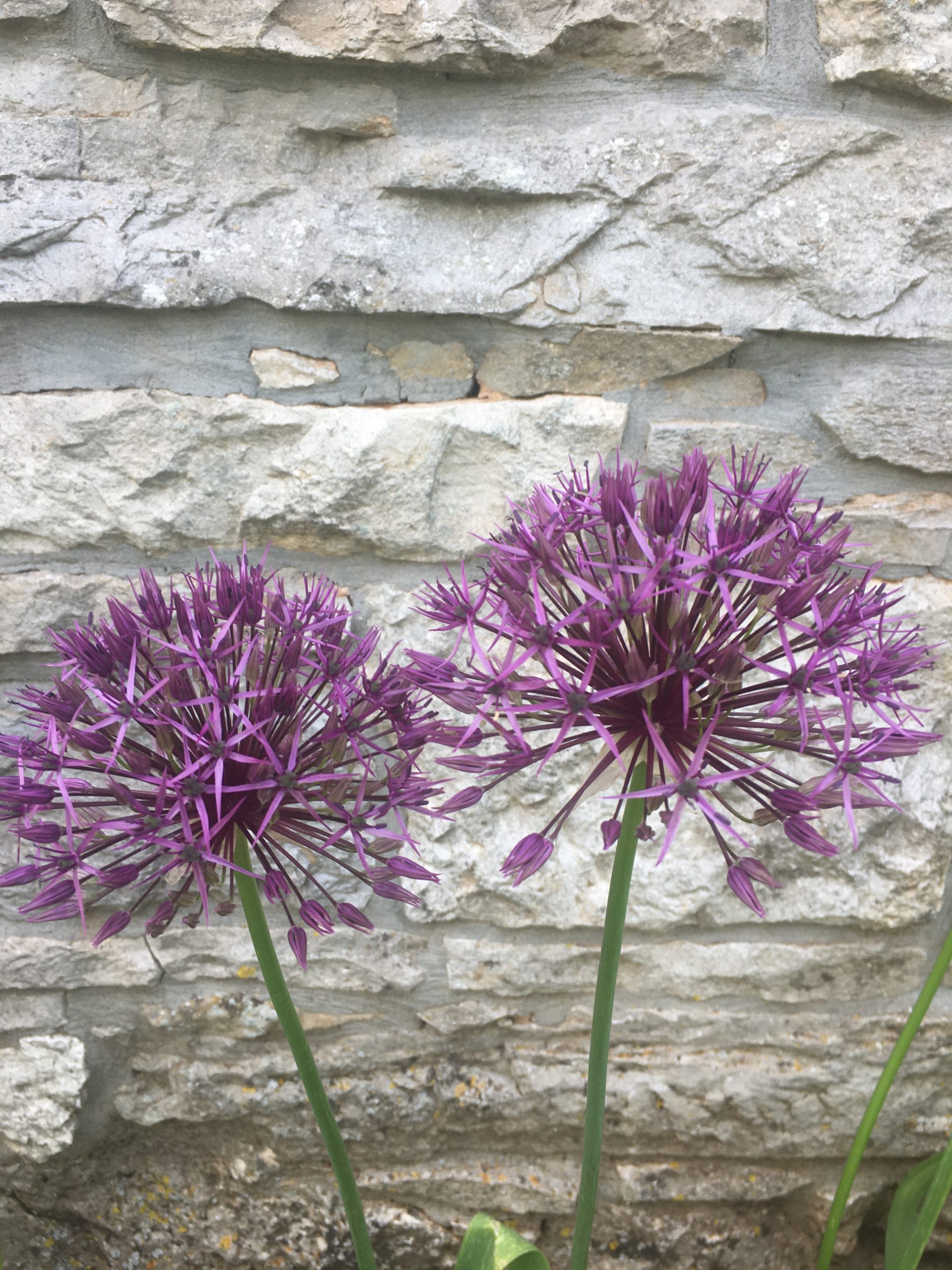
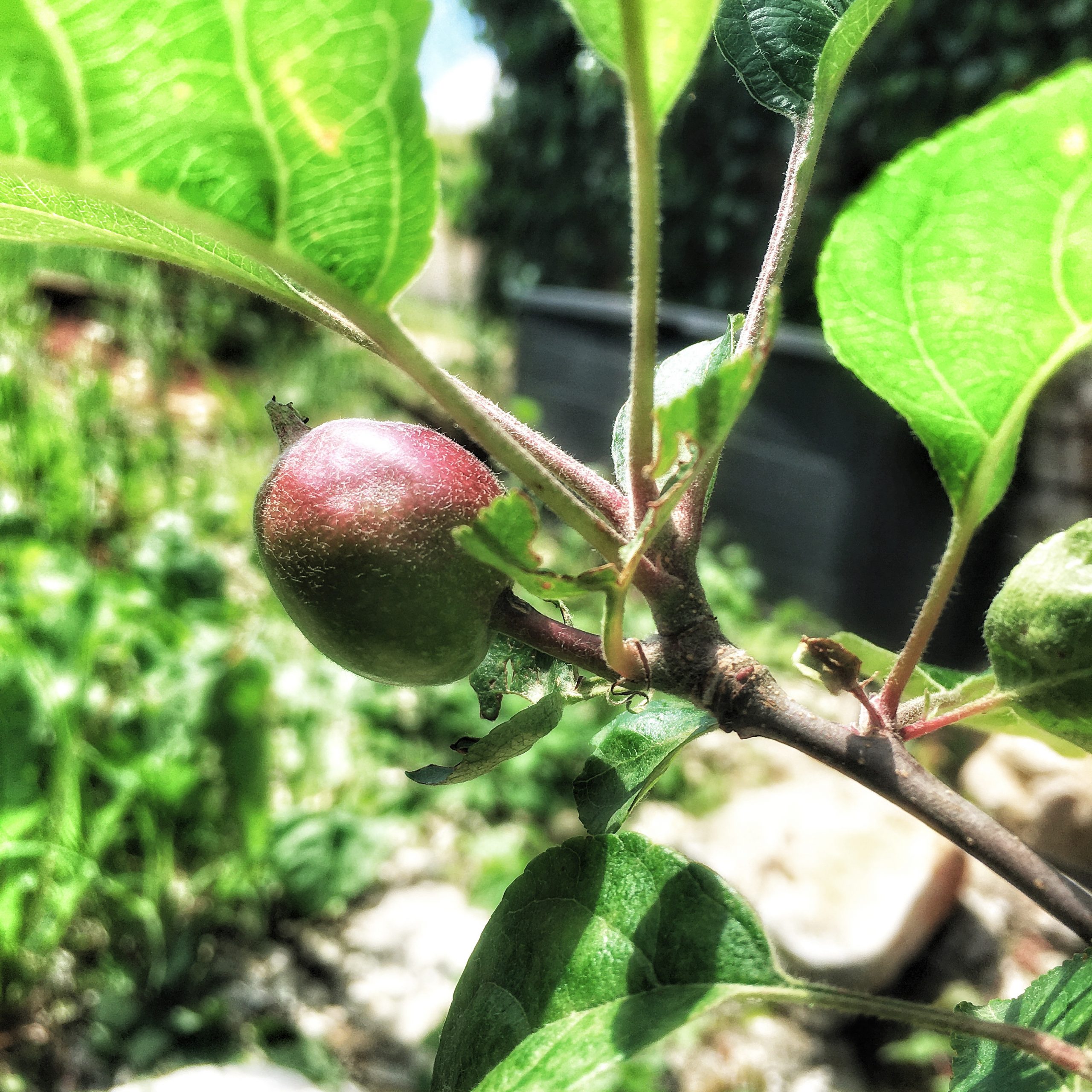
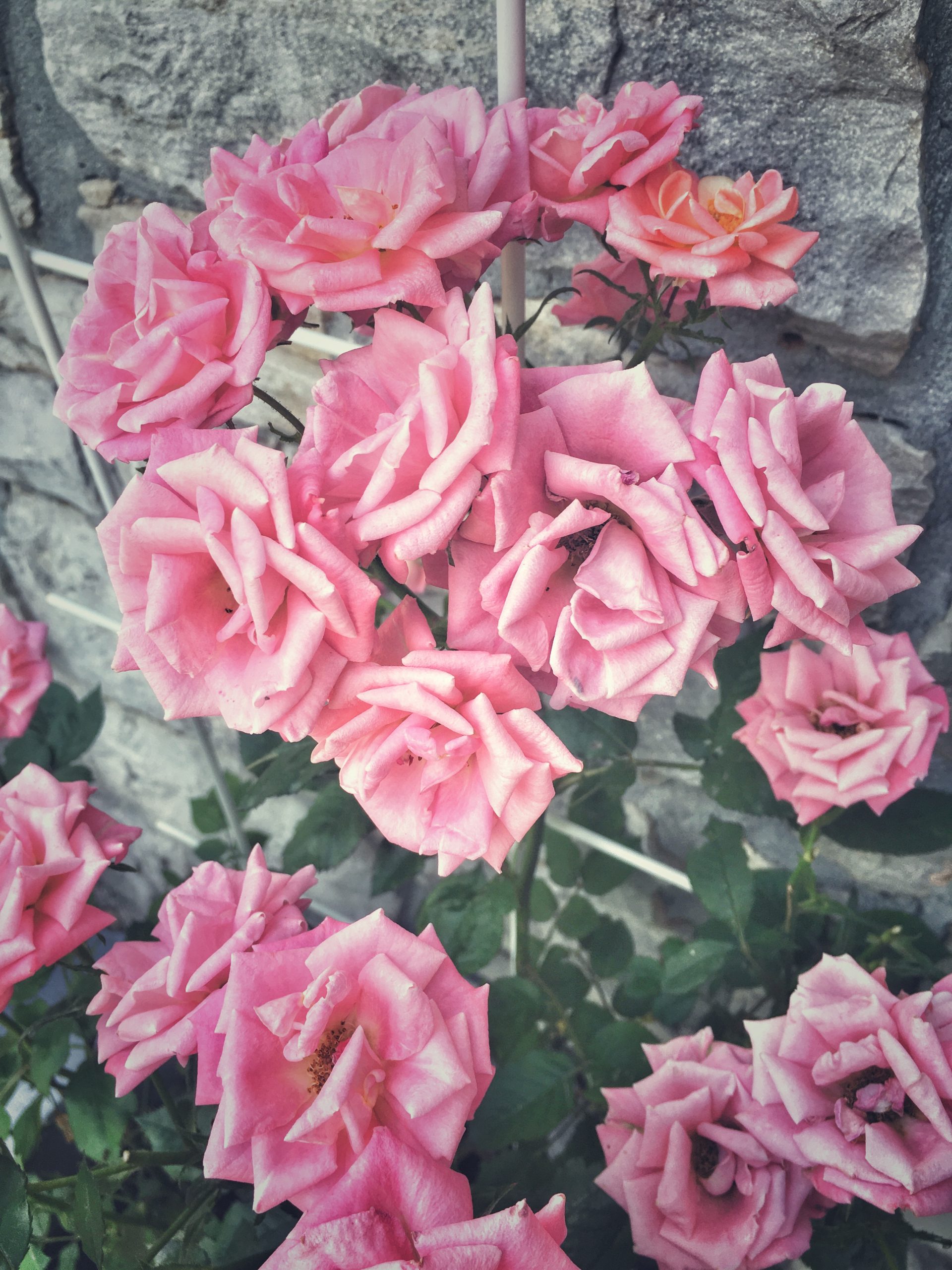
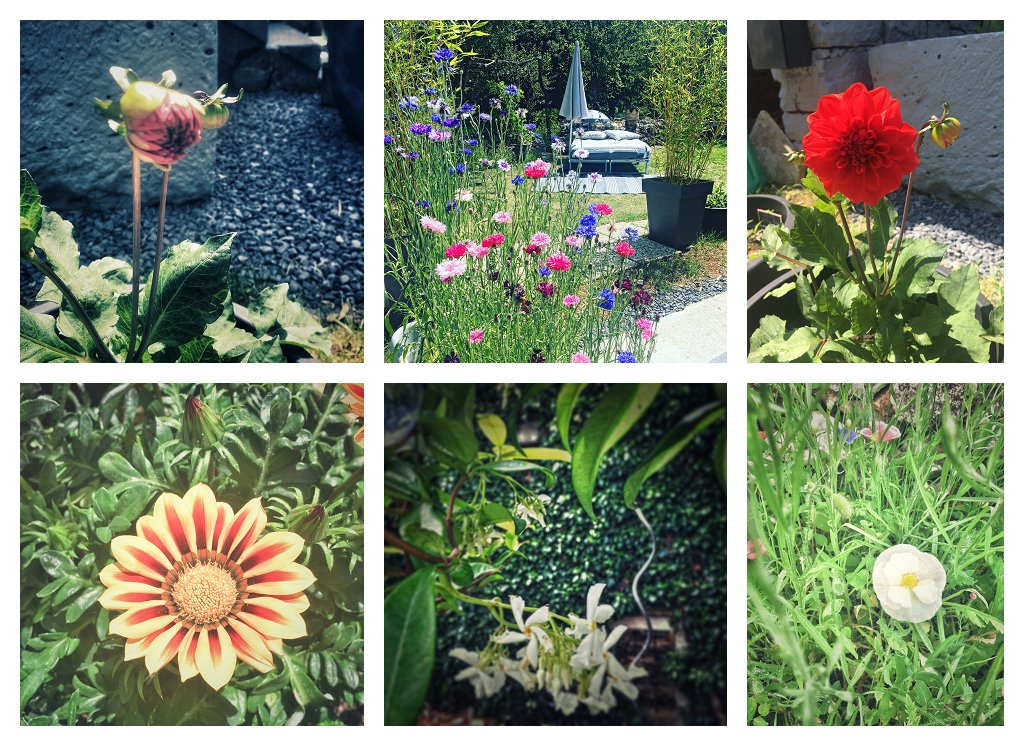 The garden, finally, is looking so, so pretty. We’ve worked hard on it this year. It’s full of bees and butterflies and colours and aromas. So, even though we can potentially travel in the near future, I think we’ll be quite happy to sit in our garden and savour it.